Mathias Hanses - Böcker
Visar alla böcker från författaren Mathias Hanses. Handla med fri frakt och snabb leverans.
2 produkter
2 produkter
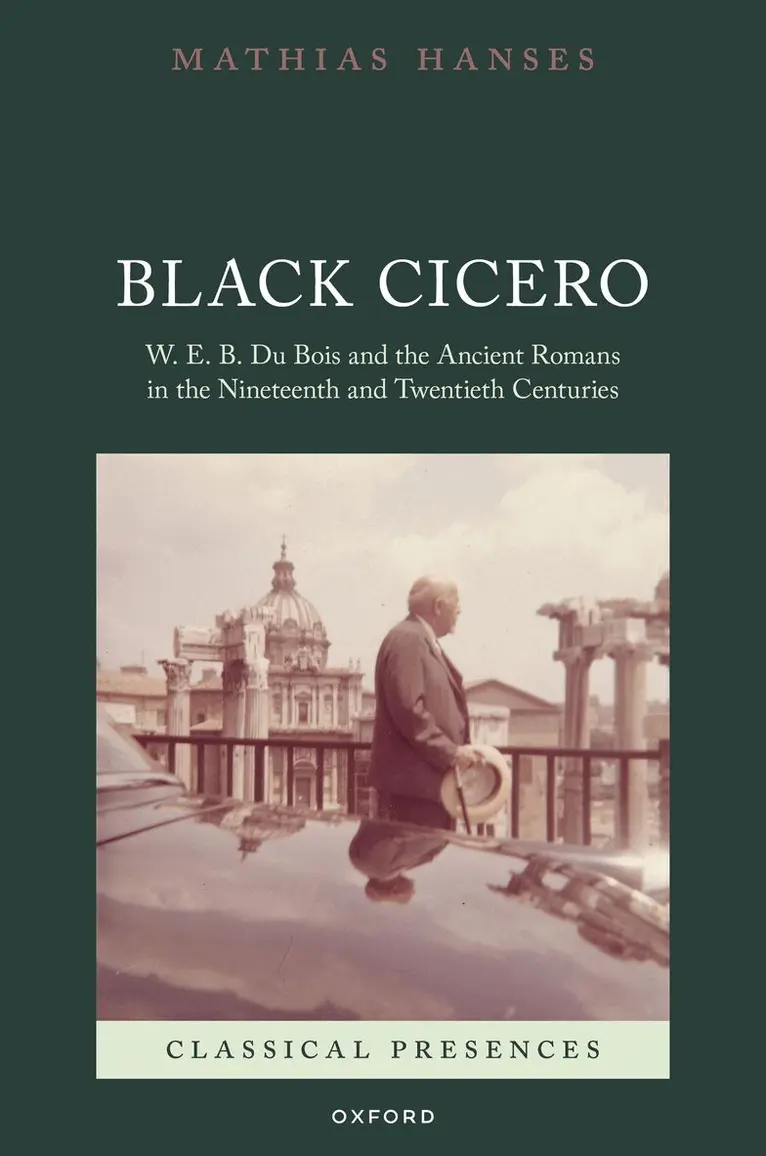
Black Cicero
W. E. B. Du Bois and the Ancient Romans in the Nineteenth and Twentieth Centuries
Inbunden, Engelska, 2026
1 956 kr
Kommande
Black Cicero examines the black American scholar and activist W. E. B. Du Bois's lifelong engagement with the Roman orator Marcus Tullius Cicero. To Du Bois, Cicero's life and his opposition to Caesar provided a foundational example of anti-tyrannical thought and action, a tradition of which he considered himself a part alongside his ancient Roman forerunner. Despite this continuity in Du Bois's extensive oeuvre, the image of ancient Mediterranean life that informed his self-fashioning as a "Black Cicero" underwent tremendous changes as the nineteenth century yielded to the twentieth. Considering Cicero a white man at the start of his career, Du Bois later came to advertise ancient Rome's multi-continental positioning at the intersection of Europe, Asia, and Africa, as well as the diversity of that space's populations. Du Bois travelled, read, and interacted with thinkers from across these same continents--and the Americas--evincing a complex intertextual rhizome within which Cicero ultimately turned non-white. From the Jim Crow era, through World War I and II, to the Cold War and his move to newly independent Ghana at the end of his life, Du Bois celebrated those who pursued liberty, and he condemned imitators of the imperialist oppression that he observed in the Roman empire. Black Cicero embeds this duality in the discourses about the ancient Mediterranean that were proliferating at the time. Probing Du Bois's attractive yet also notably distorted view of a freedom-loving Cicero, this book traces how one of the nineteenth and twentieth centuries' most engaging thinkers and compelling writers made ancient Rome relevant to discussions about white supremacism and anti-blackness, to decolonial and anti-colonial thought, to communism, and to the fight against fascism.
1 288 kr
Skickas inom 7-10 vardagar
The Life of Comedy after the Death of Plautus and Terence documents the ongoing popularity of Roman comedies, and shows that they continued to be performed in the late Republic and early Imperial periods of Rome. Playwrights Plautus and Terence impressed audiences with stock characters as the young-man-in-love, the trickster slave, the greedy pimp, the prostitute, and many others. A wide range of spectators visited Roman theaters, including even the most privileged members of Roman society: orators like Cicero, satirists like Horace and Juvenal, and love poets like Catullus and Ovid. They all put comedy’s varied characters to new and creative uses in their own works, as they tried to make sense of their own lives and those of the people around them by suggesting comparisons to the standard personality types of Roman comedy.Scholars have commonly believed that the plays fell out of favor with theatrical audiences by the end of the first century BCE, but The Life of Comedy demonstrates that performances of these comedies continued at least until the turn of the second century CE. Mathias Hanses traces the plays’ reception in Latin literature from the late first century BCE to the early second century CE, and shines a bright light on the relationships between comic texts and the works of contemporary and later Latin writers.