Mathias Poertner - Böcker
Visar alla böcker från författaren Mathias Poertner. Handla med fri frakt och snabb leverans.
4 produkter
4 produkter
298 kr
Skickas inom 7-10 vardagar
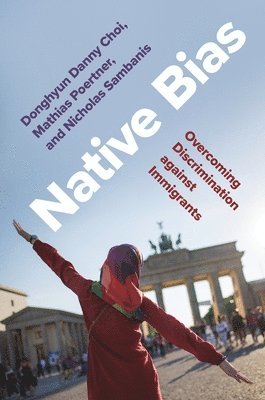
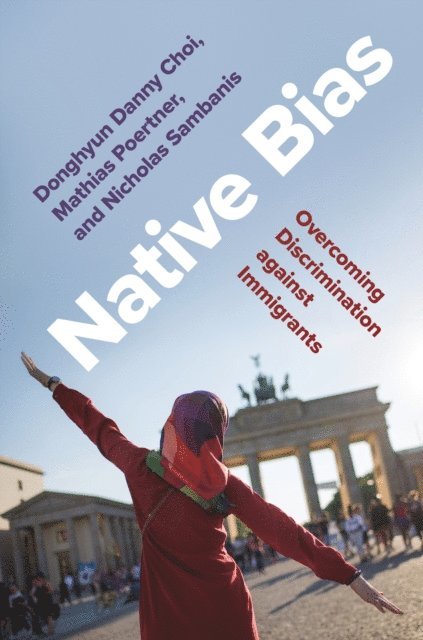
What drives anti-immigrant bias—and how it can be mitigatedIn the aftermath of the refugee crisis caused by conflicts in the Middle East and an increase in migration to Europe, European nations have witnessed a surge in discrimination targeted at immigrant minorities. To quell these conflicts, some governments have resorted to the adoption of coercive assimilation policies aimed at erasing differences between natives and immigrants. Are these policies the best method for reducing hostilities? Native Bias challenges the premise of such regulations by making the case for a civic integration model, based on shared social ideas defining the concept and practice of citizenship.Drawing from original surveys, survey experiments, and novel field experiments, Donghyun Danny Choi, Mathias Poertner, and Nicholas Sambanis show that although prejudice against immigrants is often driven by differences in traits such as appearance and religious practice, the suppression of such differences does not constitute the only path to integration. Instead, the authors demonstrate that similarities in ideas and value systems can serve as the foundation for a common identity, based on a shared concept of citizenship, overcoming the perceived social distance between natives and immigrants.Addressing one of the most pressing challenges of our time, Native Bias offers an original framework for understanding anti-immigrant discrimination and the processes through which it can be overcome.
990 kr
Skickas inom 7-10 vardagar
What drives anti-immigrant bias—and how it can be mitigatedIn the aftermath of the refugee crisis caused by conflicts in the Middle East and an increase in migration to Europe, European nations have witnessed a surge in discrimination targeted at immigrant minorities. To quell these conflicts, some governments have resorted to the adoption of coercive assimilation policies aimed at erasing differences between natives and immigrants. Are these policies the best method for reducing hostilities? Native Bias challenges the premise of such regulations by making the case for a civic integration model, based on shared social ideas defining the concept and practice of citizenship.Drawing from original surveys, survey experiments, and novel field experiments, Donghyun Danny Choi, Mathias Poertner, and Nicholas Sambanis show that although prejudice against immigrants is often driven by differences in traits such as appearance and religious practice, the suppression of such differences does not constitute the only path to integration. Instead, the authors demonstrate that similarities in ideas and value systems can serve as the foundation for a common identity, based on a shared concept of citizenship, overcoming the perceived social distance between natives and immigrants.Addressing one of the most pressing challenges of our time, Native Bias offers an original framework for understanding anti-immigrant discrimination and the processes through which it can be overcome.
349 kr
Skickas inom 7-10 vardagar
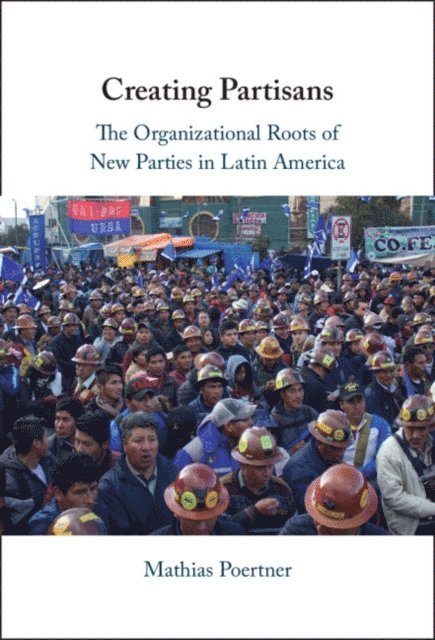
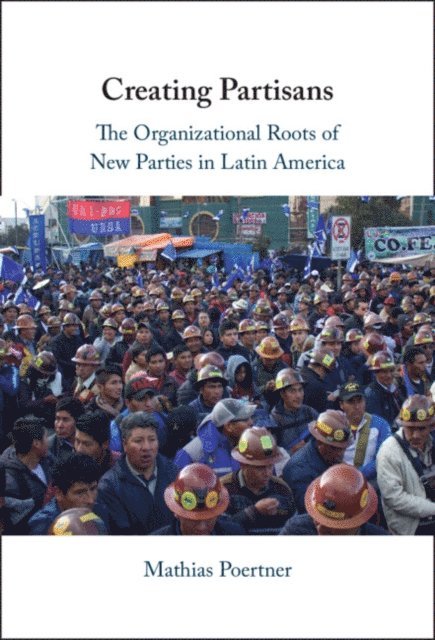
Why are some new political parties successful at creating mass partisanship and engendering stable electoral support, while most fail to take root in society and disappear quickly? Creating Partisans unveils the secrets behind successful political parties, taking a deep dive into the formation and success of new political parties in Latin America. Based on extensive fieldwork and using a multi-method approach, the book explores how different mobilization strategies sway voters to support new parties. While prior studies have focused on the various types of direct appeals parties make to voters, Creating Partisans reveals that it is organizationally mediated appeals – those that engage voters through locally-based civil society organizations – that can secure electoral support more effectively and can create lasting partisan attachments. From indigenous organizations to informal sector unions, new types of societal organizations play a critical mediating role in shaping electoral outcomes and fostering long-term partisan loyalties in young democracies.
1 060 kr
Skickas inom 7-10 vardagar
Why are some new political parties successful at creating mass partisanship and engendering stable electoral support, while most fail to take root in society and disappear quickly? Creating Partisans unveils the secrets behind successful political parties, taking a deep dive into the formation and success of new political parties in Latin America. Based on extensive fieldwork and using a multi-method approach, the book explores how different mobilization strategies sway voters to support new parties. While prior studies have focused on the various types of direct appeals parties make to voters, Creating Partisans reveals that it is organizationally mediated appeals – those that engage voters through locally-based civil society organizations – that can secure electoral support more effectively and can create lasting partisan attachments. From indigenous organizations to informal sector unions, new types of societal organizations play a critical mediating role in shaping electoral outcomes and fostering long-term partisan loyalties in young democracies.