Matthew Blackwell - Böcker
Visar alla böcker från författaren Matthew Blackwell. Handla med fri frakt och snabb leverans.
3 produkter
3 produkter
339 kr
Skickas inom 7-10 vardagar
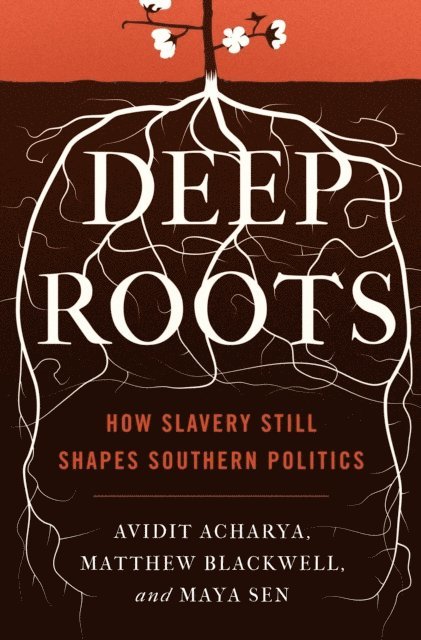
The lasting effects of slavery on contemporary political attitudes in the American SouthDespite dramatic social transformations in the United States during the last 150 years, the South has remained staunchly conservative. Southerners are more likely to support Republican candidates, gun rights, and the death penalty, and southern whites harbor higher levels of racial resentment than whites in other parts of the country. Why haven't these sentiments evolved or changed? Deep Roots shows that the entrenched political and racial views of contemporary white southerners are a direct consequence of the region's slaveholding history, which continues to shape economic, political, and social spheres. Today, southern whites who live in areas once reliant on slavery—compared to areas that were not—are more racially hostile and less amenable to policies that could promote black progress. Highlighting the connection between historical institutions and contemporary political attitudes, the authors explore the period following the Civil War when elite whites in former bastions of slavery had political and economic incentives to encourage the development of anti-black laws and practices. Deep Roots shows that these forces created a local political culture steeped in racial prejudice, and that these viewpoints have been passed down over generations, from parents to children and via communities, through a process called behavioral path dependence. While legislation such as the Civil Rights Act and the Voting Rights Act made huge strides in increasing economic opportunity and reducing educational disparities, southern slavery has had a profound, lasting, and self-reinforcing influence on regional and national politics that can still be felt today.A groundbreaking look at the ways institutions of the past continue to sway attitudes of the present, Deep Roots demonstrates how social beliefs persist long after the formal policies that created those beliefs have been eradicated.
228 kr
Skickas inom 7-10 vardagar
The lasting effects of slavery on contemporary political attitudes in the American SouthDespite dramatic social transformations in the United States during the last 150 years, the South has remained staunchly conservative. Southerners are more likely to support Republican candidates, gun rights, and the death penalty, and southern whites harbor higher levels of racial resentment than whites in other parts of the country. Why haven't these sentiments evolved? Deep Roots shows that the entrenched views of white southerners are a direct consequence of the region's slaveholding history. Today, southern whites who live in areas once reliant on slavery—compared to areas that were not—are more racially hostile and less amenable to policies that could promote black progress. A groundbreaking look at the ways institutions of the past continue to sway attitudes of the present, Deep Roots demonstrates how social beliefs persist long after the formal policies that created those beliefs have been eradicated.
202 kr
Skickas
Featuring interviews with John Oswald, Negativland, and others and drawing on a wealth of research on copyright and intellectual property, Plunderphonics explores the impact of a genre that made illegality a point of pride.In Plunderphonics, Matthew Blackwell tells the story of a group of musicians who advocated for changes to the copyright system by deploying unlicensed samples in their recordings. The composer John Oswald, who coined the genre term “plunderphonics,” was threatened with legal action by the Canadian Recording Industry Association on behalf of Michael Jackson. The Bay Area group Negativland was sued by Island Records on behalf of U2 for their parody of the band. These artists attracted media attention to their cause in a bid to expand fair use protections. Later, the Australian band the Avalanches encountered the limitations of the music licensing system during the release of their debut album, having to drop several samples that could not be successfully cleared. Finally, American DJ and producer Girl Talk released a series of albums featuring hundreds of uncleared samples and successfully avoided lawsuits by publicly arguing a fair use defense. This book narrates the conflicts between these artists and the recording industry. Blackwell places plunderphonics in the cultural contexts of postmodernism, Situationism, and culture jamming and analyzes responses to the genre from the media and the legal system. Along with histories of each artist, changes to American copyright law are tracked through important cases like Grand Upright v. Warner Bros. and Bridgeport v. Dimension Films. Though the legal terrain did not shift in the favor of plunderphonic musicians, they changed public perception of fair use and enabled more widespread sampling in underground music.