Matthew Frye Jacobson - Böcker
Visar alla böcker från författaren Matthew Frye Jacobson. Handla med fri frakt och snabb leverans.
11 produkter
11 produkter
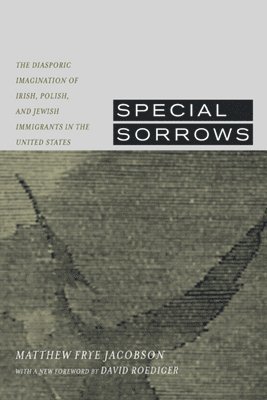
Special Sorrows
The Diasporic Imagination of Irish, Polish, and Jewish Immigrants in the United States
Häftad, Engelska, 2002
609 kr
Skickas inom 3-6 vardagar
'A scholarly study of the real roots of what Jacobson calls 'America's largely assimilated but ultimately 'unmeltable' ethics'. It's a startling point of view for readers who are accustomed to the self-congratulatory myth of America as a beacon of liberty to which the 'huddled masses' of the world look with longing' - Jonathan Kirsch, "Los Angeles Times".
250 kr
Skickas inom 7-10 vardagar
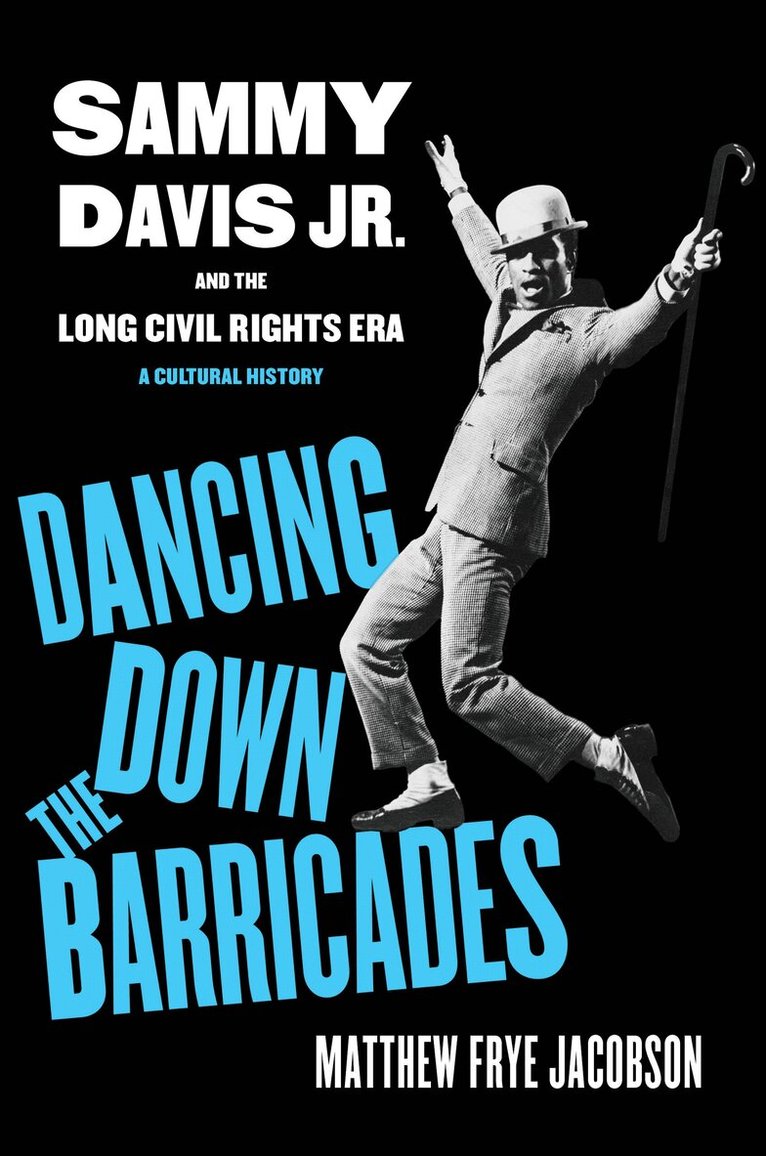
A deep dive into racial politics, Hollywood, and Black cultural struggles for liberation as reflected in the extraordinary life and times of Sammy Davis Jr. Through the lens of Sammy Davis Jr.'s six-decade career in show business—from vaudeville to Vegas to Broadway, Hollywood, and network TV—Dancing Down the Barricades examines the workings of race in American culture. The title phrase holds two contradictory meanings regarding Davis's cultural politics: Did he dance the barricades down, as he liked to think, or did he simply dance down them, as his more radical critics would have it? Davis was at once a pioneering, barrier-busting, anti–Jim Crow activist and someone who was widely associated with accommodationism and wannabe whiteness. Historian Matthew Frye Jacobson attends to both threads, analyzing how industry norms, productions, scripts, roles, and audience expectations and responses were all framed by race against the backdrop of a changing America. In the spirit of better understanding Davis's life and career, Dancing Down the Barricades examines the complexities of his constraints, freedoms, and choices for what they reveal about Black history and American political culture.
250 kr
Skickas inom 7-10 vardagar
A deep dive into racial politics, Hollywood, and Black cultural struggles for liberation as reflected in the extraordinary life and times of Sammy Davis Jr. Through the lens of Sammy Davis Jr.'s six-decade career in show business—from vaudeville to Vegas to Broadway, Hollywood, and network TV—Dancing Down the Barricades examines the workings of race in American culture. The title phrase holds two contradictory meanings regarding Davis's cultural politics: Did he dance the barricades down, as he liked to think, or did he simply dance down them, as his more radical critics would have it? Davis was at once a pioneering, barrier-busting, anti–Jim Crow activist and someone who was widely associated with accommodationism and wannabe whiteness. Historian Matthew Frye Jacobson attends to both threads, analyzing how industry norms, productions, scripts, roles, and audience expectations and responses were all framed by race against the backdrop of a changing America. In the spirit of better understanding Davis's life and career, Dancing Down the Barricades examines the complexities of his constraints, freedoms, and choices for what they reveal about Black history and American political culture.
306 kr
Skickas inom 10-15 vardagar
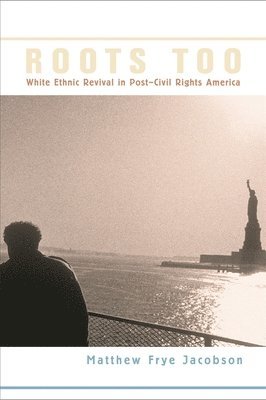
In the 1950s, America was seen as a vast melting pot in which white ethnic affiliations were on the wane and a common American identity was the norm. Yet by the 1970s, these white ethnics mobilized around a new version of the epic tale of plucky immigrants making their way in the New World through the sweat of their brow. Although this turn to ethnicity was for many an individual search for familial and psychological identity, Roots Too establishes a broader white social and political consensus arising in response to the political language of the Civil Rights and Black Power movements.In the wake of the Civil Rights movement, whites sought renewed status in the romance of Old World travails and New World fortunes. Ellis Island replaced Plymouth Rock as the touchstone of American nationalism. The entire culture embraced the myth of the indomitable white ethnics—who they were and where they had come from—in literature, film, theater, art, music, and scholarship. The language and symbols of hardworking, self-reliant, and ultimately triumphant European immigrants have exerted tremendous force on political movements and public policy debates from affirmative action to contemporary immigration.In order to understand how white primacy in American life survived the withering heat of the Civil Rights movement and multiculturalism, Matthew Frye Jacobson argues for a full exploration of the meaning of the white ethnic revival and the uneasy relationship between inclusion and exclusion that it has engendered in our conceptions of national belonging.
Special Sorrows
The Diasporic Imagination of Irish, Polish, and Jewish Immigrants in the United States
Inbunden, Engelska, 1995
931 kr
Skickas inom 10-15 vardagar
Conventional wisdom would have us believe that every immigrant to the United States “became American,” by choice and with deliberate speed. Yet, as Special Sorrows shows us, this is simply untrue. In this compelling revisionist study, Matthew Frye Jacobson reveals tenacious attachments to the Old World and explores the significance of homeland politics for Irish, Polish, and Jewish immigrants at the turn of the twentieth century.Drawing on Yiddish, Polish, and English-language sources, Jacobson discovers the influence of nationalist ideologies in the overt political agendas of such ethnic associations as the Knights of Zion and the Polish Falcons, as well as in newspapers, vernacular theater, popular religion, poetry, fiction, and festivals, both religious and secular. In immigrant communities, he finds that nationalism was a powerful component of popular sensibility.A captivating example of Jacobson’s thesis is immigrant reaction to American intervention in Cuba. Masculinist/militarist strains of nationalist culture met with the keen impulse to aid a subjugated people. The three national groups, rich with memories of their own subjugation, found an unlikely outlet in the Caribbean. But when the U.S. war for Cuban liberation was followed by a crusade for Philippine subjugation, immigrants faced a dilemma: some condemned the American empire rich in Old World parallels; others dismissed the Filipinos as racial “others” and embraced the glories of conquest. In effect, the crucible of American imperialism was vital to many immigrants’ Americanization, in the sense of passionate participation in national politics, pro or con.This work answers the call of scholars to recover the full experience of these immigrants. It adds to the tapestry of America’s turn-of-the-century political culture and restores an essential transnational dimension to questions of ethnic identity and behavior.
317 kr
Skickas inom 10-15 vardagar
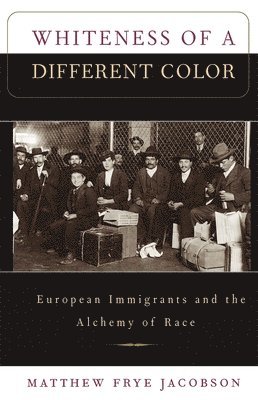
America’s racial odyssey is the subject of this remarkable work of historical imagination. Matthew Frye Jacobson argues that race resides not in nature but in the contingencies of politics and culture. In ever-changing racial categories we glimpse the competing theories of history and collective destiny by which power has been organized and contested in the United States. Capturing the excitement of the new field of “whiteness studies” and linking it to traditional historical inquiry, Jacobson shows that in this nation of immigrants “race” has been at the core of civic assimilation: ethnic minorities in becoming American were re-racialized to become Caucasian. He provides a counter-history of how nationality groups such as the Irish or Greeks became Americans as racial groups like Celts or Mediterraneans became Caucasian.Jacobson tracks race as a conception and perception, emphasizing the importance of knowing not only how we label one another but also how we see one another, and how that racialized vision has largely been transformed in this century. The stages of racial formation—race as formed in conquest, enslavement, imperialism, segregation, and labor migration—are all part of the complex, and now counterintuitive, history of race. Whiteness of a Different Color traces the fluidity of racial categories from an immense body of research in literature, popular culture, politics, society, ethnology, anthropology, cartoons, and legal history, including sensational trials like the Leo Frank case and the Draft Riots of 1863.
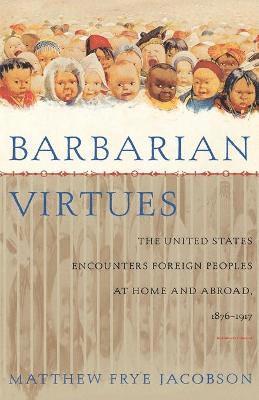
Barbarian Virtues: The United States Encounters Foreign Peoples at Home and Abroad, 1876-1917
Häftad, Engelska, 2001
292 kr
Skickas inom 3-6 vardagar
213 kr
Skickas inom 10-15 vardagar
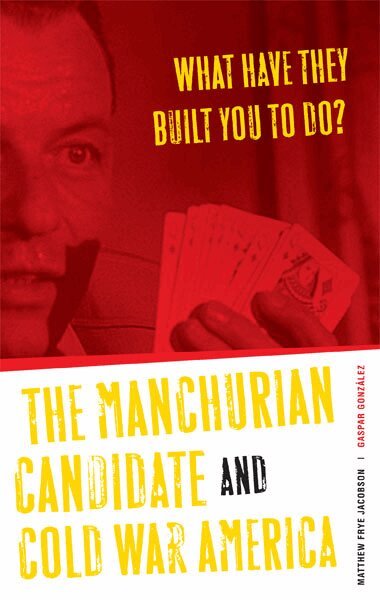
Considered by many to be the best political thriller ever made, The Manchurian Candidate is as entertaining, troubling, and relevant today as it was in 1962. Starring Frank Sinatra, Laurence Harvey, and Angela Lansbury, and directed with probing insight by John Frankenheimer, the film was widely acclaimed as a masterpiece. Largely out of circulation for the next two decades, it acquired a well-deserved cult following until it was rereleased during the last year of the Reagan presidency, when its pointed satire of political and media manipulation seemed more timely than ever. In What Have They Built You to Do?—a key line of dialogue from the original film—Matthew Frye Jacobson and Gaspar González undertake an ambitious reexamination of The Manchurian Candidate, the 1959 novel by Richard Condon on which it was based, and—critically analyzed here for the first time—the 2004 remake directed by Jonathan Demme. Based on close readings of the film and broad investigations into the eras in which it was made and rediscovered, the authors decode the many layers of meaning within and surrounding the film, from the contradictions of the Cold War it both embodies and parodies—McCarthyism and Kennedy liberalism, individualism and conformity—to its construction of Asian villains, overbearing women, and male heroes in a society anxious about race, gender, and sexuality. Through their multifaceted analysis of The Manchurian Candidate (in all its incarnations), Jacobson and González raise provocative questions about power and anxiety in American politics and society from the Cold War to today.Matthew Frye Jacobson teaches American studies at Yale University. His books include Roots Too: White Ethnic Revival in Post–Civil Rights America. Gaspar González is an independent scholar and journalist in Miami. He has taught American studies at Yale University and film studies at the University of Miami.
413 kr
Skickas inom 7-10 vardagar
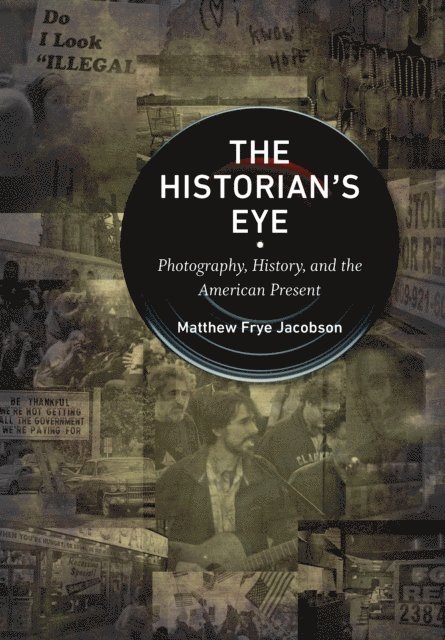
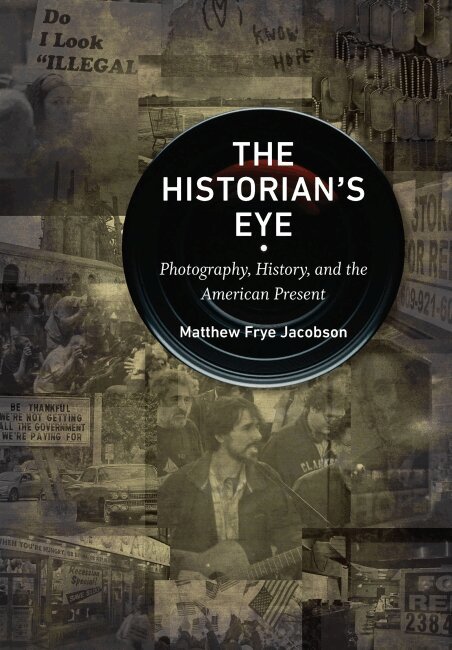
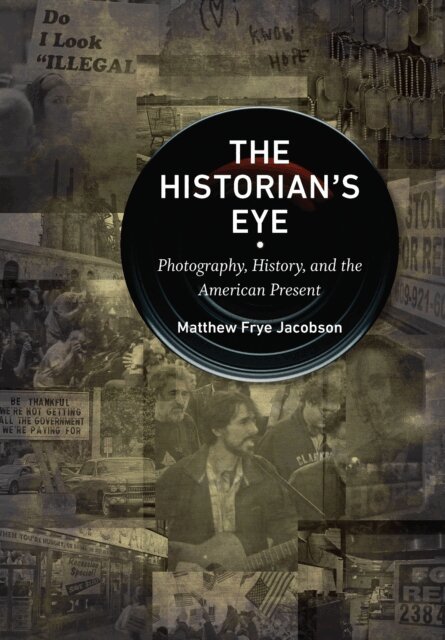
Between 2009 and 2013, as the nation contemplated the historic election of Barack Obama and endured the effects of the Great Recession, Matthew Frye Jacobson set out with a camera to explore and document what was discernible to the ""historian's eye"" during this tumultuous period. Having collected several thousand images, Jacobson began to reflect on their raw, informal immediacy alongside the recognition that they comprised an archive of a moment with unquestionable historical significance. This book presents 100 images alongside Jacobson's recollections of their moments of creation and his understanding of how they link past, present, and future. The images reveal diverse expressions of civic engagement that are emblematic of the aspirations, expectations, promises, and failures of this period in American history. Myriad closed businesses and abandoned storefronts stand as public monuments to widespread distress; omnipresent, expectant Obama iconography articulates a wish for new national narratives; flamboyant street theater and wry signage bespeak a common impulse to talk back to power. Framed by an introductory essay, these images reflect the sober grace of a time that seems perilous, but in which ""hope"" has not ceased to hold meaning.
350 kr
Skickas inom 10-15 vardagar
Between 2009 and 2014, as the nation contemplated the historic election of Barack Obama and endured the effects of the Great Recession, Matthew Frye Jacobson set out with a camera to explore and document what was discernible to the "historian's eye" during this tumultuous period. Having collected several thousand images, Jacobson began to reflect on their raw, informal immediacy alongside the recognition that they comprised an archive of a moment with unquestionable historical significance. This book presents more than 100 images alongside Jacobson's recollections of their moments of creation and his understanding of how they link past, present, and future. Jacobson's documentary work between 2009 and 2014 tracked in real time the emergence of what we now know as Trumpism.The images reveal diverse expressions of civic engagement that are emblematic of the aspirations, expectations, promises, and failures of this period in American history. Myriad closed businesses and abandoned storefronts stand as public monuments to widespread distress; omnipresent, expectant Obama iconography articulates a wish for new national narratives; flamboyant street theater and wry signage bespeak a common impulse to talk back to power. Framed by an introductory essay, these images reflect the sober grace of a time that seems perilous, but in which "hope" has not ceased to hold meaning.
137 kr
Skickas
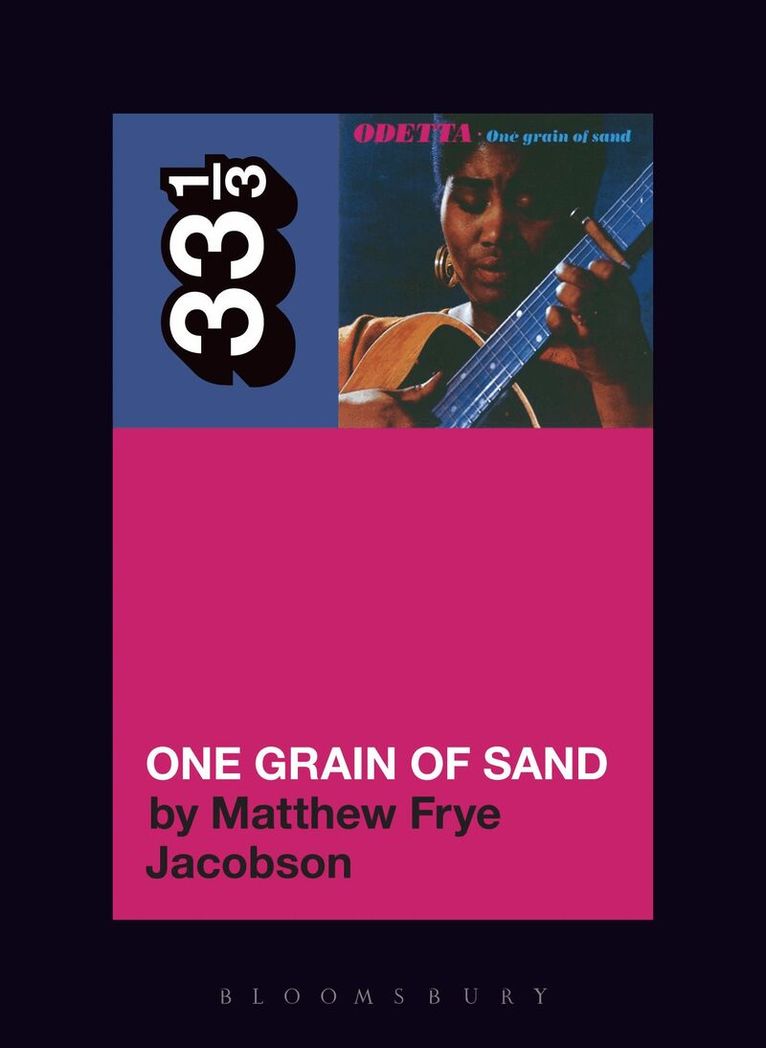
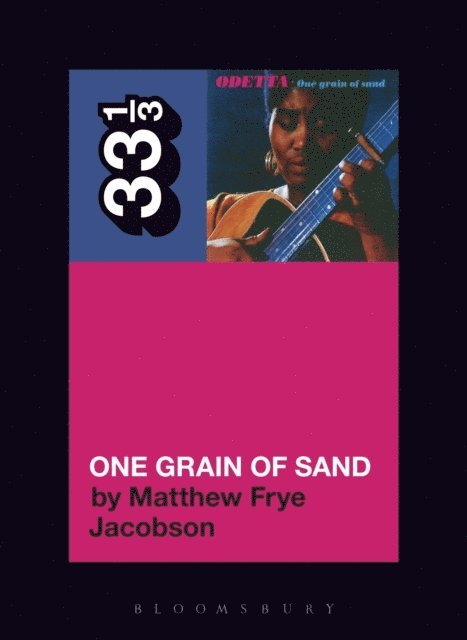
When 20-year-old Odetta Holmes—classically trained as a vocalist and poised to become “the next Marian Anderson”—veered away from both opera and musical theater in favor of performing politically charged field hollers, prison songs, work songs, and folk tunes before mixed-race audiences in 1950s coffee houses, she was making one of the most portentous decisions in the history of both American music and Civil Rights.Released the same year as her famous rendition of “I’m on My Way” at the March on Washington, One Grain of Sand captures the social justice project that was Odetta’s voice. “There was no way I could say the things I was thinking, but I could sing them,” she later remarked. In pieces like “Moses, Moses,” “Ain’t No Grave,” and “Ramblin’ Round Your City,” One Grain of Sand embodies Odetta’s approach to the folk repertoire as both an archive of black history and a vehicle for radical expression. For many among her audience, a song like “Cotton Fields” represented a first introduction to black history at a time when there was as yet no academic discipline going by this name, and when history books themselves still peddled convenient fictions of a fundamentally “happy” plantation past. And for many among her audience, black and white, this young woman’s pride in black artistry and resolve, and her open rage and her challenge to whites to recognize who they were and who they had been, too, modeled the very honesty and courage that the movement now called for.