Matthew Hayward - Böcker
Visar alla böcker från författaren Matthew Hayward. Handla med fri frakt och snabb leverans.
6 produkter
6 produkter
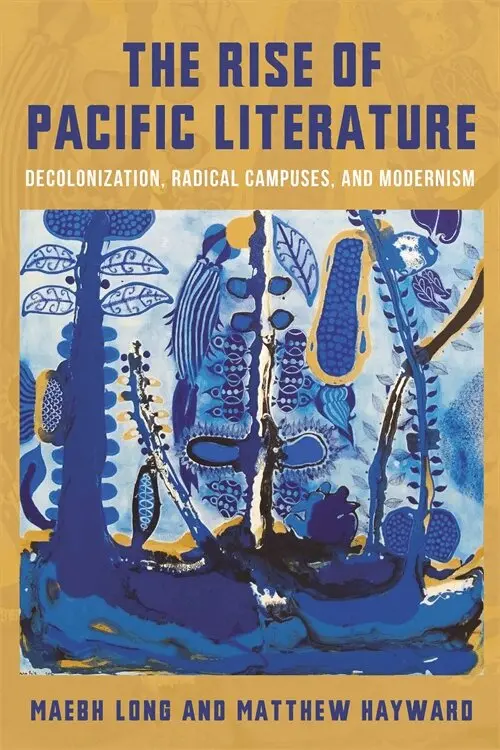
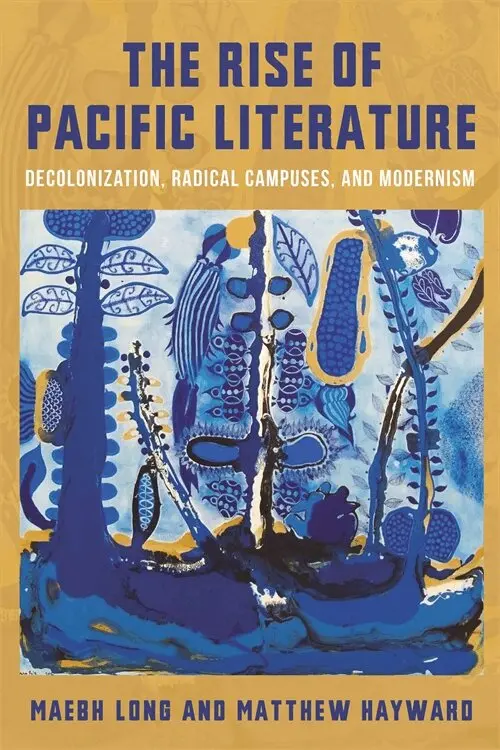
The Rise of Pacific Literature
Decolonization, Radical Campuses, and Modernism
Inbunden, Engelska, 2024
1 273 kr
Skickas inom 7-10 vardagar
Winner, 2025 Modernist Studies Association Book PrizeWinner, 2025 Choice Outstanding Academic TitleShortlisted, 2025 Literary Encyclopedia Book PrizeIn the 1960s and 1970s, the staff and students of two newly founded universities in the Pacific Islands helped foster a golden age of Oceanian literature. At the University of Papua New Guinea and the University of the South Pacific, bold experiments in curriculum design recentered literary studies around a Pacific modernity. Rejecting the established British colonial model, writer-scholars placed Pacific oratory and a growing body of Oceanian writing at the heart of the syllabus. From this local core, students ventured outward to contemporary postcolonial literatures, where they saw modernist techniques repurposed for a decolonizing world. Only then did they turn to foundational modernist texts, encountered at last as a set of creative tools rather than a canon to be copied or learned by rote.The Rise of Pacific Literature reveals the transformative role and radical adaptations of global modernisms in this golden age. Maebh Long and Matthew Hayward examine the reading and teaching of Pacific oral narratives, European and American modernisms, and African, Caribbean, and Indian literature, tracing how Oceanian writers appropriated and reworked key texts and techniques. They identify the local innovations and international networks that spurred Pacific literature’s golden age by reading crucial works against the poetry, prose, and plays on the syllabi of the new universities. Placing internationally recognized writers such as Albert Wendt, Subramani, Konai Helu Thaman, Marjorie Crocombe, and John Kasaipwalova alongside lesser-known authors of works published in Oceanian little magazines, this book offers a wide-ranging new account of Pacific literary history that tells a fresh story about modernism’s global itineraries and transformations.
324 kr
Skickas inom 7-10 vardagar
Winner, 2025 Modernist Studies Association Book PrizeWinner, 2025 Choice Outstanding Academic TitleShortlisted, 2025 Literary Encyclopedia Book PrizeIn the 1960s and 1970s, the staff and students of two newly founded universities in the Pacific Islands helped foster a golden age of Oceanian literature. At the University of Papua New Guinea and the University of the South Pacific, bold experiments in curriculum design recentered literary studies around a Pacific modernity. Rejecting the established British colonial model, writer-scholars placed Pacific oratory and a growing body of Oceanian writing at the heart of the syllabus. From this local core, students ventured outward to contemporary postcolonial literatures, where they saw modernist techniques repurposed for a decolonizing world. Only then did they turn to foundational modernist texts, encountered at last as a set of creative tools rather than a canon to be copied or learned by rote.The Rise of Pacific Literature reveals the transformative role and radical adaptations of global modernisms in this golden age. Maebh Long and Matthew Hayward examine the reading and teaching of Pacific oral narratives, European and American modernisms, and African, Caribbean, and Indian literature, tracing how Oceanian writers appropriated and reworked key texts and techniques. They identify the local innovations and international networks that spurred Pacific literature’s golden age by reading crucial works against the poetry, prose, and plays on the syllabi of the new universities. Placing internationally recognized writers such as Albert Wendt, Subramani, Konai Helu Thaman, Marjorie Crocombe, and John Kasaipwalova alongside lesser-known authors of works published in Oceanian little magazines, this book offers a wide-ranging new account of Pacific literary history that tells a fresh story about modernism’s global itineraries and transformations.
2 418 kr
Skickas inom 10-15 vardagar
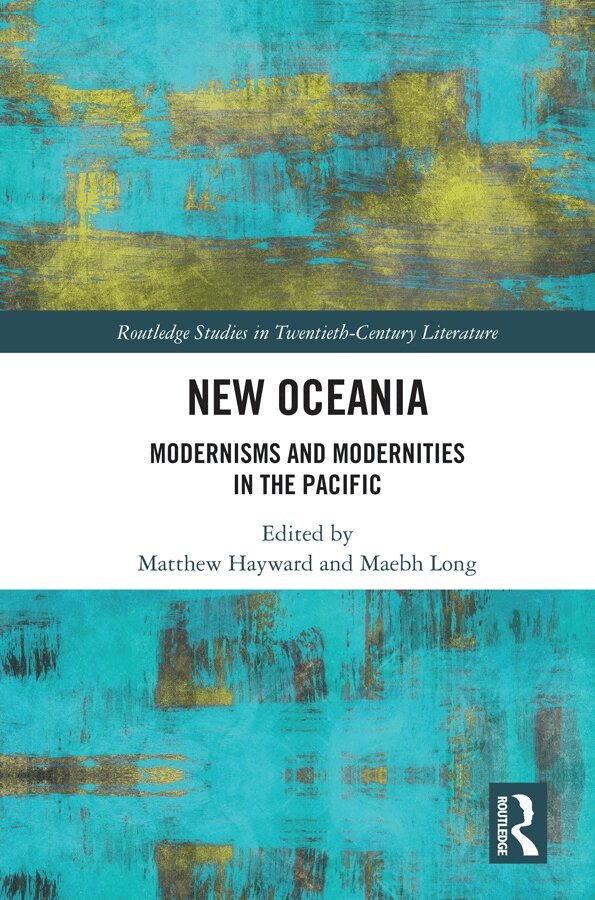
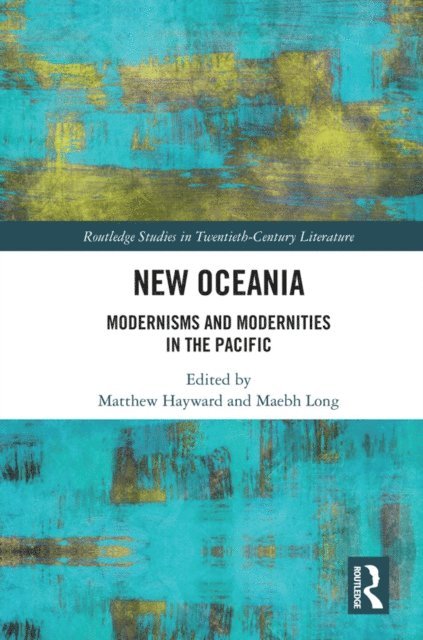
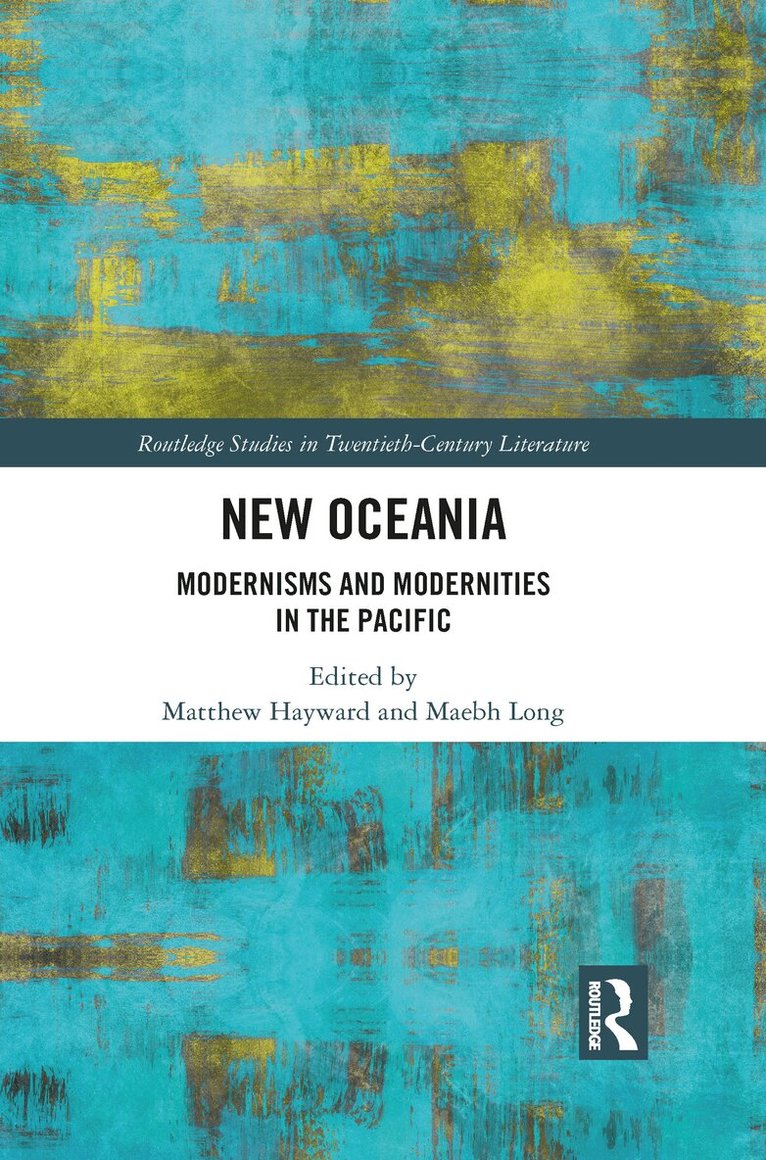
For so long figured in European discourses as the antithesis of modernity, the Pacific Islands have remained all but absent from the modernist studies’ critical map. Yet, as the chapters of New Oceania: Modernisms and Modernities in the Pacific collectively show, Pacific artists and writers have been as creatively engaged in the construction and representation of modernity as any of their global counterparts. In the second half of the twentieth century, driving a still ongoing process of decolonisation, Pacific Islanders forged an extraordinary cultural and artistic movement. Integrating Indigenous aesthetics, forms, and techniques with a range of other influences — realist novels, avant-garde poetry, anti-colonial discourse, biblical verse, Indian mythology, American television, Bollywood film — Pacific artists developed new creative registers to express the complexity of the region’s transnational modernities. New Oceania presents the first sustained account of the modernist dimensions of this period, while presenting timely reflections on the ideological and methodological limitations of the global modernism rubric. Breaking new critical ground, it brings together scholars from a range of backgrounds to demonstrate the relevance of modernism for Pacific scholars, and the relevance of Pacific literature for modernist scholars.
725 kr
Skickas inom 10-15 vardagar
For so long figured in European discourses as the antithesis of modernity, the Pacific Islands have remained all but absent from the modernist studies’ critical map. Yet, as the chapters of New Oceania: Modernisms and Modernities in the Pacific collectively show, Pacific artists and writers have been as creatively engaged in the construction and representation of modernity as any of their global counterparts. In the second half of the twentieth century, driving a still ongoing process of decolonisation, Pacific Islanders forged an extraordinary cultural and artistic movement. Integrating Indigenous aesthetics, forms, and techniques with a range of other influences — realist novels, avant-garde poetry, anti-colonial discourse, biblical verse, Indian mythology, American television, Bollywood film — Pacific artists developed new creative registers to express the complexity of the region’s transnational modernities. New Oceania presents the first sustained account of the modernist dimensions of this period, while presenting timely reflections on the ideological and methodological limitations of the global modernism rubric. Breaking new critical ground, it brings together scholars from a range of backgrounds to demonstrate the relevance of modernism for Pacific scholars, and the relevance of Pacific literature for modernist scholars.
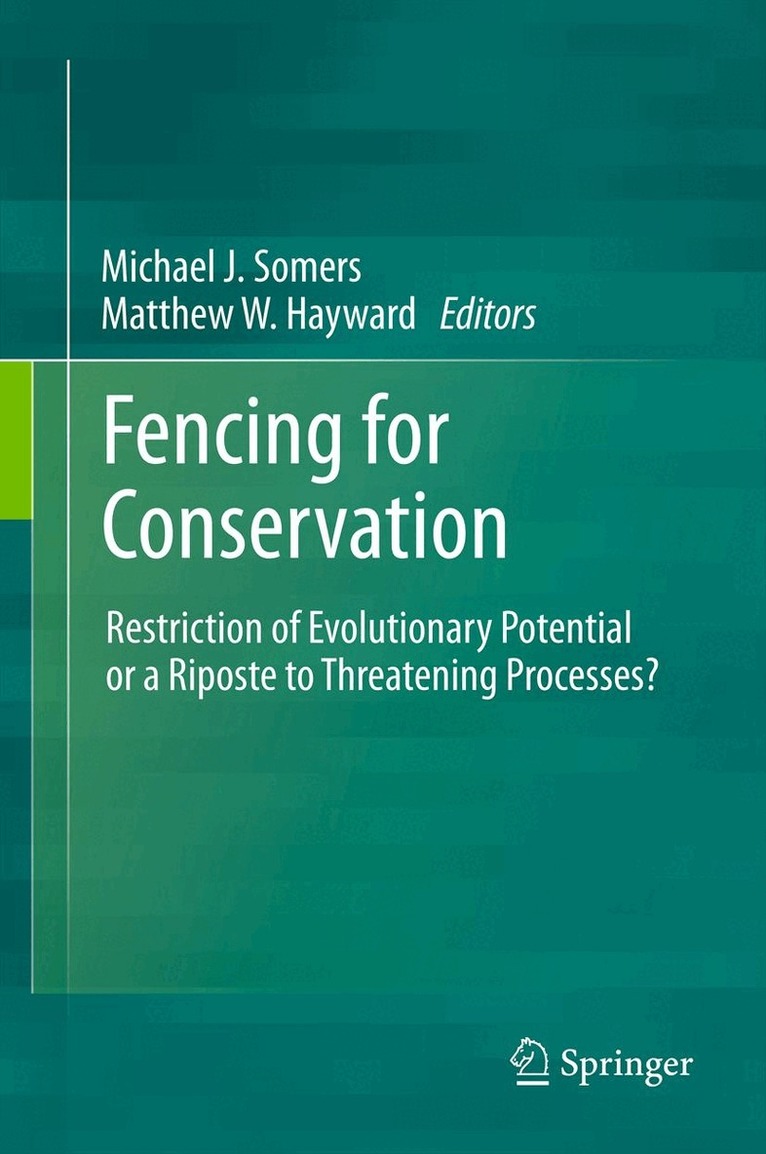
Fencing for Conservation
Restriction of Evolutionary Potential or a Riposte to Threatening Processes?
Inbunden, Engelska, 2011
1 577 kr
Skickas inom 10-15 vardagar
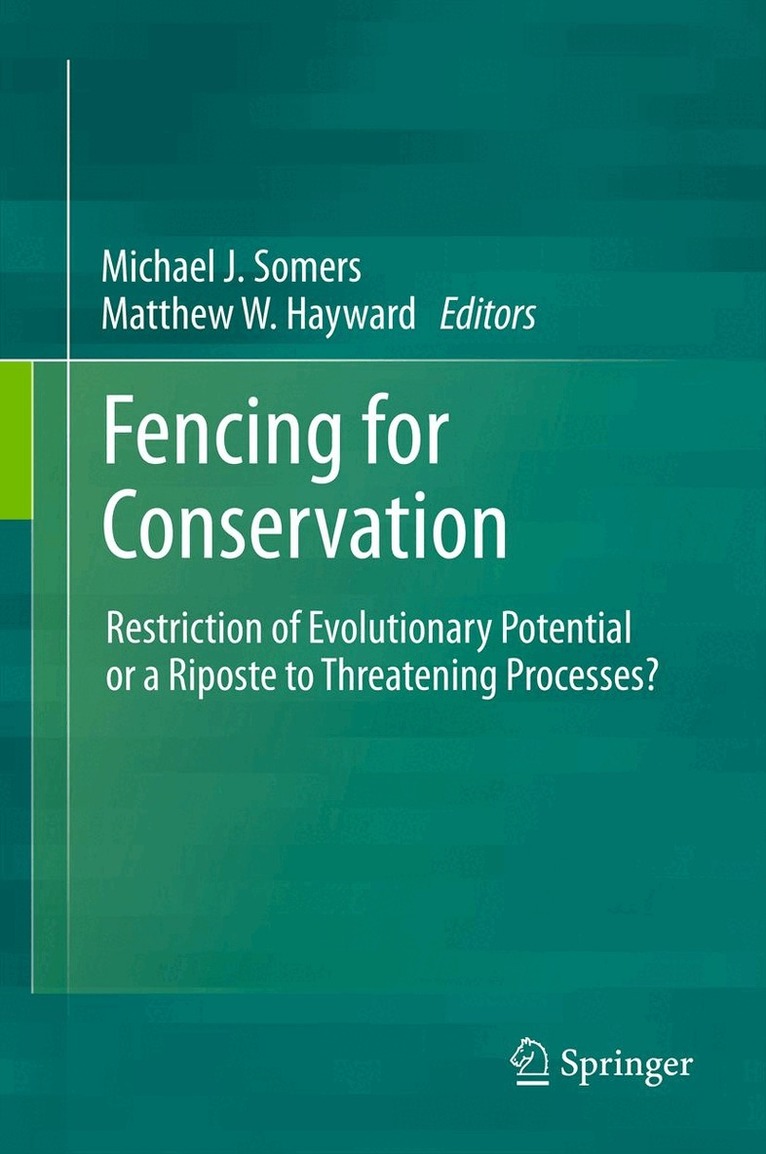
The conflict between increasing human population and biodiversity conservation is one of the IUCN’s key threatening processes. Conservation planning has received a great deal of coverage and research as a way of conserving biodiversity yet, while theoretically successful, it has never been tested. Simple lines on maps to illustrate conservation areas are unlikely to be successful in the light of human encroachment. It may be that some form of overt display is necessary to ensure the protection of reserves. This may be signage, presence of guards/rangers or physical fencing structures.The need for some form of barrier goes beyond restricting human access. The megafauna of Africa pose a genuine threat to human survival. In southern Africa, fences keep animals in and protect the abutting human population. Elsewhere, fencing is not considered important or viable. Where poverty is rife, it won’t take much to tip the balance from beneficial conservation areas to troublesome repositories of crop-raiders, diseases and killers. Conversely, in New Zealand fences are used to keep animals out. Introduced species have decimated New Zealand’s endemic birds, reptiles and invertebrates, and several sites have been entirely encapsulated in mouse-proof fencing to ensure their protection. Australia faces the same problems as New Zealand, however surrounds its national parks with cattle fences. Foxes and cats are free to enter and leave at will, resulting in rapid recolonisation following poisoning campaigns. How long will these poison campaigns work before tolerance, aversion or resistance evolves in the introduced predator populations?
Fencing for Conservation
Restriction of Evolutionary Potential or a Riposte to Threatening Processes?
Häftad, Engelska, 2014
1 577 kr
Skickas inom 10-15 vardagar
The conflict between increasing human population and biodiversity conservation is one of the IUCN’s key threatening processes. Conservation planning has received a great deal of coverage and research as a way of conserving biodiversity yet, while theoretically successful, it has never been tested. Simple lines on maps to illustrate conservation areas are unlikely to be successful in the light of human encroachment. It may be that some form of overt display is necessary to ensure the protection of reserves. This may be signage, presence of guards/rangers or physical fencing structures.The need for some form of barrier goes beyond restricting human access. The megafauna of Africa pose a genuine threat to human survival. In southern Africa, fences keep animals in and protect the abutting human population. Elsewhere, fencing is not considered important or viable. Where poverty is rife, it won’t take much to tip the balance from beneficial conservation areas to troublesome repositories of crop-raiders, diseases and killers. Conversely, in New Zealand fences are used to keep animals out. Introduced species have decimated New Zealand’s endemic birds, reptiles and invertebrates, and several sites have been entirely encapsulated in mouse-proof fencing to ensure their protection. Australia faces the same problems as New Zealand, however surrounds its national parks with cattle fences. Foxes and cats are free to enter and leave at will, resulting in rapid recolonisation following poisoning campaigns. How long will these poison campaigns work before tolerance, aversion or resistance evolves in the introduced predator populations?