
Matthew Mills Stevenson – författare
Visar alla böcker från författaren Matthew Mills Stevenson. Handla med fri frakt och snabb leverans.
3 produkter
3 produkter
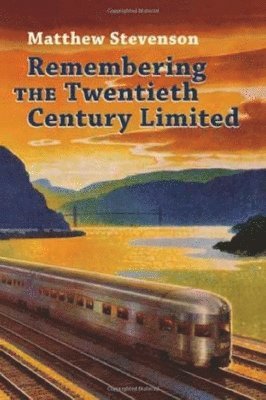
Häftad, Engelska, 2010
309 kr
Skickas inom 3-6 vardagar
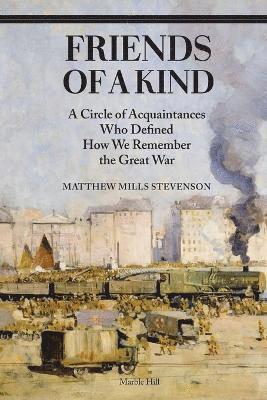
Häftad, Engelska, 2026
267 kr
Skickas inom 5-8 vardagar
This book is a journey of discovery as Matthew Mills Stevenson, affectionately known as the Cycling Historian, investigates the people, the places and the poetry that define how we remember the First World War.Stevenson's reading, begun by the fireplace in the darkness of a Swiss winter, hinted at the extraordinary network of friendship that connected so many of the writers of that time. Siegfried Sassoon and Robert Graves served in the same regiment. Wilfred Owen spent time with Sassoon recuperating in Craiglockhart, a Scottish hospital. Winston Churchill shared friendships with T. E. Lawrence, Sassoon, Thomas Hardy and Erskine Childers. John Buchan, author of Greenmantle, admired Lawrence. And a constant presence in their lives is Churchill's private secretary, Edward Marsh. When spring came Stevenson decided that these men would only come alive for him if he visited the places where they had lived or fought in the war. So, with his faithful folding Brompton bicycle, he set off to unlock a literary puzzle.
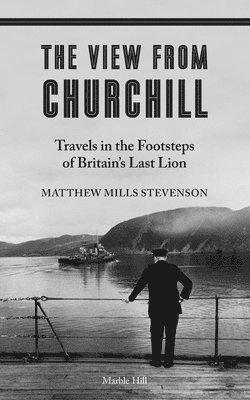
Häftad, Engelska, 2024
161 kr
Skickas
Mills Stevenson visits Pretoria in South Africa where in 1899 the young journalist Churchill was imprisoned and then escaped from Boer captivity. He walks the battlefields of Gallipoli in Turkey and looks out on the Dardanelles to ponder why Churchill’s bold military strategy failed. He rides his bicycle along the Western Front of World War I to visit Ploegsteert in Belgium, where Churchill commanded a battalion of the Scots Fusiliers. He visits Chartwell where Churchill spent the years out of office in the 1930s, warning the world of the dangers to come from Hitler and Fascism. He travels to Yalta (yes, on his bicycle) to write about Churchill’s 1945 meetings with Joseph Stalin and Franklin Roosevelt, to evaluate his leadership during the Second World War.