Matthew S. Holland - Böcker
Visar alla böcker från författaren Matthew S. Holland. Handla med fri frakt och snabb leverans.
3 produkter
3 produkter
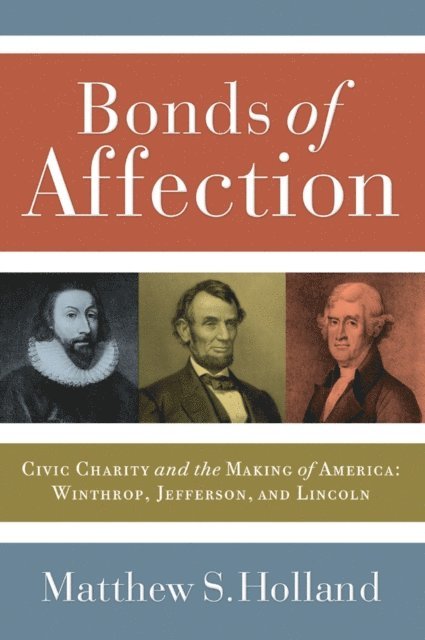
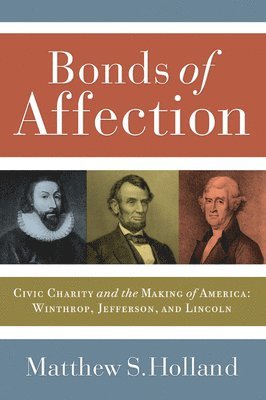
Bonds of Affection
Civic Charity and the Making of America--Winthrop, Jefferson, and Lincoln
Häftad, Engelska, 2007
369 kr
Tillfälligt slut
Notions of Christian love, or charity, strongly shaped the political thought of John Winthrop, Thomas Jefferson, and Abraham Lincoln as each presided over a foundational moment in the development of American democracy. Matthew Holland examines how each figure interpreted and appropriated charity, revealing both the problems and possibilities of making it a political ideal. Holland first looks at early American literature and seminal speeches by Winthrop to show how the Puritan theology of this famed 17th century governor of the Massachusetts Colony (he who first envisioned America as a "City upon a Hill") galvanized an impressive sense of self-rule and a community of care in the early republic, even as its harsher aspects made something like Jefferson's "Enlightenment" faith in liberal democracy a welcome development. Holland then shows that between Jefferson's early rough draft of the Declaration of Independence and his First Inaugural Jefferson came to see some notion of charity as a necessary complement to modern political liberty.However, Holland argues, it was Lincoln and his ingenious blend of Puritan and democratic insights who best fulfilled the promise of this nation's "bonds of affection." With his recognition of the imperfections of both North and South, his humility in the face of God's judgment on the Civil War, and his insistence on "charity for all," including the defeated Confederacy, Lincoln personified the possibilities of religious love turned civic virtue. Weaving a rich tapestry of insights from political science and literature and American religious history and political theory, "Bonds of Affection" is a major contribution to the study of American political identity. Matthew Holland makes plain that civic charity, while commonly rejected as irrelevant or even harmful to political engagement, has been integral to our national character. This book includes the full texts of Winthrop's speech "A Model of Christian Charity"; Jefferson's rough draft of the Declaration and his First Inaugural; and, Lincoln's Second Inaugural.
1 177 kr
Skickas inom 10-15 vardagar
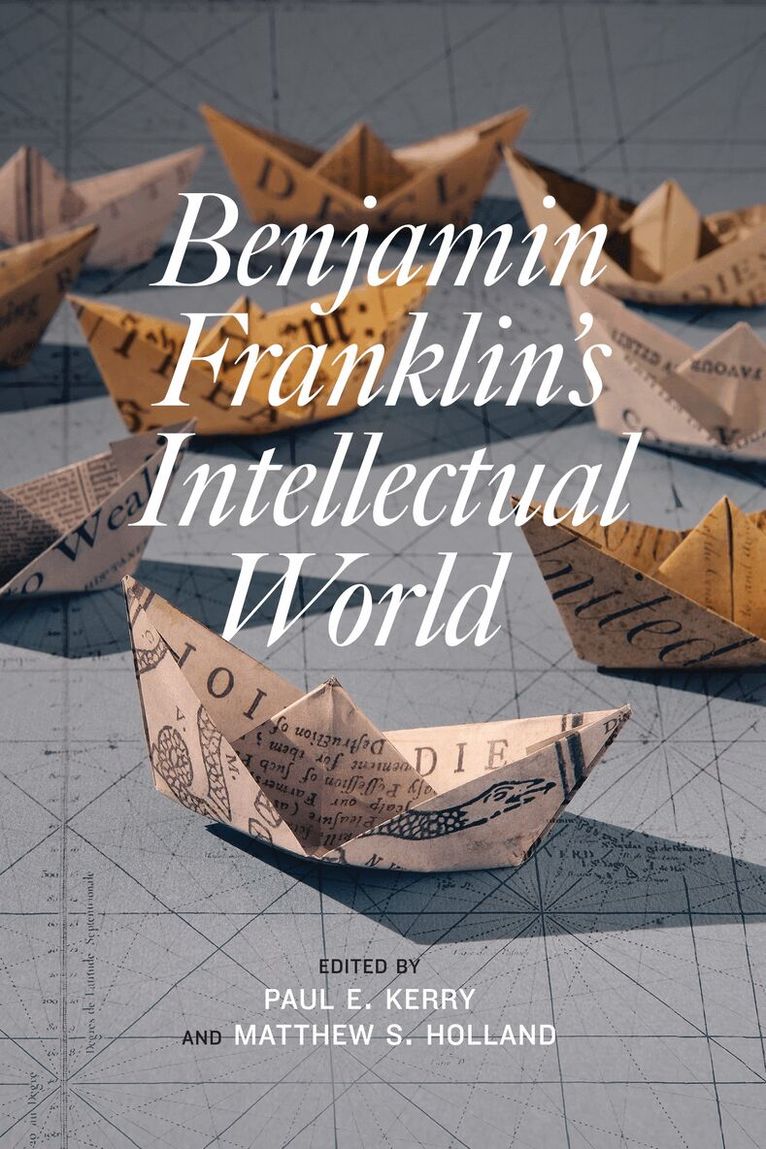
This volume attempts to throw fresh light on two areas of Benjamin Franklin’s intellectual world, namely: his self-fashioning and his political thought. It is an odd thing that for all of Franklin’s voluminous writings—a fantastically well-documented correspondence over many years, scientific treatises that made his name amongst the brightest minds of Europe, newspaper articles, satires, and of course his signature on the Declaration of Independence and the U.S. Constitution—and yet scholars debate how to get at his political thought, indeed, if he had any political philosophy at all. It could be argued, that he is perhaps the American Founder most closely associated with the Enlightenment. Similarly, for a man who left so much evidence about his life—as a printer, bookseller, postmaster, inventor, diplomat, politician, scientist, among other professions—one who wrote an autobiography that has become a piece of American national literature and, indeed, a contribution to world culture; the question of who Ben Franklin continues to engage scholars and those who read about his life. His identity seems so stable that we associate it with certain virtues that apply to the way we live our lives, time management, for example. The image of the stable figure of Franklin is applied to create a sense of trust in everything from financial institutions to plumbers. His constant drive to improve and fashion himself reveal, however, a man whose identity was not static and fixed, but was focused on growth, on bettering his understanding of himself and the world he lived in and attempted to influence and improve.
695 kr
Skickas inom 10-15 vardagar
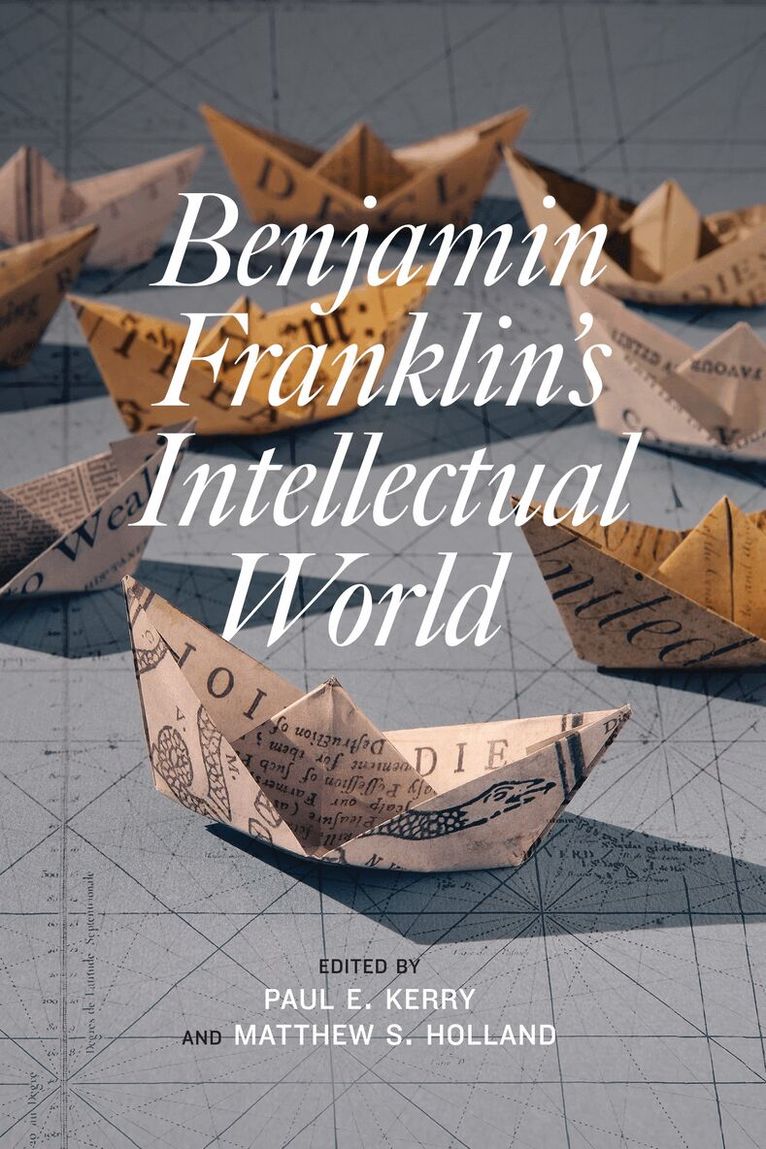
This volume attempts to throw fresh light on two areas of Benjamin Franklin’s intellectual world, namely: his self-fashioning and his political thought. It is an odd thing that for all of Franklin’s voluminous writings—a fantastically well-documented correspondence over many years, scientific treatises that made his name amongst the brightest minds of Europe, newspaper articles, satires, and of course his signature on the Declaration of Independence and the U.S. Constitution—and yet scholars debate how to get at his political thought, indeed, if he had any political philosophy at all. It could be argued, that he is perhaps the American Founder most closely associated with the Enlightenment. Similarly, for a man who left so much evidence about his life—as a printer, bookseller, postmaster, inventor, diplomat, politician, scientist, among other professions—one who wrote an autobiography that has become a piece of American national literature and, indeed, a contribution to world culture; the question of who Ben Franklin continues to engage scholars and those who read about his life. His identity seems so stable that we associate it with certain virtues that apply to the way we live our lives, time management, for example. The image of the stable figure of Franklin is applied to create a sense of trust in everything from financial institutions to plumbers. His constant drive to improve and fashion himself reveal, however, a man whose identity was not static and fixed, but was focused on growth, on bettering his understanding of himself and the world he lived in and attempted to influence and improve.