
Matthew Yde – författare
Visar alla böcker från författaren Matthew Yde. Handla med fri frakt och snabb leverans.
2 produkter
2 produkter
Häftad, Engelska, 2021
134 kr
Skickas inom 5-8 vardagar
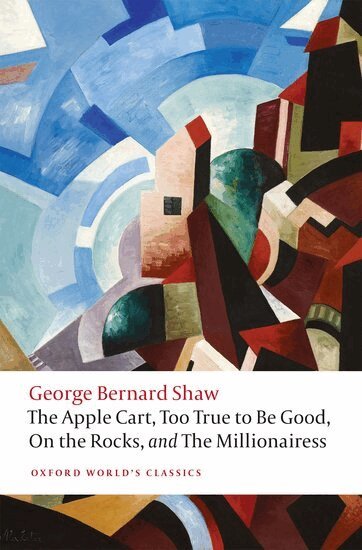
The four dramas in this volume are some of George Bernard Shaw's most interesting plays. They stretch from 1929 to 1935 and coincide with the Great Depression, the intensification of the crisis of democracy that began after the war, and the rise of totalitarianism, all of which find expression in these plays. They also signal the beginning of an important new phase in Shaw's writing, one marked especially by the development of two new Shaw genres: the political extravaganza and the political allegory. The Apple Cart (1929) marked Shaw's return to playwriting after the long hiatus that followed Saint Joan (1923). The Apple Cart is perhaps the most pointed critique of parliamentary democracy in the entire Shavian canon. Too True to Be Good (1931) is another 'political extravaganza', with the opening stage direction -- 'The patient is sleeping heavily. Near her, in the easy chair, sits a Monster' ---signaling that Shaw is advancing further into uncharted dramaturgical territory. He began writing shortly before his trip to the Soviet Union and finished the play and wrote the preface after his return. In the preface Shaw asserts that the USSR is a new Catholic church. The dark mood continues in Shaw's next play, On the Rocks (1933) which Shaw subtitled, 'a political comedy'. It is reminiscent of The Apple Cart in that it is sharply focused on British politics and set in the Cabinet Room at 10 Downing Street during the economic depression of the 1930s.Shaw started writing The Millionairess in 1934 and finished it in 1935. On the surface, it is a simple comedy, and if not for the preface we might acquiesce to Shaw's assessment that the play 'oes not pretend to be anything more than a comedy of humorous and curious contemporary characters such as Ben Jonson might write'. Yet the preface appended to the play is entirely about leadership and declaims at great length on Mussolini and Hitler.
Häftad, Engelska, 2024
842 kr
Skickas inom 5-8 vardagar
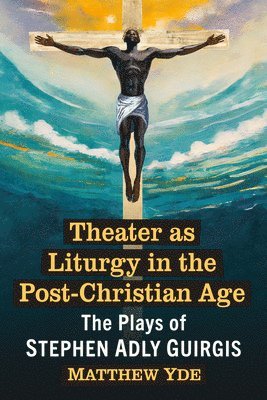
This is the first book-length study of one of the most talented and exciting American playwrights working today. Stephen Adly Guirgis has said that "God is the starting point and the finish line" of his work, and this book identifies him as a playwright with a distinctly Christian sensibility who uses the technique of "inculturation" to translate the gospel for a secular audience. Critics have noted that his plays are peopled with poor, suffering minority figures, but few have also noted that these figures bear a remarkable similarity to the dispossessed with whom Jesus identifies in Matthew 25.Beginning with his early play Den of Thieves and proceeding through each of his dramas, this work examines Guirgis's plays within a biblical context. While noting that Guirgis is a writer of the "post-Christian age" who staunchly resists identification as a "Christian playwright," the book situates him within the tradition of the "drama of ideas" as a powerful writer employing a dialectical method to inculcate the New Testament ethos and transform the theater space into a place of sacrament.