Matthias Felleisen – författare
Visar alla böcker från författaren Matthias Felleisen. Handla med fri frakt och snabb leverans.
8 produkter
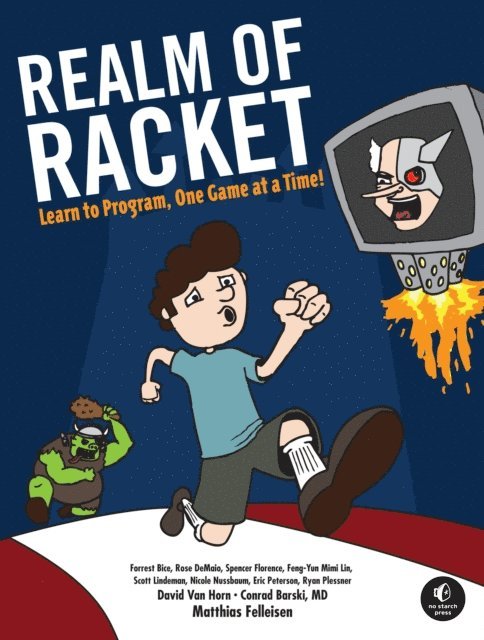
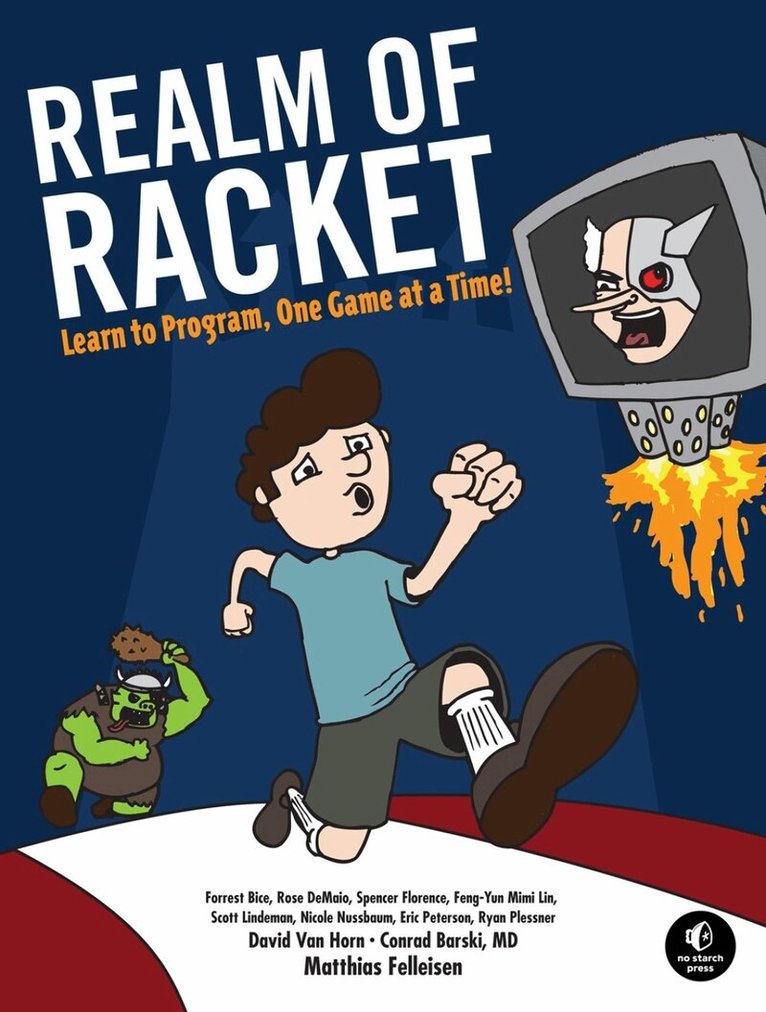
Realm of Racket
Learn to Program, One Game at a Time!
Av Conrad Barski, David Van Horn m. fl.
E-bok, 2013
369 kr
Lägg i varukorg
Racket is a descendant of Lisp, a programming language renowned for its elegance, power, and challenging learning curve. But while Racket retains the functional goodness of Lisp, it was designed with beginning programmers in mind. Realm of Racket is your introduction to the Racket language. In …
Programming Languages and Systems
22nd European Symposium on Programming, ESOP 2013, Held as Part of the European Joint Conferences on Theory and Practice of Software, ETAPS 2013, Rome, Italy, March 16-24, 2013, Proceedings
Av Matthias Felleisen, Philippa Gardner
Häftad, 2013
569 kr
Lägg i varukorg
This book constitutes the refereed proceedings of the 22nd European Symposium on Programming, ESOP 2013, held as part of the European Joint Conferences on Theory and Practice of Software, ETAPS 2013, which took place in Rome, Italy, in March 2013.The 31 papers, presented together with a full-length …
Programming Languages and Systems
22nd European Symposium on Programming, ESOP 2013, Held as Part of the European Joint Conferences on Theory and Practice of Software, ETAPS 2013, Rome, Italy, March 16-24, 2013, Proceedings
Av Philippa Gardner, Matthias Felleisen
E-bok, 2013
734 kr
Lägg i varukorg
This book constitutes the refereed proceedings of the 22nd European Symposium on Programming, ESOP 2013, held as part of the European Joint Conferences on Theory and Practice of Software, ETAPS 2013, which took place in Rome, Italy, in March 2013.The 31 papers, presented together with a full-length …
How to Design Programs
An Introduction to Programming and Computing
Av Matthias Felleisen, Robert Bruce Findler m. fl.
Häftad, 2018
5,0 utav 5 stjärnor. Totalt antal röster: (1)
687 kr
Tillfälligt slut
Realm of Racket
Häftad, 2013
5,0 utav 5 stjärnor. Totalt antal röster: (1)
361 kr
Tillfälligt slut
Racket is a descendant of Lisp, a programming language renowned for its elegance, power, and challenging learning curve. But while Racket retains the functional goodness of Lisp, it was designed with beginning programmers in mind. Realm of Racket is your introduction to the Racket language. In …
Semantics Engineering with PLT Redex
Av Matthias Felleisen, Robert Bruce Findler m. fl.
Inbunden, 2009
540 kr
Tillfälligt slut