Matthieu Queloz - Böcker
Visar alla böcker från författaren Matthieu Queloz. Handla med fri frakt och snabb leverans.
3 produkter
3 produkter
2 095 kr
Skickas inom 3-6 vardagar
For Bernard Williams, philosophy and history are importantly connected. His work exploits this connection in a number of directions: he believes that philosophy cannot ignore its own history the way science can; that even when engaging with philosophy's history primarily to produce history, one needs to draw on philosophy; and that when doing the history of philosophy primarily to produce philosophy, one still needs a sense of how historically distant past philosophers are, because the point of reading them is to confront something different from the present. But Williams also holds that systematic philosophy itself needs to be done historically, engaging not just with its own history, but with that of the concepts it seeks to understand. To explore these different ways in which philosophy and history intertwine, this volume assembles specially commissioned contributions by A. W. Moore, Terence Irwin, Sophie-Grace Chappell, Catherine Rowett, Marcel van Ackeren, John Cottingham, Gerald Lang, Lorenzo Greco, Paul Russell, Carla Bagnoli, Peter Kail, David Owen, Giuseppina D'Oro, James Connelly, Matthieu Queloz, Nikhil Krishnan, John Marenbon, Ralph Wedgwood, Garrett Cullity, Hans-Johann Glock, Geraldine Ng, Ilaria Cozzaglio, Amanda R. Greene, and Miranda Fricker. They critically appraise Williams's work in and on the history of philosophy as well as his 'historicist turn' and his use of genealogy. The collection uniquely combines substantive discussions of historical figures from Homer to Wittgenstein with methodological discussions of how and why the history of philosophy should be done, and how and why philosophy should draw on history.Chapter 11 of this work is available under the terms of a CC BY-NC-ND 4.0 International open access licence. This part of the work is free to read on the Oxford Academic platform and offered as a free PDF download from OUP and selected open access locations.
1 374 kr
Skickas inom 5-8 vardagar
This is an open access title available under the terms of a CC BY-NC-ND 4.0 International licence. It is free to read at Oxford Scholarship Online and offered as a free PDF download from OUP and selected open access locations.Why did such highly abstract ideas as truth, knowledge, or justice become so important to us? What was the point of coming to think in these terms? In The Practical Origins of Ideas Matthieu Queloz presents a philosophical method designed to answer such questions: the method of pragmatic genealogy. Pragmatic genealogies are partly fictional, partly historical narratives exploring what might have driven us to develop certain ideas in order to discover what these do for us. The book uncovers an under-appreciated tradition of pragmatic genealogy which cuts across the analytic-continental divide, running from the state-of-nature stories of David Hume and the early genealogies of Friedrich Nietzsche to recent work in analytic philosophy by Edward Craig, Bernard Williams, and Miranda Fricker. However, these genealogies combine fictionalizing and historicizing in ways that even philosophers sympathetic to the use of state-of-nature fictions or real history have found puzzling. To make sense of why both fictionalizing and historicizing are called for, this book offers a systematic account of pragmatic genealogies as dynamic models serving to reverse-engineer the points of ideas in relation not only to near-universal human needs, but also to socio-historically situated needs. This allows the method to offer us explanation without reduction and to help us understand what led our ideas to shed the traces of their practical origins. Far from being normatively inert, moreover, pragmatic genealogy can affect the space of reasons, guiding attempts to improve our conceptual repertoire by helping us determine whether and when our ideas are worth having.
1 539 kr
Skickas inom 5-8 vardagar
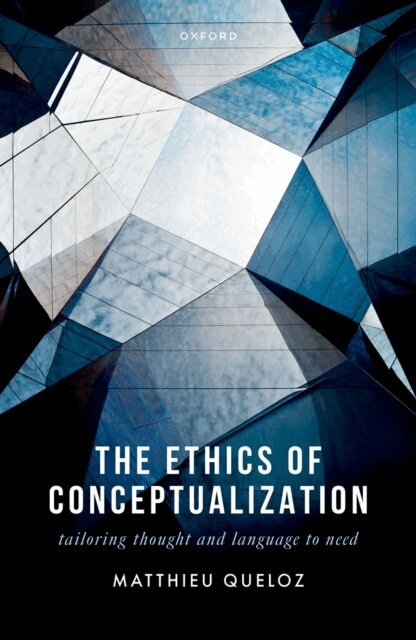
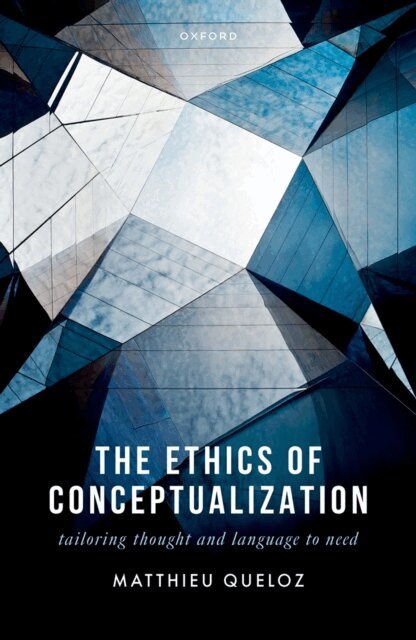
Philosophy strives to give us a firmer hold on our concepts. But what about their hold on us? Why place ourselves under the sway of a concept and grant it the authority to shape our thought and conduct? Another conceptualization would carry different implications. What makes one way of thinking better than another?The Ethics of Conceptualization develops a framework for concept appraisal. Its guiding idea is that to question the authority of concepts is to ask for reasons of a special kind: reasons for concept use, which tell us which concepts to adopt, adhere to, or abandon, thereby shoring up—or undercutting—the reasons for action and belief that guide our deliberations.Traditionally, reasons for concept use have been sought either in timeless rational foundations or in concepts' inherent virtues, such as precision and consistency. Against this, the book advances two main claims: that we find reasons for concept use in the conceptual needs we discover when we critically distance ourselves from a concept by viewing it from the autoethnographic stance; and that sometimes, concepts that conflict, or exhibit other vices such as vagueness or superficiality, are just what we need.By considering which concepts we need rather than which are absolutely best, we can reconcile ourselves to the contingency of our concepts, determine the proper place of efforts to tidy up thought, and adjudicate between competing conceptions of things—even things as contested as liberty or free will. A needs-based approach separates helpful clarification from hobbling tidy-mindedness, and authoritative definition from conceptual gerrymandering.This is an open access title available under the terms of a CC BY-NC-ND 4.0 International licence. It is free to read on the Oxford Academic platform and offered as a free PDF download from OUP and selected open access locations.