Maurice Heemels – författare
Visar alla böcker från författaren Maurice Heemels. Handla med fri frakt och snabb leverans.
4 produkter
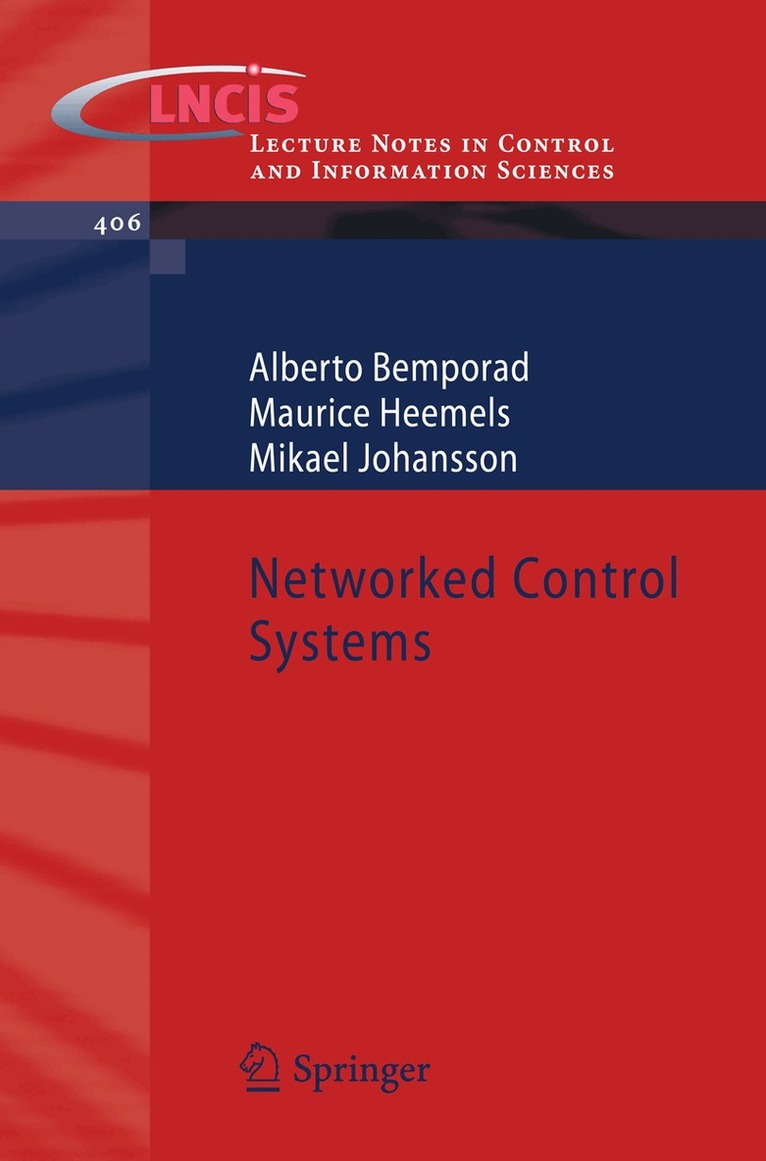
Networked Control Systems
Av Alberto Bemporad, Maurice Heemels m. fl.
Häftad, 2010
2180 kr
Lägg i varukorg
This book nds its origin in the WIDE PhD School on Networked Control Systems, which we organized in July 2009 in Siena, Italy. Having gathered experts on all the aspects of networked control systems, it was a small step to go from the summer school to the book, certainly given the enthusiasm of the …
Networked Control Systems
Av Mikael Johansson, Maurice Heemels m. fl.
E-bok, 2010
2860 kr
Lägg i varukorg
This book nds its origin in the WIDE PhD School on Networked Control Systems, which we organized in July 2009 in Siena, Italy. Having gathered experts on all the aspects of networked control systems, it was a small step to go from the summer school to the book, certainly given the enthusiasm of the …
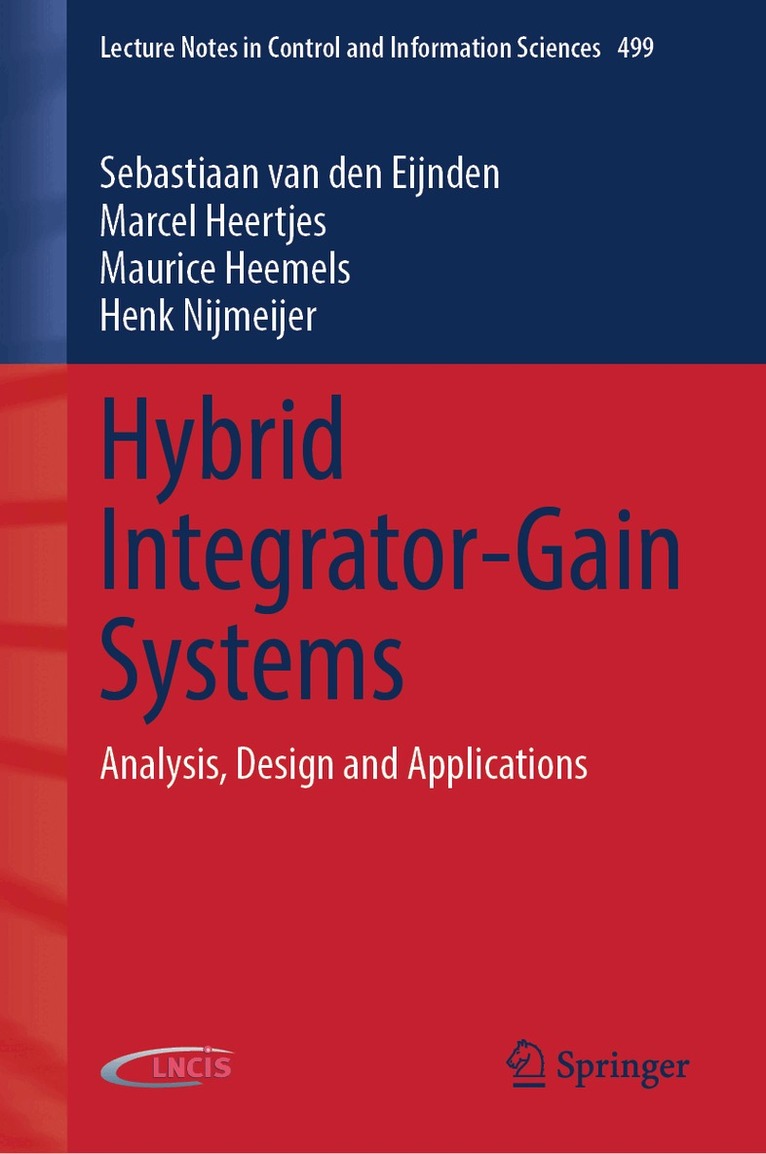
Hybrid Integrator-Gain Systems
Analysis, Design and Applications
Av Sebastiaan van den Eijnden, Marcel Heertjes m. fl.
Inbunden, 2026
1637 kr
Lägg i varukorg
This book introduces the hybrid integrator-gain system (HIGS) as a promising approach for overcoming fundamental limitations of linear time-invariant (LTI) control systems. These limitations pose significant challenges in meeting the ever-increasing demands for accuracy, speed and reliability in …
Hybrid Integrator-Gain Systems
Analysis, Design and Applications
Av Henk Nijmeijer, Maurice Heemels m. fl.
E-bok, 2026
2111 kr
Lägg i varukorg
This book introduces the hybrid integrator-gain system (HIGS) as a promising approach for overcoming fundamental limitations of linear time-invariant (LTI) control systems. These limitations pose significant challenges in meeting the ever-increasing demands for accuracy, speed and reliability in …