Max Grömping - Böcker
Visar alla böcker från författaren Max Grömping. Handla med fri frakt och snabb leverans.
3 produkter
3 produkter
488 kr
Skickas inom 7-10 vardagar
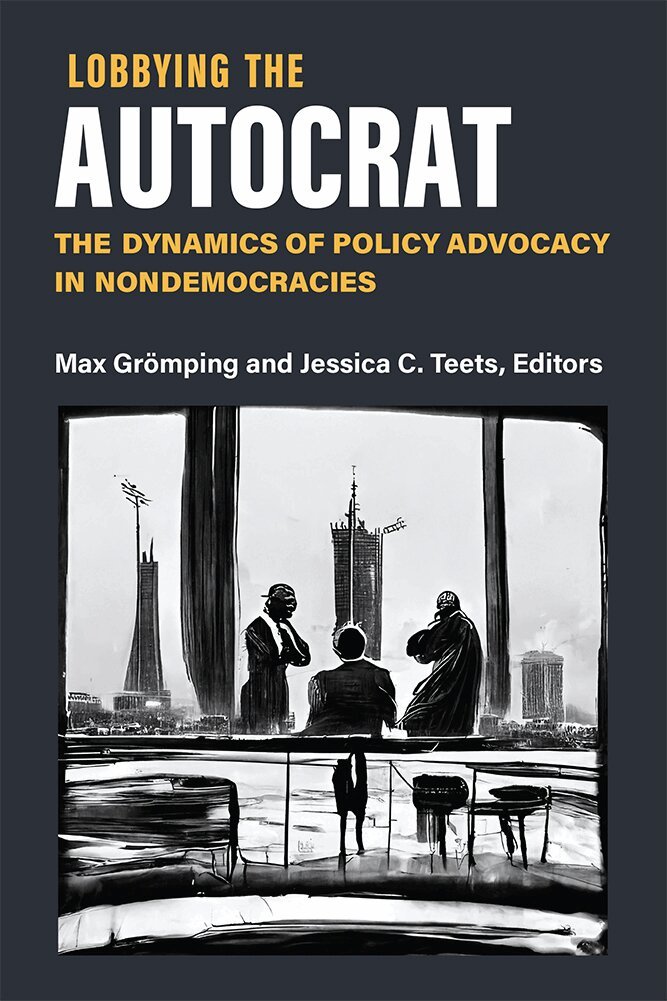
Although authoritarian countries often repress independent citizen activity, lobbying by civil society organizations is actually a widespread phenomenon. Using case studies such as China, Russia, Belarus, Cambodia, Malaysia, Montenegro, Turkey, and Zimbabwe, Lobbying the Autocrat shows that citizen advocacy organizations carve out niches in the authoritarian policy process, even influencing policy outcomes. The cases cover a range of autocratic regime types (one-party, multi-party, personalist) on different continents, and encompass different systems of government to explore citizen advocacy ranging from issues such as social welfare, women’s rights, election reform, environmental protection, and land rights. They show how civil society has developed adaptive capacities to the changing levels of political repression and built resilience through ‘tactful contention’ strategies. Thus, within the bounds set by the authoritarian regimes, adaptive lobbying may still bring about localized responsiveness and representation.However, the challenging conditions of authoritarian advocacy systems identified throughout this volume present challenges for both advocates and autocrats alike. The former are pushed by an environment of constant threat and uncertainty into a precarious dance with the dictator: just the right amount of acquiescence and assertiveness, private persuasion and public pressure, and the flexibility to change quickly to suit different situations. An adaptive lobbyist survives and may even thrive in such conditions, while others often face dire consequences. For the autocrat on the other hand, the more they stifle the associational sphere in an effort to prevent mass mobilization, the less they will reap the informational benefits associated with it. This volume synthesizes the findings of the comparative cases to build a framework for understanding how civil society effectively lobbies inside authoritarian countries.
1 093 kr
Skickas inom 7-10 vardagar
Although authoritarian countries often repress independent citizen activity, lobbying by civil society organizations is actually a widespread phenomenon. Using case studies such as China, Russia, Belarus, Cambodia, Malaysia, Montenegro, Turkey, and Zimbabwe, Lobbying the Autocrat shows that citizen advocacy organizations carve out niches in the authoritarian policy process, even influencing policy outcomes. The cases cover a range of autocratic regime types (one-party, multi-party, personalist) on different continents, and encompass different systems of government to explore citizen advocacy ranging from issues such as social welfare, women’s rights, election reform, environmental protection, and land rights. They show how civil society has developed adaptive capacities to the changing levels of political repression and built resilience through ‘tactful contention’ strategies. Thus, within the bounds set by the authoritarian regimes, adaptive lobbying may still bring about localized responsiveness and representation.However, the challenging conditions of authoritarian advocacy systems identified throughout this volume present challenges for both advocates and autocrats alike. The former are pushed by an environment of constant threat and uncertainty into a precarious dance with the dictator: just the right amount of acquiescence and assertiveness, private persuasion and public pressure, and the flexibility to change quickly to suit different situations. An adaptive lobbyist survives and may even thrive in such conditions, while others often face dire consequences. For the autocrat on the other hand, the more they stifle the associational sphere in an effort to prevent mass mobilization, the less they will reap the informational benefits associated with it. This volume synthesizes the findings of the comparative cases to build a framework for understanding how civil society effectively lobbies inside authoritarian countries.
9 831 kr
Skickas inom 7-10 vardagar
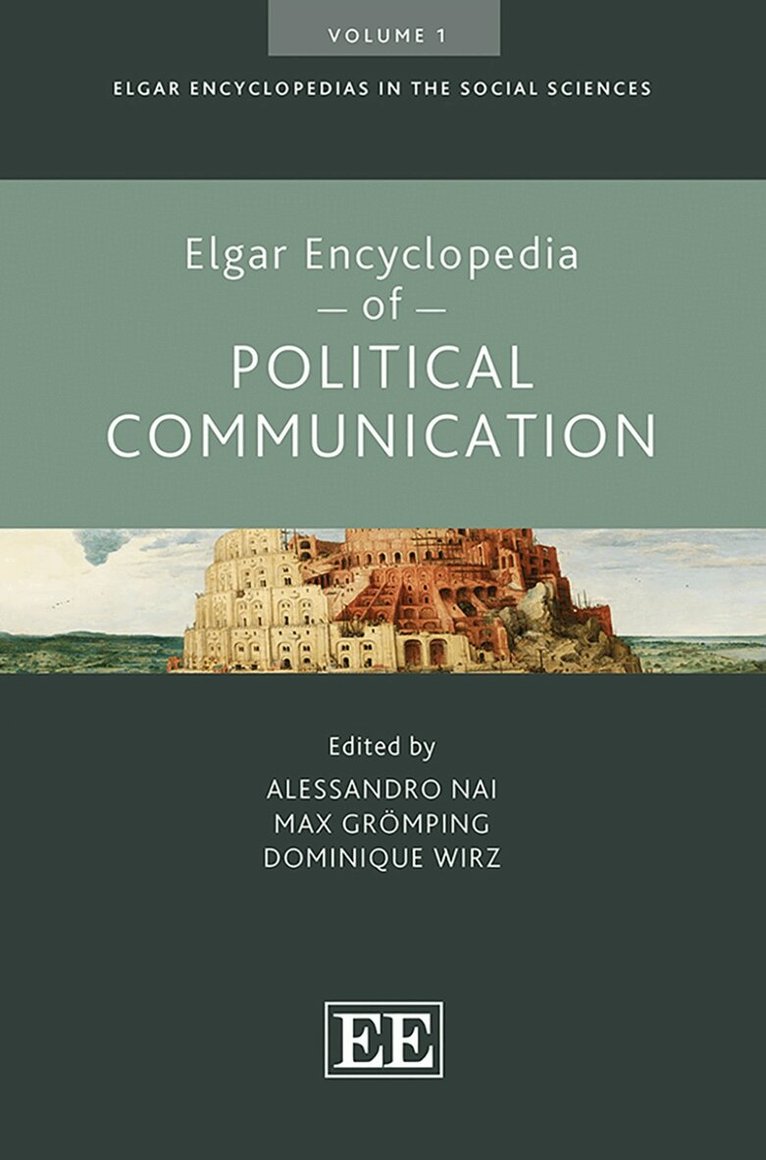
This Encyclopedia covers the vast field of political communication, presenting an authoritative overview of its key foundational theories and empirical methodologies. Authored by nearly 600 experts from across the globe, it explores diverse areas of inquiry, foreshadowing future trends and avenues for research.Highlighting the interdisciplinary nature of political communication, the Encyclopedia engages with a range of topics from election campaigns, news and journalism, to interpersonal communication, social media, and psychological mechanisms of information processing. Entries are concise and accessible, critically examining the role of the communicator, the message, the medium, and the receiver, as well as applications to broader societal issues.Key Features:Thoroughly comprehensive with over 400 entries written by leading scholars and researchersExpands the boundaries of political communication beyond usual Western-centric conceptionsProvides insights into a wide variety of topics, approaches, paradigms, methodologies, and perspectivesStudents and scholars of media and communication, political science, sociology, international relations, public administration and management, and social sciences in general will greatly benefit from this essential Encyclopedia. It is also a vital resource for researchers and international policy professionals seeking to understand cutting-edge developments in the field.