Maximilian Ohle – författare
Visar alla böcker från författaren Maximilian Ohle. Handla med fri frakt och snabb leverans.
5 produkter
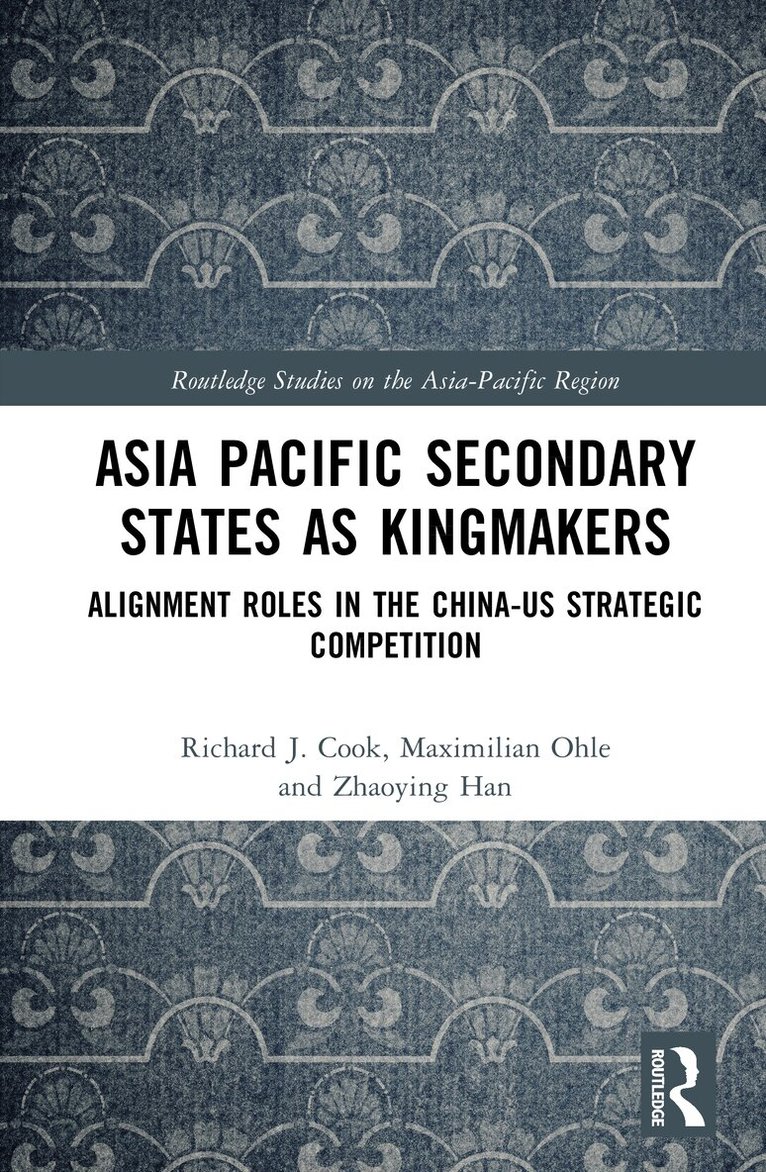
Asia-Pacific Secondary States as Kingmakers
Alignment Roles in the China-US Strategic Competition
Av Richard J. Cook, Maximilian Ohle m. fl.
Inbunden, 2025
2439 kr
Lägg i varukorg
Focusing on the Asia-Pacific region, Cook, Ohle and Han investigate the escalating strategic competition between China and the US. They explore the dynamics of key regional secondary states caught in the middle, namely Japan, South Korea, the Philippines and Vietnam, emphasising their crucial role …
Asia-Pacific Secondary States as Kingmakers
Alignment Roles in the China-US Strategic Competition
Av Richard J. Cook, Maximilian Ohle m. fl.
Häftad, 2026
706 kr
Lägg i varukorg
Focusing on the Asia-Pacific region, Cook, Ohle and Han investigate the escalating strategic competition between China and the US. They explore the dynamics of key regional secondary states caught in the middle, namely Japan, South Korea, the Philippines and Vietnam, emphasising their crucial role …
Asia-Pacific Secondary States as Kingmakers
Alignment Roles in the China-US Strategic Competition
Av Zhaoying Han, Maximilian Ohle m. fl.
E-bok, 2025
805 kr
Lägg i varukorg
Focusing on the Asia-Pacific region, Cook, Ohle and Han investigate the escalating strategic competition between China and the US. They explore the dynamics of key regional secondary states caught in the middle, namely Japan, South Korea, the Philippines and Vietnam, emphasising their crucial role …
Asia-Pacific Secondary States as Kingmakers
Alignment Roles in the China-US Strategic Competition
Av Zhaoying Han, Maximilian Ohle m. fl.
E-bok, 2025
831 kr
Lägg i varukorg
Focusing on the Asia-Pacific region, Cook, Ohle and Han investigate the escalating strategic competition between China and the US. They explore the dynamics of key regional secondary states caught in the middle, namely Japan, South Korea, the Philippines and Vietnam, emphasising their crucial role …
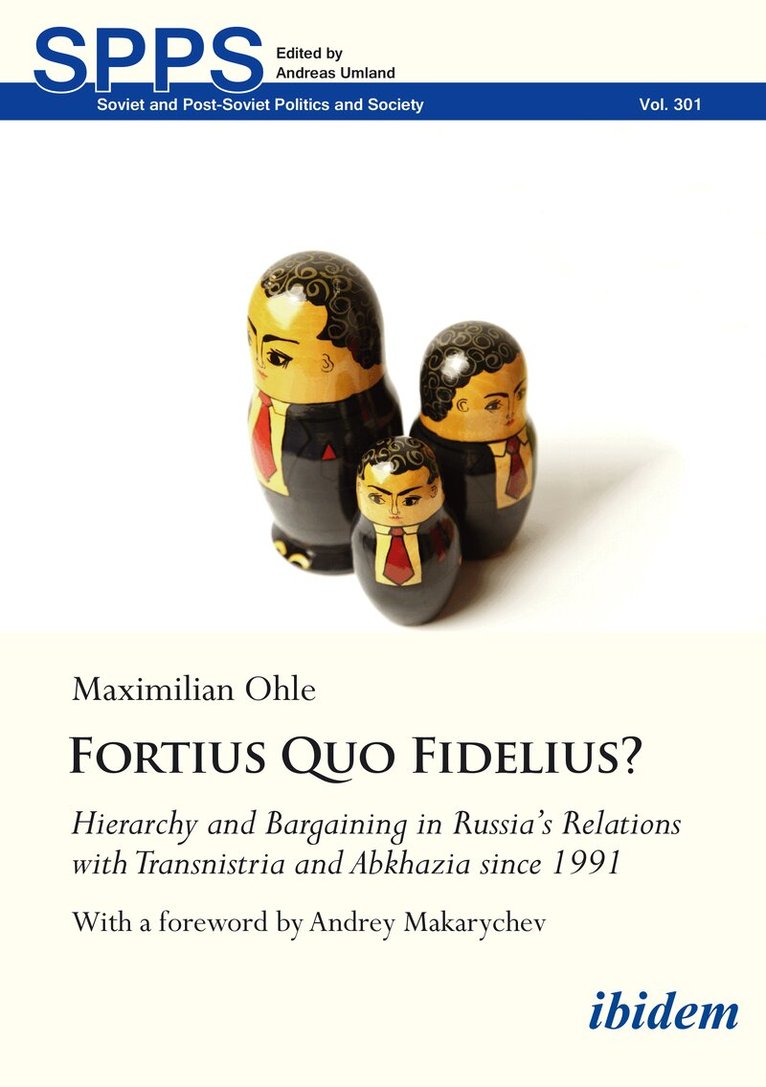
Fortius Quo Fidelius?
Hierarchy and Bargaining in Russia’s Relations with Transnistria and Abkhazia since 1991
Häftad, 2026
428 kr
Lägg i varukorg
This book investigates how and to what extent the de facto regimes of the unrecognized “republics” of Transnistria in Moldova and Abkhazia in Georgia, albeit bound to Russia through loyalty and obsequiousness, can challenge the Kremlin’s political authority. Although such situations have been rare, …