Maximilian Viatori - Böcker
Visar alla böcker från författaren Maximilian Viatori. Handla med fri frakt och snabb leverans.
4 produkter
4 produkter
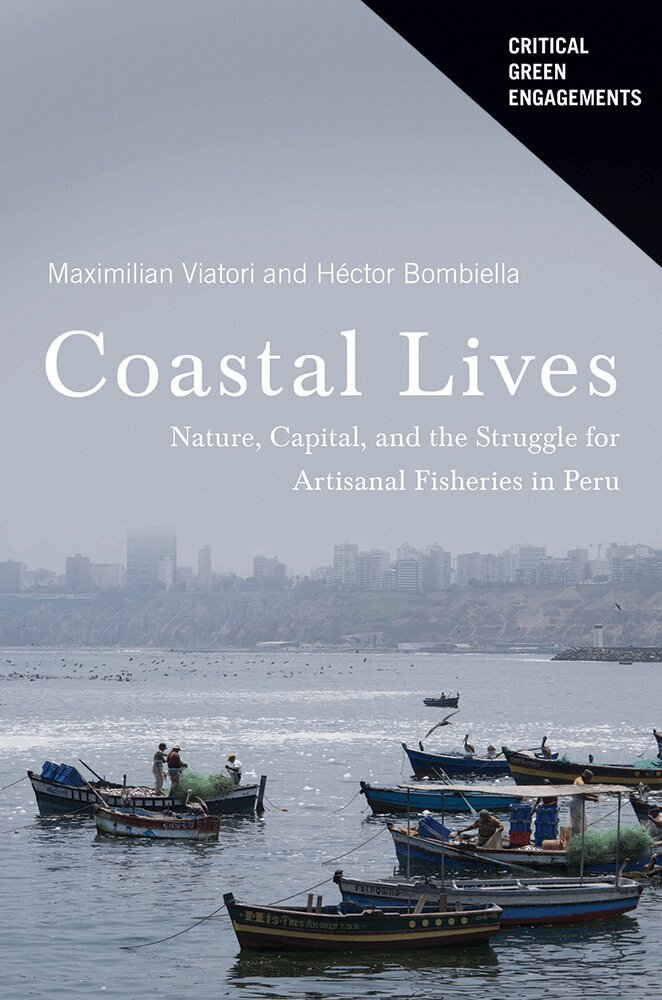
Coastal Lives
Nature, Capital, and the Struggle for Artisanal Fisheries in Peru
Häftad, Engelska, 2020
309 kr
Skickas inom 11-20 vardagar
Peru's fisheries are in crisis as overfishing and ecological changes produce dramatic fluctuations in fish stocks. To address this crisis, government officials have claimed that fishers need to become responsible producers who create economic advantages by taking better care of the ocean ecologies they exploit.In Coastal Lives, Maximilian Viatori and HÉctor Bombiella argue that this has not made Peru's fisheries more sustainable. Through a fine-grained ethnographic and historical account of Lima's fisheries, the authors reveal that new government regimes of entrepreneurial agency have placed overwhelming burdens on the city's impoverished artisanal fishers to demonstrate that they are responsible producers and have created failures that can be used to justify closing these fishers' traditional use areas and to deny their historically sanctioned rights. The result is a critical examination of how neoliberalized visions of nature and individual responsibility work to normalize the dispossessions that have enabled ongoing capital accumulation at the cost of growing social dislocations and ecological degradation.The authors' innovative approach to the politics of constructing and degrading coastal lives will interest a wide range of scholars in cultural anthropology, environmental humanities, and Latin American studies, as well as policymakers and anyone concerned with inequality, global food systems, and multispecies ecologies.
635 kr
Skickas inom 7-10 vardagar
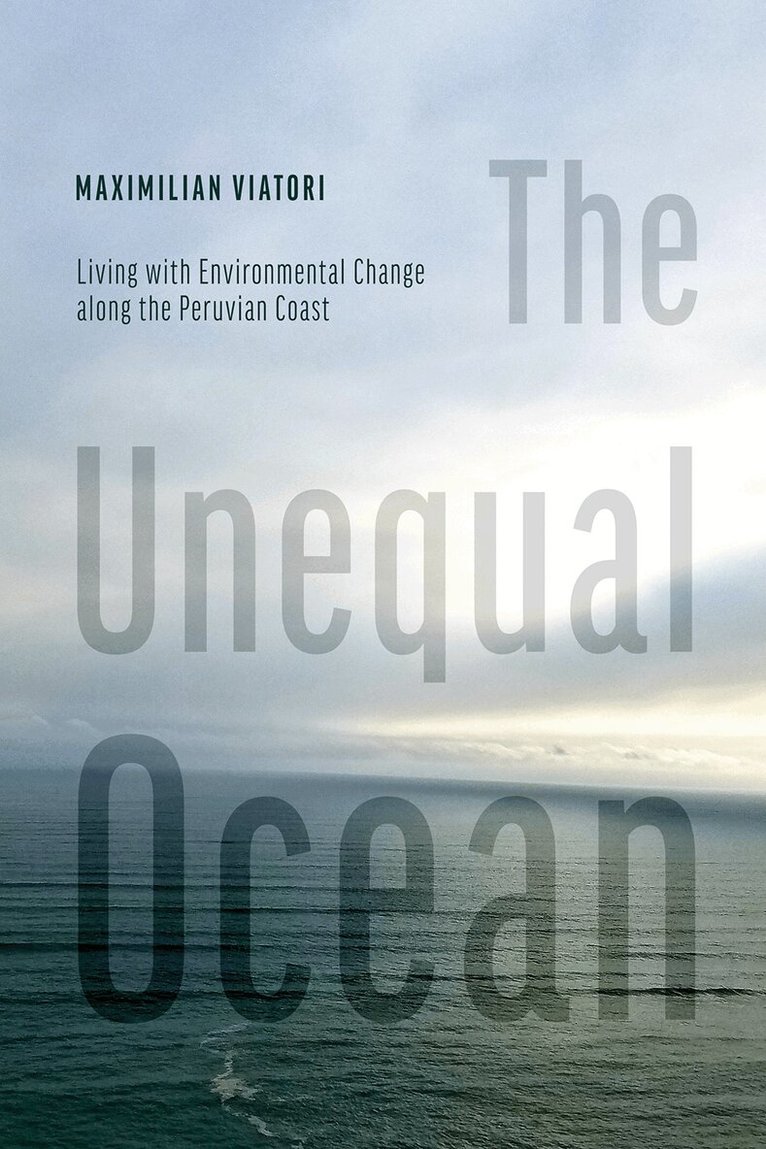
Based on a decade of ethnographic and archival research in Peru, this volume reveals how prevailing representations of the ocean obscure racialized disparities and the ways that different people experience the impacts of the climate crisis.Tackling important subjects of global concern, the author presents a complex image of Peru’s global seascapes as historical spaces comprising precarious worlds that expose people, nonhuman species, and places to unequal levels of harm. He traces how powerful actors in Peru represent the ocean in ways that erase the systemic inequalities, histories of uneven development, and extractive violence that have shaped ocean life. These erasures underscore the need for alternative representations of the ocean that highlight the engagements and commitments that make oceanic ecologies possible, as well as the material relationships and unequal positions of different people and species within them.The author analyzes a multitude of timely topics, including waves and coastal development, the circulation of ocean waste, El NiÑo warming events, and the extraction of jumbo squid. This book also addresses expanding scholarly interest in the world’s oceans as sites for thinking about social inequities, environmental politics, and multispecies relationships.
361 kr
Skickas inom 7-10 vardagar
Based on a decade of ethnographic and archival research in Peru, this volume reveals how prevailing representations of the ocean obscure racialized disparities and the ways that different people experience the impacts of the climate crisis. Tackling important subjects of global concern, the author presents a complex image of Peru’s global seascapes as historical spaces comprising precarious worlds that expose people, nonhuman species, and places to unequal levels of harm. He traces how powerful actors in Peru represent the ocean in ways that erase the systemic inequalities, histories of uneven development, and extractive violence that have shaped ocean life. These erasures underscore the need for alternative representations of the ocean that highlight the engagements and commitments that make oceanic ecologies possible, as well as the material relationships and unequal positions of different people and species within them. The author analyzes a multitude of timely topics, including waves and coastal development, the circulation of ocean waste, El Niño warming events, and the extraction of jumbo squid. This book also addresses expanding scholarly interest in the world’s oceans as sites for thinking about social inequities, environmental politics, and multispecies relationships.
308 kr
Skickas inom 7-10 vardagar
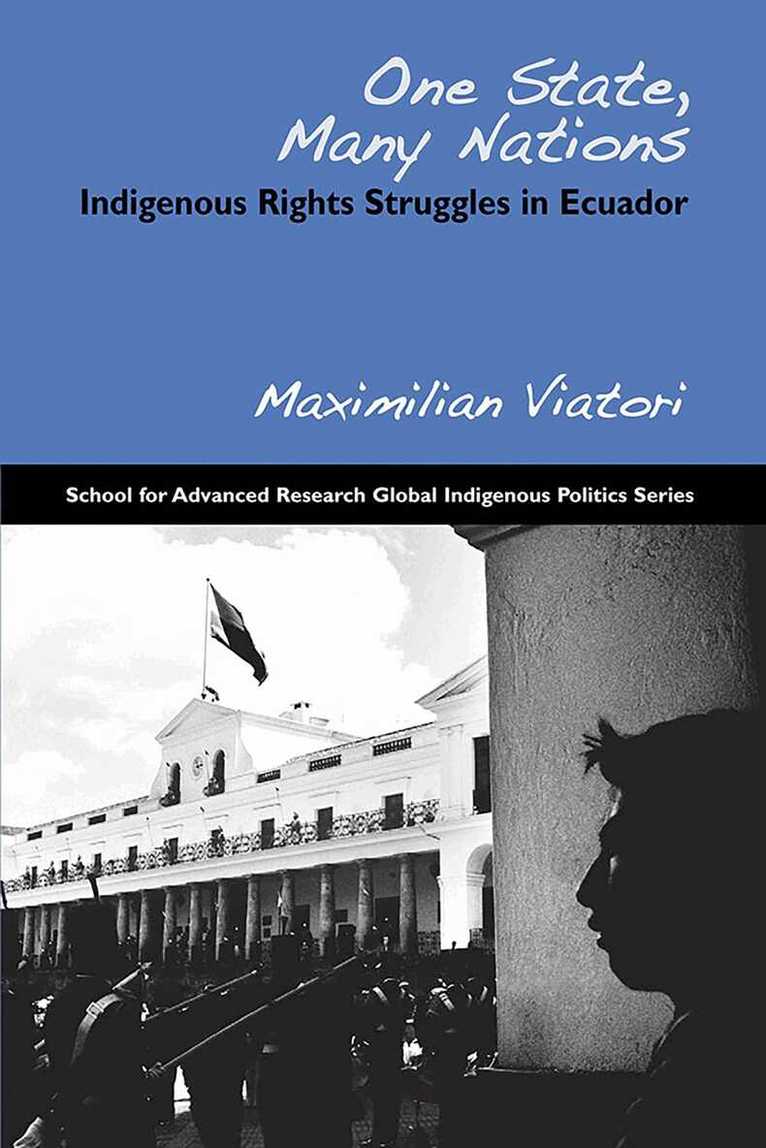
The Zápara are one of the smallest Indigenous nationalities in Ecuador, with roughly two hundred members, most of whom live along the Conambo and Pindoyacu rivers in Pastaza province. The Zápara language is a member of the Zaparoan language family, a small group of Amazonian languages in eastern Ecuador and northern Peru. In 1998 four communities organized as the Nacionalidad Zápara de Ecuador (Zápara Nationality of Ecuador, NAZAE) with the intent of reasserting Zápara identity and establishing a legal Zápara territory distinct from those of other Indigenous nationalities in the region. At the heart of this revitalization was an attempt to document the language of the remaining Zápara elders as “proof” of these communities’ cultural uniqueness.One State, Many Nations traces the Zápara nationality’s process of self-organization and emergence within Ecuador’s Indigenous movement from 1998 to 2008, to explore the complex role that multiculturalism has played in local Indigenous politics. The paradoxical treatment of Indigenous identity is the subject of this book. Its purpose is to explore the official recognition of ethnic and cultural difference in Ecuador with the following question in mind: has the official recognition of Indigenous rights provided new opportunities for Indigenous actors or further restricted their political action?