M.C. Bishop - Böcker
Visar alla böcker från författaren M.C. Bishop. Handla med fri frakt och snabb leverans.
10 produkter
10 produkter
184 kr
Skickas inom 7-10 vardagar
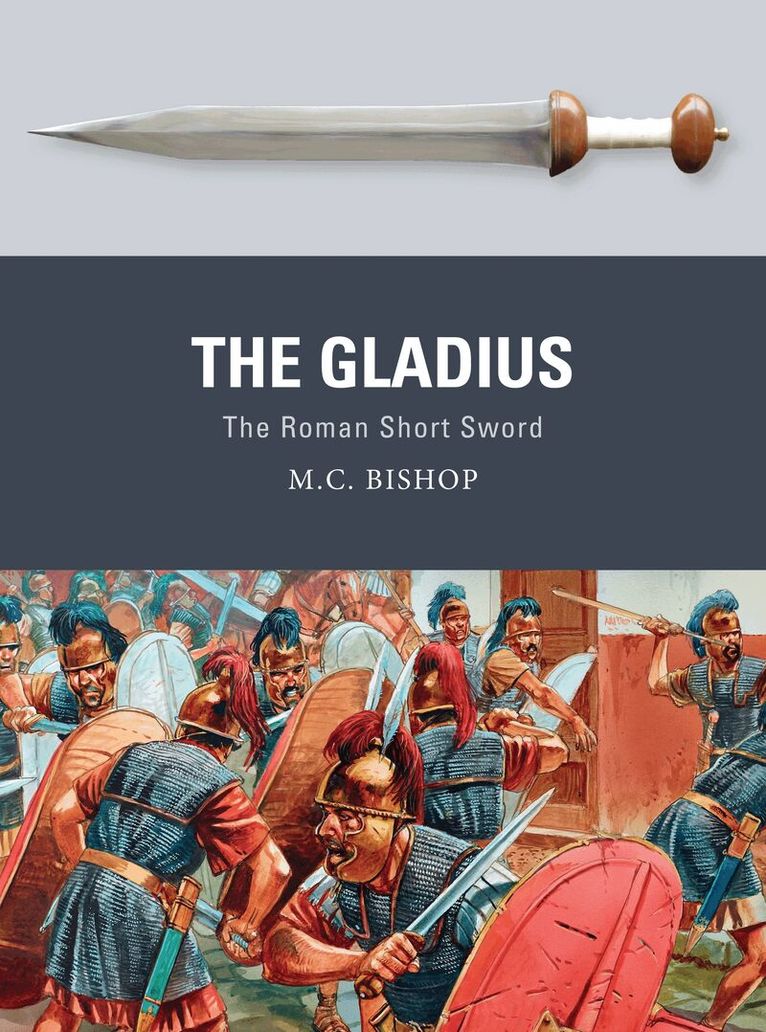
One of the most feared weapons in the ancient world, the gladius was lethal both on the battlefield and in the arena.Literary sources tell of the terror it inspired, while archaeological evidence of wounds inflicted is testament to its deadly effect. By pulling together strands of literary, sculptural and archaeological evidence renowned expert M.C. Bishop creates a narrative of the gladius' development, exploring the way in which the shape of the short sword changed as soldiers and gladiators evolved their fighting style.Covering historical accounts, excavated artefacts and the results of the latest scientific analyses of the blades, this volume reveals the development, technology, training and use of the gladius hispaniensis: the sword that conquered the Mediterranean.
187 kr
Skickas inom 10-15 vardagar
A heavy javelin, normally used as a shock weapon immediately before contact, the pilum was designed with a particular speciality: it could penetrate a shield and carry on into the individual behind it.Relying on mass rather than velocity, at short range a volley of pila had much the same effect on a charging enemy as musketry would in later periods. The design was not uniform, with a wide diversity of types throughout the developmental history of the weapon, but for more than four centuries it remained a vital part of the arsenal of weapons at the disposal of the Roman legionary.Drawing upon up-to-date finds in the Iberian Peninsula and the Balkans, as well as written records and rigorous scientific analysis, this enthralling study lifts the veil on the evolving nature of the pilum, the Roman heavy javelin that helped to conquer the known world.
184 kr
Skickas inom 7-10 vardagar
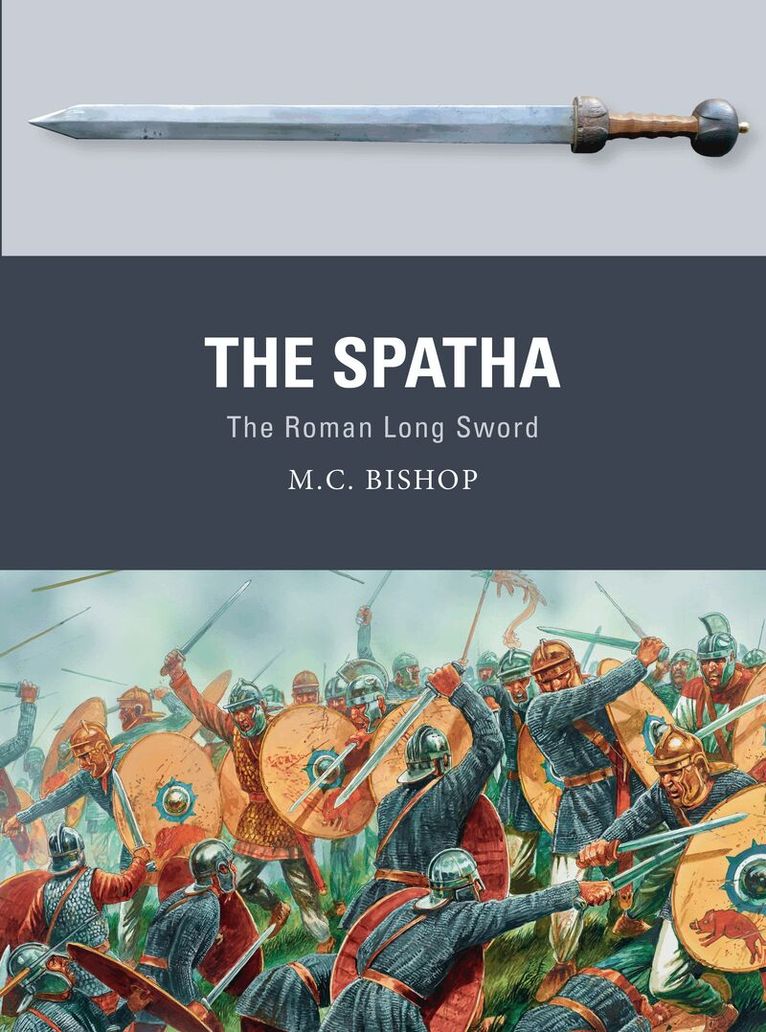
Adopted from the Celts in the 1st century BC, the spatha, a lethal and formidable chopping blade, became the primary sword of the Roman soldier in the Later Empire.Over the following centuries, the blade, its scabbard, and its system of carriage underwent a series of developments, until by the 3rd century AD it was the universal sidearm of both infantry and cavalry.Thanks to its long reach, the spatha was the ideal cavalry weapon, replacing the long gladius hispaniensis in the later Republican period. Easy maintenance was key to its success and the spatha was designed to be easily repaired in the field where access to a forge may have been limited. Its influence survived into the Dark Ages with Byzantine, Carolingian and Viking blades.Drawing together historical accounts, excavated artefacts and the results of the latest scientific analyses of the blades, renowned authority M.C. Bishop reveals the full history of the development, technology, training and use of the spatha: the sword that defended an empire.
175 kr
Skickas inom 10-15 vardagar
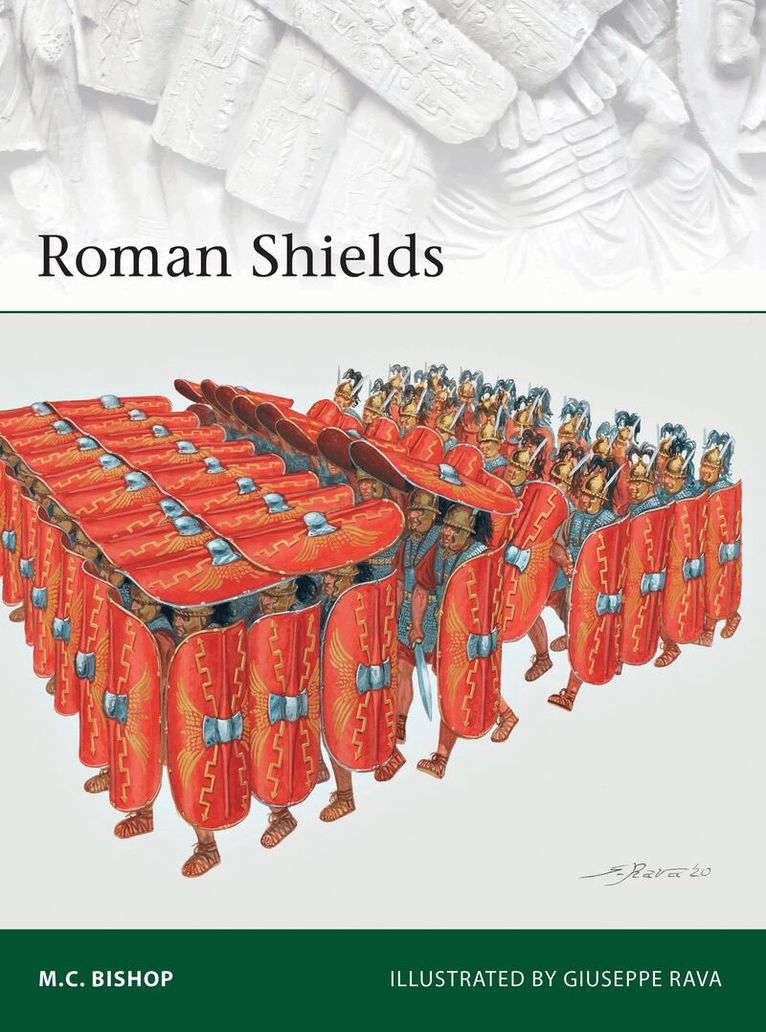
The introduction of the scutum in the 4th century BC revolutionized the way the Romans fought. Instead of being purely defensive, the shield became a weapon in its own right.Using the top edge or boss to punch an opponent, or the lower rim to smash down on their feet, it served to unbalance an enemy and allow the sword to do its work. The versatility of the scutum was characterized by the testudo, a formation the Romans used offensively like a pedestrian tank. Meanwhile, other shield types equipped the auxiliaries who fought alongside the legionaries. The curved, rectangular scutum survived into the 3rd century AD, only to be replaced by an oval, slightly domed shield derived from the oval shields of Early Imperial auxiliaries.Drawing together historical accounts, excavated artefacts and the results of the latest scientific analyses of the boards and fittings, renowned authority M.C. Bishop reveals the development, technology, training and use of the scutum and other Roman shield types.
173 kr
Skickas inom 7-10 vardagar
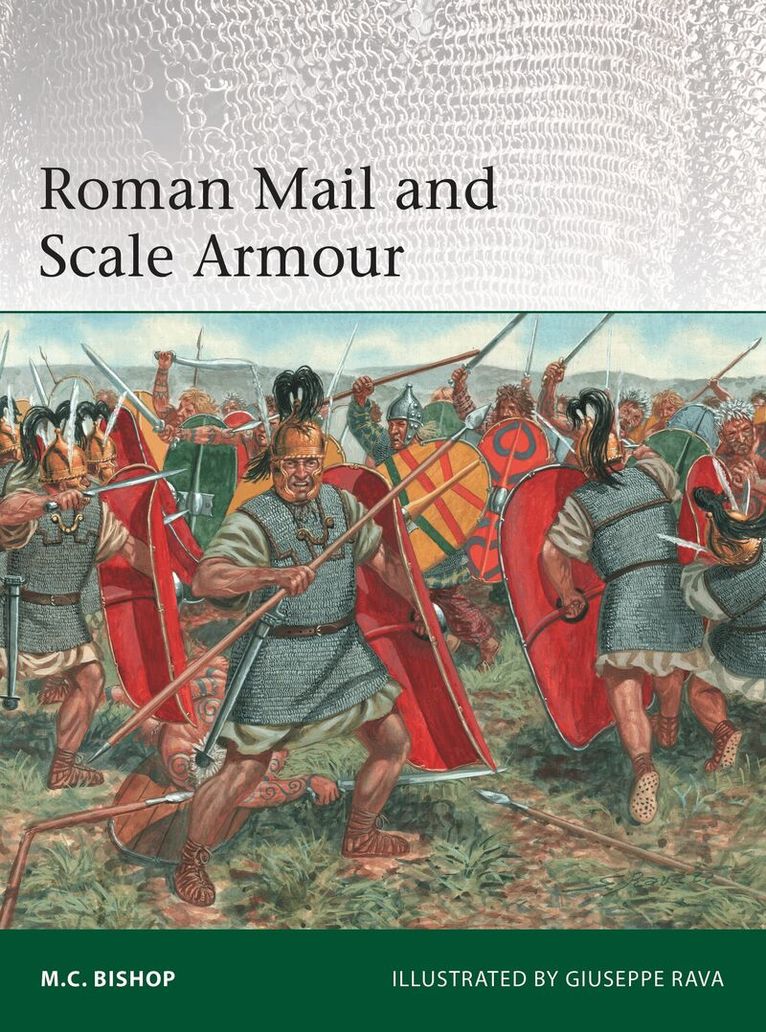
Fully illustrated, this study investigates the origins, evolution and use of the mail and scale armour worn by the soldiers and gladiators of Imperial Rome.Less glamorous than the Roman Army’s instantly recognizable plate armour but much more versatile, mail and scale armour were used by both legionaries and auxiliaries throughout Rome’s history. Developed by the Celts and quickly adopted by the Romans, mail armour was easy to make and required little maintenance. Scale was a much older form of armour, originating in the Near East during the second millennium BC. As with mail, it was used by both auxiliaries and legionaries, but like plate armour, it was much more fragile than mail. Both types of armour were also used by gladiators (principally as arm defences).New discoveries in both mail and scale, as well as in hybrid forms that mixed the two, mean that much more is now known about the development of these types of defence during the Roman period, their efficacy in battle and how they were manufactured and repaired. Featuring specially commissioned artwork and drawing upon the latest findings, this study lifts the veil on the mail and scale armour used by soldiers, gladiators and others during the heyday of Imperial Rome.
162 kr
Skickas inom 7-10 vardagar
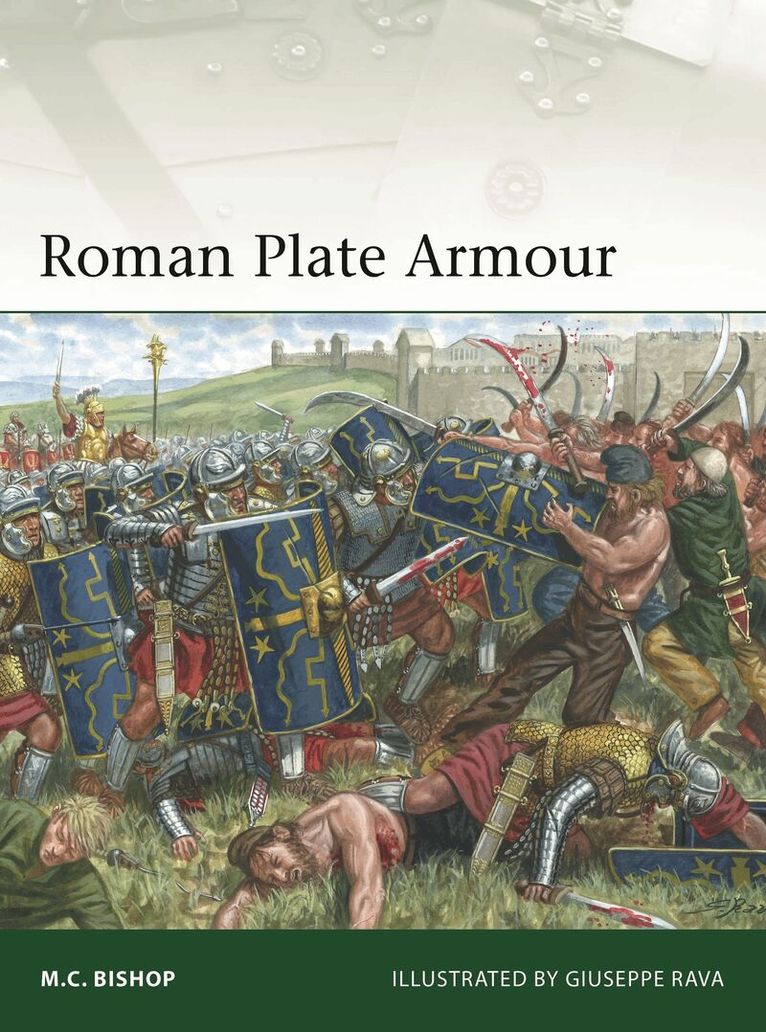
Fully illustrated, this book investigates the articulated plate armour worn by Roman legionaries.First named by Renaissance historians studying the reliefs on Trajan’s Column, lorica segmentata evaded successful attempts to reconstruct it until a series of important archaeological finds in the 20th century revealed how it worked and the truth of its extended chronology. The earliest finds date from the late 1st century BC, and its discovery at Kalkriese in Germany shows how rapidly it was adopted. At the same time, discoveries in Spain and Britain showed that, despite its apparent fragility, it continued in use into the 4th century AD.The spectacular find of six halves of cuirasses in a chest at Corbridge in 1964 was later matched by the rare discovery of a complete set of this armour at Kalkriese. The Corbridge find provided the context to interpret and reconstruct earlier finds. There is now years of experience gleaned from reenactors over the practical strengths and weaknesses of this form of armour. At the same time, scientific analysis has provided insights into the technology behind this revolutionary form of armour so characteristic of the Roman Army.Featuring specially commissioned artwork and drawing upon the latest findings, this study lifts the veil on the formidable plate armour used by the legionaries of Imperial Rome.
173 kr
Skickas inom 7-10 vardagar
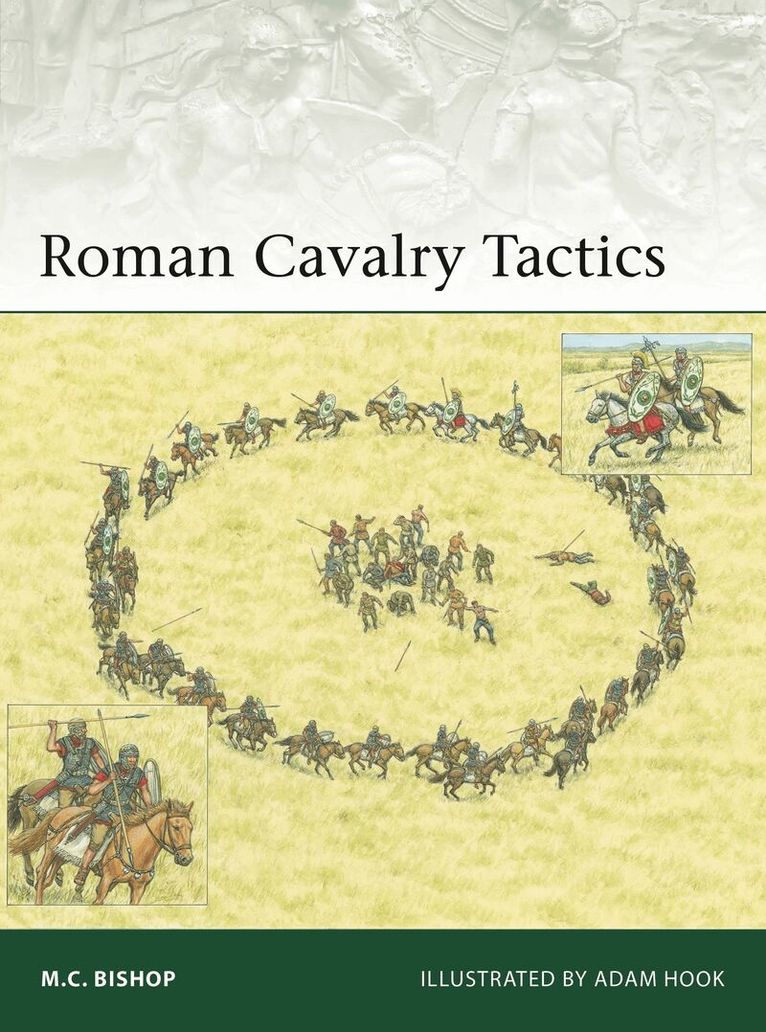
A fully illustrated study of the Roman cavalry's evolution, this fascinating book chronicles tactics and composition from the time of the Republic to the fall of the Dominate.The cavalry ‘wings’ that probed ahead of the Roman Army played a key role in its campaigns of conquest, masking its marching flanks and seeking to encircle enemies in battle. However, the original small cavalry arm provided by the citizen nobility had proved inadequate before the end of the Republic, and Julius Caesar’s cavalry was largely made up of hired allies. During the Early Principate, the armies under Augustus continued in this vein, incorporating large numbers of non-citizen auxiliary cavalry units. The provinces came under increasing attack throughout and following the chaotic mid-3rd century, and Rome took lessons from its ‘barbarian’ enemies in how to improve its military mobility, adopting both new, heavily armoured shock cavalry and horse-archers, and vitally shaping the tactics employed during the Dominate.In this engaging study, Roman Army expert M.C. Bishop charts how the cavalry grew to become the dominant force in Roman field armies by the twilight of the Western Empire. Eight newly commissioned artwork plates and a rich selection of artefact photographs and archaeological sources provide vivid detail and insight, helping to bring to the life the evolving tactics, clothing and weaponry of Rome’s cavalry from the 2nd century BC through to the 5th century AD.
191 kr
Skickas inom 7-10 vardagar
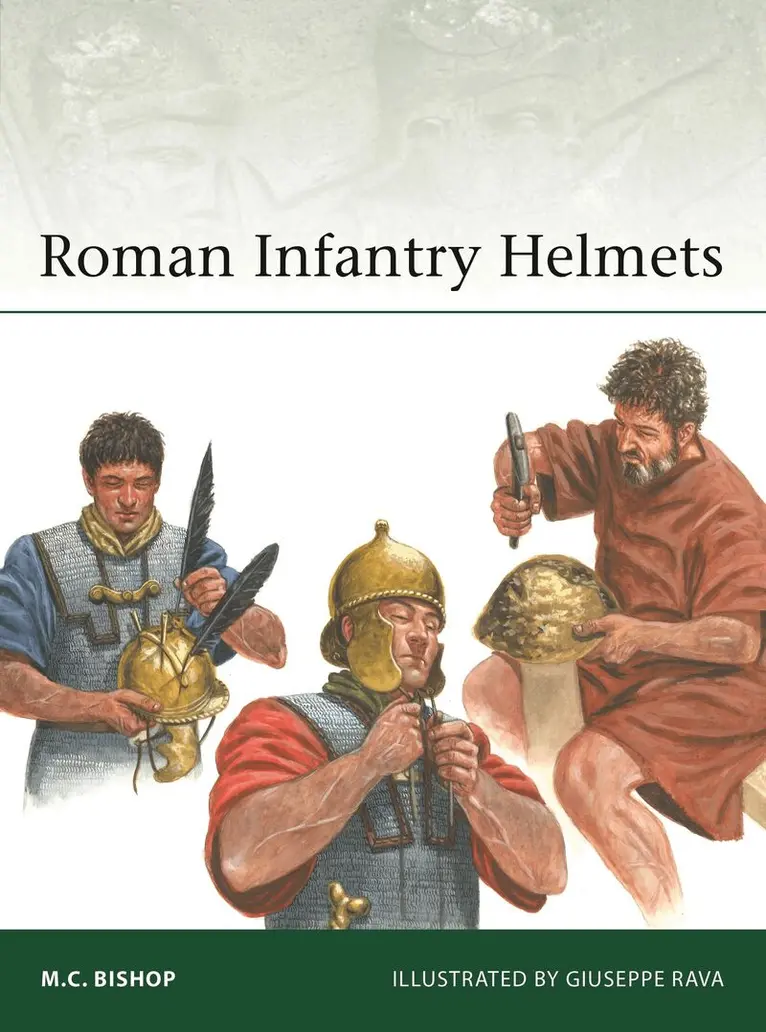
This study investigates the development, manufacture, decoration and use of the Roman infantry helmet, a vital piece of personal protection equipment of both legionary and auxiliary troops.The protective headgear worn by Roman foot soldiers of the Republican period was adopted directly from the Etruscans, who had in turn adapted helmets from neighbouring European cultures within and beyond the Italian peninsula. In this study, a renowned authority explains how its form remained largely unchanged until the Late Republic, when contact and conflict with a wider variety of cultures introduced new influences.The dynamic forces at work during civil wars and transition from the Republic to the Principate at the end of the 1st century BC saw a whole range of types introduced which then evolved until new influences prompted further changes. M.C. Bishop shows how this culminated in contact with Eastern cultures leading to completely new types being introduced, which simplified manufacture and led to a variety of post-Roman helmet types.Many new finds have ensured that much has changed in the narrative of Roman helmets in recent scholarship and the time is ripe for this accessible examination of the development, manufacture and use of the Roman infantry helmet. The text is complemented by carefully chosen illustrations, many in colour, and eight plates of specially commissioned artwork.
170 kr
Kommande
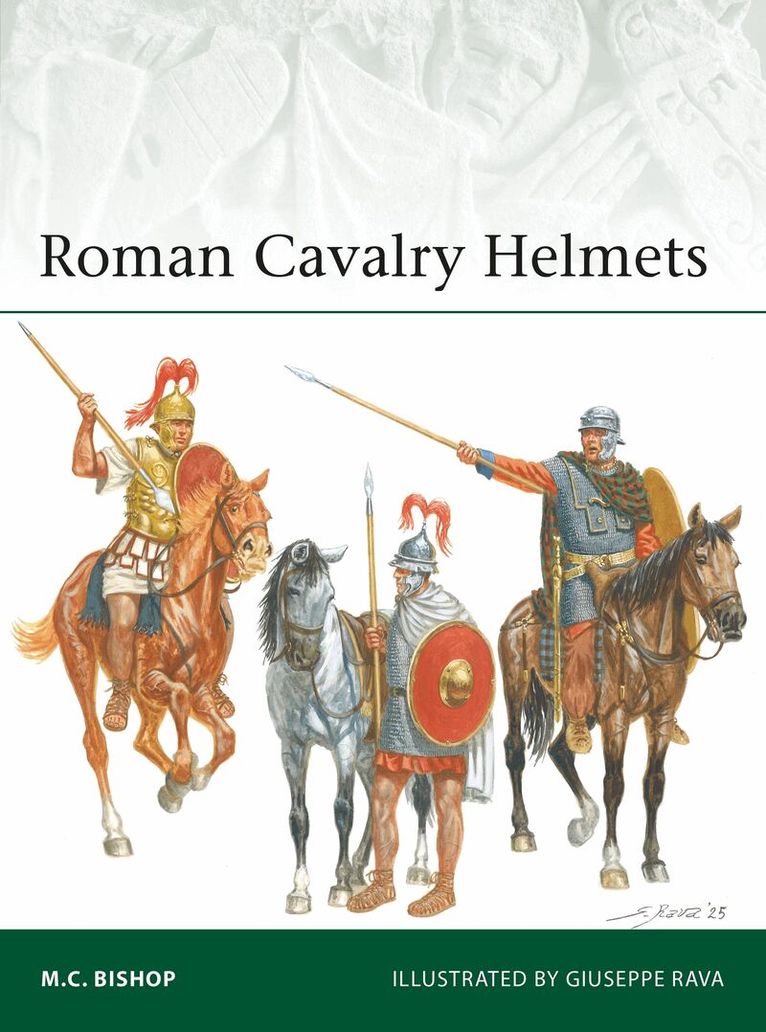
Renowned authority M. C. Bishop investigates the origins, development, manufacture, decoration and use of the Roman cavalry helmet.Roman cavalry helmets of the Republican period at first differed little from the infantry helmets and identifying them proves a challenging but not impossible task. In this study, M.C. Bishop reveals how changes to the Roman Army under the Principate at the end of the 1st century BC, not least the incorporation of auxiliary forces, brought changes, with cavalry and infantry helmet types soon diverging. Notably, the Principate saw the introduction of face-mask helmets specifically for use in the hippika gymnasia, a form of combined mounted training and display manoeuvres.As with Roman infantry helmets, contact with Eastern cultures led to completely new types of cavalry helmet being introduced. As this study shows, this simplified helmet manufacture and ultimately led directly to a variety of post-Roman helmet types found, among others, with Saxon and Viking warriors. All of these types are described and illustrated in this ground-breaking work, featuring eight pages of specially commissioned full-colour artwork. This timely and accessible book builds on new finds and the latest research to chart the origins, evolution and legacy of the Roman cavalry helmet.
Reframing the “Desert Frontier”
Studies in the ancient Near East and northern Arabia in honour of David Kennedy
Häftad, Engelska, 2025
724 kr
Skickas inom 5-8 vardagar
The eastern frontier of the Roman Empire its network of roads, trade routes, towns and forts is often conceived of as an 'edge' of both empire and civilisation but this 'borderland' is also part of a rich cultural landscape.