
M.C.A. Korpel – författare
Visar alla böcker från författaren M.C.A. Korpel. Handla med fri frakt och snabb leverans.
10 produkter
10 produkter
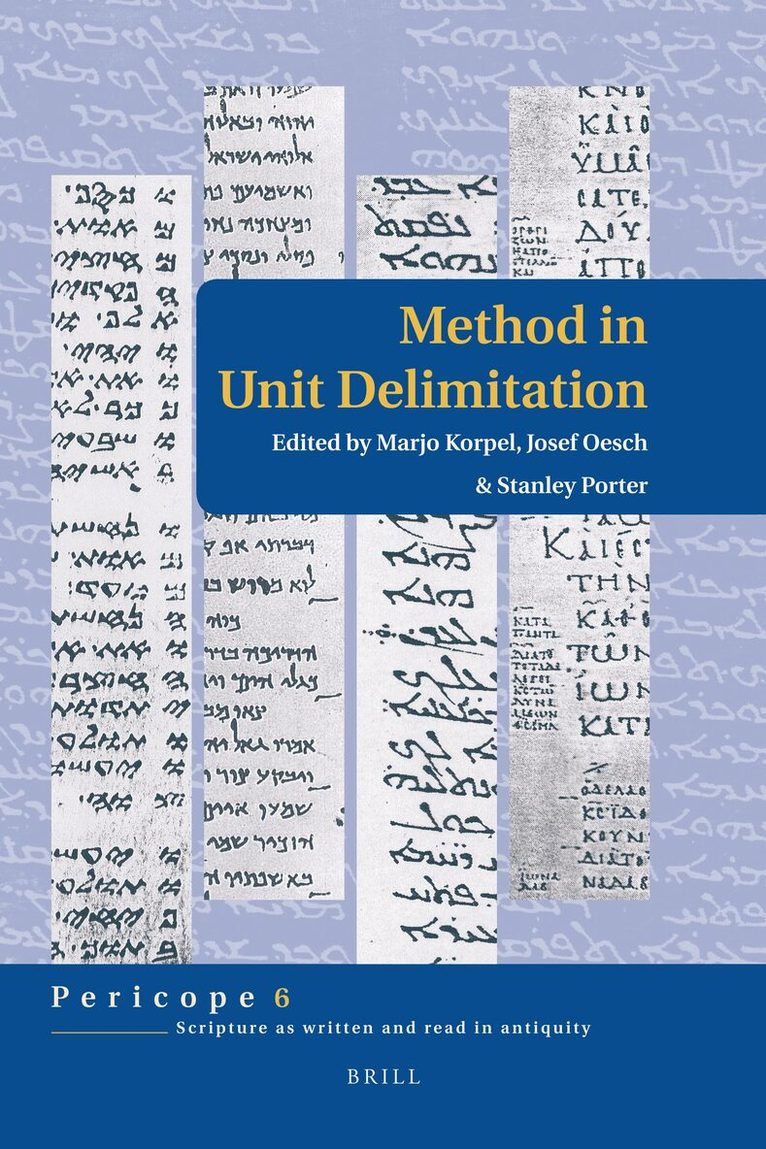
Del 6 - Pericope
Method in Unit Delimitation
Inbunden, Engelska, 2007
1 920 kr
Skickas inom 5-8 vardagar
In this volume selected papers from several Pericope meetings have been combined into a thematic volume, dealing with the method of unit delimitation. A hitherto unnoticed Tibero-Palestinian manuscript from Paris is discussed, as well as the text divisions in the Leviticus and Joshua Codices from the Schoyen collection and a fifth-century lectionary. The volume closes with a proposal for a new polyglot Bible, containing data with regard to unit delimitation from our traditions, Hebrew, Greek, Syriac and Latin.The Pericope Series aims at making available data on unit delimitation found in biblical and related manuscripts to the scholarly world and provides a platform for evaluating this hitherto largely neglected evidence for the benefit of biblical interpretation.
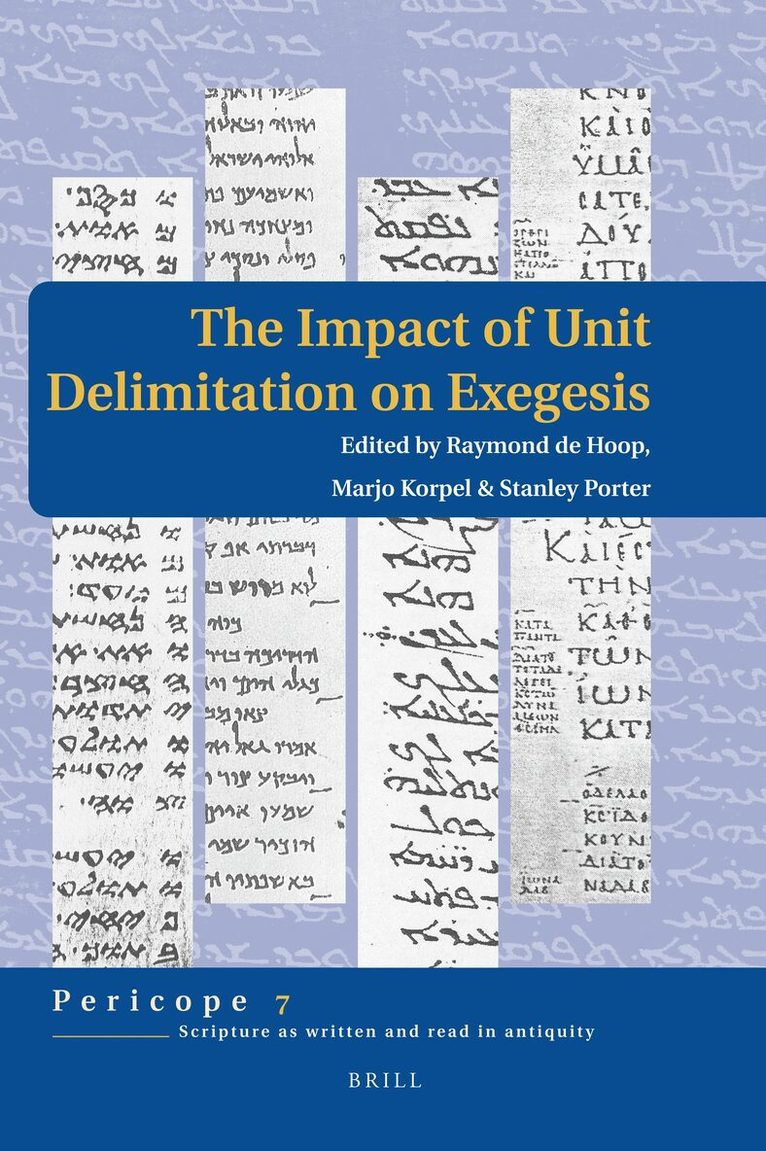
Del 7 - Pericope
Impact of Unit Delimitation on Exegesis
Inbunden, Engelska, 2008
2 154 kr
Skickas inom 5-8 vardagar
This volume contains papers dealing with the impact of unit delimitation on exegesis. Pargraph markers play an important role in literature, this is illustrated by means of the examples of Mark 12:13-27 and Romans 1:21-25. The setumah after Isaiah 8:16 is significant for understanding the making of the Hebrew Bible. Furthermore, it is demonstrated that the text divisions in the Book of Daniel guide the reading of the text. The demarcation of hymns and prayers in the prophets is illustrated by the examples of Hosea 6:1-3 and Isaiah 42:10-12. Unit delimitation is taken up for the theory of an acrostichon in Nahum 1. Also discussed is the delimitation of units in Genesis, Isaiah 56:1-9, and Jeremiah and Habakkuk.
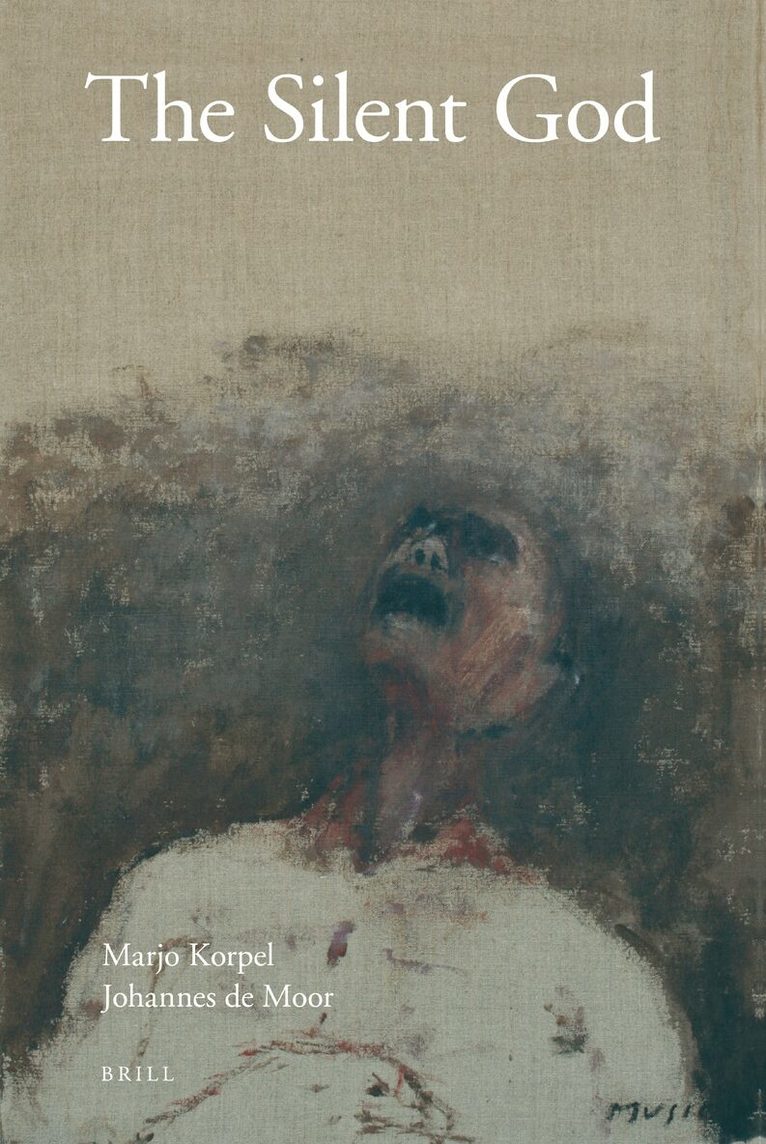
Inbunden, Engelska, 2011
2 982 kr
Skickas inom 5-8 vardagar
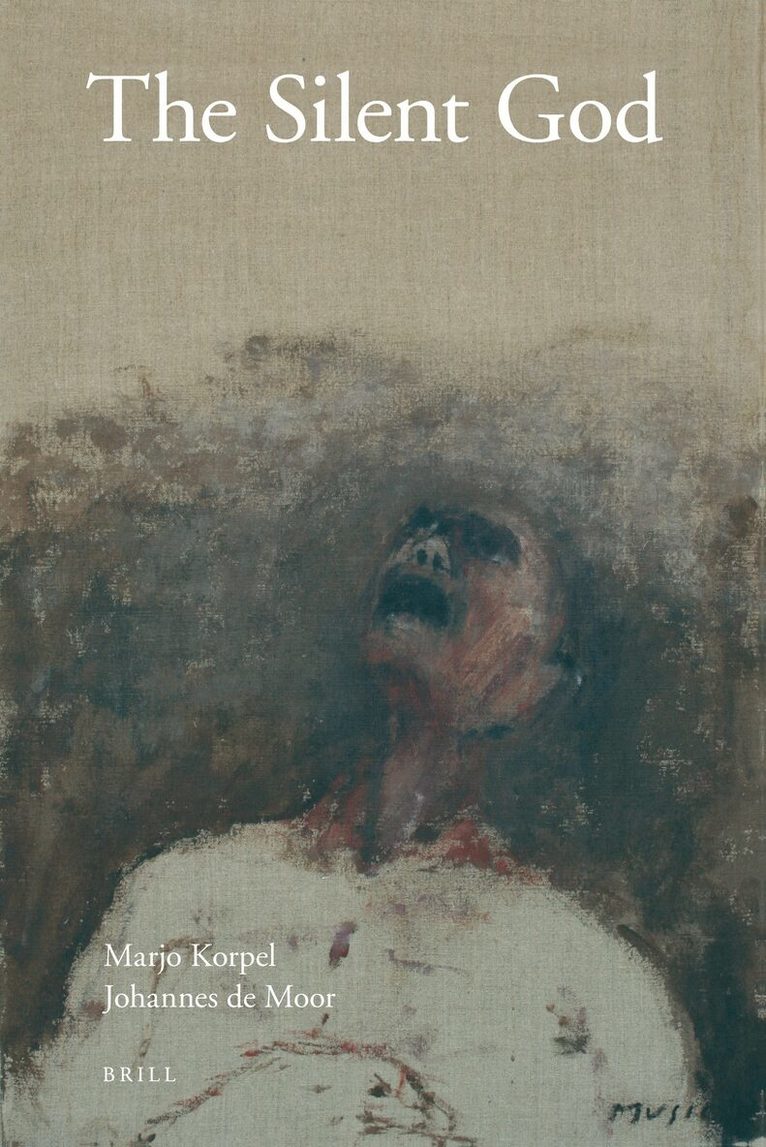
The silence of God is a recurring theme in modern reflection. It is not only addressed in theology, religious studies and philosophy, but also in literary fiction, film and theatre. The authors show that the concept of a silent deity emerged in the ancient Near East (including Greece). What did the Ancients mean when they assumed that under circumstances their deities remained silent? What reasons are discernable for silence between human beings and their gods? For the first time the close interrelation between the divine and the human in the revelatory process is demonstrated here on the basis of a wealth of translated ancient texts. In an intriguing epilogue, the authors explore the theological consequences of what they have found.
E-bok
PDF, Engelska, 20113 246 kr
Läs direkt efter köp
The silence of God is a recurring theme in modern reflection. It is not only addressed in theology, religious studies and philosophy, but also in literary fiction, film and theatre. The authors show that the concept of a silent deity emerged in the ancient Near East (including Greece). What did the Ancients mean when they assumed that under circumstances their deities remained silent? What reasons are discernable for silence between human beings and their gods? For the first time the close interrelation between the divine and the human in the revelatory process is demonstrated here on the basis of a wealth of translated ancient texts. In an intriguing epilogue, the authors explore the theological consequences of what they have found.
Häftad, Engelska, 2012
1 334 kr
Skickas inom 5-8 vardagar
The silence of God is a recurring theme in modern reflection. It is not only addressed in theology, religious studies and philosophy, but also in literary fiction, film and theatre. The authors show that the concept of a silent deity emerged in the ancient Near East (including Greece). What did the Ancients mean when they assumed that under circumstances their deities remained silent? What reasons are discernible for silence between human beings and their gods? For the first time the close interrelation between the divine and the human in the revelatory process is demonstrated here on the basis of a wealth of translated ancient texts. In an intriguing epilogue, the authors explore the theological consequences of what they have found.
E-bok
PDF, Engelska, 20212 081 kr
Läs direkt efter köp
The Book of Ruth reads like a novel. Scholars agree on the literary virtuosity of its author, but are deeply divided about the way she or he has structured the work. For the first time ever, The Structure of the Book of Ruth makes use of hitherto neglected evidence from ancient Hebrew, Greek, Syriac and Latin manuscripts in an attempt to create a more objective basis for discussions about the book's structure. This type of structural analysis is a powerful new tool in the hands of Bible scholars. Structural irregularities appear to elucidate the redactional history of the Book of Ruth. Structural breaks and links appear to function as markers indicating a certain understanding of the text to the exclusion of other possibilities. The question of divine justice comes out as the central theme of the book. Is it justified to accuse God of injustice, as Naomi did? The time when this problem was most virulent was the exilic and post-exilic period. Naomi appears to stand for the old Zion, the embittered widow of Lamentations 1. Ruth is a personification of the new Zion, the bride whom her divine husband will marry again. The remarkable openness to an active role of foreigners and women in the restoration of Israel is a deliberate protest against the draconic measures of Ezra and Nehemiah against marriages with foreign women.
E-bok
PDF, Engelska, 20213 513 kr
Läs direkt efter köp
Exile and Return have caused a crisis in Israelite religion. This crisis eventually gave the impetus for the emergence of Judaism. The papers in this volume, originally read at a Symposium organized by Utrecht University in April 1998, discuss the relevant aspects of this crisis and the shift from Yahwism to Judaism. The collection of papers is unique in presenting a multidimensional treatment of the problems involved. Biblical texts are read against their historical background with the question in mind: How did the author(s) of this text cope with the changed and shifting situation? Next to that the period under consideration is discussed from historical, religion-historical, archaeological and iconographic angles.The volume underscores the significance of this period for Biblical studies and will certainly yield further discussion.
E-bok
PDF, Engelska, 20216 218 kr
Läs direkt efter köp
Exegesis starts with the delimitation of the pericope to be interpreted. Yet the principles for selecting passages which form the part of departure for the exegete are seldom made explicit and if one compares various commentaries and Bible translations, it soon becomes apparent that this lack of methodical transparency gives rise to a lot of confusion and dissent.In this work the authors make use of text divisions found in ancient Hebrew, Greek and Syriac manuscripts of Isaiah 40-55 (Deutero-Isaiah). For the first time the poetic structure of the text is based on controllable evidence which is roughly 500-1000 years older than the medieval Masoretic manuscripts on which all modern editions are based. The results are astonishing and raise the question why this type of evidence has been largely neglected thus far.
E-bok
PDF, Engelska, 20072 103 kr
Läs direkt efter köp
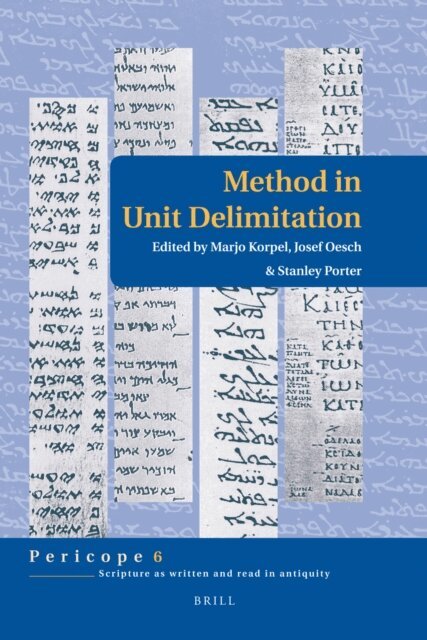
In this volume selected papers from several Pericope meetings have been combined into a thematic volume, dealing with the method of unit delimitation. A hitherto unnoticed Tibero-Palestinian manuscript from Paris is discussed, as well as the text divisions in the Leviticus and Joshua Codices from the Schoyen collection and a fifth-century lectionary. The volume closes with a proposal for a new polyglot Bible, containing data with regard to unit delimitation from our traditions, Hebrew, Greek, Syriac and Latin.The Pericope Series aims at making available data on unit delimitation found in biblical and related manuscripts to the scholarly world and provides a platform for evaluating this hitherto largely neglected evidence for the benefit of biblical interpretation.
E-bok
PDF, Engelska, 20092 258 kr
Läs direkt efter köp
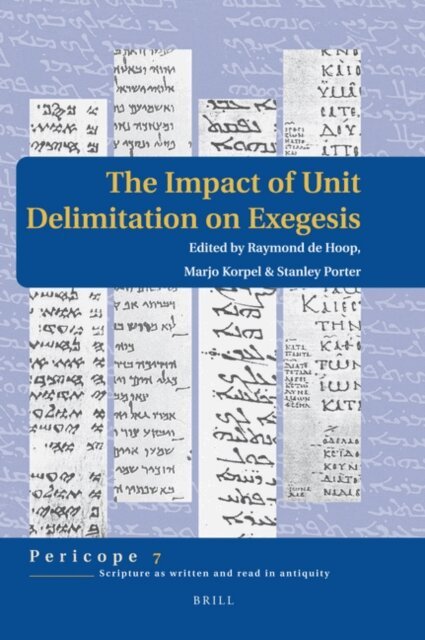
This volume contains papers dealing with the impact of unit delimitation on exegesis. Pargraph markers play an important role in literature, this is illustrated by means of the examples of Mark 12:13-27 and Romans 1:21-25. The setumah after Isaiah 8:16 is significant for understanding the making of the Hebrew Bible. Furthermore, it is demonstrated that the text divisions in the Book of Daniel guide the reading of the text. The demarcation of hymns and prayers in the prophets is illustrated by the examples of Hosea 6:1-3 and Isaiah 42:10-12. Unit delimitation is taken up for the theory of an acrostichon in Nahum 1. Also discussed is the delimitation of units in Genesis, Isaiah 56:1-9, and Jeremiah and Habakkuk.