Medical Follow-up Agency – författare
Visar alla böcker från författaren Medical Follow-up Agency. Handla med fri frakt och snabb leverans.
44 produkter
Anthrax Vaccine
Is It Safe? Does It Work?
Av Institute of Medicine, Medical Follow-up Agency m. fl.
Häftad, 2002
725 kr
Lägg i varukorg
The vaccine used to protect humans against the anthrax disease, called Anthrax Vaccine Adsorbed (AVA), was licensed in 1970. It was initially used to protect people who might be exposed to anthrax where they worked, such as veterinarians and textile plant workers who process animal hair. When the …
Advancing Prion Science
Guidance for the National Prion Research Program
Av Institute of Medicine, Medical Follow-up Agency m. fl.
Häftad, 2004
813 kr
Lägg i varukorg
In Advancing Prion Science, the Institute of Medicinea (TM)s Committee on Transmissible Spongiform Encephalopathies Assessment of Relevant Science recommends priorities for research and investment to the Department of Defensea (TM)s National Prion Research Program (NPRP). Transmissible spongiform …
Long-Term Health Effects of Participation in Project SHAD (Shipboard Hazard and Defense)
Av Institute of Medicine, Board on Military and Veterans Health m. fl.
Häftad, 2007
685 kr
Lägg i varukorg
More than 5,800 military personnel, mostly Navy personnel and Marines, participated in a series of tests of U.S. warship vulnerability to biological and chemical warfare agents, Project SHAD (Shipboard Hazard and Defense), in the period 1962-1973. Only some of the involved military personnel were …
Strategies to Leverage Research Funding
Guiding DOD''s Peer Reviewed Medical Research Programs
Av Committee on Alternative Funding Strategies for DOD's Peer Reviewed Medical Research Programs, Medical Follow-Up Agency m. fl.
E-bok, 2004
820 kr
Lägg i varukorg
Since 1992 the Department of Defense (DOD), through the U.S. Army MedicalResearch and Material Command, has received congressionally earmarked appropriationsfor programs of biomedical research on prostate, breast, and ovarian cancer;neurofibromatosis; tuberous sclerosis; and other health problems. …
Giving Full Measure to Countermeasures
Addressing Problems in the DoD Program to Develop Medical Countermeasures Against Biological Warfare Agents
Av and Acquisition of Medical Countermeasures Against Biological Warfare Agents Committee on Accelerating the Research, Development, Medical Follow-up Agency m. fl.
E-bok, 2004
642 kr
Lägg i varukorg
In recent years, substantial efforts have been initiated to develop new drugs, vaccines,and other medical interventions against biological agents that could be usedin bioterrorist attacks against civilian populations. According to a new congressionallymandated report from the Institute of Medicine …
Advancing Prion Science
Guidance for the National Prion Research Program: Interim Report
Av Committee on Transmissible Spongiform Encephalopathies: Assessment of Relevant Science, Medical Follow-up Agency m. fl.
E-bok, 2003
642 kr
Lägg i varukorg
In Advancing Prion Science, the Institute of Medicine''s Committee on Transmissible Spongiform Encephalopathies Assessment of Relevant Science recommends priorities for research and investment to the Department of Defense''s National Prion Research Program (NPRP). Transmissible spongiform …
Assessment of the CDC Anthrax Vaccine Safety and Efficacy Research Program
Av Committee to Review the CDC Anthrax Vaccine Safety and Efficacy Research Program, Medical Follow-up Agency m. fl.
E-bok, 2002
641 kr
Lägg i varukorg
In 1998, the Department of Defense (DoD) began a program of mandatory immunization against anthrax for all military personnel. As the program proceeded, however, some military personnel and their families raised concerns about the safety and efficacy of the anthrax vaccine. Acknowledging both the …
Protecting Our Forces
Improving Vaccine Acquisition and Availability in the U.S. Military
Av Committee on a Strategy for Minimizing the Impact of Naturally Occurring Infectious Diseases of Military Importance: Vaccine Issues in the U.S. Military, Medical Follow-up Agency m. fl.
E-bok, 2002
589 kr
Lägg i varukorg
Infectious diseases continue to pose a substantial threat to the operational capacity of military forces. Protecting Our Forces reviews the process by which the U.S. military acquires vaccines to protect its warfighters from natural infectious disease threats. The committee found that poorly …
Perspectives on the Department of Defense Global Emerging Infections Surveillance and Response System
A Program Review
Av Committee to Review the Department of Defense Global Emerging Infections Surveillance and Response System, Medical Follow-Up Agency m. fl.
E-bok, 2001
628 kr
Lägg i varukorg
Perspectives on the Department of Defense Global Emerging Infections Surveillance and Response System: A Program Review describes the capacity, quality, and effectiveness of the international and domestic facilities and programs that are a part of a DoD system to monitor and address emerging …
Strategies to Protect the Health of Deployed U.S. Forces
Medical Surveillance, Record Keeping, and Risk Reduction
Av Medical Follow-Up Agency, Institute of Medicine m. fl.
E-bok, 1999
1159 kr
Lägg i varukorg
Nine years after Operations Desert Shield and Desert Storm (the Gulf War) ended in June 1991, uncertainty and questions remain about illnesses reported in a substantial percentage of the 697,000 service members who were deployed. Even though it was a short conflict with very few battle casualties …
Five Series Study
Mortality of Military Participants in U.S. Nuclear Weapons Tests
Av Susan Thaul, William F. Page m. fl.
E-bok, 2000
960 kr
Lägg i varukorg
More than 200,000 U.S. military personnel participated in atmospheric nuclear weapons tests between 1945 and the 1963 Limited Nuclear Test Ban Treaty. Questions persist, such as whether that test participation is associated with the timing and causes of death among those individuals. This is the …
Health Consequences of Service During the Persian Gulf War
Recommendations for Research and Information Systems
Av Committee to Review the Health Consequences of Service During the Persian Gulf War, Medical Follow-up Agency m. fl.
E-bok, 1996
660 kr
Lägg i varukorg
In January 1995 the Institute of Medicine released a preliminary report containing initial findings and recommendations on the federal government''s response to reports by some veterans and their families that they were suffering from illnesses related to military service in the Persian Gulf War. …
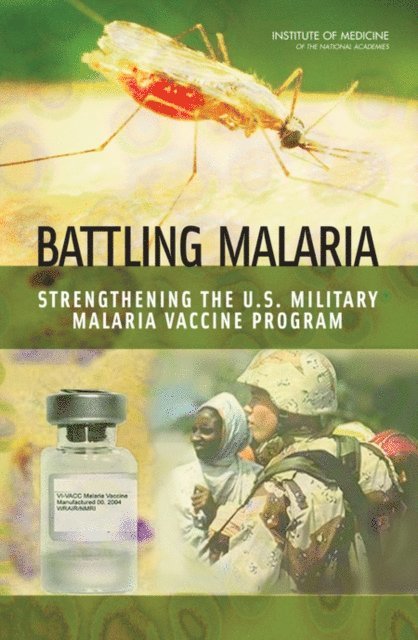
Battling Malaria
Strengthening the U.S. Military Malaria Vaccine Program
Av Committee on U.S. Military Malaria Vaccine Research: A Program Review, Medical Follow-Up Agency m. fl.
E-bok, 2006
696 kr
Lägg i varukorg
Malaria is an infectious disease common to several parts of the world, including Africa, northern South America, and Asia. During their service in the military, U.S. active members may be sent to any part of the world, including parts of the world where Malaria is an issue. In Liberia in 2003, for …
Anthrax Vaccine
Is It Safe? Does It Work?
Av Committee to Assess the Safety and Efficacy of the Anthrax Vaccine, Medical Follow-up Agency m. fl.
E-bok, 2002
693 kr
Lägg i varukorg
The vaccine used to protect humans against the anthrax disease, called Anthrax Vaccine Adsorbed (AVA), was licensed in 1970. It was initially used to protect people who might be exposed to anthrax where they worked, such as veterinarians and textile plant workers who process animal hair. When the …
Protecting Our Forces
Improving Vaccine Acquisition and Availability in the U.S. Military
Av Committee on a Strategy for Minimizing the Impact of Naturally Occurring Infectious Diseases of Military Importance: Vaccine Issues in the U.S. Military, Medical Follow-up Agency m. fl.
E-bok, 2002
416 kr
Lägg i varukorg
Infectious diseases continue to pose a substantial threat to the operational capacity of military forces. Protecting Our Forces reviews the process by which the U.S. military acquires vaccines to protect its warfighters from natural infectious disease threats. The committee found that poorly …
Assessment of the CDC Anthrax Vaccine Safety and Efficacy Research Program
Av Committee to Review the CDC Anthrax Vaccine Safety and Efficacy Research Program, Medical Follow-up Agency m. fl.
E-bok, 2002
432 kr
Lägg i varukorg
In 1998, the Department of Defense (DoD) began a program of mandatory immunization against anthrax for all military personnel. As the program proceeded, however, some military personnel and their families raised concerns about the safety and efficacy of the anthrax vaccine. Acknowledging both the …
Advancing Prion Science
Guidance for the National Prion Research Program: Interim Report
Av Committee on Transmissible Spongiform Encephalopathies: Assessment of Relevant Science, Medical Follow-up Agency m. fl.
E-bok, 2003
437 kr
Lägg i varukorg
In Advancing Prion Science, the Institute of Medicine''s Committee on Transmissible Spongiform Encephalopathies Assessment of Relevant Science recommends priorities for research and investment to the Department of Defense''s National Prion Research Program (NPRP). Transmissible spongiform …
Perspectives on the Department of Defense Global Emerging Infections Surveillance and Response System
A Program Review
Av Committee to Review the Department of Defense Global Emerging Infections Surveillance and Response System, Medical Follow-Up Agency m. fl.
E-bok, 2001
580 kr
Lägg i varukorg
Perspectives on the Department of Defense Global Emerging Infections Surveillance and Response System: A Program Review describes the capacity, quality, and effectiveness of the international and domestic facilities and programs that are a part of a DoD system to monitor and address emerging …
Advancing Prion Science
Guidance for the National Prion Research Program
Av Committee on Transmissible Spongiform Encephalopathies: Assessment of Relevant Science, Medical Follow-up Agency m. fl.
E-bok, 2004
572 kr
Lägg i varukorg
In Advancing Prion Science , the Institute of Medicine''s Committee on TransmissibleSpongiform Encephalopathies Assessment of Relevant Science recommends prioritiesfor research and investment to the Department of Defense''s National Prion ResearchProgram (NPRP). Transmissible spongiform …
Giving Full Measure to Countermeasures
Addressing Problems in the DoD Program to Develop Medical Countermeasures Against Biological Warfare Agents
Av and Acquisition of Medical Countermeasures Against Biological Warfare Agents Committee on Accelerating the Research, Development, Medical Follow-up Agency m. fl.
E-bok, 2004
437 kr
Lägg i varukorg
In recent years, substantial efforts have been initiated to develop new drugs, vaccines,and other medical interventions against biological agents that could be usedin bioterrorist attacks against civilian populations. According to a new congressionallymandated report from the Institute of Medicine …
Health of Former Prisoners of War
Results from the Medical Examination Survey of Former POWs of World War II and the Korean Conflict
Av William Frank Page, Medical Follow-up Agency m. fl.
E-bok, 1992
428 kr
Lägg i varukorg
Using the results from comprehensive medical examinations, this volume explores the prevalence of disease among former prisoners of war of World War II and the Korean conflict and the relationship between that prevalence and their decades-earlier treatment while in captivity.
Strategies to Leverage Research Funding
Guiding DOD''s Peer Reviewed Medical Research Programs
Av Committee on Alternative Funding Strategies for DOD's Peer Reviewed Medical Research Programs, Medical Follow-Up Agency m. fl.
E-bok, 2004
580 kr
Lägg i varukorg
Since 1992 the Department of Defense (DOD), through the U.S. Army MedicalResearch and Material Command, has received congressionally earmarked appropriationsfor programs of biomedical research on prostate, breast, and ovarian cancer;neurofibromatosis; tuberous sclerosis; and other health problems. …
Anthrax Vaccine
Is It Safe? Does It Work?
Av Committee to Assess the Safety and Efficacy of the Anthrax Vaccine, Medical Follow-up Agency m. fl.
E-bok, 2002
494 kr
Lägg i varukorg
The vaccine used to protect humans against the anthrax disease, called Anthrax Vaccine Adsorbed (AVA), was licensed in 1970. It was initially used to protect people who might be exposed to anthrax where they worked, such as veterinarians and textile plant workers who process animal hair. When the …
Five Series Study
Mortality of Military Participants in U.S. Nuclear Weapons Tests
Av Susan Thaul, William F. Page m. fl.
E-bok, 2000
899 kr
Lägg i varukorg
More than 200,000 U.S. military personnel participated in atmospheric nuclear weapons tests between 1945 and the 1963 Limited Nuclear Test Ban Treaty. Questions persist, such as whether that test participation is associated with the timing and causes of death among those individuals. This is the …
Strategies to Protect the Health of Deployed U.S. Forces
Medical Surveillance, Record Keeping, and Risk Reduction
Av Medical Follow-Up Agency, Institute of Medicine m. fl.
E-bok, 1999
1115 kr
Lägg i varukorg
Nine years after Operations Desert Shield and Desert Storm (the Gulf War) ended in June 1991, uncertainty and questions remain about illnesses reported in a substantial percentage of the 697,000 service members who were deployed. Even though it was a short conflict with very few battle casualties …
Epidemiology in Military and Veteran Populations
Proceedings of the Second Biennial Conference, March 7, 1990
Av Medical Follow-Up Agency, Institute of Medicine m. fl.
E-bok, 1991
262 kr
Lägg i varukorg
This book contains papers presented at a conference which describe studies of a World War II hepatitis epidemic, a genetic analysis of substance use in veteran twins, hemorrhagic fever with renal syndrome, the psychological effects of military captivity, and dioxin in adipose tissue. Other papers …
Health Consequences of Service During the Persian Gulf War
Recommendations for Research and Information Systems
Av Committee to Review the Health Consequences of Service During the Persian Gulf War, Medical Follow-up Agency m. fl.
E-bok, 1996
455 kr
Lägg i varukorg
In January 1995 the Institute of Medicine released a preliminary report containing initial findings and recommendations on the federal government''s response to reports by some veterans and their families that they were suffering from illnesses related to military service in the Persian Gulf War. …
Noise and Military Service
Implications for Hearing Loss and Tinnitus
Av Committee on Noise-Induced Hearing Loss and Tinnitus Associated with Military Service from World War II to the Present, Medical Follow-up Agency m. fl.
E-bok, 2005
821 kr
Lägg i varukorg
The Institute of Medicine carried out a study mandated by Congress and sponsoredby the Department of Veterans Affairs to provide an assessment of several issuesrelated to noise-induced hearing loss and tinnitus associated with service in theArmed Forces since World War II.The resulting book, Noise …
Improving the Social Security Disability Decision Process
Interim Report
Av Committee on Improving the Disability Decision Process: SSA's Listing of Impairments and Agency Access to Medical Expertise, Medical Follow-up Agency m. fl.
E-bok, 2005
243 kr
Lägg i varukorg
The Institute of Medicine (IOM) Committee on Improving the Disability Decision Process has been working since it first met in January 2005 to develop recommendations to the Social Security Administration (SSA) on how to improve the medical aspects of its disability determination process. By law, …