Board on Military and Veterans Health – författare
Visar alla böcker från författaren Board on Military and Veterans Health. Handla med fri frakt och snabb leverans.
12 produkter
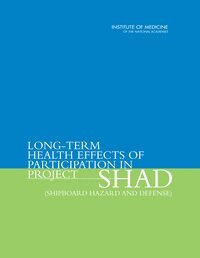
Long-Term Health Effects of Participation in Project SHAD (Shipboard Hazard and Defense)
Av Institute of Medicine, Board on Military and Veterans Health m. fl.
Häftad, 2007
685 kr
Lägg i varukorg
More than 5,800 military personnel, mostly Navy personnel and Marines, participated in a series of tests of U.S. warship vulnerability to biological and chemical warfare agents, Project SHAD (Shipboard Hazard and Defense), in the period 1962-1973. Only some of the involved military personnel were …
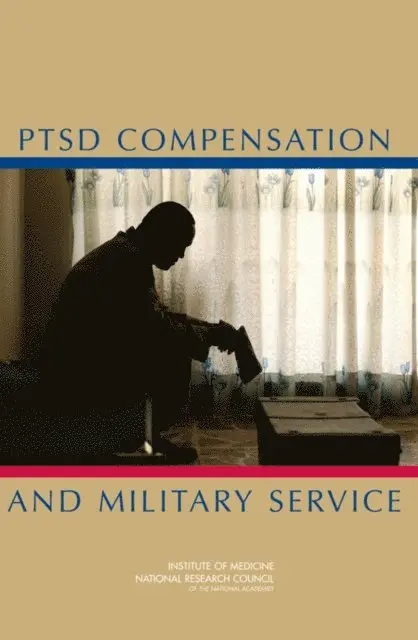
PTSD Compensation and Military Service
Av Committee on Veterans' Compensation for Posttraumatic Stress Disorder, Board on Military and Veterans Health m. fl.
E-bok, 2007
616 kr
Lägg i varukorg
The scars of war take many forms: the limb lost, the illness brought on by a battlefield exposure, and, for some, the psychological toll of encountering an extremely traumatic event. PTSD Compensation and Military Service presents a thorough assessment of how the U.S. Department of Veterans Affairs …
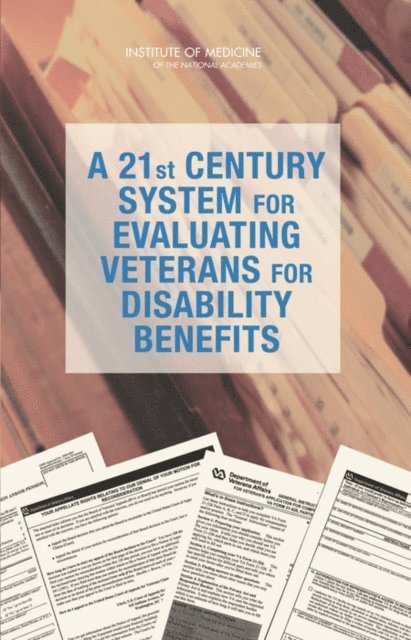
21st Century System for Evaluating Veterans for Disability Benefits
Av Committee on Medical Evaluation of Veterans for Disability Compensation, Board on Military and Veterans Health m. fl.
E-bok, 2007
1097 kr
Lägg i varukorg
21st Century System for Evaluating Veterans'' Disability Benefits recommends improvements in the medical evaluation and rating of veterans for the benefits provided by the Department of Veterans Affairs (VA) to compensate for illnesses or injuries incurred in or aggravated by military service. …
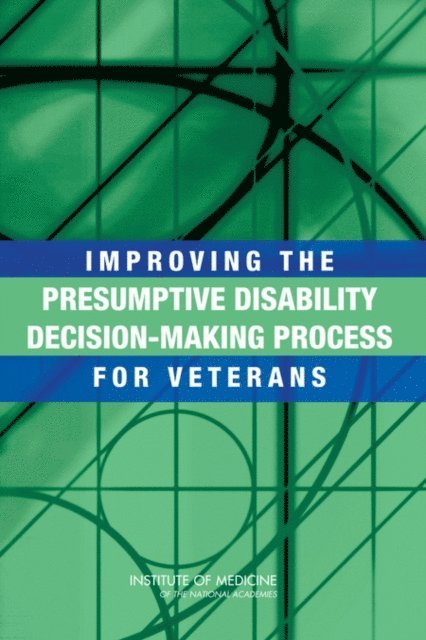
Improving the Presumptive Disability Decision-Making Process for Veterans
Av Committee on Evaluation of the Presumptive Disability Decision-Making Process for Veterans, Board on Military and Veterans Health m. fl.
E-bok, 2008
1168 kr
Lägg i varukorg
The United States has long recognized and honored the service and sacrifices of its military and veterans. Veterans who have been injured by their service (whether their injury appears during service or afterwards) are owed appropriate health care and disability compensation. For some medical …
PTSD Compensation and Military Service
Av Committee on Veterans' Compensation for Posttraumatic Stress Disorder, Board on Military and Veterans Health m. fl.
E-bok, 2007
849 kr
Lägg i varukorg
The scars of war take many forms: the limb lost, the illness brought on by a battlefield exposure, and, for some, the psychological toll of encountering an extremely traumatic event. PTSD Compensation and Military Service presents a thorough assessment of how the U.S. Department of Veterans Affairs …
21st Century System for Evaluating Veterans for Disability Benefits
Av Committee on Medical Evaluation of Veterans for Disability Compensation, Board on Military and Veterans Health m. fl.
E-bok, 2007
1159 kr
Lägg i varukorg
21st Century System for Evaluating Veterans'' Disability Benefits recommends improvements in the medical evaluation and rating of veterans for the benefits provided by the Department of Veterans Affairs (VA) to compensate for illnesses or injuries incurred in or aggravated by military service. …
Utility of Proximity-Based Herbicide Exposure Assessment in Epidemiologic Studies of Vietnam Veterans
Av Committee on Making Best Use of the Agent Orange Exposure Reconstruction Model, Board on Military and Veterans Health m. fl.
E-bok, 2008
727 kr
Lägg i varukorg
A fundamental challenge in past studies evaluating whether health problems experienced by Vietnam veterans might be linked to wartime use of Agent Orange or other herbicides has been a lack of information about the veterans'' level of exposure to these herbicides. To address that problem, …
Improving the Social Security Disability Decision Process
Av Committee on Improving the Disability Decision Process: SSA's Listing of Impairments and Agency Access to Medical Expertise, Board on Military and Veterans Health m. fl.
E-bok, 2007
981 kr
Lägg i varukorg
The Social Security Administration (SSA) provides Social Security Disability Insurance (SSDI) benefits to disabled persons of less than full retirement age and to their dependents. SSA also provides Supplemental Security Income (SSI) payments to disabled persons who are under age 65. For both …
Long-Term Health Effects of Participation in Project SHAD (Shipboard Hazard and Defense)
Av William F. Page, Heather A. Young m. fl.
E-bok, 2007
458 kr
Lägg i varukorg
More than 5,800 military personnel, mostly Navy personnel and Marines, participated in a series of tests of U.S. warship vulnerability to biological and chemical warfare agents, Project SHAD (Shipboard Hazard and Defense), in the period 1962-1973. Only some of the involved military personnel were …
Improving the Social Security Disability Decision Process
Av Institute of Medicine, Board on Military and Veterans Health m. fl.
Häftad, 2007
863 kr
Tillfälligt slut
The Social Security Administration (SSA) provides Social Security Disability Insurance (SSDI) benefits to disabled persons of less than full retirement age and to their dependents. SSA also provides Supplemental Security Income (SSI) payments to disabled persons who are under age 65. For both …
PTSD Compensation and Military Service
Av National Research Council, Institute of Medicine m. fl.
Häftad, 2007
802 kr
Tillfälligt slut
The scars of war take many forms: the limb lost, the illness brought on by a battlefield exposure, and, for some, the psychological toll of encountering an extremely traumatic event. PTSD Compensation and Military Service presents a thorough assessment of how the U.S. Department of Veterans Affairs …
21st Century System for Evaluating Veterans for Disability Benefits
Av Institute of Medicine, Board on Military and Veterans Health m. fl.
Häftad, 2007
1014 kr
Tillfälligt slut
21st Century System for Evaluating Veterans' Disability Benefits recommends improvements in the medical evaluation and rating of veterans for the benefits provided by the Department of Veterans Affairs (VA) to compensate for illnesses or injuries incurred in or aggravated by military service. …