Melike Sayoglu – författare
Visar alla böcker från författaren Melike Sayoglu. Handla med fri frakt och snabb leverans.
4 produkter
4 produkter
Inbunden, Engelska, 2019
1 088 kr
Skickas inom 5-8 vardagar
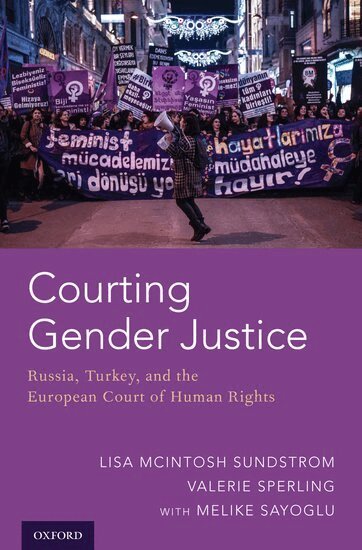
Women and the LGBT community in Russia and Turkey face pervasive discrimination. Only a small percentage dare to challenge their mistreatment in court. Facing domestic police and judges who often refuse to recognize discrimination, a small minority of activists have exhausted their domestic appeals and then turned to their last hope: the European Court of Human Rights (ECtHR). The ECtHR, located in Strasbourg, France, is widely regarded as the most effective international human rights court in existence. Russian citizens whose rights have been violated at home have brought tens of thousands of cases to the ECtHR over the past two decades. But only one of these cases resulted in a finding of gender discrimination by the ECtHR-and that case was brought by a man. By comparison, the Court has found gender discrimination more frequently in decisions on Turkish cases. Courting Gender Justice explores the obstacles that confront citizens, activists, and lawyers who try to bring gender discrimination cases to court. To shed light on the factors that make rare victories possible in discrimination cases, the book draws comparisons among forms of discrimination faced by women and LGBT people in Russia and Turkey. Based on interviews with human rights and feminist activists and lawyers in Russia and Turkey, this engaging book grounds the law in the personal experiences of individual people fighting to defend their rights.
E-bok
PDF, Engelska, 20191 091 kr
Läs direkt efter köp
Women and the LGBT community in Russia and Turkey face pervasive discrimination. Only a small percentage dare to challenge their mistreatment in court. Facing domestic police and judges who often refuse to recognize discrimination, a small minority of activists have exhausted their domestic appeals and then turned to their last hope: the European Court of Human Rights (ECtHR). The ECtHR, located in Strasbourg, France, is widely regarded as the most effective international human rights court in existence. Russian citizens whose rights have been violated at home have brought tens of thousands of cases to the ECtHR over the past two decades. But only one of these cases resulted in a finding of gender discrimination by the ECtHR-and that case was brought by a man. By comparison, the Court has found gender discrimination more frequently in decisions on Turkish cases. Courting Gender Justice explores the obstacles that confront citizens, activists, and lawyers who try to bring gender discrimination cases to court. To shed light on the factors that make rare victories possible in discrimination cases, the book draws comparisons among forms of discrimination faced by women and LGBT people in Russia and Turkey. Based on interviews with human rights and feminist activists and lawyers in Russia and Turkey, this engaging book grounds the law in the personal experiences of individual people fighting to defend their rights.
1 091 kr
Läs direkt efter köp
Women and the LGBT community in Russia and Turkey face pervasive discrimination. Only a small percentage dare to challenge their mistreatment in court. Facing domestic police and judges who often refuse to recognize discrimination, a small minority of activists have exhausted their domestic appeals and then turned to their last hope: the European Court of Human Rights (ECtHR). The ECtHR, located in Strasbourg, France, is widely regarded as the most effective international human rights court in existence. Russian citizens whose rights have been violated at home have brought tens of thousands of cases to the ECtHR over the past two decades. But only one of these cases resulted in a finding of gender discrimination by the ECtHR-and that case was brought by a man. By comparison, the Court has found gender discrimination more frequently in decisions on Turkish cases. Courting Gender Justice explores the obstacles that confront citizens, activists, and lawyers who try to bring gender discrimination cases to court. To shed light on the factors that make rare victories possible in discrimination cases, the book draws comparisons among forms of discrimination faced by women and LGBT people in Russia and Turkey. Based on interviews with human rights and feminist activists and lawyers in Russia and Turkey, this engaging book grounds the law in the personal experiences of individual people fighting to defend their rights.
Inbunden, Ryska, 2022
463 kr
Skickas inom 5-8 vardagar
ENGWomen and the LGBT (lesbian, gay, bisexual, and transgender) community in Russia and Turkey face pervasive discrimination. Only a small percentage dare to challenge their mistreatment in court. Facing domestic police and judges who often refuse to recognize discrimination, a tiny minority of activists have exhausted their domestic appeals and then turned to their last hope: the European Court of Human Rights (ECtHR). The ECtHR, located in Strasbourg, France, is widely regarded as the most effective international human rights court in existence. Russian citizens whose rights have been violated at home have brought tens of thousands of cases to the ECtHR in the last 20 years. But only one of these cases resulted in a finding of gender discrimination—and that case was brought by a man. By comparison, the Court has found gender discrimination more frequently in decisions on Turkish cases. Courting Gender Justice explores the obstacles that confront those who try to use domestic and international law to fight gender and sexual orientation discrimination in Russia and Turkey, and sheds light on the factors that make legal victories possible both at home and abroad. Based on interviews with human rights and feminist activists and lawyers in both countries, this engaging book grounds the law in the experiences of individual people fighting to defend their rights.RUSКоллектив авторов пристально рассматривает историю обращения российских и турецких женщин в Европейский суд по правам человека и выясняет, что, несмотря на десятки тысяч поданных за два десятилетия исков, победить в ЕСПЧ по делу о гендерной дискриминации оказывается очень сложно. Сравнительный анализ исков из Турции и России помогает выяснить, в каких случаях в таких делах оказывается все же возможно доказать факт нарушения своих прав. Накопленный массив информации позволяет также дать практические рекомендации тем, кто желает обратиться в международные инстанции в поисках справедливости.