Melody Jue - Böcker
Visar alla böcker från författaren Melody Jue. Handla med fri frakt och snabb leverans.
7 produkter
7 produkter
1 086 kr
Skickas inom 7-10 vardagar
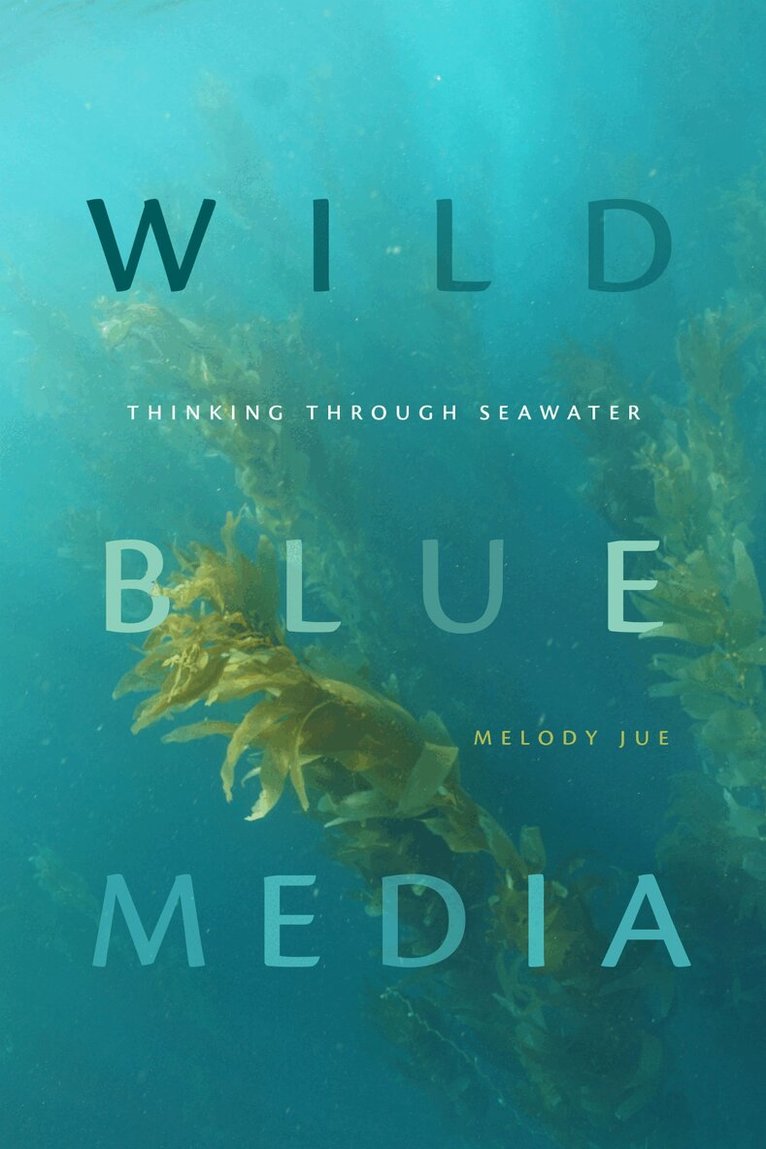
In Wild Blue Media, Melody Jue destabilizes terrestrial-based ways of knowing and reorients our perception of the world by considering the ocean itself as a media environment-a place where the weight and opacity of seawater transforms how information is created, stored, transmitted, and perceived. By recentering media theory on and under the sea, Jue calls attention to the differences between perceptual environments and how we think within and through them as embodied observers. In doing so, she provides media studies with alternatives to familiar theoretical frameworks, thereby challenging scholars to navigate unfamiliar oceanic conditions of orientation, materiality, and saturation. Jue not only examines media about the ocean-science fiction narratives, documentary films, ocean data visualizations, animal communication methods, and underwater art-but reexamines media through the ocean, submerging media theory underwater to estrange it from terrestrial habits of perception while reframing our understanding of mediation, objectivity, and metaphor.
297 kr
Skickas
In Wild Blue Media, Melody Jue destabilizes terrestrial-based ways of knowing and reorients our perception of the world by considering the ocean itself as a media environment-a place where the weight and opacity of seawater transforms how information is created, stored, transmitted, and perceived. By recentering media theory on and under the sea, Jue calls attention to the differences between perceptual environments and how we think within and through them as embodied observers. In doing so, she provides media studies with alternatives to familiar theoretical frameworks, thereby challenging scholars to navigate unfamiliar oceanic conditions of orientation, materiality, and saturation. Jue not only examines media about the ocean-science fiction narratives, documentary films, ocean data visualizations, animal communication methods, and underwater art-but reexamines media through the ocean, submerging media theory underwater to estrange it from terrestrial habits of perception while reframing our understanding of mediation, objectivity, and metaphor.
1 138 kr
Skickas inom 7-10 vardagar
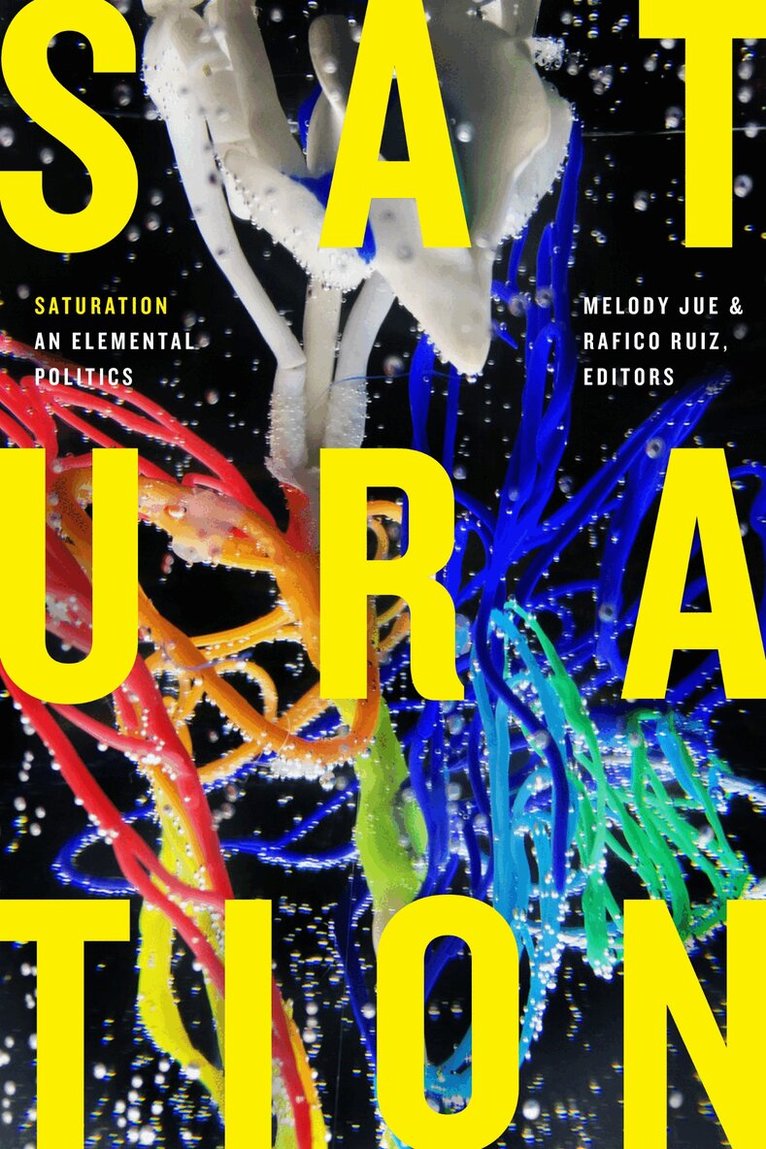
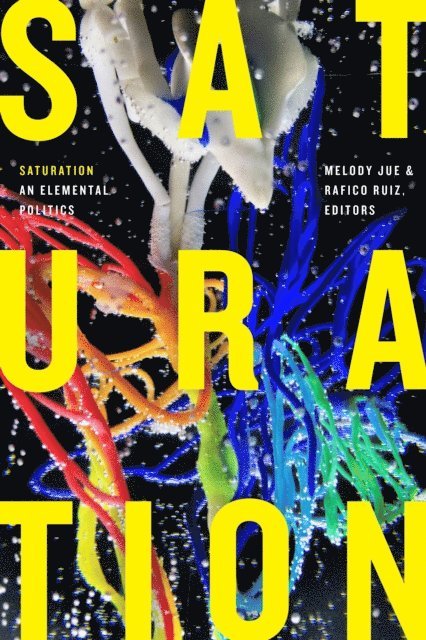
Bringing together media studies and environmental humanities, the contributors to Saturation develop saturation as a heuristic to analyze phenomena in which the elements involved are difficult or impossible to separate. In ordinary language, saturation describes the condition of being thoroughly soaked, while in chemistry it is the threshold at which something can be maximally dissolved or absorbed in a solution. Contributors to this collection expand notions of saturation beyond water to consider saturation in sound, infrastructure, media, Big Data, capitalism, and visual culture. Essays include analyses of the thresholds of HIV detectability in bloodwork, militarism's saturation of oceans, and the deleterious effects of the saturation of cellphone and wi-fi signals into the human body. By channeling saturation to explore the relationship between media, the environment, technology, capital, and the legacies of settler colonialism, Saturation illuminates how elements, the natural world, and anthropogenic infrastructures, politics, and processes exist in and through each other.Contributors. Marija Cetinić, Jeff Diamanti, Bishnupriya Ghosh, Lisa Yin Han, Stefan Helmreich, MÉl Hogan, Melody Jue, Rahul Mukherjee, Max Ritts, Rafico Ruiz, Bhaskar Sarkar, John Shiga, Avery Slater, Janet Walker, Joanna Zylinska
309 kr
Skickas inom 7-10 vardagar
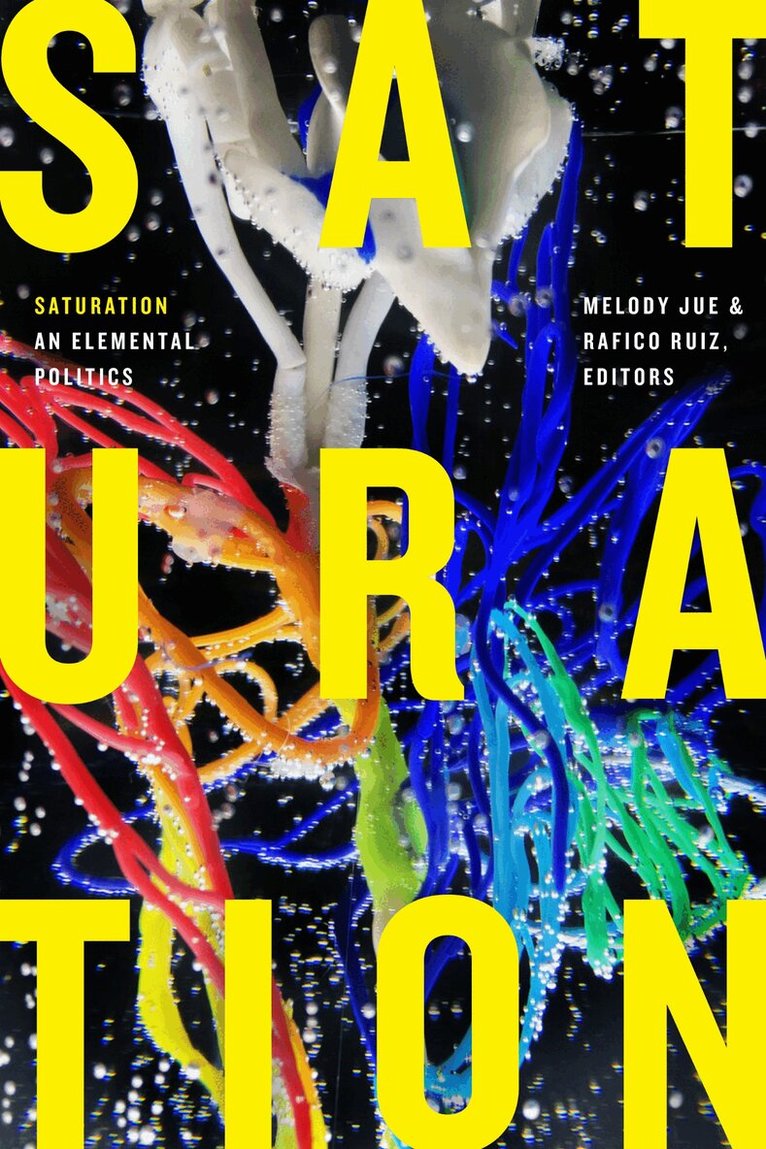
Bringing together media studies and environmental humanities, the contributors to Saturation develop saturation as a heuristic to analyze phenomena in which the elements involved are difficult or impossible to separate. In ordinary language, saturation describes the condition of being thoroughly soaked, while in chemistry it is the threshold at which something can be maximally dissolved or absorbed in a solution. Contributors to this collection expand notions of saturation beyond water to consider saturation in sound, infrastructure, media, Big Data, capitalism, and visual culture. Essays include analyses of the thresholds of HIV detectability in bloodwork, militarism's saturation of oceans, and the deleterious effects of the saturation of cellphone and wi-fi signals into the human body. By channeling saturation to explore the relationship between media, the environment, technology, capital, and the legacies of settler colonialism, Saturation illuminates how elements, the natural world, and anthropogenic infrastructures, politics, and processes exist in and through each other.Contributors. Marija Cetinić, Jeff Diamanti, Bishnupriya Ghosh, Lisa Yin Han, Stefan Helmreich, MÉl Hogan, Melody Jue, Rahul Mukherjee, Max Ritts, Rafico Ruiz, Bhaskar Sarkar, John Shiga, Avery Slater, Janet Walker, Joanna Zylinska
1 059 kr
Skickas inom 7-10 vardagar
Informatics of Domination is an experimental collection addressing formations of power that manifest through technical systems and white capitalist patriarchy in the twenty-first century. The volume takes its name from a chart in Donna J. Haraway’s canonical 1985 essay “A Manifesto for Cyborgs.” Haraway theorizes the informatics of domination as a feminist, diagrammatic concept for situating power and a world system from which the figure of the cyborg emerges. Informatics of Domination builds on Haraway’s chart as an open structure for thought, inviting fifty scholars, artists, and creative writers to unfold new perspectives. Their writings take on a variety of forms, such as essays on artificial intelligence, disability and protest, and transpacific imaginaries; conversations with an AI trained on Black oral history; a three-dimensional response to Mexico-US border tensions; hand-drawn images on queer autotheory; ecological fictions about gut microbiomes and wet markets; and more. Together, the writings take up the unfinished structure of the chart in order to proliferate critiques of white capitalist patriarchal power with the study of information systems, networks, and computation today. This volume includes an afterword by Haraway.Contributors. Dalida MarÍa Benfield, Zach Blas, Ama Josephine Budge Johnstone, micha cÁrdenas, Amy Sara Carroll, Shu Lea Cheang, Jian Neo Chen, Heather Dewey-Hagborg, Ranjodh Singh Dhaliwal, Stephanie Dinkins, Ricardo Dominguez, Ashley Ferro-Murray, Matthew Fuller, Jacob Gaboury, Jennifer Gabrys, Alexander R. Galloway, Jennifer Mae Hamilton, Donna J. Haraway, Eva Hayward, Stefan Helmreich, Kathy High, Leon J. Hilton, Ho Rui An, Hi'ilei Julia Kawehipuaakahaopulani Hobart, Tung-Hui Hu, Caroline A. Jones, Melody Jue, Homay King, Larissa Lai, Lawrence Lek, Esther Leslie, Alexis Lothian, Isadora Neves Marques, Radha May (Elisa Giardina-Papa, Nupur Mathur, and Bathsheba Okwenje), Shaka McGlotten, Mahan Moalemi, madison moore, Astrida Neimanis, Bahar Noorizadeh, Luciana Parisi, Thao Phan, Ana Teixeira Pinto, Luiza Prado de O. Martins, Rita Raley, Patricia Reed, Jennifer Rhee, Bassem Saad, Ashkan Sepahvand, Justin Talplacido Shoulder, Lucy Suchman, Ollie Zhang
270 kr
Skickas inom 7-10 vardagar
Informatics of Domination is an experimental collection addressing formations of power that manifest through technical systems and white capitalist patriarchy in the twenty-first century. The volume takes its name from a chart in Donna J. Haraway’s canonical 1985 essay “A Manifesto for Cyborgs.” Haraway theorizes the informatics of domination as a feminist, diagrammatic concept for situating power and a world system from which the figure of the cyborg emerges. Informatics of Domination builds on Haraway’s chart as an open structure for thought, inviting fifty scholars, artists, and creative writers to unfold new perspectives. Their writings take on a variety of forms, such as essays on artificial intelligence, disability and protest, and transpacific imaginaries; conversations with an AI trained on Black oral history; a three-dimensional response to Mexico-US border tensions; hand-drawn images on queer autotheory; ecological fictions about gut microbiomes and wet markets; and more. Together, the writings take up the unfinished structure of the chart in order to proliferate critiques of white capitalist patriarchal power with the study of information systems, networks, and computation today. This volume includes an afterword by Haraway.Contributors. Dalida MarÍa Benfield, Zach Blas, Ama Josephine Budge Johnstone, micha cÁrdenas, Amy Sara Carroll, Shu Lea Cheang, Jian Neo Chen, Heather Dewey-Hagborg, Ranjodh Singh Dhaliwal, Stephanie Dinkins, Ricardo Dominguez, Ashley Ferro-Murray, Matthew Fuller, Jacob Gaboury, Jennifer Gabrys, Alexander R. Galloway, Jennifer Mae Hamilton, Donna J. Haraway, Eva Hayward, Stefan Helmreich, Kathy High, Leon J. Hilton, Ho Rui An, Hi'ilei Julia Kawehipuaakahaopulani Hobart, Tung-Hui Hu, Caroline A. Jones, Melody Jue, Homay King, Larissa Lai, Lawrence Lek, Esther Leslie, Alexis Lothian, Isadora Neves Marques, Radha May (Elisa Giardina-Papa, Nupur Mathur, and Bathsheba Okwenje), Shaka McGlotten, Mahan Moalemi, madison moore, Astrida Neimanis, Bahar Noorizadeh, Luciana Parisi, Thao Phan, Ana Teixeira Pinto, Luiza Prado de O. Martins, Rita Raley, Patricia Reed, Jennifer Rhee, Bassem Saad, Ashkan Sepahvand, Justin Talplacido Shoulder, Lucy Suchman, Ollie Zhang
125 kr
Skickas inom 7-10 vardagar
A captivating meditation on coral beyond iconic tropical coralsCoralations is a philosophical exploration of the media that come into focus when we shift our attention from the highly recognizable coral of the tropics. Focusing on soft corals and deep-water corals leads to different narratives about climate change and involves different analogies to media. Through thought-provoking analyses of photography, science fiction, visual art, and scientific images, Melody Jue renews our curiosity and broadens our understanding of corals beyond the dominant narratives about their endangerment. Coralations shows how paying attention to particular corals can change what we take for granted.