Mia Bloom - Böcker
Visar alla böcker från författaren Mia Bloom. Handla med fri frakt och snabb leverans.
9 produkter
9 produkter
955 kr
Skickas inom 7-10 vardagar
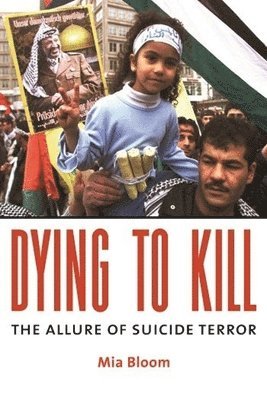
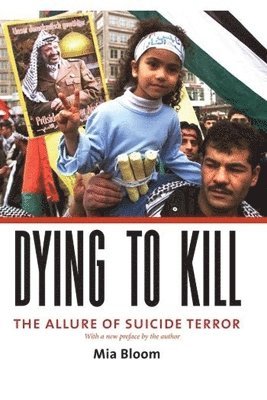
What motivates suicide bombers in Iraq and around the world? Can winning the hearts and minds of local populations stop them? Will the phenomenon spread to the United States? These vital questions are at the heart of this important book. Mia Bloom examines the use, strategies, successes, and failures of suicide bombing in Asia, the Middle East, and Europe and assesses the effectiveness of government responses. She argues that in many instances the efforts of Israel, Russia, and the United States in Iraq have failed to deter terrorism and suicide bombings. Bloom also considers how terrorist groups learn from one another, how they respond to counterterror tactics, the financing of terrorism, and the role of suicide attacks against the backdrop of larger ethnic and political conflicts. Dying to Kill begins with a review of the long history of terrorism, from ancient times to modernity, from the Japanese Kamikazes during World War II, to the Palestinian, Tamil, Iraqi, and Chechen terrorists of today.Bloom explores how suicide terror is used to achieve the goals of terrorist groups: to instill public fear, attract international news coverage, gain support for their cause, and create solidarity or competition between disparate terrorist organizations. She contends that it is often social and political motivations rather than inherently religious ones that inspire suicide bombers. In her chapter focusing on the increasing number of women suicide bombers and terrorists, Bloom examines Sri Lanka, where 33 percent of bombers have been women; Turkey, where the PKK used women feigning pregnancy as bombers; and the role of the Black Widows in the Chechen struggle against Moscow. The motives of individuals, whether religious or nationalist, are important but the larger question is, what external factors make it possible for suicide terrorism to flourish? Bloom describes these conditions and develops a theory of why terrorist tactics work in some instances and fail in others.
267 kr
Skickas inom 7-10 vardagar
What motivates suicide bombers in Iraq and around the world? Can winning the hearts and minds of local populations stop them? Will the phenomenon spread to the United States? These vital questions are at the heart of this important book. Mia Bloom examines the use, strategies, successes, and failures of suicide bombing in Asia, the Middle East, and Europe and assesses the effectiveness of government responses. She argues that in many instances the efforts of Israel, Russia, and the United States in Iraq have failed to deter terrorism and suicide bombings. Bloom also considers how terrorist groups learn from one another, how they respond to counterterror tactics, the financing of terrorism, and the role of suicide attacks against the backdrop of larger ethnic and political conflicts. Dying to Kill begins with a review of the long history of terrorism, from ancient times to modernity, from the Japanese Kamikazes during World War II, to the Palestinian, Tamil, Iraqi, and Chechen terrorists of today.Bloom explores how suicide terror is used to achieve the goals of terrorist groups: to instill public fear, attract international news coverage, gain support for their cause, and create solidarity or competition between disparate terrorist organizations. She contends that it is often social and political motivations rather than inherently religious ones that inspire suicide bombers. In her chapter focusing on the increasing number of women suicide bombers and terrorists, Bloom examines Sri Lanka, where 33 percent of bombers have been women; Turkey, where the PKK used women feigning pregnancy as bombers; and the role of the Black Widows in the Chechen struggle against Moscow. The motives of individuals, whether religious or nationalist, are important but the larger question is, what external factors make it possible for suicide terrorism to flourish? Bloom describes these conditions and develops a theory of why terrorist tactics work in some instances and fail in others.
1 437 kr
Skickas inom 10-15 vardagar
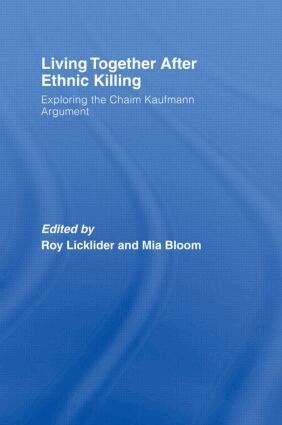
This volume attempts to critically analyze Chaim Kaufman's ideas from various methodological perspectives, with the view of further understanding how stable states may arise after violent ethnic conflict and to generate important debate in the area.After the Cold War, the West became optimistic of their ability to intervene effectively in instances of humanitarian disasters and civil war. Unfortunately, in the light of Bosnia, Somalia and Rwanda, questions of the appropriate course of action in situations of large scale violence became hotly contested. A wave of analysis considered the traditional approach of third parties attempting to ensure that the nation was built on the basis of a ruling power-share between the opposing sides of the conflict to be overwhelmingly problematic, and perhaps impossible. Within this movement Kaufman wrote a series of articles advocating separation of warring sides in order to provide stability in situations of large scale violence. His theorem provoked extreme responses and polarized opinion, contradicting the established position of promoting power-sharing, democracy and open economies to solve ethnic conflict and had policy implications for the entire international community.This book was previously published as a special issue of Security Studies.
302 kr
Skickas inom 10-15 vardagar
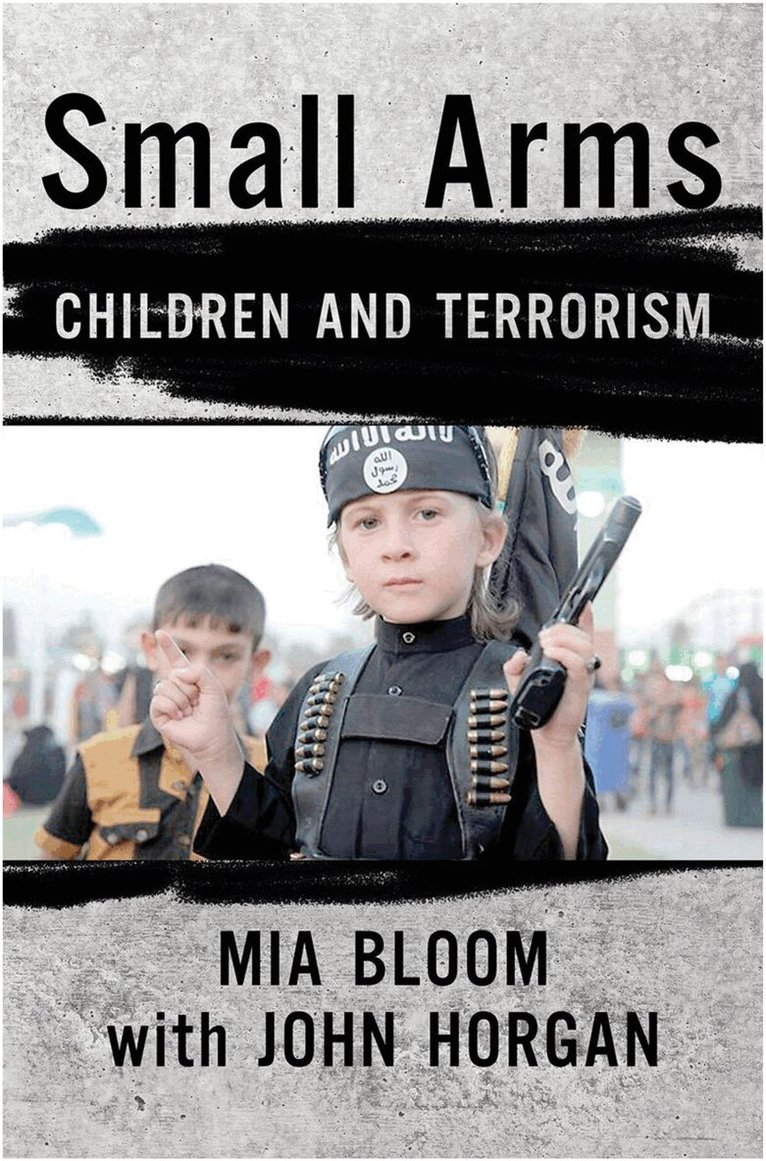
Why do terrorist organizations use children to support their cause and carry out their activities? Small Arms uncovers the brutal truth behind the mobilization of children by terrorist groups. Mia Bloom and John Horgan show us the grim underbelly of society that allows and even encourages the use of children to conduct terrorist activities. They provide readers with the who, what, when, why, and how of this increasingly concerning situation, illuminating a phenomenon that to most of us seems abhorrent. And yet, they argue, for terrorist groups the use of children carries many benefits. Children possess skills that adults lack. They often bring innovation and creativity. Children are, in fact, a superb demographic from which to recruit if you are a terrorist.Small Arms answers questions about recruitment strategies and tactics, determines what makes a child terrorist and what makes him or her different from an adult one, and charts the ways in which organizations use them. The unconventional focus on child and youth militants allows the authors to, in essence, give us a biography of the child terrorist and the organizations that use them. We are taken inside the mind of the adult and the child to witness that which perhaps most scares us.
387 kr
Skickas inom 3-6 vardagar
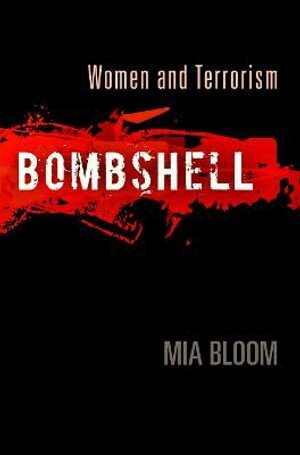
Between 1985 and 2008, female suicide bombers committed more than 230 attacks-about a quarter of all such acts. Women have become the ideal stealth weapon for terrorist groups. They are less likely to be suspected or searched and as a result have been used to strike at the heart of coalition troops in Iraq and Afghanistan. This alarming tactic has been highly effective, garnering extra media attention and helping to recruit more numbers to the terrorists' cause. Yet, as Mia Bloom explains in Bombshell: Women and Terrorism, female involvement in terrorism is not confined to suicide bombing and not limited to the Middle East. From Northern Ireland to Sri Lanka, women have been engaged in all manner of terrorist activities, from generating propaganda to blowing up targets. What drives women to participate in terrorist activities? Bloom-a scholar of both international studies and women's studies-blends scrupulous research with psychological insight to unearth affecting stories from women who were formerly terrorists.She moves beyond gender stereotypes to examine the conditions that really influence female violence, arguing that while women terrorists can be just as bloodthirsty as their male counterparts, their motivations tend to be more intricate and multilayered. Through compelling case studies she demonstrates that though some of these women volunteer as martyrs, many more have been coerced by physical threats or other means of social control. As evidenced by the March 2011 release of Al Qaeda's magazine Al Shamikha, dubbed the jihadi Cosmo, it is clear that women are the future of even the most conservative terrorist organizations. Bombshell is a groundbreaking book that reveals the inner workings of a shocking, unfamiliar world.
443 kr
Skickas inom 10-15 vardagar
This volume attempts to critically analyze Chaim Kaufman's ideas from various methodological perspectives, with the view of further understanding how stable states may arise after violent ethnic conflict and to generate important debate in the area.After the Cold War, the West became optimistic of their ability to intervene effectively in instances of humanitarian disasters and civil war. Unfortunately, in the light of Bosnia, Somalia and Rwanda, questions of the appropriate course of action in situations of large scale violence became hotly contested. A wave of analysis considered the traditional approach of third parties attempting to ensure that the nation was built on the basis of a ruling power-share between the opposing sides of the conflict to be overwhelmingly problematic, and perhaps impossible. Within this movement Kaufman wrote a series of articles advocating separation of warring sides in order to provide stability in situations of large scale violence. His theorem provoked extreme responses and polarized opinion, contradicting the established position of promoting power-sharing, democracy and open economies to solve ethnic conflict and had policy implications for the entire international community.This book was previously published as a special issue of Security Studies.
1 525 kr
Skickas inom 10-15 vardagar
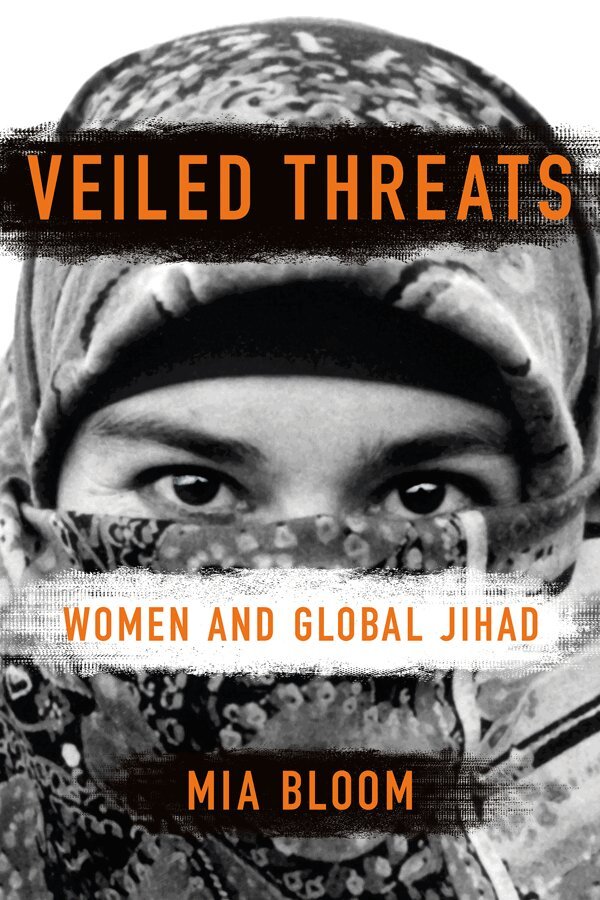
Veiled Threats challenges the idea that women in violent terrorist groups lack agency. Too often, these women are assumed to be controlled by men: their fathers, their husbands, or some other male relative. Mia Bloom contests this narrow understanding. Although extremist groups often control different aspects of women's lives, including their religious obligations or dress, jihadi women have asserted themselves in myriad ways. Bloom interrogates the prevailing perceptions about women's involvement in violent extremism exclusively as victims: manipulated, drugged, or coerced. Following her pioneering work on women in Bombshell, Bloom lifts the veil of the secret world of women in jihadi groups to provide a nuanced and complex explanation of their motivations and challenge misperceptions about women's agency. Veiled Threats explores the range of roles of the women involved in jihad—not only across secular and religious groups but within affiliated religious groups—and examines how these extremist groups have used rape as a weapon of war. Bloom explains how women are used and abused, deployed and destroyed, and the many ways in which their roles in terrorism have evolved over the past three decades.
302 kr
Skickas inom 10-15 vardagar
Veiled Threats challenges the idea that women in violent terrorist groups lack agency. Too often, these women are assumed to be controlled by men: their fathers, their husbands, or some other male relative. Mia Bloom contests this narrow understanding. Although extremist groups often control different aspects of women's lives, including their religious obligations or dress, jihadi women have asserted themselves in myriad ways. Bloom interrogates the prevailing perceptions about women's involvement in violent extremism exclusively as victims: manipulated, drugged, or coerced. Following her pioneering work on women in Bombshell, Bloom lifts the veil of the secret world of women in jihadi groups to provide a nuanced and complex explanation of their motivations and challenge misperceptions about women's agency. Veiled Threats explores the range of roles of the women involved in jihad—not only across secular and religious groups but within affiliated religious groups—and examines how these extremist groups have used rape as a weapon of war. Bloom explains how women are used and abused, deployed and destroyed, and the many ways in which their roles in terrorism have evolved over the past three decades.
248 kr
Skickas inom 10-15 vardagar
A NEW YORK TIMES EDITORS' PICK / TOP 10 RECOMMENDED READTwo experts of extremist radicalization take us down the QAnon rabbit hole, exposing how the conspiracy theory ensnared countless Americans, and show us a way back to sanity.In January 2021, thousands descended on the U.S. Capitol to aid President Donald Trump in combating a shadowy cabal of Satan-worshipping pedophiles. Two women were among those who died that day. They, like millions of Americans, believed that a mysterious insider known as "Q" is exposing a vast deep-state conspiracy. The QAnon conspiracy theory has ensnared many women, who identify as members of "pastel QAnon," answering the call to "save the children." With Pastels and Pedophiles, Mia Bloom and Sophia Moskalenko explain why the rise of QAnon should not surprise us: believers have been manipulated to follow the baseless conspiracy. The authors track QAnon's unexpected leap from the darkest corners of the Internet to the filtered glow of yogi-mama Instagram, a frenzy fed by the COVID-19 pandemic that supercharged conspiracy theories and spurred a fresh wave of Q-inspired violence. Pastels and Pedophiles connects the dots for readers, showing how a conspiracy theory with its roots in centuries-old anti-Semitic hate has adapted to encompass local grievances and has metastasized around the globe—appealing to a wide range of alienated people who feel that something is not quite right in the world around them. While QAnon claims to hate Hollywood, the book demonstrates how much of Q's mythology is ripped from movie and television plot lines. Finally, Pastels and Pedophiles lays out what can be done about QAnon's corrosive effect on society, to bring Q followers out of the rabbit hole and back into the light.