Michael A. Daise – författare
Visar alla böcker från författaren Michael A. Daise. Handla med fri frakt och snabb leverans.
6 produkter
6 produkter
E-bok
PDF, Engelska, 2003616 kr
Läs direkt efter köp
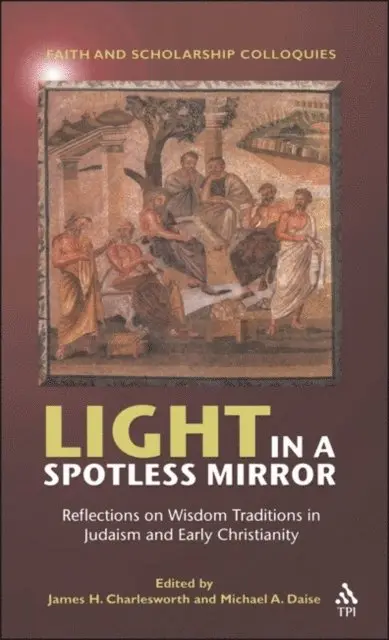
After the death of Alexander the Great in 323 B.C.E., Jewish scholars, especially those in Jerusalem and Alexandria, turned increasingly to the eternal questions that define those who reflect on human life. These sages sought to comprehend the origin and essence of things and pondered how it was possible to learn and obtain insight. Wisdom, they came to see, was the "fashioner of all things" who disclosed "what is secret and what is manifest." Many of these Jewish intellectuals saw Wisdom as the closest being to God.In this book, five of the world''s foremost scholars in the field reflect on the Wisdom traditions in Second Temple Judaism and earliest Christianity. Roland Murphy (late of Duke University) explores the biblical and Jewish wisdom literature, and focuses on ways that Jews sought to understand sin and suffering.Peter Schäfer (Princeton University) argues that the association of Wisdom, Torah, and Israel found in biblical literature was taken up much later in the writings of the Rabbinic sages.Peder Borgen (formerly University of Trondheim, Norway) examines the similarities in the writings of the Hellenistic Jewish Wisdom teacher Philo of Alexandria and the writer of the Gospel of John.D. Moody Smith (Duke University) focuses on the Passion narrative in the Gospel of John as he demonstrates how much John relies on Jewish Wisdom tradition in his gospel. James Charlesworth (PrincetonTheological Seminary) examines the Wisdom aspects of some Jewish apocalypses in order to demonstrate that the Gospel of John draws upon both the Jewish Wisdom literature and Jewish apocalypses. James H. Charlesworth is George L. Collord Professor of New Testament Language and Literature at Princeton Theological Seminary, director of the seminary''s Dead Sea Scrolls Project, and co-editor of the Trinity Press Faith and Scholarship Colloquies (FSC) series.Michael A. Daise is Assistant Professor of Religion at The College of William and Mary and has published articles on the Old Testament Pseudepigrapha and the Dead Sea Scrolls.
Inbunden, Engelska, 2019
1 674 kr
Skickas inom 10-15 vardagar
Michael A. Daise identifies literary features found in six quotations in the Fourth Gospel, suggesting they should be revisited as clusters rather than as discrete units. Three quotations are the only ones whose introductory formulae explicitly ascribe them to Isaiah; three are the only ones cast as being ‘remembered’ by Jesus’ disciples; and each of these groupings forms an inclusio within the Book of Signs which, when combined with the other, produces a chiasmus to Jesus’ public ministry. Daise examines these clusters in three studies, addressing their exegetical issues and theological implications. After an introductory apologia for an historical-critical and theological approach, the first two studies distil narrative themes embedded in the Isaianic and ‘remembrance’ inclusios. The third study then reconstructs the synthesis of these themes created by the chiasmus, and translates its key elements into theological categories. Daise concludes that, while the Isaianic inclusio brings ‘closure’ to the Book of Signs —by disclosing the angelic cause of the Jews’ unbelief — the ‘remembrance’ inclusio creates an anticipation of the Book of Glory — by casting Jesus as poised to establish a new dynasty with the casting out that angelic cause. Daise further argues that this broader storyline carries ramifications for an array of motifs in the Fourth Gospel’s theological taxonomy: in particular its christology, soteriology, eschatology, ecclesiology and pneumatology.
E-bok
PDF, Engelska, 2019500 kr
Läs direkt efter köp
Michael A. Daise identifies literary features found in six quotations in the Fourth Gospel, suggesting they should be revisited as clusters rather than as discrete units. Three quotations are the only ones whose introductory formulae explicitly ascribe them to Isaiah; three are the only ones cast as being ''remembered'' by Jesus'' disciples; and each of these groupings forms an inclusio within the Book of Signs which, when combined with the other, produces a chiasmus to Jesus'' public ministry. Daise examines these clusters in three studies, addressing their exegetical issues and theological implications. After an introductory apologia for an historical-critical and theological approach, the first two studies distil narrative themes embedded in the Isaianic and ''remembrance'' inclusios. The third study then reconstructs the synthesis of these themes created by the chiasmus, and translates its key elements into theological categories. Daise concludes that, while the Isaianic inclusio brings ''closure'' to the Book of Signs -by disclosing the angelic cause of the Jews'' unbelief - the ''remembrance'' inclusio creates an anticipation of the Book of Glory - by casting Jesus as poised to establish a new dynasty with the casting out that angelic cause. Daise further argues that this broader storyline carries ramifications for an array of motifs in the Fourth Gospel''s theological taxonomy: in particular its christology, soteriology, eschatology, ecclesiology and pneumatology.
E-bok
Engelska, 2019500 kr
Läs direkt efter köp
Michael A. Daise identifies literary features found in six quotations in the Fourth Gospel, suggesting they should be revisited as clusters rather than as discrete units. Three quotations are the only ones whose introductory formulae explicitly ascribe them to Isaiah; three are the only ones cast as being ''remembered'' by Jesus'' disciples; and each of these groupings forms an inclusio within the Book of Signs which, when combined with the other, produces a chiasmus to Jesus'' public ministry. Daise examines these clusters in three studies, addressing their exegetical issues and theological implications. After an introductory apologia for an historical-critical and theological approach, the first two studies distil narrative themes embedded in the Isaianic and ''remembrance'' inclusios. The third study then reconstructs the synthesis of these themes created by the chiasmus, and translates its key elements into theological categories. Daise concludes that, while the Isaianic inclusio brings ''closure'' to the Book of Signs -by disclosing the angelic cause of the Jews'' unbelief - the ''remembrance'' inclusio creates an anticipation of the Book of Glory - by casting Jesus as poised to establish a new dynasty with the casting out that angelic cause. Daise further argues that this broader storyline carries ramifications for an array of motifs in the Fourth Gospel''s theological taxonomy: in particular its christology, soteriology, eschatology, ecclesiology and pneumatology.
Häftad, Engelska, 2021
465 kr
Skickas inom 10-15 vardagar
Michael A. Daise identifies literary features found in six quotations in the Fourth Gospel, suggesting they should be revisited as clusters rather than as discrete units. Three quotations are the only ones whose introductory formulae explicitly ascribe them to Isaiah; three are the only ones cast as being ‘remembered’ by Jesus’ disciples; and each of these groupings forms an inclusio within the Book of Signs which, when combined with the other, produces a chiasmus to Jesus’ public ministry. Daise examines these clusters in three studies, addressing their exegetical issues and theological implications. After an introductory apologia for an historical-critical and theological approach, the first two studies distil narrative themes embedded in the Isaianic and ‘remembrance’ inclusios. The third study then reconstructs the synthesis of these themes created by the chiasmus, and translates its key elements into theological categories. Daise concludes that, while the Isaianic inclusio brings ‘closure’ to the Book of Signs —by disclosing the angelic cause of the Jews’ unbelief — the ‘remembrance’ inclusio creates an anticipation of the Book of Glory — by casting Jesus as poised to establish a new dynasty with the casting out that angelic cause. Daise further argues that this broader storyline carries ramifications for an array of motifs in the Fourth Gospel’s theological taxonomy: in particular its christology, soteriology, eschatology, ecclesiology and pneumatology.
Del 229 - Wissenschaftliche Untersuchungen zum Neuen Testament 2. Reihe
Feasts in John
Jewish Festivals and Jesus' "Hour" in the Fourth Gospel
Häftad, Engelska, 2007
1 129 kr
Skickas inom 5-8 vardagar
Die Bedeutung der Feste im Johannesevangelium stellt die Forschung zum Neuen Testament seit langem vor Probleme. Michael A. Daise untersucht sie im Kontext des jüdischen liturgischen Jahres und kommt so zu neuen Ergebnissen. Er geht davon aus, daß in einer früheren Version des Evangeliums Kapitel 5 und 6 vertauscht wurden. Das Passahfest in Johannes 6,4 muß deshalb als das 'Zweite Passah' von Numeri 9,9-14 gelesen werden, das am 14 Iyyar (2. Monat des jüdischen Kalender) gehalten wird. Liest man Kapitel 5 und 6 in diesem Kontext, so zeigt sich, daß in einer früheren Version des Evangeliums die Feste in der Abfolge eines einzigen liturgischen Jahres stehen.