Michael A. Signer - Böcker
Visar alla böcker från författaren Michael A. Signer. Handla med fri frakt och snabb leverans.
5 produkter
5 produkter
1 513 kr
Skickas inom 5-8 vardagar
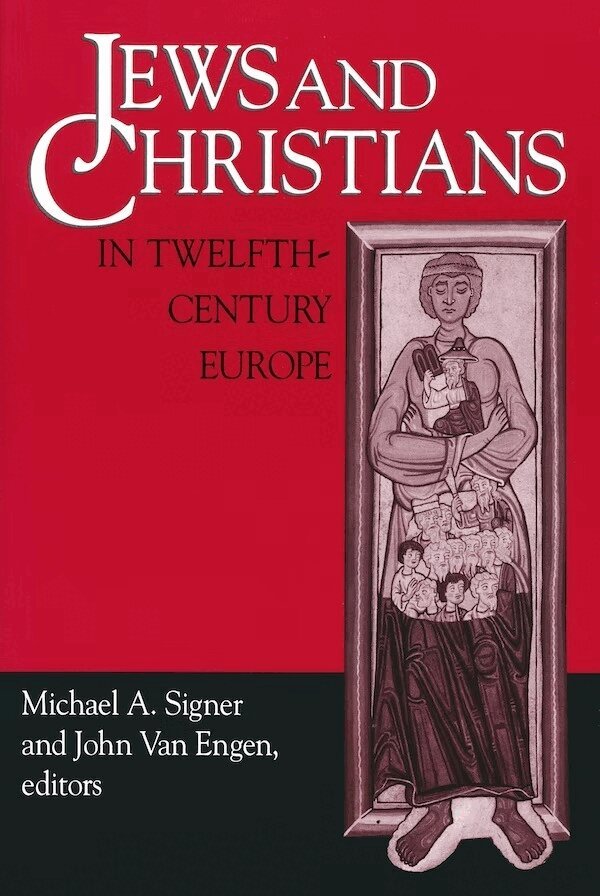
In the summer of 1096, marauding crusaders attacked Jewish communities in three Rhineland cities. These violent episodes disrupted what had been a fairly peaceful history of coexistence between Jews and Christians for more than two centuries. Although the two groups inhabited fundamentally different religious universes, Jews and Christians lived in the same towns, on the same streets, and pursued their lives with minimal interference, often with considerable cooperation. However, the events of 1096 caused relations between the two communities to deteriorate, with Jewish communities suffering as a result.The careful analyses of people, events, and texts provide a balanced perspective on the fate of twelfth-century Jewish communities. The contributors reveal considerable evidence that old routines and interactions between Christians and Jews persisted throughout this volatile period. The essays intentionally highlight areas of common or parallel activity: in vernacular literature, in biblical exegesis, in piety and mysticism, in the social context of conversion, in relations with prelates and monarchs, in coping in a time of change, renewal, and upheaval. Most importantly, the contributors insist on integrating both Jewish and Christian perspectives into the larger history of a very complex and increasingly urban twelfth-century Europe.Contributors: John Van Engen, Jeremy Cohen, Ivan G. Marcus, Robert Chazan, Jonathan M. Elukin, William Chester Jordan, Walter Cahn, Jan M. Ziolkowski, Michael A. Signer, Elliott R. Wolfson, Susan Einbinder, Maureen Boulton, Alfred Haverkamp, Gérard Nahon, and Robert C. Stacey.
314 kr
Skickas inom 10-15 vardagar
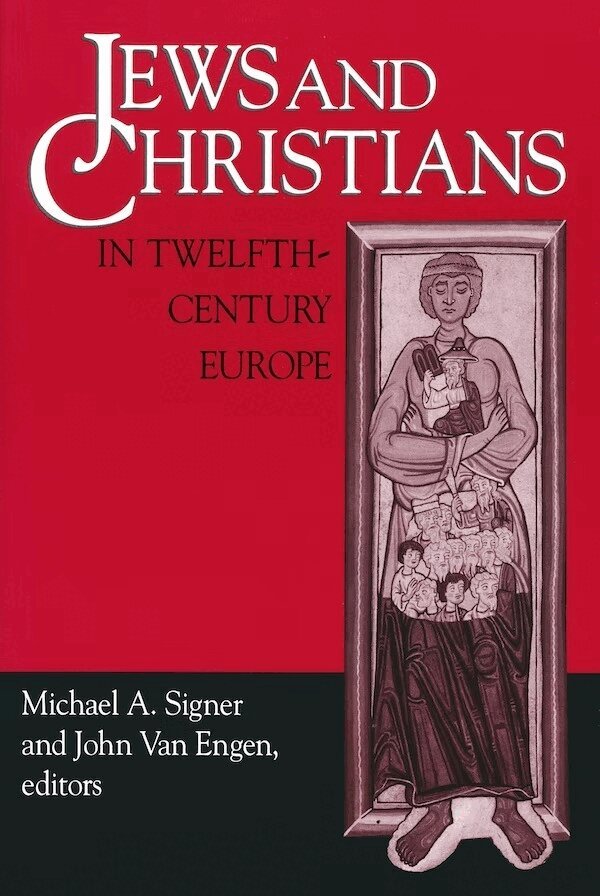
In the summer of 1096, marauding crusaders attacked Jewish communities in three Rhineland cities. These violent episodes disrupted what had been a fairly peaceful history of coexistence between Jews and Christians for more than two centuries. Although the two groups inhabited fundamentally different religious universes, Jews and Christians lived in the same towns, on the same streets, and pursued their lives with minimal interference, often with considerable cooperation. However, the events of 1096 caused relations between the two communities to deteriorate, with Jewish communities suffering as a result.The careful analyses of people, events, and texts provide a balanced perspective on the fate of twelfth-century Jewish communities. The contributors reveal considerable evidence that old routines and interactions between Christians and Jews persisted throughout this volatile period. The essays intentionally highlight areas of common or parallel activity: in vernacular literature, in biblical exegesis, in piety and mysticism, in the social context of conversion, in relations with prelates and monarchs, in coping in a time of change, renewal, and upheaval. Most importantly, the contributors insist on integrating both Jewish and Christian perspectives into the larger history of a very complex and increasingly urban twelfth-century Europe.Contributors: John Van Engen, Jeremy Cohen, Ivan G. Marcus, Robert Chazan, Jonathan M. Elukin, William Chester Jordan, Walter Cahn, Jan M. Ziolkowski, Michael A. Signer, Elliott R. Wolfson, Susan Einbinder, Maureen Boulton, Alfred Haverkamp, Gérard Nahon, and Robert C. Stacey.
260 kr
Skickas inom 10-15 vardagar
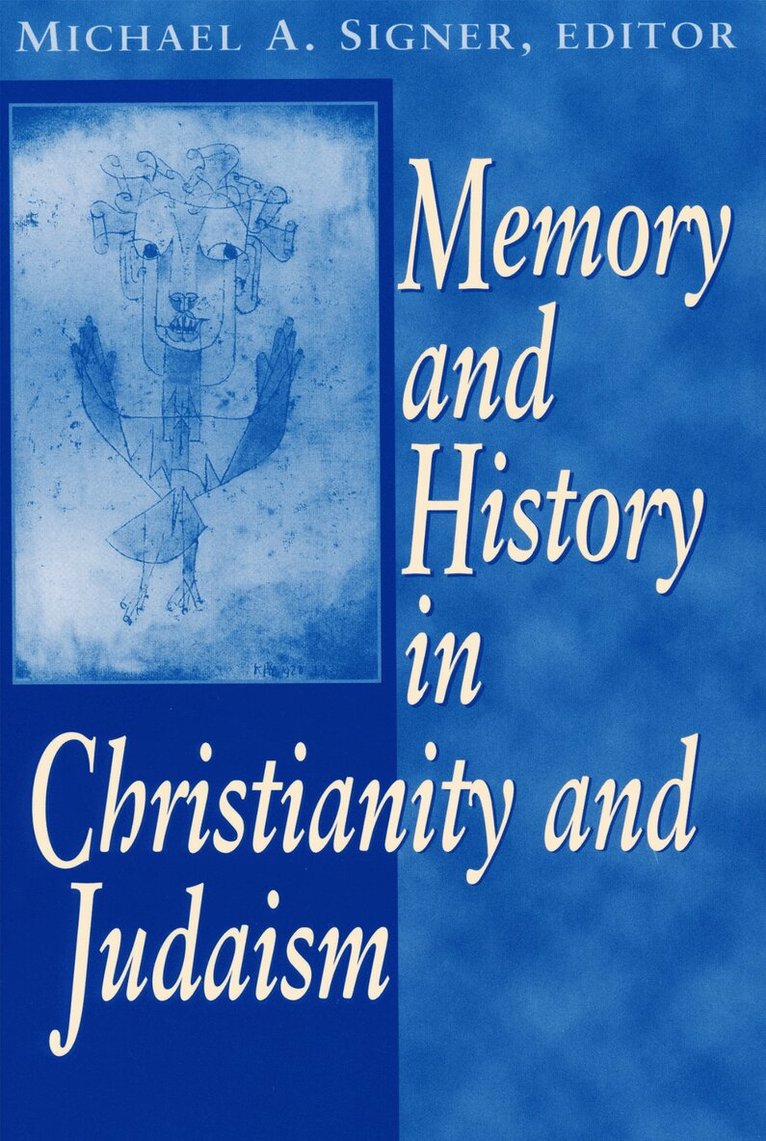
Both Judaism and Christianity are communities bound by rituals of commemoration. At significant moments of gathering, each community reaffirms its identity in the present by calling to mind images and words from the past. The rise of modernity, however, has significantly altered the intellectual and social contexts in which Jews and Christians gather for prayer. During the past hundred years, both groups have been engaged in a creative dialogue with the historical disciplines, and these conversations have significantly altered their respective approaches to theological and religious language. Modernity has undermined a naive conjunction between memory and ritualization and challenged the validity of memory grounded in the authority of divine revelation.The essays and responses in this important volume reflect a unique effort to respond to the disjunction between history and memory that has developed in the modern period. They affirm both the difficulty and the desirability of joining history and memory.Contributors: Michael A. Signer, Marc Brettler, Edith Wyschogrod, Mary Gerhart, Lawrence A. Hoffman, Paul Bradshaw, Paula E. Hyman, Thomas Kselman, Arnold J. Band, Krzysztof Ziarek, Hanspeter Heinz, David Ellenson, Karl-Josef Kuschel, and Lawrence Cunningham.
1 235 kr
Skickas inom 10-15 vardagar
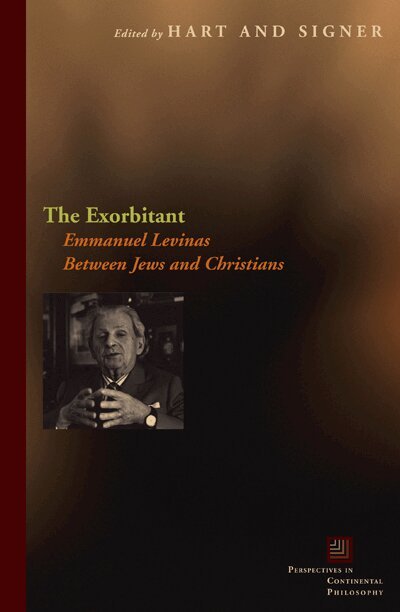
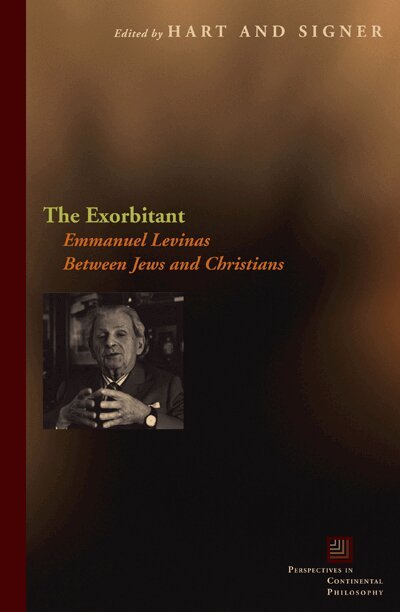
We are exorbitant, and rightly so, when we cut any link we may have to cosmological powers. Levinas invites us to be exorbitant by distancing ourselves from visions of metaphysics, epistemology, and theology. We begin to listen well to Levinas when we hear him inviting us to break completely with the pagan world in which the gods are simply the highest beings in the cosmos and learn to practice an adult religion in which God is outside cosmology and ontology. God comes to mind neither in our attempts to think him as the creator of the cosmos nor in moments of ecstasy but in acts of genuine holiness, such as sharing a piece of bread with someone in a time of desperate need. Levinas, in short, enjoins us to be exorbitant in our dealings with one another. This book asks how the "between" of Levinas's thinking facilitates a dialogue between Jews and Christians. In one sense, Levinas stands exactly between Jews and Christians: ethics, as he conceives it, is a space in which religious traditions can meet. At the same time, his position seems profoundly ambivalent. No one can read a page of his writings without hearing a Jewish voice as well a a philosophical one. Yet his talk of substitution seems to resonate with Christological themes. On occasion, Levinas himself sharply distinguishes Judaism from Christianity--but to what extent can his thinking become the basis for a dialogue between Christians and Jews? This book, with a stellar cast of contributors, explores these questions, thereby providing a snapshot of the current state of Jewish-Christian dialogue.
522 kr
Skickas inom 7-10 vardagar
We are exorbitant, and rightly so, when we cut any link we may have to cosmological powers. Levinas invites us to be exorbitant by distancing ourselves from visions of metaphysics, epistemology, and theology. We begin to listen well to Levinas when we hear him inviting us to break completely with the pagan world in which the gods are simply the highest beings in the cosmos and learn to practice an adult religion in which God is outside cosmology and ontology. God comes to mind neither in our attempts to think him as the creator of the cosmos nor in moments of ecstasy but in acts of genuine holiness, such as sharing a piece of bread with someone in a time of desperate need. Levinas, in short, enjoins us to be exorbitant in our dealings with one another. This book asks how the "between" of Levinas's thinking facilitates a dialogue between Jews and Christians. In one sense, Levinas stands exactly between Jews and Christians: ethics, as he conceives it, is a space in which religious traditions can meet. At the same time, his position seems profoundly ambivalent. No one can read a page of his writings without hearing a Jewish voice as well a a philosophical one. Yet his talk of substitution seems to resonate with Christological themes. On occasion, Levinas himself sharply distinguishes Judaism from Christianity--but to what extent can his thinking become the basis for a dialogue between Christians and Jews? This book, with a stellar cast of contributors, explores these questions, thereby providing a snapshot of the current state of Jewish-Christian dialogue.