Michael Della Rocca – författare
Visar alla böcker från författaren Michael Della Rocca. Handla med fri frakt och snabb leverans.
13 produkter
Spinoza
Häftad, 2008
385 kr
Lägg i varukorg
Renowned for his metaphysics, Spinoza made significant contributions to understanding the human mind, the emotions, moral philosophy, and political philosophy.Beginning with an overview of Spinoza's life, Michael Della Rocca carefully unpacks and explains Spinoza's philosophy: his metaphysics of …
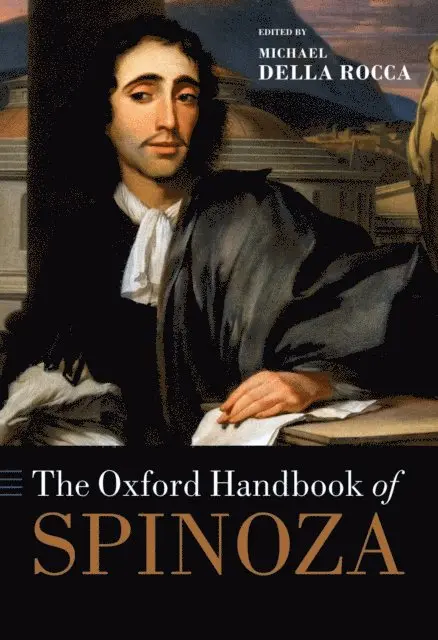
Oxford Handbook of Spinoza
E-bok, 2017
550 kr
Lägg i varukorg
Until recently, Spinoza''s standing in Anglophone studies of philosophy has been relatively low and has only seemed to confirm Friedrich Heinrich Jacobi''s assessment of him as "a dead dog." However, an exuberant outburst of excellent scholarship on Spinoza has of late come to dominate work on …
Representation and the Mind-Body Problem in Spinoza
Inbunden, 1997
2994 kr
Lägg i varukorg
This first extensive study of Spinoza's philosophy of mind concentrates on two problems crucial to the philosopher's thoughts on the matter: the requirements for having a thought about a particular object, and the problem of the mind's relation to the body. Della Rocca contends that Spinoza's …
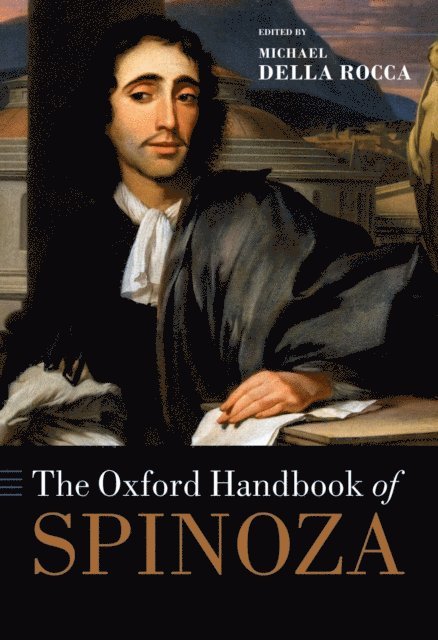
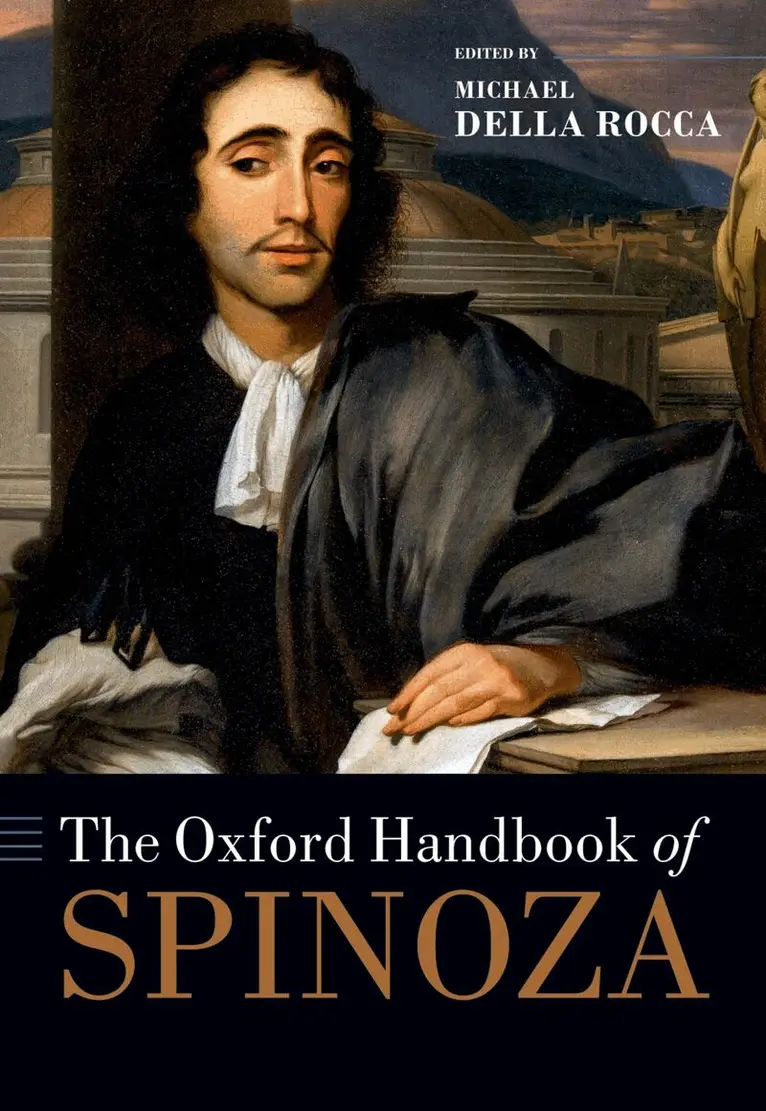
The Oxford Handbook of Spinoza
Inbunden, 2017
2810 kr
Lägg i varukorg
Until recently, Spinoza's standing in Anglophone studies of philosophy has been relatively low and has only seemed to confirm Friedrich Heinrich Jacobi's assessment of him as "a dead dog." However, an exuberant outburst of excellent scholarship on Spinoza has of late come to dominate work on early …
Representation and the Mind-Body Problem in Spinoza
E-bok, 1996
1907 kr
Lägg i varukorg
This first extensive study of Spinoza''s philosophy of mind concentrates on two problems crucial to the philosopher''s thoughts on the matter: the requirements for having a thought about a particular object, and the problem of the mind''s relation to the body. Della Rocca contends that Spinoza''s …
The Parmenidean Ascent
Inbunden, 2020
603 kr
Lägg i varukorg
For the Parmenidean monist, there are no distinctions whatsoever-indeed, distinctions are unintelligible. In The Parmenidean Ascent, Michael Della Rocca aims to revive this controversial approach on rationalist grounds. He not only defends the attribution of such an extreme monism to the …
Parmenidean Ascent
E-bok, 2020
391 kr
Lägg i varukorg
For the Parmenidean monist, there are no distinctions whatsoever-indeed, distinctions are unintelligible. In The Parmenidean Ascent , Michael Della Rocca aims to revive this controversial approach on rationalist grounds. He not only defends the attribution of such an extreme monism to the …
Parmenidean Ascent
E-bok, 2020
391 kr
Lägg i varukorg
For the Parmenidean monist, there are no distinctions whatsoever-indeed, distinctions are unintelligible. In The Parmenidean Ascent , Michael Della Rocca aims to revive this controversial approach on rationalist grounds. He not only defends the attribution of such an extreme monism to the …
The Oxford Handbook of Spinoza
Häftad, 2022
708 kr
Lägg i varukorg
Until recently, Spinoza's standing in Anglophone studies of philosophy has been relatively low and has only seemed to confirm Friedrich Heinrich Jacobi's assessment of him as "a dead dog." However, an exuberant outburst of excellent scholarship on Spinoza has of late come to dominate work on early …
Oxford Handbook of Spinoza
E-bok, 2017
550 kr
Lägg i varukorg
Until recently, Spinoza''s standing in Anglophone studies of philosophy has been relatively low and has only seemed to confirm Friedrich Heinrich Jacobi''s assessment of him as "a dead dog." However, an exuberant outburst of excellent scholarship on Spinoza has of late come to dominate work on …
Spinoza
Inbunden, 2008
2510 kr
Lägg i varukorg
Renowned for his metaphysics, Spinoza made significant contributions to understanding the human mind, the emotions, moral philosophy, and political philosophy.Beginning with an overview of Spinoza's life, Michael Della Rocca carefully unpacks and explains Spinoza's philosophy: his metaphysics of …
Spinoza
E-bok, 2008
450 kr
Lägg i varukorg
Renowned for his metaphysics, Spinoza made significant contributions to understanding the human mind, the emotions, moral philosophy, and political philosophy. Beginning with an overview of Spinoza''s life, Michael Della Rocca carefully unpacks and explains Spinoza''s philosophy: his metaphysics of …
Spinoza
E-bok, 2008
437 kr
Lägg i varukorg
Renowned for his metaphysics, Spinoza made significant contributions to understanding the human mind, the emotions, moral philosophy, and political philosophy. Beginning with an overview of Spinoza''s life, Michael Della Rocca carefully unpacks and explains Spinoza''s philosophy: his metaphysics of …