Michael Fabricant - Böcker
Visar alla böcker från författaren Michael Fabricant. Handla med fri frakt och snabb leverans.
8 produkter
8 produkter
Charter Schools and the Corporate Makeover of Public Education
What's at Stake?
Häftad, Engelska, 2012
331 kr
Skickas inom 11-20 vardagar
This book will reset the discourse on charter schooling by systematically exploring the gap between the promise and the performance of charter schools. The authors do not defend the public school system, which for decades has failed primarily poor children of color. Instead, they use empirical evidence to determine whether charter schooling offers an authentic alternative for these children. In concise chapters, they address a series of important questions related to the recent ascent of charter schools and the radical restructuring of public education. This essential introduction includes a detailed history of the charter movement, an analysis of the politics and economics driving the movement, documentation of actual student outcomes, and alternative images of transforming public education to serve all children.Book Features:An overview of the key issues surrounding the charter school movement.A reframing of the recent discourse on public school reformA comprehensive comparison examining the promises of charter schooling against the empirical evidence.An examination of how charter schools impact communities of color and larger public school systems in poor urban areas.An exploration of the relationships among the rapid ascendance of charter reform, economic decline, and fiscal austerity.
2 088 kr
Skickas inom 10-15 vardagar
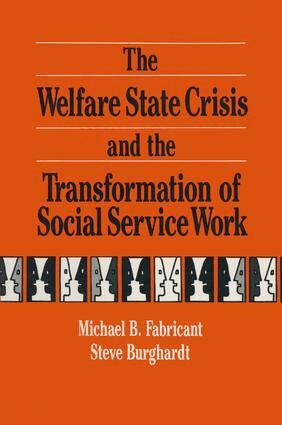
This book has emerged in response to social service workers' vivid descriptions of changes in the practice of their craft during the past 15 years and to the scanty literature that addressed their concerns. Few works have attempted to explore the interplay between the recent broader changes affecting the welfare state (fiscal crisis, cost containment, privatization, etc) and the restructuring of social service work. Yet, it is clear that the fiscal decisions of the 1980s profoundly affected both the context and content of social service practice. "The Welfare State Crisis and the Transformation of Social Service Work" explores how these larger forces have created significant changes for the line practitioner. The greater push for caseload volume in the face of resource scarcity is redefining service encounters in ways that are more likely to meet the fiscal needs of the agency rather than the service needs of clients and the professional concerns of the worker. In short, the fiscal crisis of the past two decades has placed the enterprise of social services at risk. After empirically documenting the seriousness of the risk, "The Welfare State Crisis and the Transformation of Social Service Work" concludes with an exploration of new social service practice strategies that have the potential to integrate the individual, organization, communal, and social changes necessary for effective service interventions.
441 kr
Skickas inom 10-15 vardagar
This book has emerged in response to social service workers' vivid descriptions of changes in the practice of their craft during the past 15 years and to the scanty literature that addressed their concerns. Few works have attempted to explore the interplay between the recent broader changes affecting the welfare state (fiscal crisis, cost containment, privatization, etc) and the restructuring of social service work. Yet, it is clear that the fiscal decisions of the 1980s profoundly affected both the context and content of social service practice. "The Welfare State Crisis and the Transformation of Social Service Work" explores how these larger forces have created significant changes for the line practitioner. The greater push for caseload volume in the face of resource scarcity is redefining service encounters in ways that are more likely to meet the fiscal needs of the agency rather than the service needs of clients and the professional concerns of the worker. In short, the fiscal crisis of the past two decades has placed the enterprise of social services at risk. After empirically documenting the seriousness of the risk, "The Welfare State Crisis and the Transformation of Social Service Work" concludes with an exploration of new social service practice strategies that have the potential to integrate the individual, organization, communal, and social changes necessary for effective service interventions.
588 kr
Kommande
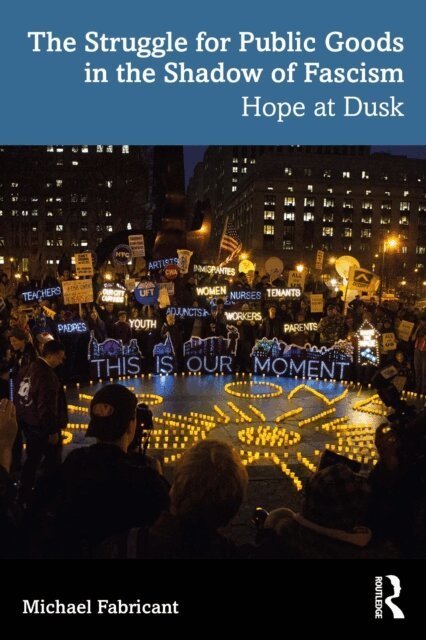
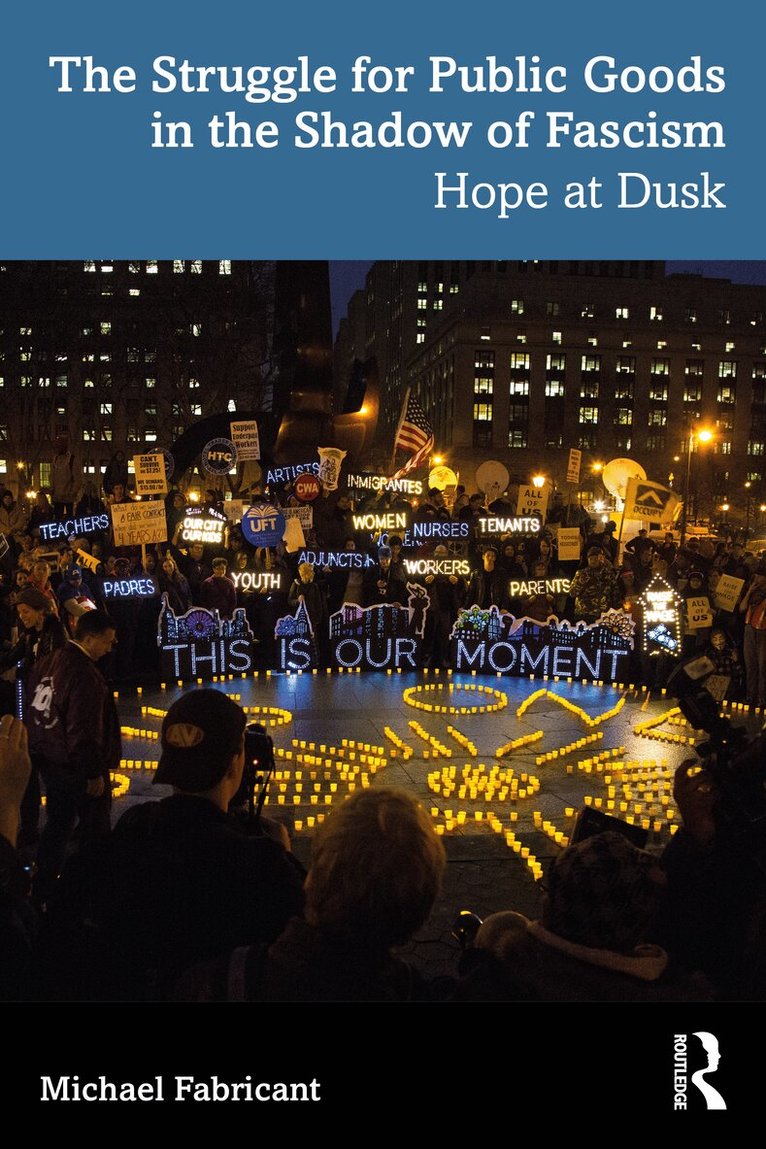
The Struggle for Public Goods in the Shadow of Fascism examines the present diminishment of democracy through the prism of intensifying conflict between market freedom and citizen rights. The fate of democracy is at the center of this book’s exploration of the decline of the welfare state and rise of radical right politics.Sources of hope in difficult times as expressed by artists and organizers are underscored as a constructive way forward. The rise of radical right politics has in part been fueled by the political capitalization of resentment and economic elite interest. State policies supporting basic functions of the welfare state, such as service benefits, anti‑discrimination laws, and market regulation, are in the crosshairs of radical right politics. The welfare state is seen as undermining market interests and displacing “heritage citizens.” Therefore, a primary intention of radical right politics is the disassembly of the welfare state.Providing an important history of American social welfare, all of these are unpacked with careful attention and scrutiny to enable readers to perceive not only the winding path to how we got here but also the stakes in the current predicament. Tracing out the impact of the rise of far‑right politics on American political discourse and social policy, this text will be an important resource for researchers, instructors, and students in sociology, social theory, social policy, human services and public administration, and American and political studies.
2 113 kr
Kommande
The Struggle for Public Goods in the Shadow of Fascism examines the present diminishment of democracy through the prism of intensifying conflict between market freedom and citizen rights. The fate of democracy is at the center of this book’s exploration of the decline of the welfare state and rise of radical right politics.Sources of hope in difficult times as expressed by artists and organizers are underscored as a constructive way forward. The rise of radical right politics has in part been fueled by the political capitalization of resentment and economic elite interest. State policies supporting basic functions of the welfare state, such as service benefits, anti‑discrimination laws, and market regulation, are in the crosshairs of radical right politics. The welfare state is seen as undermining market interests and displacing “heritage citizens.” Therefore, a primary intention of radical right politics is the disassembly of the welfare state.Providing an important history of American social welfare, all of these are unpacked with careful attention and scrutiny to enable readers to perceive not only the winding path to how we got here but also the stakes in the current predicament. Tracing out the impact of the rise of far‑right politics on American political discourse and social policy, this text will be an important resource for researchers, instructors, and students in sociology, social theory, social policy, human services and public administration, and American and political studies.
343 kr
Skickas inom 7-10 vardagar
Public higher education in the postwar era was a key economic and social driver in American life, making college available to millions of working men and women. Since the 1980s, however, government austerity policies and politics have severely reduced public investment in higher education, exacerbating inequality among poor and working-class students of color, as well as part-time faculty. In Austerity Blues, Michael Fabricant and Stephen Brier examine these devastating fiscal retrenchments nationally, focusing closely on New York and California, both of which were leaders in the historic expansion of public higher education in the postwar years and now are at the forefront of austerity measures. Fabricant and Brier describe the extraordinary growth of public higher education after 1945, thanks largely to state investment, the alternative intellectual and political traditions that defined the 1960s, and the social and economic forces that produced austerity policies and inequality beginning in the late 1970s and 1980s.A provocative indictment of the negative impact neoliberal policies have visited on the public university, especially the growth of class, racial, and gender inequalities, Austerity Blues also analyzes the many changes currently sweeping public higher education, including the growing use of educational technology, online learning, and privatization, while exploring how these developments hurt students and teachers. In its final section, the book offers examples of oppositional and emancipatory struggles and practices that can help reimagine public higher education in the future. The ways in which factors as diverse as online learning, privatization, and disinvestment cohere into a single powerful force driving deepening inequality is the central theme of the book. Incorporating the differing perspectives of students, faculty members, and administrators, the book reveals how public education has been redefined as a private benefit, often outsourced to for-profit vendors who "sell" education back to indebted undergraduates. Over the past twenty years, tuition and related student debt have climbed precipitously and degree completion rates have dropped.Not only has this new austerity threatened public universities' ability to educate students, Fabricant and Brier argue, but it also threatens to undermine the very meaning and purpose of public higher education in offering poor and working-class students access to a quality education in a democracy. Synthesizing historical sources, social science research, and contemporary reportage, Austerity Blues will be of interest to readers concerned about rising inequality and the decline of public higher education.
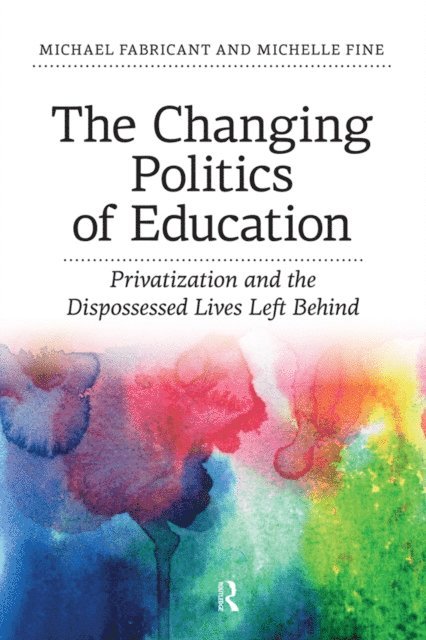
Changing Politics of Education
Privitization and the Dispossessed Lives Left Behind
Inbunden, Engelska, 2013
2 420 kr
Skickas inom 10-15 vardagar
The authors persuasively argue that the present cascade of reforms to public education is a consequence of a larger intention to shrink government. The startling result is that more of public education's assets and resources are moving to the private sector and to the prison industrial complex. Drawing on various forms of evidence-structural, economic, narrative, and youth-generated participatory research-the authors reveal new structures and circuits of dispossession and privilege that amount to a clear failure of present policy. Policymaking is at war with the interests of the vast majority of citizens, and especially with urban youth of color. In the final chapter the authors explore democratic principles and offer examples essential to mobilizing, in solidarity with educators, youth, communities, labor, and allied social movements, the kind of power necessary to contest the present direction of public education reform.
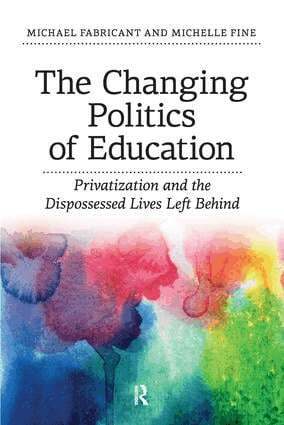
Changing Politics of Education
Privitization and the Dispossessed Lives Left Behind
Häftad, Engelska, 2013
692 kr
Skickas inom 10-15 vardagar
The authors persuasively argue that the present cascade of reforms to public education is a consequence of a larger intention to shrink government. The startling result is that more of public education's assets and resources are moving to the private sector and to the prison industrial complex. Drawing on various forms of evidence-structural, economic, narrative, and youth-generated participatory research-the authors reveal new structures and circuits of dispossession and privilege that amount to a clear failure of present policy. Policymaking is at war with the interests of the vast majority of citizens, and especially with urban youth of color. In the final chapter the authors explore democratic principles and offer examples essential to mobilizing, in solidarity with educators, youth, communities, labor, and allied social movements, the kind of power necessary to contest the present direction of public education reform.