• Fri frakt över 249 kr
  • •
  • Snabba leveranser
  • •
  • Billiga böcker
Kundservice

Du är på sajten för privatpersoner.

Företag, bibliotek eller offentlig verksamhet?

Du handlar på classic.bokus.com, där alla dina funktioner finns intakta.
Till classic.bokus.com
Bokus logotyp. Gå till startsidan.
  • Erbjudanden
  • Nyheter
  • Student
  • Topplistor
  • Barn & ungdom
  • Bokus Play
  • E-böcker
  • Pocketböcker
  • Spel & pussel

10% rabatt på allt med kod NYSTART10 →

Sidfot

Mina sidor

    Hjälp

    • Kundservice
    • Vanliga frågor och svar
    • Frakt och leverans
    • Retur vid ångerrätt
    • Reklamera vara
    • Betalning
    • Köpvillkor
    • Allmänna villkor
    • Information om webbplatsens tillgänglighet

    Om Bokus

    • Om oss
    • Pressrum
    • För studenter
    • För företag
    • För bibliotek och offentlig verksamhet
    • För leverantörer
    • Hållbarhet

    Populärt

    • Aktuella erbjudanden
    • Presentkort
    • Studentlitteratur
    • Nya böcker
    • Topplistor
    • Signerade böcker
    • Engelska böcker

    Inspiration

    • Boktips
    • BookTok
    • Populära bokserier
    • Barnbokskaraktärer
    • Populära författare
    Logotyp för Bokus
    Följ oss på Facebook (extern länk)Följ oss på Instagram (extern länk)Följ oss på YouTube (extern länk)Följ oss på TikTok (extern länk)
    bokus @ CookiesAnpassa cookiesIntegritetspolicyKöpvillkor
    Till Citymail hemsida (extern länk)Till Budbee hemsida (extern länk)Till Postnord hemsida (extern länk)Till Schenker hemsida (extern länk)Till Early Bird hemsida (extern länk)Till Walleys hemsida (extern länk)
    1. Samhälle och politik
    2. Samhälle och kultur
    3. Kultur och medier
    4. Kulturvetenskap

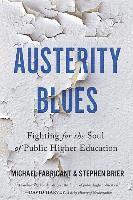
    Austerity Blues

    Fighting for the Soul of Public Higher Education

    AvMichael Fabricant,Stephen Brier

    Inbunden, Engelska, 2016

    354 kr

    Beställningsvara. Skickas inom 5-8 vardagar. Fri frakt över 249 kr.

    Beskrivning

    Public higher education in the postwar era was a key economic and social driver in American life, making college available to millions of working men and women. Since the 1980s, however, government austerity policies and politics have severely reduced public investment in higher education, exacerbating inequality among poor and working-class students of color, as well as part-time faculty. In Austerity Blues, Michael Fabricant and Stephen Brier examine these devastating fiscal retrenchments nationally, focusing closely on New York and California, both of which were leaders in the historic expansion of public higher education in the postwar years and now are at the forefront of austerity measures. Fabricant and Brier describe the extraordinary growth of public higher education after 1945, thanks largely to state investment, the alternative intellectual and political traditions that defined the 1960s, and the social and economic forces that produced austerity policies and inequality beginning in the late 1970s and 1980s.A provocative indictment of the negative impact neoliberal policies have visited on the public university, especially the growth of class, racial, and gender inequalities, Austerity Blues also analyzes the many changes currently sweeping public higher education, including the growing use of educational technology, online learning, and privatization, while exploring how these developments hurt students and teachers. In its final section, the book offers examples of oppositional and emancipatory struggles and practices that can help reimagine public higher education in the future. The ways in which factors as diverse as online learning, privatization, and disinvestment cohere into a single powerful force driving deepening inequality is the central theme of the book. Incorporating the differing perspectives of students, faculty members, and administrators, the book reveals how public education has been redefined as a private benefit, often outsourced to for-profit vendors who "sell" education back to indebted undergraduates. Over the past twenty years, tuition and related student debt have climbed precipitously and degree completion rates have dropped.Not only has this new austerity threatened public universities' ability to educate students, Fabricant and Brier argue, but it also threatens to undermine the very meaning and purpose of public higher education in offering poor and working-class students access to a quality education in a democracy. Synthesizing historical sources, social science research, and contemporary reportage, Austerity Blues will be of interest to readers concerned about rising inequality and the decline of public higher education.

    Produktinformation

    • Utgivningsdatum:2016-12-27
    • Mått:152 x 229 x 26 mm
    • Vikt:567 g
    • Format:Inbunden
    • Språk:Engelska
    • Antal sidor:320
    • Förlag:Johns Hopkins University Press
    • ISBN:9781421420677

    Utforska kategorier

    • Kulturvetenskap inom Samhälle och politik
    • Centralt styre och förvaltning inom Samhälle och politik
    • Högskola och universitet inom Psykologi och pedagogik

    Mer om författaren

    Michael Fabricant is a professor of social work at the City University of New York Graduate Center and the vice president of CUNY's Professional Staff Congress. He is the author of Organizing for Educational Justice: The Campaign for Public School Reform in the South Bronx and the coauthor of The Changing Politics of Education: Privatization and the Dispossessed Lives Left Behind. Stephen Brier is a professor of urban education and the coordinator of the Interactive Technology and Pedagogy program at the CUNY Graduate Center. He is the cofounder of CUNY's American Social History Project and the coauthor and coproducer of the ASHP's Who Built America? multimedia curriculum.

    Recensioner i media

    Austerity Blues is a must read for people engaged in public higher education and an important addition to Critical University Studies.—Radical Teacher

    Innehållsförteckning

    • Introduction Part I: The Political-Economic Context of Public Higher EducationChapter 1: Public Assets in an Era of Austerity Deregulation, Disinvestment, and Degradation Six Propositions for Understanding the Restructuring of Public Higher EducationEconomic Crisis and the Capitalization of Public GoodsThe Radical Restructuring of Public Higher Education Chapter 2: The State Expansion of Public Higher Education The G.I. Bill The Presidential Panel on Higher EducationPublic Higher Education in California, New York, and BeyondThe Founding and Expansion of SUNY and the Status of New York City's Municipal Colleges The California Master Plan for Higher Education Chapter 3: Students and Faculty Take Command New York State, CUNY and the Struggle for Open Admissions-The Multiversity and the Student MovementThe Fate of Open Admissions Part II: The State of AusterityChapter 4: The Making of the Neoliberal Public University Neoliberal Reform I: Corporatizing University CultureNeoliberal Reform II: The Perfect Storm of Online Technology and the Commodification of Knowledge Elite Politics and EconomicsThe Curricula of Austerity Technology as the Tool of Austerity ManagersCollege Readiness, Low Graduation Rates, and Fiscal Starvation Resetting Course: Investing in Disposable Citizens Chapter 5: The Public University as an Engine of Inequality Unequal Investments in Public Higher EducationCheapening Public Higher EducationQualitative Shifts in the Experience of Public Higher Education The Ascent of For-Profit Colleges Accountability in an Era of Austerity Cheap Part-time Labor as an Austerity FixManaging Public Universities in a Time of Inverted Priorities Chapter 6: Technology as a "Magic Bullet" in an Era of AusterityExpanding Beyond Classroom InstructionThe Emergence of Digital Technology The Rise of DigitalU The Open Educational Resources MovementThe Khan AcademyMOOCs and the Reshaping of Public Higher EducationNeoliberal Reformer: Michael Crow and the "New American University" Part III: Resistance Efforts and the Fight for Emancipatory EducationChapter 7: Fighting for the Soul of Public Higher Education Restructuring, Abandonment, and Dissolution The Struggle Over Purposes and Practices Achieving Emancipatory EducationWhat Types of Strategic Investments Are Needed?Building a Better Knowledge Production WorkforceWhere Should Public Higher Education Be Situated?Deploying Technology to Improve Teaching and LearningPolitical Choice and StruggleFault Lines in Current Struggles Grassroots Struggles and Educational Policy Reforms: Student Debt and the Choice to StrikeFree Tuition and Community CollegesIncreasing Wages and Job Protections for Part-Time Faculty Cross-Sector Campaigns and Increased Investment Sustaining and Expanding Universal Access Resisting Curricular DilutionScaling Up and Drilling Down EpilogueAcknowledgmentsNotesBibliographyIndex