Michael Huemer – författare
Visar alla böcker från författaren Michael Huemer. Handla med fri frakt och snabb leverans.
18 produkter
18 produkter
Häftad, Engelska, 2021
447 kr
Skickas inom 10-15 vardagar
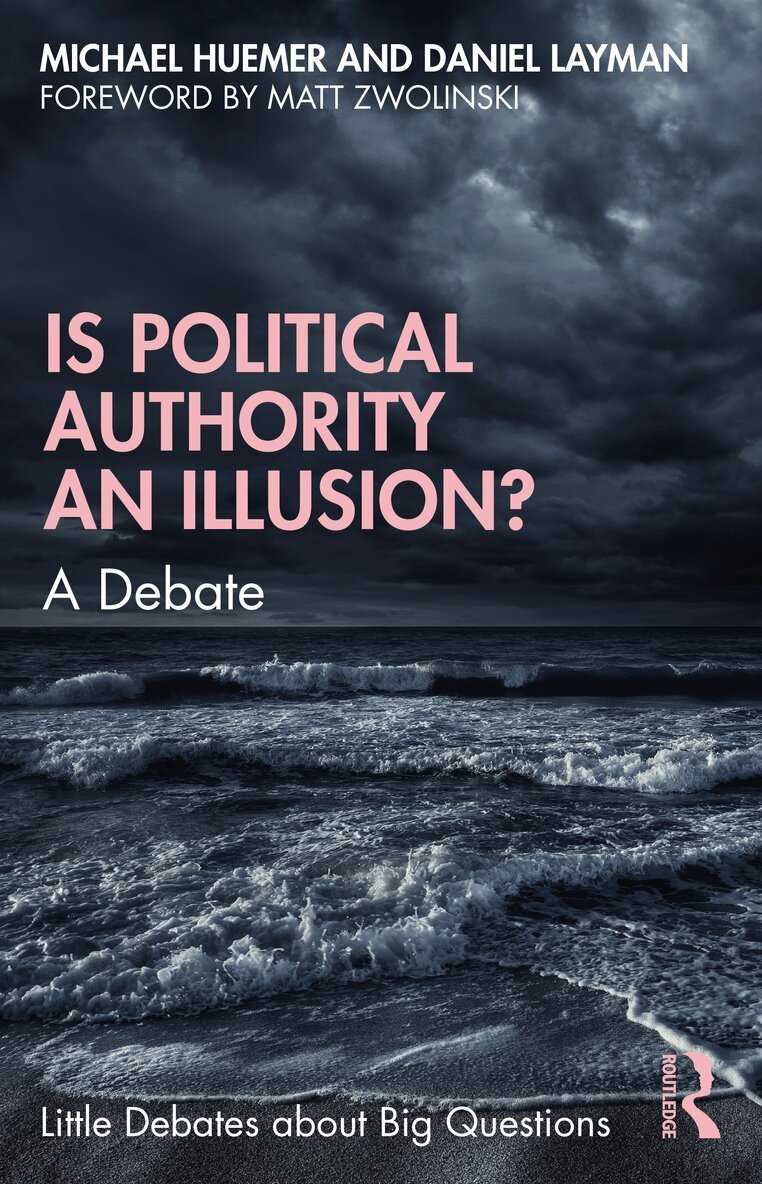
What gives some people the right to issue commands to everyone else and force everyone else to obey them? And why should people obey the commands of those with political power? These two key questions are the heart of the issue of political authority, and, in this volume, two philosophers debate the answers. Michael Huemer argues that political authority is an illusion and that no one is entitled to rule over anyone. He discusses and rebuts the major theories supporting political authority’s rightfulness: implicit social contract theory, hypothetical contract theories, democratic theories of authority, and utilitarian theories. Daniel Layman argues that democratic governments have authority because they are needed to protect our rights and because they are accountable to the people. Each author writes two replies directly addressing the arguments and ideas of the other.Key FeaturesCovers a key foundational problem of political philosophy: the authority of government.Debate format ensures a full hearing of both sides.A Glossary includes key concepts in political philosophy related to the issue of authority.Annotated Further Reading sections point students to additional resources.Clear, concrete examples and arguments help students clearly see both sides of the argument.A Foreword by Matt Zwolinski describes a broader context for political authority and then traces the key points and turns in the authors’ debate.
Häftad, Engelska, 2012
1 068 kr
Skickas inom 5-8 vardagar
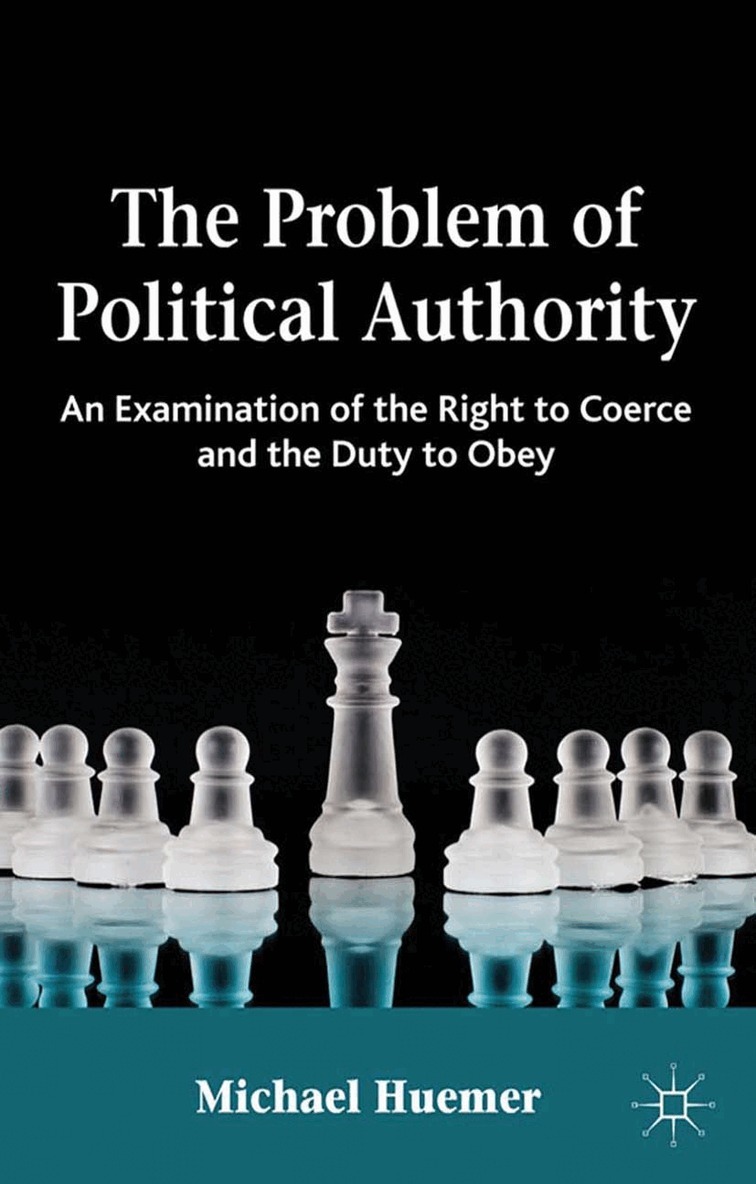
The state is often ascribed a special sort of authority, one that obliges citizens to obey its commands and entitles the state to enforce those commands through threats of violence. This book argues that this notion is a moral illusion: no one has ever possessed that sort of authority.
Inbunden, Engelska, 2023
1 794 kr
Skickas inom 10-15 vardagar
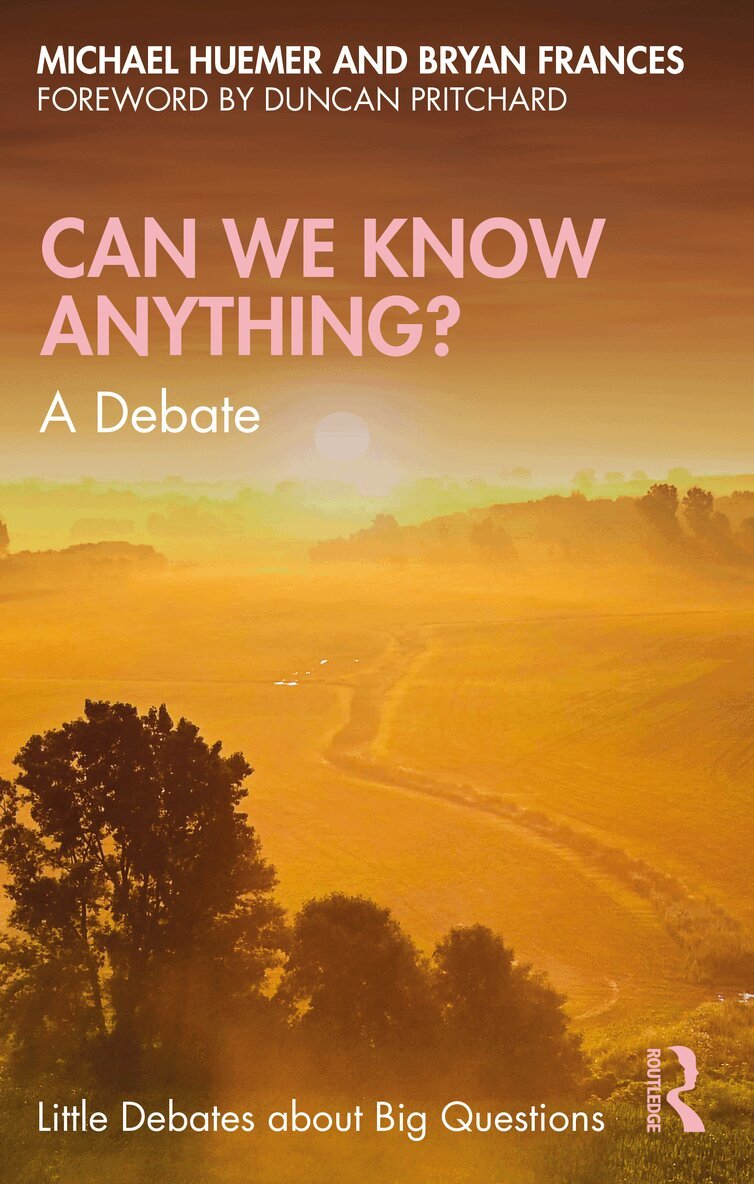
In this book, Michael Huemer and Bryan Frances debate whether – and how – we can gain knowledge of the world outside of our own minds. Starting with opening statements, the debate moves through two rounds of replies.Frances argues that we lack knowledge because, for example, we cannot rule out the possibility that we are brains in vats being artificially stimulated in such a way as to create an illusion of living in the real world. Huemer disagrees that we need evidence against such possibilities in order to gain knowledge of the external world, maintaining instead that we are entitled to presume that things are as they appear unless and until we acquire specific grounds for thinking otherwise. The authors go on to discuss how one should think about controversial issues wherein the experts persistently disagree. Frances argues that we should generally withhold judgment about such issues or at least greatly reduce our confidence. Huemer agrees that people are often overconfident about controversial issues but tries to carve out exceptions wherein one can rationally hold on to controversial views.Accessible whilst also detailed and substantial, this thoughtful debate is suitable for readers at all levels, from those encountering the topic for the first time through those who are deeply familiar with the issues.Key Features:Showcases arguments from two leading philosophers in standard form and in clear languagePresents definitions in an easily accessible formSummary boxes recap key argumentsIncludes an annotated bibliography and glossary of all specialized vocabulary
Häftad, Engelska, 2023
419 kr
Skickas inom 10-15 vardagar
In this book, Michael Huemer and Bryan Frances debate whether – and how – we can gain knowledge of the world outside of our own minds. Starting with opening statements, the debate moves through two rounds of replies.Frances argues that we lack knowledge because, for example, we cannot rule out the possibility that we are brains in vats being artificially stimulated in such a way as to create an illusion of living in the real world. Huemer disagrees that we need evidence against such possibilities in order to gain knowledge of the external world, maintaining instead that we are entitled to presume that things are as they appear unless and until we acquire specific grounds for thinking otherwise. The authors go on to discuss how one should think about controversial issues wherein the experts persistently disagree. Frances argues that we should generally withhold judgment about such issues or at least greatly reduce our confidence. Huemer agrees that people are often overconfident about controversial issues but tries to carve out exceptions wherein one can rationally hold on to controversial views.Accessible whilst also detailed and substantial, this thoughtful debate is suitable for readers at all levels, from those encountering the topic for the first time through those who are deeply familiar with the issues.Key Features:Showcases arguments from two leading philosophers in standard form and in clear languagePresents definitions in an easily accessible formSummary boxes recap key argumentsIncludes an annotated bibliography and glossary of all specialized vocabulary
Inbunden, Engelska, 2021
2 137 kr
Skickas inom 10-15 vardagar
What gives some people the right to issue commands to everyone else and force everyone else to obey them? And why should people obey the commands of those with political power? These two key questions are the heart of the issue of political authority, and, in this volume, two philosophers debate the answers. Michael Huemer argues that political authority is an illusion and that no one is entitled to rule over anyone. He discusses and rebuts the major theories supporting political authority’s rightfulness: implicit social contract theory, hypothetical contract theories, democratic theories of authority, and utilitarian theories. Daniel Layman argues that democratic governments have authority because they are needed to protect our rights and because they are accountable to the people. Each author writes two replies directly addressing the arguments and ideas of the other.Key FeaturesCovers a key foundational problem of political philosophy: the authority of government.Debate format ensures a full hearing of both sides.A Glossary includes key concepts in political philosophy related to the issue of authority.Annotated Further Reading sections point students to additional resources.Clear, concrete examples and arguments help students clearly see both sides of the argument.A Foreword by Matt Zwolinski describes a broader context for political authority and then traces the key points and turns in the authors’ debate.
Inbunden, Engelska, 2002
2 137 kr
Skickas inom 10-15 vardagar
This comprehensive anthology draws together classic and contemporary readings by leading philosophers on epistemology. Ideal for any philosophy student, it will prove essential reading for epistemology courses, and is designed to complement Robert Audi's textbook Epistemology: A Contemporary Introduction (Routledge, 1998).Themes covered include, perception, memory, inductive inference, reason and the a priori, the architecture of knowledge, skepticism, the analysis of knowledge, testimony. Each section begins with an introductory essay, guiding students into the topic.Includes articles by:Russell, Hume, Berkeley, Malcolm, Quine, Carnap, J.L. Austin, Pollock, Nozick, Putnam, G.E. Moore, Huemer, Reid, Plato, BonJour, Coady, Carroll, Fumerton, Edwards, Foster, Howson, Urbach, Stove, Empiricus, Oakley, Alston, Gettier, Clark, Goldman, Lehrer, Paxson, DeRose, Dretske, Klein and Chisholm
Häftad, Engelska, 2002
570 kr
Skickas inom 10-15 vardagar
This comprehensive anthology draws together classic and contemporary readings by leading philosophers on epistemology. Ideal for any philosophy student, it will prove essential reading for epistemology courses, and is designed to complement Robert Audi's textbook Epistemology: A Contemporary Introduction (Routledge, 1998).Themes covered include, perception, memory, inductive inference, reason and the a priori, the architecture of knowledge, skepticism, the analysis of knowledge, testimony. Each section begins with an introductory essay, guiding students into the topic.Includes articles by:Russell, Hume, Berkeley, Malcolm, Quine, Carnap, J.L. Austin, Pollock, Nozick, Putnam, G.E. Moore, Huemer, Reid, Plato, BonJour, Coady, Carroll, Fumerton, Edwards, Foster, Howson, Urbach, Stove, Empiricus, Oakley, Alston, Gettier, Clark, Goldman, Lehrer, Paxson, DeRose, Dretske, Klein and Chisholm
Häftad, Engelska, 2001
588 kr
Skickas inom 10-15 vardagar
Since Descartes, one of the central questions of Western philosophy has been that of how we know that the objects we seem to perceive are real. Philosophical skeptics claim that we know no such thing. Representationalists claim that we can gain such knowledge only by inference, by showing that the hypothesis of a real world is the best explanation for the kind of sensations and mental images we experience. Both accept the doctrine of a 'veil of perception:' that perception can only give us direct awareness of images or representations of objects, not the external objects themselves. In contrast, Huemer develops a theory of perceptual awareness in which perception gives us direct awareness of real objects, not mental representations, and we have non-inferential knowledge of the properties of these objects. Further, Huemer confronts the four main arguments for philosophical skepticism, showing that they are powerless against this kind of theory of perceptual knowledge.
Häftad, Engelska, 2025
227 kr
Skickas inom 10-15 vardagar
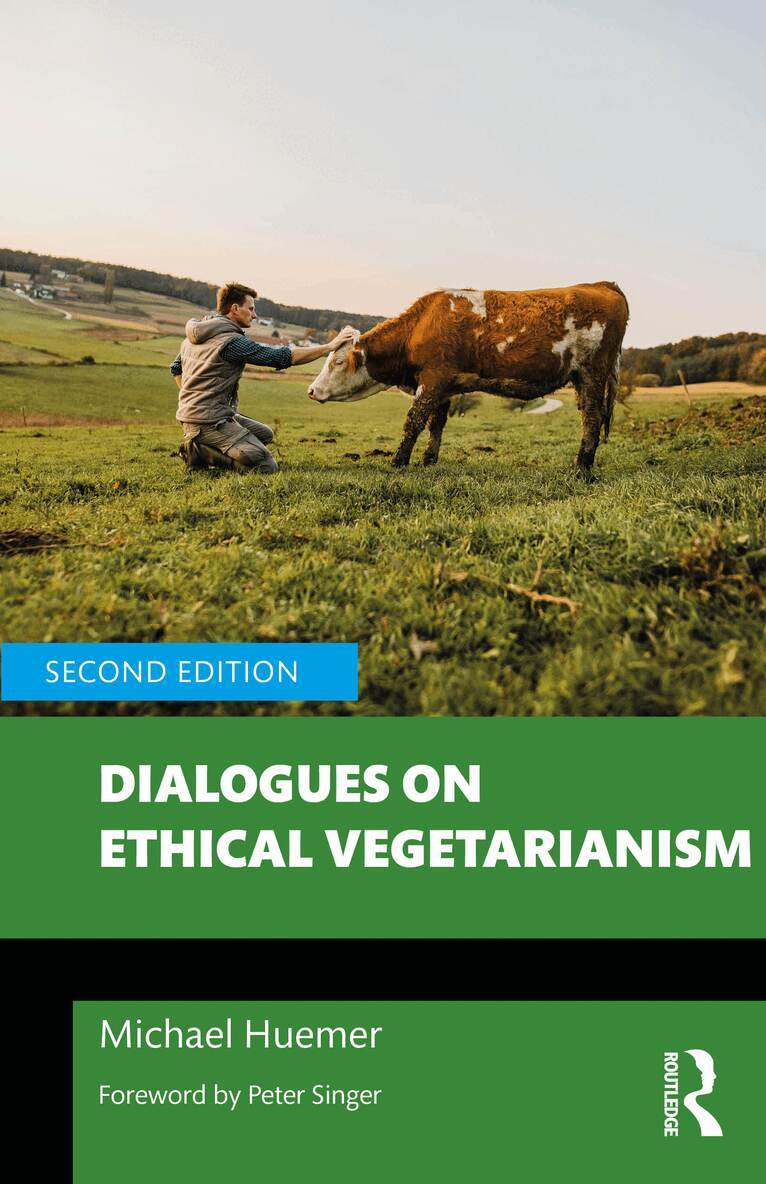
Worldwide every year, 83 billion animals are slaughtered on factory farms, at the end of brief lives full of suffering. Is it wrong to buy the products of this industry?In this book, two college students – a meat-eater and an ethical vegetarian – discuss this question in a series of dialogues conducted over five days. Issues covered include: how intelligence affects the badness of pain, whether consumers are responsible for the practices of the industry, how individual choices affect an industry, whether farm animals are better off living on factory farms than not existing at all, whether meat-eating is natural, whether morality protects those who cannot understand morality, whether morality protects those who are not members of society, whether humans alone possess souls, whether different creatures have different degrees of consciousness, why extreme animal welfare positions "sound crazy," and the role of empathy in moral judgment. The two go on to discuss the vegan life, why people who accept the arguments often fail to change their behavior, and how vegans should interact with non-vegans.This Second Edition also covers many new topics, including:Satisfying nutritional needs with plant-based foodsThe overall health effects of vegetarian dietsThe consumer costs of a plant-based dietSynthetic meatFood desertsChristian-inspired arguments for and against veganismProgressive-inspired arguments for and against veganismA new appendix offers readers delicious vegan recipes, including ones for Carrot Ginger Soup, Avocado Toast, Compassionate Chili, and The Smoothie of the Gods.Key Features:Thoroughly reviews the common arguments on both sides of the debateDialogue format provides the most engaging way of introducing the issuesWritten in clear, conversational prose for a popular audienceOffers new insights into the psychology of our dietary choices and our responsibility for influencing othersNew in this edition, several easy and delicious vegan recipes
Inbunden, Engelska, 2025
2 137 kr
Skickas inom 10-15 vardagar
Worldwide every year, 83 billion animals are slaughtered on factory farms, at the end of brief lives full of suffering. Is it wrong to buy the products of this industry?In this book, two college students – a meat-eater and an ethical vegetarian – discuss this question in a series of dialogues conducted over five days. Issues covered include: how intelligence affects the badness of pain, whether consumers are responsible for the practices of the industry, how individual choices affect an industry, whether farm animals are better off living on factory farms than not existing at all, whether meat-eating is natural, whether morality protects those who cannot understand morality, whether morality protects those who are not members of society, whether humans alone possess souls, whether different creatures have different degrees of consciousness, why extreme animal welfare positions "sound crazy," and the role of empathy in moral judgment. The two go on to discuss the vegan life, why people who accept the arguments often fail to change their behavior, and how vegans should interact with non-vegans.This Second Edition also covers many new topics, including:Satisfying nutritional needs with plant-based foodsThe overall health effects of vegetarian dietsThe consumer costs of a plant-based dietSynthetic meatFood desertsChristian-inspired arguments for and against veganismProgressive-inspired arguments for and against veganismA new appendix offers readers delicious vegan recipes, including ones for Carrot Ginger Soup, Avocado Toast, Compassionate Chili, and The Smoothie of the Gods.Key Features:Thoroughly reviews the common arguments on both sides of the debateDialogue format provides the most engaging way of introducing the issuesWritten in clear, conversational prose for a popular audienceOffers new insights into the psychology of our dietary choices and our responsibility for influencing othersNew in this edition, several easy and delicious vegan recipes
Inbunden, Engelska, 2012
1 605 kr
Skickas inom 10-15 vardagar
The state is often ascribed a special sort of authority, one that obliges citizens to obey its commands and entitles the state to enforce those commands through threats of violence. This book argues that this notion is a moral illusion: no one has ever possessed that sort of authority.
Häftad, Engelska, 2021
305 kr
Skickas inom 10-15 vardagar
America’s legal system harbors serious, widespread injustices. Many defendants are sent to prison for nonviolent offenses, including many victimless crimes. Convicts often serve draconian sentences in crowded prisons rife with abuse. Almost all defendants are convicted without trial because prosecutors threaten defendants with drastically higher sentences if they request a trial. Most Americans are terrified of encountering any kind of legal trouble, knowing that both civil and criminal courts are extremely slow, unreliable, and expensive to use. This book explores the largest injustices in the legal system and what can be done about them. Besides proposing institutional reforms, the author argues that prosecutors, judges, lawyers, and jury members ought to place justice before the law – for example, by refusing to enforce unjust laws or impose unjust sentences. Issues addressed include:· The philosophical basis for judgments about rights and justice· The problems of overcriminalization and mass incarceration· Abuse of power by police and prosecutors· The injustice of plea bargaining · The appropriateness of jury nullification· The authority of the law, or the lack thereofJustice Before the Law is essential reading for everyone interested in legal ethics, the rule of law, and criminal justice. It is also ideal for students of legal philosophy.
Häftad, Engelska, 2018
700 kr
Skickas inom 10-15 vardagar
Paradox Lost covers ten of philosophy’s most fascinating paradoxes, in which seemingly compelling reasoning leads to absurd conclusions. The following paradoxes are included: The Liar Paradox, in which a sentence says of itself that it is false. Is the sentence true or false?The Sorites Paradox, in which we imagine removing grains of sand one at a time from a heap of sand. Is there a particular grain whose removal converts the heap to a non-heap?The Puzzle of the Self-Torturer, in which a series of seemingly rational choices has us accepting a life of excruciating pain, in exchange for millions of dollars.Newcomb’s Problem, in which we seemingly maximize our expected profit by taking an unknown sum of money, rather than taking the same sum plus $1000.The Surprise Quiz Paradox, in which a professor finds that it is impossible to give a surprise quiz on any particular day of the week . . . butalso that if this is so, then a surprise quiz can be given on any day.The Two Envelope Paradox, in which we are asked to choose between two indistinguishable envelopes, and it is seemingly shown that each envelope is preferable to the other.The Ravens Paradox, in which observing a purple shoe provides evidence that all ravens are black.The Shooting Room Paradox, in which a deadly game kills 90% of all who play, yet each individual’s survival turns on the flip of a fair coin.Each paradox is clearly described, common mistakes are explored, and a clear, logical solution offered. Paradox Lost will appeal to professional philosophers, students of philosophy, and all who love intellectual puzzles.
Häftad, Tyska, 2011
330 kr
Skickas inom 3-6 vardagar
Häftad, Tyska, 2011
367 kr
Skickas inom 3-6 vardagar
Häftad, Tyska, 2013
516 kr
Skickas inom 3-6 vardagar
Inbunden, Engelska, 2001
809 kr
Tillfälligt slut
Since Descartes, one of the central questions of Western philosophy has been that of how we know that the objects we seem to perceive are real. Philosophical skeptics claim that we know no such thing. Representationalists claim that we can gain such knowledge only by inference, by showing that the hypothesis of a real world is the best explanation for the kind of sensations and mental images we experience. Both accept the doctrine of a 'veil of perception:' that perception can only give us direct awareness of images or representations of objects, not the external objects themselves. In contrast, Huemer develops a theory of perceptual awareness in which perception gives us direct awareness of real objects, not mental representations, and we have non-inferential knowledge of the properties of these objects. Further, Huemer confronts the four main arguments for philosophical skepticism, showing that they are powerless against this kind of theory of perceptual knowledge.
Inbunden, Engelska, 2019
2 099 kr
Tillfälligt slut
After lives filled with deep suffering, 74 billion animals are slaughtered worldwide every year on factory farms. Is it wrong to buy the products of this industry? In this book, two college students – a meat-eater and an ethical vegetarian – discuss this question in a series of dialogues conducted over four days. The issues they cover include: how intelligence affects the badness of pain, whether consumers are responsible for the practices of an industry, how individual choices affect an industry, whether farm animals are better off living on factory farms than not existing at all, whether meat-eating is natural, whether morality protects those who cannot understand morality, whether morality protects those who are not members of society, whether humans alone possess souls, whether different creatures have different degrees of consciousness, why extreme animal welfare positions "sound crazy," and the role of empathy in moral judgment. The two students go on to discuss the vegan life, why people who accept the arguments in favor of veganism often fail to change their behavior, and how vegans should interact with non-vegans.A foreword, by Peter Singer, introduces and provides context for the dialogues, and a final annotated bibliography offers a list of sources related to the discussion. It offers abstracts of the most important books and articles related to the ethics of vegetarianism and veganism. Key Features:Thoroughly reviews the common arguments on both sides of the debate.Dialogue format provides the most engaging way of introducing the issues.Written in clear, conversational prose for a popular audience.Offers new insights into the psychology of our dietary choices and our responsibility for influencing others.