Michael L. Rosenzweig - Böcker
Visar alla böcker från författaren Michael L. Rosenzweig. Handla med fri frakt och snabb leverans.
3 produkter
3 produkter
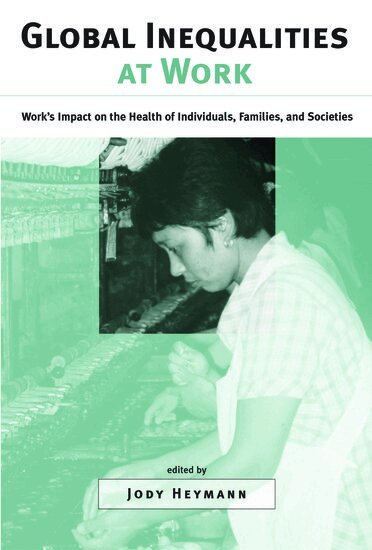
Global Inequalities at Work
Work's Impact on the Health of Individuals, Families, and Societies
Inbunden, Engelska, 2003
930 kr
Skickas inom 5-8 vardagar
A map of the relationship between work and health that is truly global, both geographically and in its coverage of the impact of work on the health of individuals, families, and societies, has not previously been drawn. Global Inequalities at Work is the first book to fill in the map. Drawing from studies done around the world, it critically examines the many ways in which work is affecting health around the world.The first section covers the wide range of risks - physical, chemical, and social - to the health of employees in agricultural, industrial, and post-industrial workplaces. Part II provides a detailed analysis of how working conditions can dramatically influence the health and welfare of family members, including children, elderly parents, and the disabled, in both the developing and industrial world.Part III examines the relationships between work and health at the societal level by focusing on two examples: the ways in which working conditions affect income inequalities and health, and the ways in which working conditions influence gender inequalities and health. Part IV investigates the new challenges to and opportunities for improving the relationship between work and health that are presented by a rapidly globalizing economy.Global Inequalities at Work addresses these issues at a time when globalization is both markedly changing the impact of work on the health of individuals, families, and societies, and radically revising what can be done about it. Leaders from universities, international organizations, and nongovernmental organizations bring to this edited volume expertise from six continents.
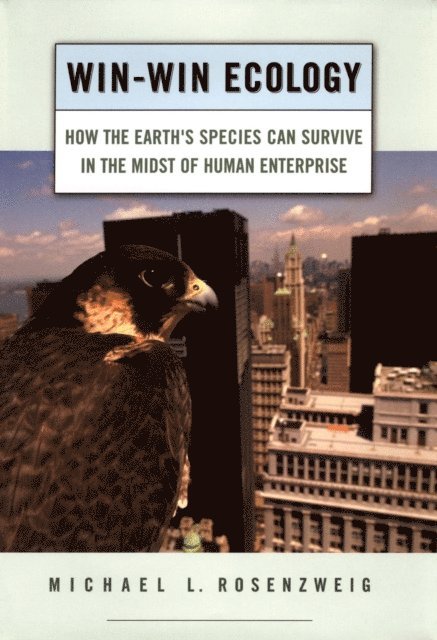
Win-Win Ecology
How the Earth's Species Can Survive in the Midst of Human Enterprise
Inbunden, Engelska, 2003
325 kr
Skickas inom 5-8 vardagar
As humanity presses down inexorably on the natural world, people debate the extent to which we can save the Earth's millions of different species without sacrificing human economic welfare. But is this argument wise? Must the human and natural worlds be adversaries?In this book, ecologist Michael Rosenzweig finds that ecological science actually rejects such polarization. Instead it suggests that, to be successful, conservation must discover how we can blend a rich natural world into the world of economic activity. This revolutionary, common ground between development and conservation is called reconciliation ecology: creating and maintaining species-friendly habitats in the very places where people live, work, or play.The book offers many inspiring examples of the good results already achieved. The Nature Conservancy, for instance, has a cooperative agreement with the Department of Defense, with more than 200 conservation projects taking place on more than 170 bases in 41 states. In places such as Elgin Air Force Base, the human uses-testing munitions, profitable timbering and recreation--continue, but populations of several threatened species on the base, such as the long-leaf pine and the red-cockaded woodpecker, have been greatly improved. The Safe Harbor strategy of the Fish & Wildlife Service encourages private landowners to improve their property for endangered species, thus overcoming the unintended negative aspects of the Endangered Species Act. And Golden Gate Park, which began as a system of sand dunes, has become, through human effort, a world of ponds and shrubs, waterfowl and trees. Rosenzweig shows that reconciliation ecology is the missing tool of conservation, the practical, scientifically based approach that, when added to the rest, will solve the problem of preserving Earth's species.
901 kr
Skickas inom 7-10 vardagar
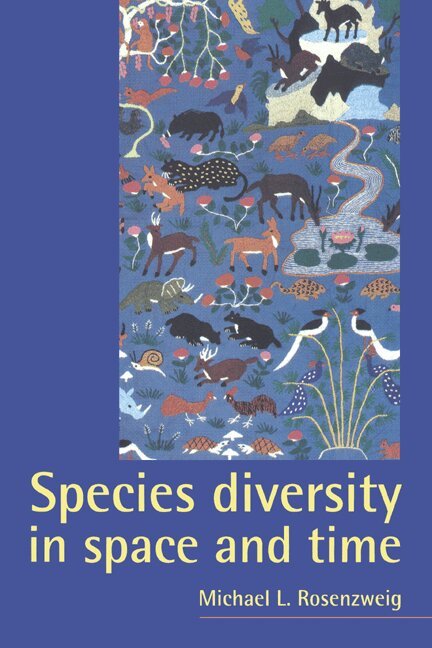
Why do larger areas have more species? What makes diversity so high near the equator? Has the number of species grown during the past 600 million years? Does habitat diversity support species diversity, or is it the other way around? What reduces diversity in ecologically productive places? At what scales of space and time do diversity patterns hold? Do the mechanisms that produce them vary with scale? This book examines these questions and many others, by employing both theory and data in the search for answers. Surprisingly, many of the questions have reasonably likely answers. By identifying these, attention can be turned toward life's many, still-unexplained diversity patterns. As evolutionary ecologists race to understand biodiversity before it is too late, this book will help set the agenda for diversity research into the next century.