Michael L. Thomas – författare
Visar alla böcker från författaren Michael L. Thomas. Handla med fri frakt och snabb leverans.
2 produkter
2 produkter
Häftad, Engelska, 2012
316 kr
Skickas inom 10-15 vardagar
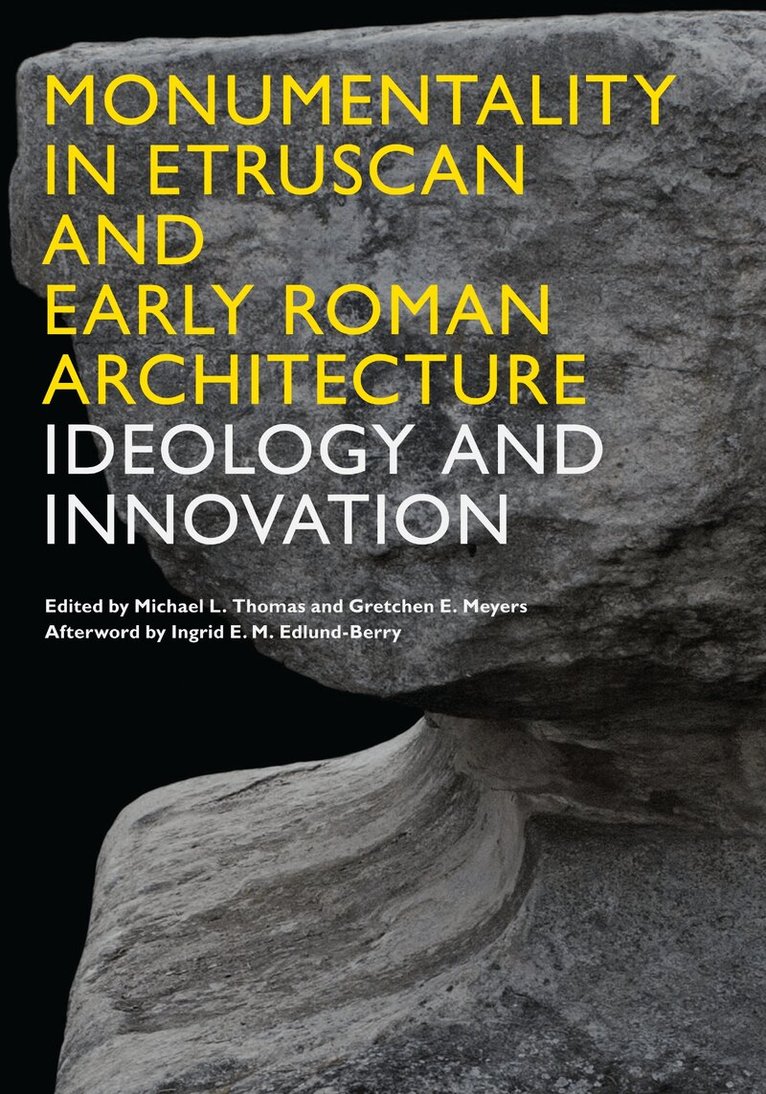
Every society builds, and many, if not all, utilize architectural structures as markers to define place, patron, or experience. Often we consider these architectural markers as “monuments” or “monumental” buildings. Ancient Rome, in particular, is a society recognized for the monumentality of its buildings. While few would deny that the term “monumental” is appropriate for ancient Roman architecture, the nature of this characterization and its development in pre-Roman Italy is rarely considered carefully. What is “monumental” about Etruscan and early Roman architecture?Delving into the crucial period before the zenith of Imperial Roman building, Monumentality in Etruscan and Early Roman Architecture addresses such questions as, “What factors drove the emergence of scale as a defining element of ancient Italian architecture?” and “How did monumentality arise as a key feature of Roman architecture?” Contributors Elizabeth Colantoni, Anthony Tuck, Nancy A. Winter, P. Gregory Warden, John N. Hopkins, Penelope J. E. Davies, and Ingrid Edlund-Berry reflect on the ways in which ancient Etruscans and Romans utilized the concepts of commemoration, durability, and visibility to achieve monumentality. The editors’ preface and introduction underscore the notion of architectural evolution toward monumentality as being connected to the changing social and political strategies of the ruling elites.By also considering technical components, this collection emphasizes the development and the ideological significance of Etruscan and early Roman monumentality from a variety of viewpoints and disciplines. The result is a broad range of interpretations celebrating both ancient and modern perspectives.
Inbunden, Engelska, 2024
405 kr
Skickas inom 7-10 vardagar
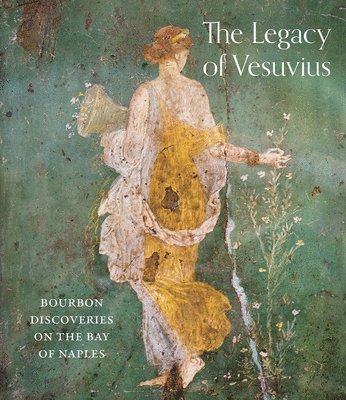
This sumptuous book reveals how discoveries of classical sculptures and frescoes in Pompeii and Herculaneum inspired artistic masterpieces created for the Spanish Bourbon Court in Naples during the eighteenth century. Ancient sculptures, frescoes and other archaeological finds discovered at the foot of Mount Vesuvius helped shape the artistic expression in Europe, particularly landscape paintings, sculpture, ceramics, furniture and portraits. These include images of the Bourbon royal family, and also detailed landscapes and cityscapes giving a glimpse into Naples at the time. Sculptures and frescoes from the Villa of the Papyri at Herculaneum, the villas at Stabiae and Cicero and the Temple of Isis at Pompeii are examined alongside the art by well-known eighteenth-century artists they influenced, including Angelica Kauffman, Anton Rafael Mengs and Antonio Joli.