• Fri frakt över 249 kr
  • •
  • Snabba leveranser
  • •
  • Billiga böcker
Kundservice

Du är på sajten för privatpersoner.

Företag, bibliotek eller offentlig verksamhet?

Du handlar på classic.bokus.com, där alla dina funktioner finns intakta.
Till classic.bokus.com
Bokus logotyp. Gå till startsidan.
  • Erbjudanden
  • Nyheter
  • Student
  • Topplistor
  • Barn & ungdom
  • Bokus Play
  • E-böcker
  • Pocketböcker
  • Spel & pussel

10% rabatt på allt med kod: NYSTART10 →

Sidfot

Mina sidor

    Hjälp

    • Kundservice
    • Vanliga frågor och svar
    • Frakt och leverans
    • Retur vid ångerrätt
    • Reklamera vara
    • Betalning
    • Köpvillkor
    • Allmänna villkor
    • Information om webbplatsens tillgänglighet

    Om Bokus

    • Om oss
    • Pressrum
    • För studenter
    • För företag
    • För bibliotek och offentlig verksamhet
    • För leverantörer
    • Hållbarhet

    Populärt

    • Aktuella erbjudanden
    • Presentkort
    • Studentlitteratur
    • Nya böcker
    • Topplistor
    • Signerade böcker
    • Engelska böcker

    Inspiration

    • Boktips
    • BookTok
    • Populära bokserier
    • Barnbokskaraktärer
    • Populära författare
    Logotyp för Bokus
    Följ oss på Facebook (extern länk)Följ oss på Instagram (extern länk)Följ oss på YouTube (extern länk)Följ oss på TikTok (extern länk)
    bokus @ CookiesAnpassa cookiesIntegritetspolicyKöpvillkor
    Till Citymail hemsida (extern länk)Till Budbee hemsida (extern länk)Till Postnord hemsida (extern länk)Till Schenker hemsida (extern länk)Till Early Bird hemsida (extern länk)Till Walleys hemsida (extern länk)
    1. Kultur
    2. Arkitektur
    3. Arkitekturhistoria

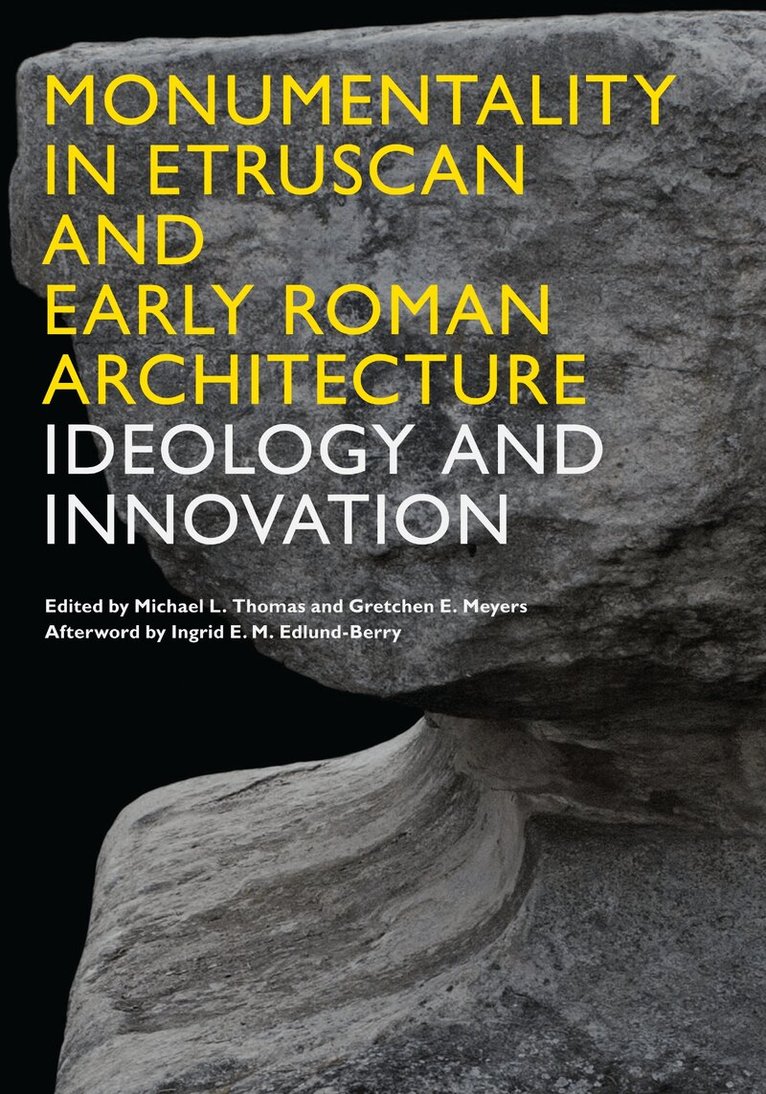
    Monumentality in Etruscan and Early Roman Architecture

    Ideology and Innovation

    AvMichael L. Thomas,Gretchen E. Meyers

    Häftad, Engelska, 2012

    322 kr

    Beställningsvara. Skickas inom 10-15 vardagar. Fri frakt över 249 kr.

    Beskrivning

    Every society builds, and many, if not all, utilize architectural structures as markers to define place, patron, or experience. Often we consider these architectural markers as “monuments” or “monumental” buildings. Ancient Rome, in particular, is a society recognized for the monumentality of its buildings. While few would deny that the term “monumental” is appropriate for ancient Roman architecture, the nature of this characterization and its development in pre-Roman Italy is rarely considered carefully. What is “monumental” about Etruscan and early Roman architecture?Delving into the crucial period before the zenith of Imperial Roman building, Monumentality in Etruscan and Early Roman Architecture addresses such questions as, “What factors drove the emergence of scale as a defining element of ancient Italian architecture?” and “How did monumentality arise as a key feature of Roman architecture?” Contributors Elizabeth Colantoni, Anthony Tuck, Nancy A. Winter, P. Gregory Warden, John N. Hopkins, Penelope J. E. Davies, and Ingrid Edlund-Berry reflect on the ways in which ancient Etruscans and Romans utilized the concepts of commemoration, durability, and visibility to achieve monumentality. The editors’ preface and introduction underscore the notion of architectural evolution toward monumentality as being connected to the changing social and political strategies of the ruling elites.By also considering technical components, this collection emphasizes the development and the ideological significance of Etruscan and early Roman monumentality from a variety of viewpoints and disciplines. The result is a broad range of interpretations celebrating both ancient and modern perspectives.

    Produktinformation

    • Utgivningsdatum:2012-11-01
    • Mått:178 x 254 x 11 mm
    • Vikt:454 g
    • Format:Häftad
    • Språk:Engelska
    • Antal sidor:200
    • Förlag:University of Texas Press
    • Medarbetare:IngridE.M. Edlund-Berry
    • ISBN:9780292756816

    Utforska kategorier

    • Arkitekturhistoria inom Kultur
    • Konsthistoria inom Kultur

    Mer om författaren

    Michael L. Thomas is Director of the recently launched Center for the Study of Ancient Italy at the University of Texas at Austin. He has excavated in Italy for seventeen years, and he currently codirects two archaeological projects there.Gretchen E. Meyers is Assistant Professor of Classics at Franklin and Marshall College. A scholar of Etruscan archaeology and culture, she has authored articles on architecture, roofing tiles, and textile production and serves as Director of Materials at the Etruscan site of Poggio Colla.

    Recensioner i media

    On relÈvera À cet Égard que les dÉveloppements d’E. Colantoni sur les mutations architecturales observÉes dans le Latium protohistorique et auprÈs de certaines peuplades amÉricaines et africaines apportent quelques ÉlÉments de comparaison inattendus et fort utiles. (Museum Helveticum)

    Innehållsförteckning

    • Preface (Michael L. Thomas)AcknowledgmentsNote on Abbreviations1. Introduction: The Experience of Monumentality in Etruscan and Early Roman Architecture (Gretchen E. Meyers)2. Straw to Stone, Huts to Houses: Transitions in Building Practices and Society in Protohistoric Latium (Elizabeth Colantoni)3. The Performance of Death: Monumentality, Burial Practice, and Community Identity in Central Italy’s Urbanizing Period (Anthony Tuck)4. Monumentalization of the Etruscan Round Moulding in Sixth-Century BCE Central Italy (Nancy A. Winter)5. Monumental Embodiment: Somatic Symbolism and the Tuscan Temple (P. Gregory Warden)6. The Capitoline Temple and the Effects of Monumentality on Roman Temple Design (John N. Hopkins)7. On the Introduction of Stone Entablatures in Republican Temples in Rome (Penelope J. E. Davies)Afterword: Reflections (Ingrid E. M. Edlund-Berry)About the ContributorsIndex