Michael P. Fitzsimmons - Böcker
Visar alla böcker från författaren Michael P. Fitzsimmons. Handla med fri frakt och snabb leverans.
8 produkter
8 produkter
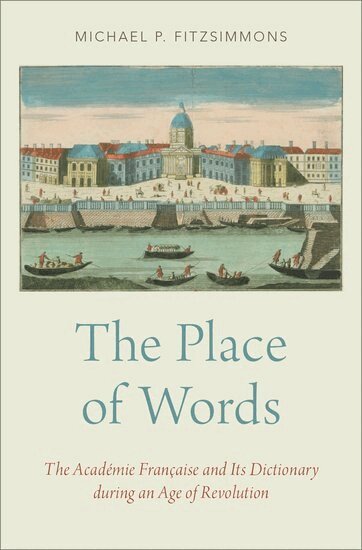
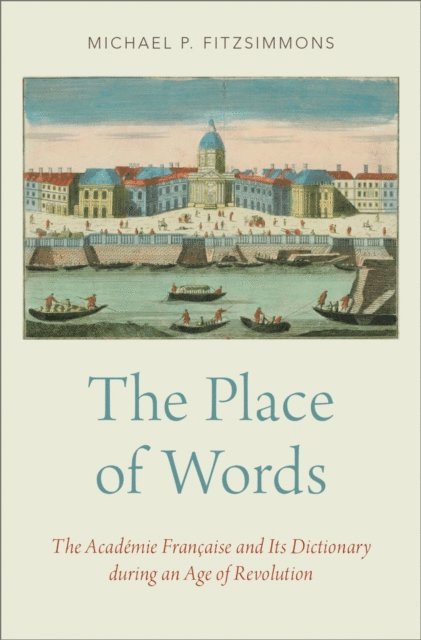
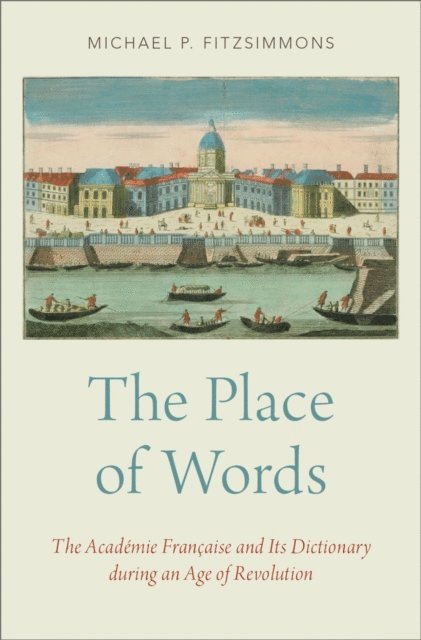
The Place of Words
The Académie Française and Its Dictionary during an Age of Revolution
Inbunden, Engelska, 2018
1 074 kr
Skickas inom 5-8 vardagar
The primary responsibility of the Académie Française to compose a dictionary of the French language intersected with major undercurrents of the French Revolution, and its significance continued through the Napoleonic period and into the Restoration. Yet, despite being such a prominent institution under the Old Regime, scholarship on the Académie during these periods remains largely neglected. From its origins in the late seventeenth century, there have been nine editions of the dictionary--of those nine, the fifth edition (published in 1798) is unquestionably the most controversial. When the National Convention commissioned it two years after it had suppressed the Académie, it expected the edition to highlight the ideals of the French Revolution and republic. Instead, the Académie delivered a dictionary comprised of anachronistic values and present-tense definitions of abolished institutions, the Revolution mentioned only in brief in a hastily-prepared supplement consigned to the end of the second volume. For its failure to capture the current state of the French language, most contemporaries judged it harshly, and its deficiencies even led Parisian publisher Nicolas Moutardier to publish a competing edition in 1802. The dictionary became the focus of protracted litigation that Napoleon Bonaparte's government increasingly used to assert its control over language. Indeed, Bonaparte met personally with the Institut National preparing the sixth edition, making clear his desire that it not contain Revolutionary neologisms. Eager to see the new edition appear, the Bonapartist regime committed financial resources and established a timetable for its completion within five years. Bonaparte, however, fell from power before it was completed. The restored Bourbon dynasty, though also eager to see the new edition completed, was less concerned with the control of language, and the sixth edition appeared in 1835, five years after the Bourbon dynasty was overthrown. Drawing on previously unused sources, A Place of Words is the first book-length study of the controversial fifth edition of the Académie Française. Spanning over half a century of changing regimes, the edition provides unique insight into the ways in which each government between the beginning of its preparation after the fourth edition's publication in 1762 and the publication of the sixth edition in 1835 viewed the role of language as an instrument of control.
The Forgotten Constitution
The Origins, Realization, and Legacy of the French Constitution of 1791
Inbunden, Engelska, 2025
1 208 kr
Skickas inom 5-8 vardagar
The French Constitution of 1791 has a major legacy that overturned many centuries of historical tradition but remains little known outside of France. It ratified the unprecedented transformation of a society based on monarchy-centered government and legal privilege to one based on a sovereign citizenry and legal equality. Its powerful impact served as the inspiration for the wave of constitution-making that engulfed Europe during the nineteenth century and expanded globally thereafter. Furthermore, with the Declaration of the Rights of Man and Citizen as its original preamble, the Constitution of 1791 is associated with the concept of human rights proclaimed by the United Nations in the Universal Declaration of Human Rights in 1948.Drawing on wide-ranging and long-overlooked manuscript sources, The Forgotten Constitution highlights the Constitution of 1791's underappreciated importance and influence in the world. The constitution was the product of a long-term crisis of the Bourbon monarchy grounded in fears of despotism. The idea of a constitution took hold during the 1780s as the means to stabilize the kingdom through a more equitable distribution of power while attempting to accommodate a king. By making a constitution a compact between monarch and people, by its written assurance of civic and natural rights, and by its assertion of legal equality as an essential element of political legitimacy, the Constitution of 1791 codified the principles of the French Revolution. This book shows how it was the French constitutional tradition, inspired by the Constitution of 1791, that drove the Western constitutional ideal, especially in the revolutions of 1848.
589 kr
Skickas inom 5-8 vardagar
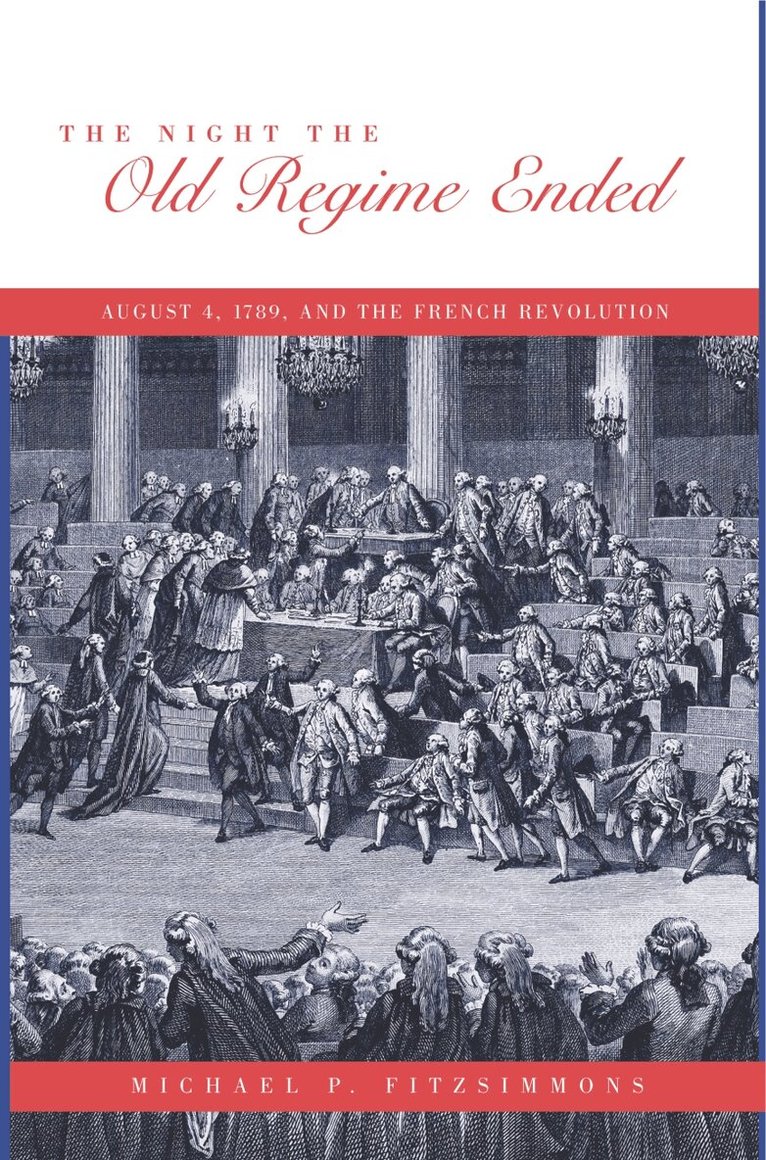
If the Fall of the Bastille on July 14, 1789, marks the symbolic beginning of the French Revolution, then August 4 is the day the Old Regime ended, for it was on that day (or, more precisely, that night) that the National Assembly met and undertook sweeping reforms that ultimately led to a complete reconstruction of the French polity. What began as a prearranged meeting with limited objectives suddenly took on a frenzied atmosphere during which dozens of noble deputies renounced their traditional privileges and dues. By the end of the night, the Assembly had instituted more meaningful reform than had the monarchy in decades of futile efforts. In The Night the Old Regime Ended, Michael Fitzsimmons offers the first full-length study in English of the night of August 4 and its importance to the French Revolution. Fitzsimmons argues against François Furet and others who maintain that the Terror was implicit in the events of 1789. To the contrary, Fitzsimmons shows that the period from 1789 to 1791 was a genuine moderate phase of the Revolution. Unlike all of its successor bodies, the National Assembly passed no punitive legislation against recalcitrant clergy or émigrés, and it amnestied all those imprisoned for political offenses before it disbanded. In the final analysis, the remarkable degree of change accomplished peacefully is what distinguishes the early period of the Revolution and gives it world-historical importance.
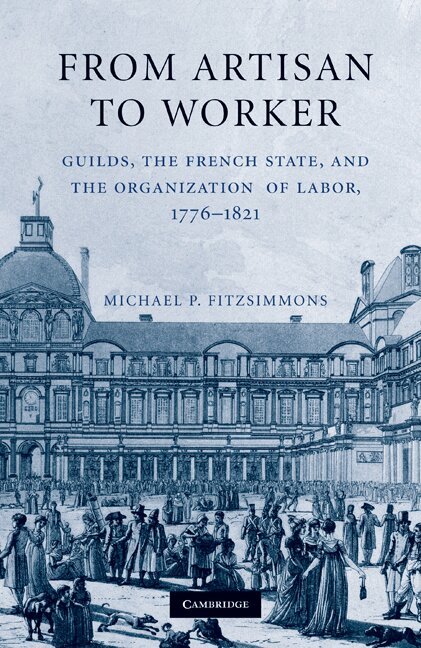
From Artisan to Worker
Guilds, the French State, and the Organization of Labor, 1776-1821
Inbunden, Engelska, 2010
1 282 kr
Skickas inom 7-10 vardagar
From Artisan to Worker examines the largely overlooked debate over the potential reestablishment of guilds that occurred from 1776 to 1821. The abolition of guilds in 1791 overturned an organization of labor that had been in place for centuries. The disorder that ensued - from concerns about the safety of the food supply to a general decline in the quality of goods - raised strong doubts about their abolition and sparked a debate both inside and outside of government that went on for decades. The issue of the reestablishment of guilds, however, subsequently became intertwined with the growing mechanization of production. Under the Napoleonic regime, the government considered several projects to restore guilds in a large-scale fashion, but the counterargument that guilds could impede mechanization prevailed. After Bonaparte's fall, the restored Bourbon dynasty was expected to reorganize guilds, but its sponsorship of an industrial exhibition in 1819 signaled its endorsement of mechanization, and after 1821 there were no further efforts to restore guilds during the Restoration.
1 228 kr
Skickas inom 7-10 vardagar
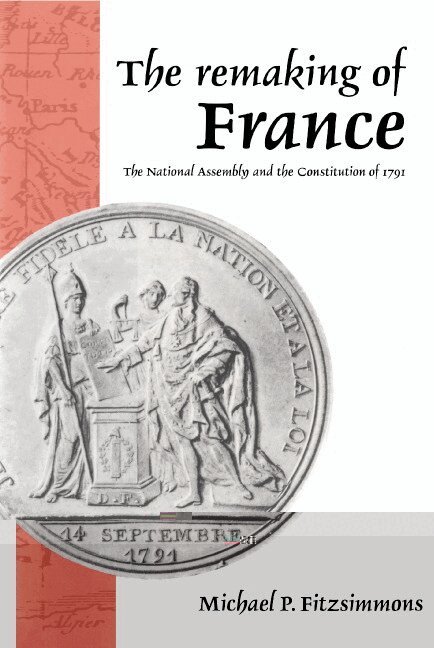
How did the ideals of liberty, equality and fraternity evolve out of the corporate structure of the Old Regime in France? This 1994 study investigates the evolution of a new ideal in polity in 1789 and the reaction of French society to it. Concentrating especially on the restructuring of the administration and judiciary, the author argues that the new political structure created by the constitution of 1791 was the most equitable and participatory national political system in the world. In particular, by the standards of the eighteenth century, the polity enacted by the National Assembly was more inclusive than exclusive, and the Constitution of 1791 was much more of an object of consensus than has been acknowledged. Challenging criticisms of the Assembly and the constitution, The Remaking of France argues that the achievements of the National Assembly deserve greater recognition than they have traditionally received.
577 kr
Skickas inom 7-10 vardagar
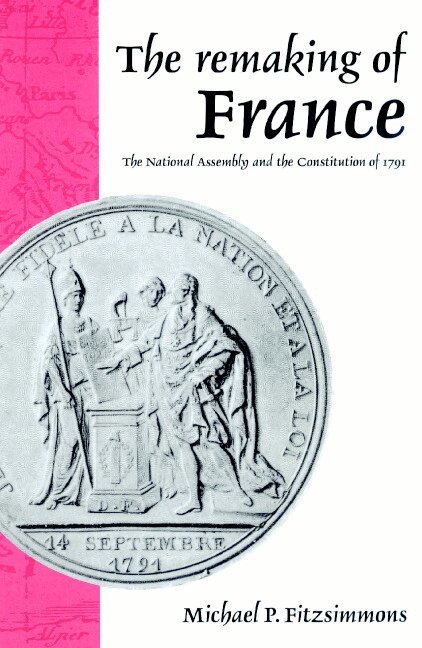
How did the ideals of liberty, equality and fraternity evolve out of the corporate structure of the Old Regime in France? This 1994 study investigates the evolution of a new ideal in polity in 1789 and the reaction of French society to it. Concentrating especially on the restructuring of the administration and judiciary, the author argues that the new political structure created by the constitution of 1791 was the most equitable and participatory national political system in the world. In particular, by the standards of the eighteenth century, the polity enacted by the National Assembly was more inclusive than exclusive, and the Constitution of 1791 was much more of an object of consensus than has been acknowledged. Challenging criticisms of the Assembly and the constitution, The Remaking of France argues that the achievements of the National Assembly deserve greater recognition than they have traditionally received.
Del 74 - Harvard Historical Monographs
Parisian Order of Barristers and the French Revolution
Inbunden, Engelska, 1987
426 kr
Skickas inom 7-10 vardagar
Did barristers as a professional group support the French Revolution, or were they most often “in flight from politics”? A close inquiry into the Order of Barristers at Paris—the largest and most important in France, with over six hundred members in 1789—reveals that the vast majority within the Order did not support the Revolution. Unsympathetic to the ideal of the nation asserted by the National Assembly, most members of the Order instead remained loyal to the traditional corporate paradigm that the National Assembly had specifically repudiated. Dismayed by the abolition of their Order, they were disillusioned with the Revolution even before the advent of the Terror, which, along with the arbitrariness of the Directory, deepened their disaffection. The manner in which Bonaparte ultimately restored the Order in 1811 completed their alienation from the Revolution and, as a result, they warmly welcomed the return of the Bourbons in 1814.This investigation not only revises what historians have long thought of the attitude of barristers toward the French Revolution, but also offers insights into the corporate character of Old Regime society and how the Revolution affected it. Fitzsimmons’s study suggests that many propertied commoners during the Revolution were not politically engaged, that they were not necessarily associated with a party or cause simply because of their place within a set of social relationships. Most of the barristers to the Parlement simply reacted timidly to events and yearned for an ideal that was irretrievably lost, tending to view the Revolution more in terms of an end than of a beginning.
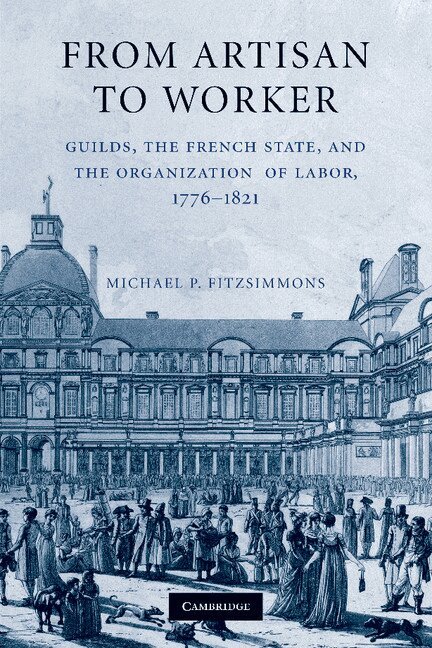
From Artisan to Worker
Guilds, the French State, and the Organization of Labor, 1776-1821
Häftad, Engelska, 2014
550 kr
Skickas inom 7-10 vardagar
From Artisan to Worker examines the largely overlooked debate over the potential reestablishment of guilds that occurred from 1776 to 1821. The abolition of guilds in 1791 overturned an organization of labor that had been in place for centuries. The disorder that ensued - from concerns about the safety of the food supply to a general decline in the quality of goods - raised strong doubts about their abolition and sparked a debate both inside and outside of government that went on for decades. The issue of the reestablishment of guilds, however, subsequently became intertwined with the growing mechanization of production. Under the Napoleonic regime, the government considered several projects to restore guilds in a large-scale fashion, but the counterargument that guilds could impede mechanization prevailed. After Bonaparte's fall, the restored Bourbon dynasty was expected to reorganize guilds, but its sponsorship of an industrial exhibition in 1819 signaled its endorsement of mechanization, and after 1821 there were no further efforts to restore guilds during the Restoration.