Michael Piotrowski – författare
Visar alla böcker från författaren Michael Piotrowski. Handla med fri frakt och snabb leverans.
10 produkter
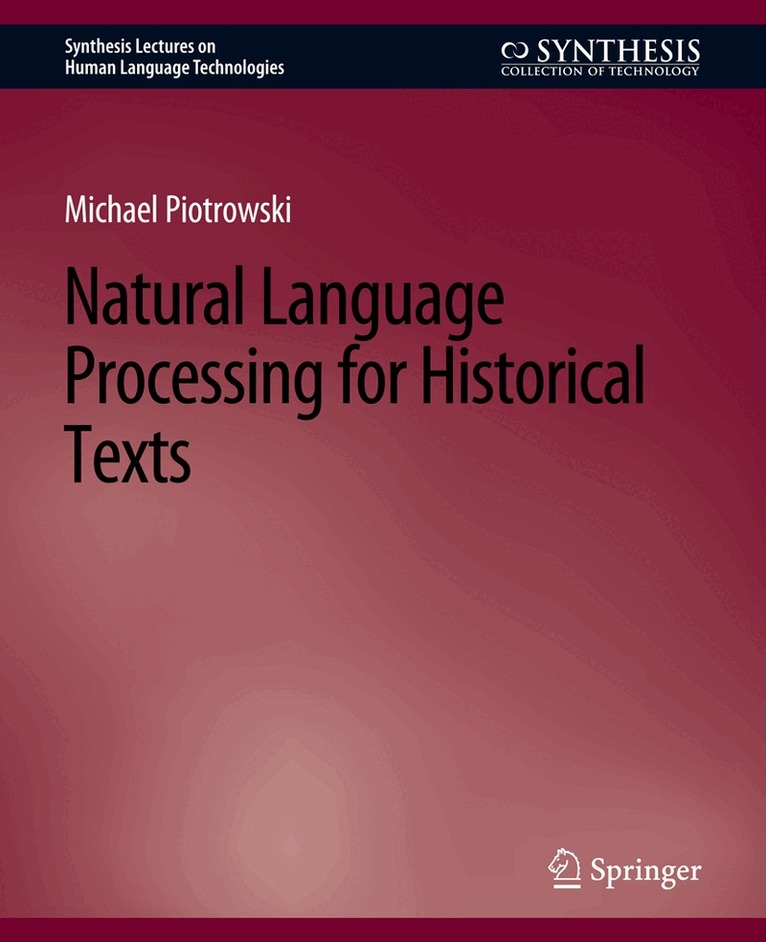
Natural Language Processing for Historical Texts
Häftad, 2012
433 kr
Lägg i varukorg
More and more historical texts are becoming available in digital form. Digitization of paper documents is motivated by the aim of preserving cultural heritage and making it more accessible, both to laypeople and scholars. As digital images cannot be searched for text, digitization projects …
Natural Language Processing for Historical Texts
E-bok, 2022
542 kr
Lägg i varukorg
More and more historical texts are becoming available in digital form. Digitization of paper documents is motivated by the aim of preserving cultural heritage and making it more accessible, both to laypeople and scholars. As digital images cannot be searched for text, digitization projects …
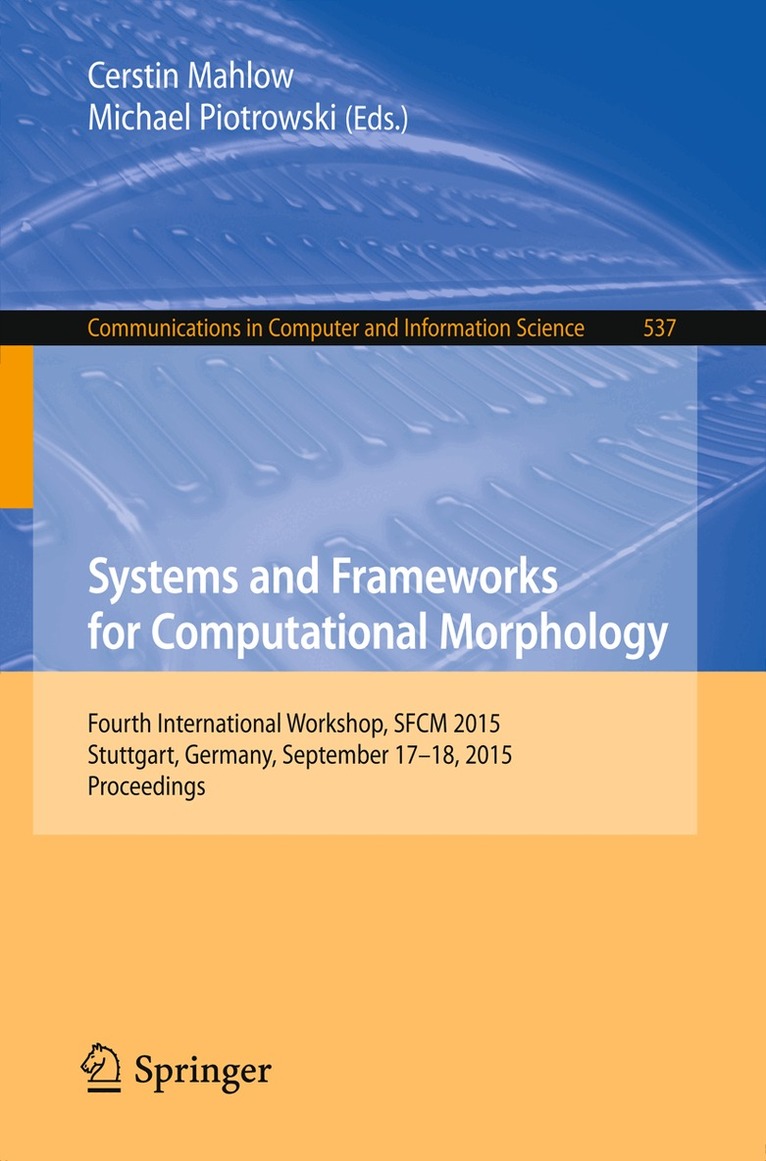
Systems and Frameworks for Computational Morphology
Fourth International Workshop, SFCM 2015, Stuttgart, Germany, September 17-18, 2015. Proceedings
Av Cerstin Mahlow, Michael Piotrowski
Häftad, 2015
568 kr
Lägg i varukorg
This book constitutes the refereed proceedings of the 4th International Workshop on Systems and Frameworks for Computational Morphology, SFCM 2015, held in Stuttgart, Germany, in September 2015. The 5 revised full papers and 5 short papers presented were carefully reviewed and selected from 16 …
Systems and Frameworks for Computational Morphology
Fourth International Workshop, SFCM 2015, Stuttgart, Germany, September 17-18, 2015. Proceedings
Av Michael Piotrowski, Cerstin Mahlow
E-bok, 2015
755 kr
Lägg i varukorg
This book constitutes the refereed proceedings of the 4th International Workshop on Systems and Frameworks for Computational Morphology, SFCM 2015, held in Stuttgart, Germany, in September 2015. The 5 revised full papers and 5 short papers presented were carefully reviewed and selected from 16 …
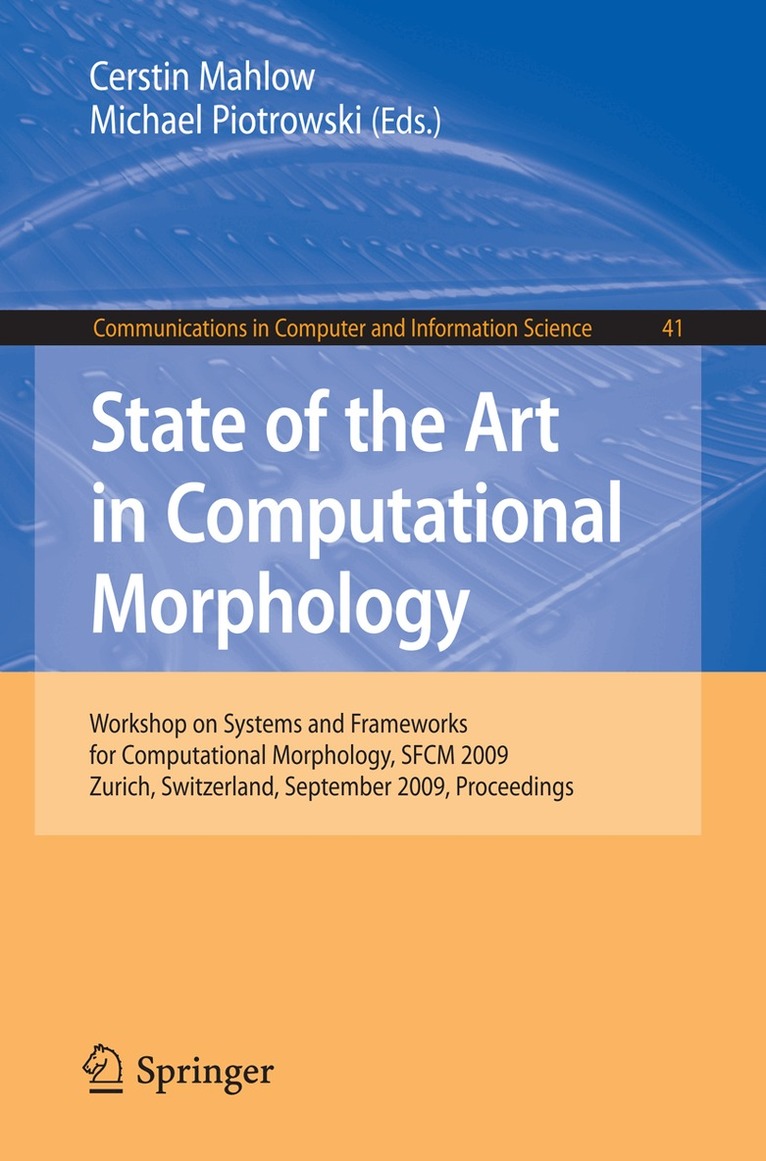
State of the Art in Computational Morphology
Workshop on Systems and Frameworks for Computational Morphology, SFCM 2009, Zurich, Switzerland, September 4, 2009, Proceedings
Av Cerstin Mahlow, Michael Piotrowski
Häftad, 2009
568 kr
Lägg i varukorg
From the point of view of computational linguistics, morphological resources are the basis for all higher-level applications. This is especially true for languages with a rich morphology, such as German or Finnish. A morphology component should thus be capable of analyzing single word forms as well …
State of the Art in Computational Morphology
Workshop on Systems and Frameworks for Computational Morphology, SFCM 2009, Zurich, Switzerland, September 4, 2009, Proceedings
Av Michael Piotrowski, Cerstin Mahlow
E-bok, 2009
718 kr
Lägg i varukorg
From the point of view of computational linguistics, morphological resources are the basis for all higher-level applications. This is especially true for languages with a rich morphology, such as German or Finnish. A morphology component should thus be capable of analyzing single word forms as well …
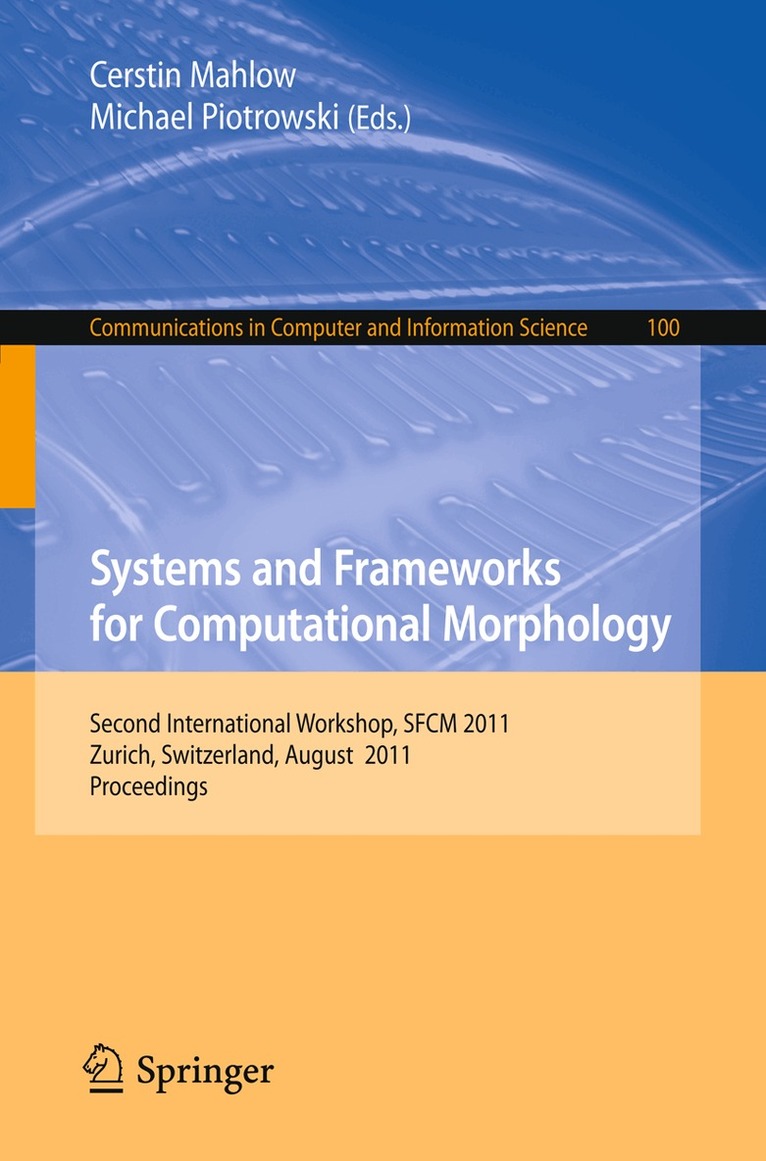
Systems and Frameworks for Computational Morphology
Second International Workshop, SFCM 2011, Zurich, Switzerland, August 26, 2011, Proceedings
Av Cerstin Mahlow, Michael Piotrowski
Häftad, 2011
568 kr
Lägg i varukorg
This book constitutes the refereed proceedings of the Second International Workshop on Systems and Frameworks for Computational Morphology, SFCM 2011, held in Zurich, Switzerland in August 2011.The eight revised full papers presented together with one invited paper were carefully reviewed and …
Systems and Frameworks for Computational Morphology
Second International Workshop, SFCM 2011, Zurich, Switzerland, August 26, 2011, Proceedings
Av Michael Piotrowski, Cerstin Mahlow
E-bok, 2011
755 kr
Lägg i varukorg
This book constitutes the refereed proceedings of the Second International Workshop on Systems and Frameworks for Computational Morphology, SFCM 2011, held in Zurich, Switzerland in August 2011. The eight revised full papers presented together with one invited paper were carefully reviewed and …
Systems and Frameworks for Computational Morphology
Third International Workshop, SFCM 2013, Berlin, Germany, September 5, 2013, Proceedings
Av Cerstin Mahlow, Michael Piotrowski
Häftad, 2013
568 kr
Lägg i varukorg
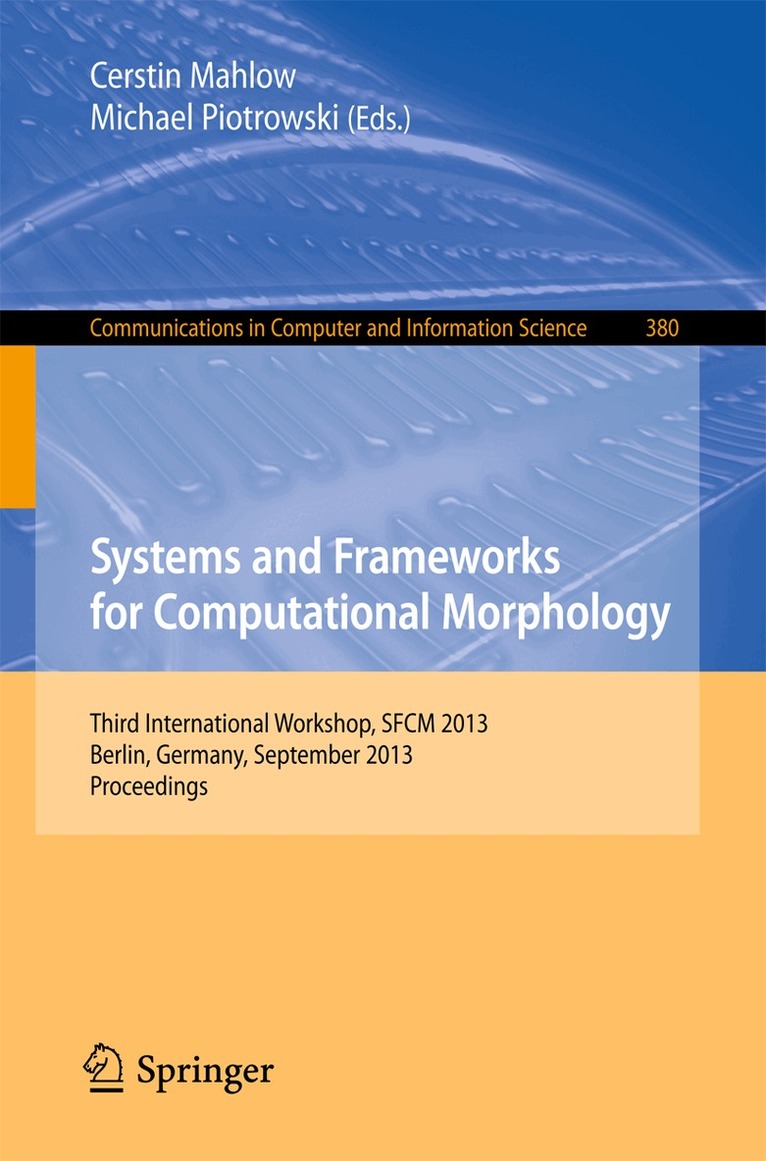
This book constitutes the refereed proceedings of the Third International Workshop on Systems and Frameworks for Computational Morphology, SFCM 2013, held in Berlin, in September 2013. The 7 full papers were carefully reviewed and selected from 15 submissions and are complemented with an invited …
Systems and Frameworks for Computational Morphology
Third International Workshop, SFCM 2013, Berlin, Germany, September 5, 2013, Proceedings
Av Michael Piotrowski, Cerstin Mahlow
E-bok, 2013
755 kr
Lägg i varukorg
This book constitutes the refereed proceedings of the Third International Workshop on Systems and Frameworks for Computational Morphology, SFCM 2013, held in Berlin, in September 2013. The 7 full papers were carefully reviewed and selected from 15 submissions and are complemented with an invited …