Michael S. Hamada - Böcker
Visar alla böcker från författaren Michael S. Hamada. Handla med fri frakt och snabb leverans.
4 produkter
4 produkter
1 910 kr
Skickas inom 10-15 vardagar
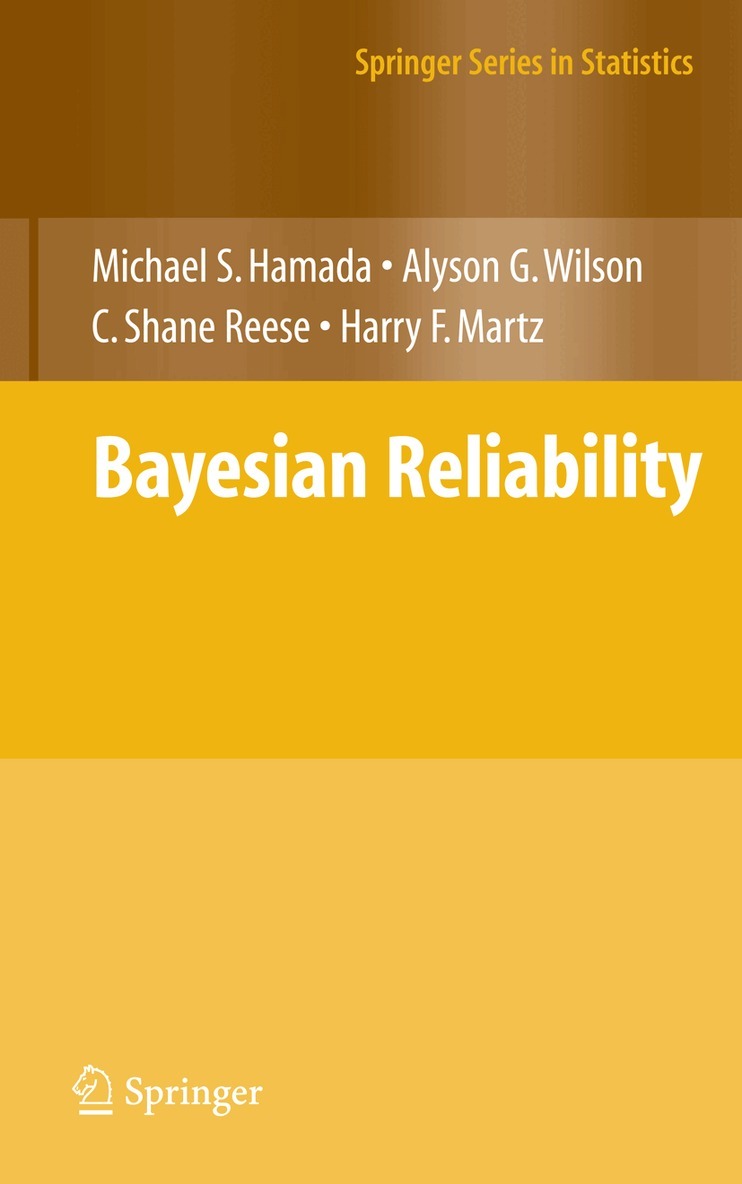
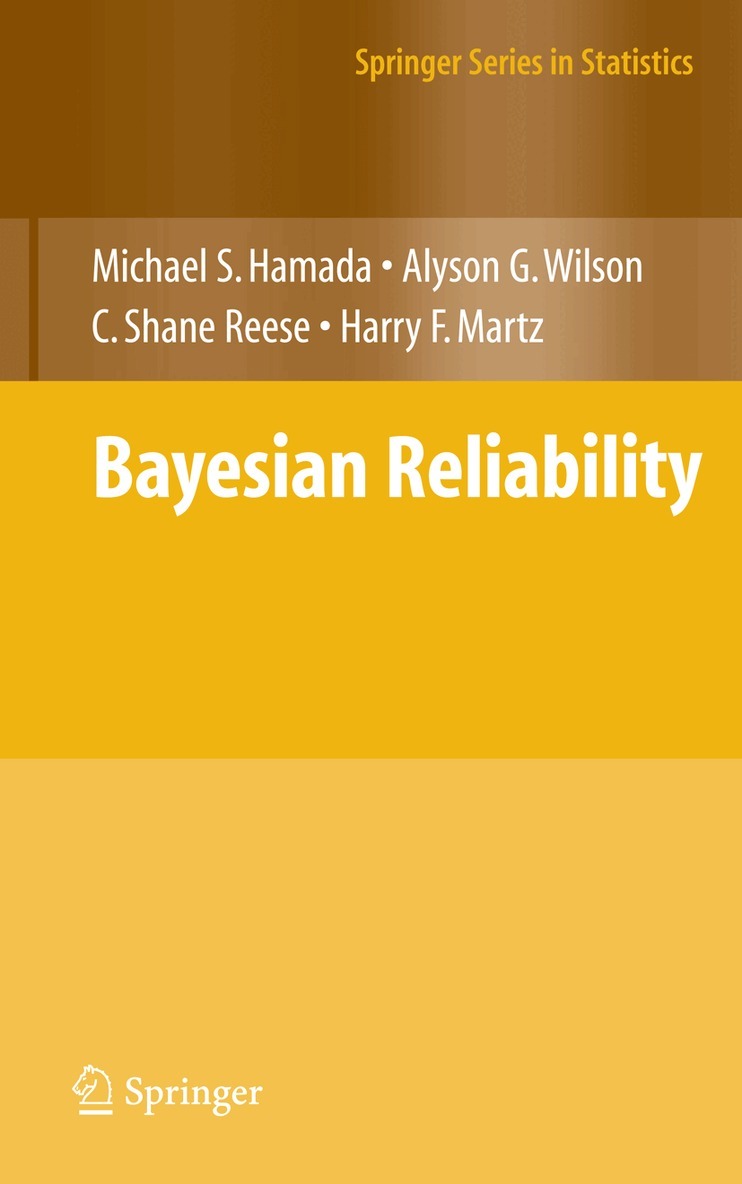
Bayesian Reliability presents modern methods and techniques for analyzing reliability data from a Bayesian perspective. The adoption and application of Bayesian methods in virtually all branches of science and engineering have significantly increased over the past few decades. This increase is largely due to advances in simulation-based computational tools for implementing Bayesian methods.The authors extensively use such tools throughout this book, focusing on assessing the reliability of components and systems with particular attention to hierarchical models and models incorporating explanatory variables. Such models include failure time regression models, accelerated testing models, and degradation models. The authors pay special attention to Bayesian goodness-of-fit testing, model validation, reliability test design, and assurance test planning. Throughout the book, the authors use Markov chain Monte Carlo (MCMC) algorithms for implementing Bayesian analyses -- algorithms that make the Bayesian approach to reliability computationally feasible and conceptually straightforward.This book is primarily a reference collection of modern Bayesian methods in reliability for use by reliability practitioners. There are more than 70 illustrative examples, most of which utilize real-world data. This book can also be used as a textbook for a course in reliability and contains more than 160 exercises.Noteworthy highlights of the book include Bayesian approaches for the following:Goodness-of-fit and model selection methodsHierarchical models for reliability estimationFault tree analysis methodology that supports data acquisition at all levels in the treeBayesian networks in reliability analysisAnalysis of failure count and failure time data collected from repairable systems, and the assessment of various related performance criteriaAnalysis of nondestructive and destructive degradation dataOptimal design of reliability experimentsHierarchical reliability assurance testing
Del 552 - Wiley Series in Probability and Statistics
Experiments
Planning, Analysis, and Optimization
Inbunden, Engelska, 2009
2 010 kr
Skickas inom 7-10 vardagar
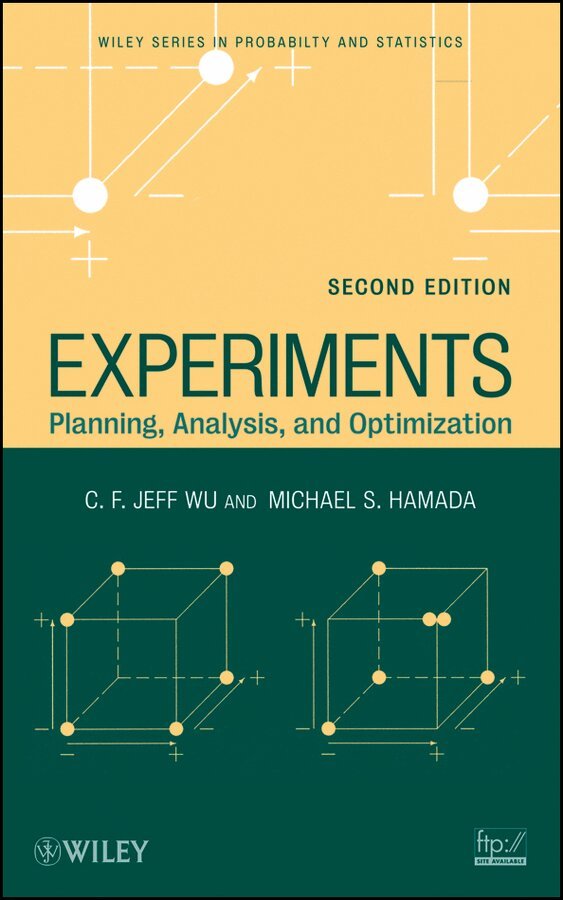
Praise for the First Edition: "If you . . . want an up-to-date, definitive reference written by authors who have contributed much to this field, then this book is an essential addition to your library."—Journal of the American Statistical AssociationFully updated to reflect the major progress in the use of statistically designed experiments for product and process improvement, Experiments, Second Edition introduces some of the newest discoveries—and sheds further light on existing ones—on the design and analysis of experiments and their applications in system optimization, robustness, and treatment comparison. Maintaining the same easy-to-follow style as the previous edition while also including modern updates, this book continues to present a new and integrated system of experimental design and analysis that can be applied across various fields of research including engineering, medicine, and the physical sciences.The authors modernize accepted methodologies while refining many cutting-edge topics including robust parameter design, reliability improvement, analysis of non-normal data, analysis of experiments with complex aliasing, multilevel designs, minimum aberration designs, and orthogonal arrays. Along with a new chapter that focuses on regression analysis, the Second Edition features expanded and new coverage of additional topics, including: Expected mean squares and sample size determination One-way and two-way ANOVA with random effects Split-plot designs ANOVA treatment of factorial effects Response surface modeling for related factors Drawing on examples from their combined years of working with industrial clients, the authors present many cutting-edge topics in a single, easily accessible source. Extensive case studies, including goals, data, and experimental designs, are also included, and the book's data sets can be found on a related FTP site, along with additional supplemental material. Chapter summaries provide a succinct outline of discussed methods, and extensive appendices direct readers to resources for further study.Experiments, Second Edition is an excellent book for design of experiments courses at the upper-undergraduate and graduate levels. It is also a valuable resource for practicing engineers and statisticians.
1 368 kr
Skickas inom 7-10 vardagar
Praise for the First Edition:"If you ... want an up-to-date, definitive reference written by authors who have contributed much to this field, then this book is an essential addition to your library."—Journal of the American Statistical AssociationA COMPREHENSIVE REVIEW OF MODERN EXPERIMENTAL DESIGNExperiments: Planning, Analysis, and Optimization, Third Edition provides a complete discussion of modern experimental design for product and process improvement—the design and analysis of experiments and their applications for system optimization, robustness, and treatment comparison. While maintaining the same easy-to-follow style as the previous editions, this book continues to present an integrated system of experimental design and analysis that can be applied across various fields of research including engineering, medicine, and the physical sciences. New chapters provide modern updates on practical optimal design and computer experiments, an explanation of computer simulations as an alternative to physical experiments. Each chapter begins with a real-world example of an experiment followed by the methods required to design that type of experiment. The chapters conclude with an application of the methods to the experiment, bridging the gap between theory and practice.The authors modernize accepted methodologies while refining many cutting-edge topics including robust parameter design, analysis of non-normal data, analysis of experiments with complex aliasing, multilevel designs, minimum aberration designs, and orthogonal arrays.The third edition includes: Information on the design and analysis of computer experimentsA discussion of practical optimal design of experimentsAn introduction to conditional main effect (CME) analysis and definitive screening designs (DSDs)New exercise problemsThis book includes valuable exercises and problems, allowing the reader to gauge their progress and retention of the book's subject matter as they complete each chapter.Drawing on examples from their combined years of working with industrial clients, the authors present many cutting-edge topics in a single, easily accessible source. Extensive case studies, including goals, data, and experimental designs, are also included, and the book's data sets can be found on a related FTP site, along with additional supplemental material. Chapter summaries provide a succinct outline of discussed methods, and extensive appendices direct readers to resources for further study.Experiments: Planning, Analysis, and Optimization, Third Edition is an excellent book for design of experiments courses at the upper-undergraduate and graduate levels. It is also a valuable resource for practicing engineers and statisticians.
1 910 kr
Skickas inom 10-15 vardagar
Bayesian Reliability presents modern methods and techniques for analyzing reliability data from a Bayesian perspective. The adoption and application of Bayesian methods in virtually all branches of science and engineering have significantly increased over the past few decades. This increase is largely due to advances in simulation-based computational tools for implementing Bayesian methods.The authors extensively use such tools throughout this book, focusing on assessing the reliability of components and systems with particular attention to hierarchical models and models incorporating explanatory variables. Such models include failure time regression models, accelerated testing models, and degradation models. The authors pay special attention to Bayesian goodness-of-fit testing, model validation, reliability test design, and assurance test planning. Throughout the book, the authors use Markov chain Monte Carlo (MCMC) algorithms for implementing Bayesian analyses -- algorithms that make the Bayesian approach to reliability computationally feasible and conceptually straightforward.This book is primarily a reference collection of modern Bayesian methods in reliability for use by reliability practitioners. There are more than 70 illustrative examples, most of which utilize real-world data. This book can also be used as a textbook for a course in reliability and contains more than 160 exercises.Noteworthy highlights of the book include Bayesian approaches for the following:Goodness-of-fit and model selection methodsHierarchical models for reliability estimationFault tree analysis methodology that supports data acquisition at all levels in the treeBayesian networks in reliability analysisAnalysis of failure count and failure time data collected from repairable systems, and the assessment of various related performance criteriaAnalysis of nondestructive and destructive degradation dataOptimal design of reliability experimentsHierarchical reliability assurance testing