Michael S. Neiberg - Böcker
Visar alla böcker från författaren Michael S. Neiberg. Handla med fri frakt och snabb leverans.
21 produkter
21 produkter
334 kr
Skickas inom 5-8 vardagar
America's entry into World War One in April 1917 marked the end of one era in the nation's history and the start of another. As acclaimed historian Michael S. Neiberg reveals in his compelling new work, the Great War erupted in the midst of lively domestic debate as to what America's role should be in the global sphere. Whereas Woodrow Wilson was re-elected in 1916 by pledging to stay out of the conflict in Europe, former president Theodore Roosevelt was convinced that the war offered a means for the U.S. to become a dominant power and ensure national security.In The Road Over There, Neiberg follows American reactions to such events as the Lusitania, German espionage, and the Zimmermann telegram, shedding light on the dilemmas and crises that the country faced in the war years. In the summer of 1916, German agents detonated the Black Tom railroad terminal in Jersey City, New Jersey, leaving only fragments of piers (still visible today); it was the costliest act of domestic terrorism in American history before 9/11 and its effect was galvanizing.Neiberg's book will revive debates around America's entry into World War One, building to Wilson's declaration while examining the forces and shifts that made it all but inevitable. Neiberg establishes beyond question that World War One was not a parenthetical exception in American history but a moment of national and international self-identification, one whose effects still resonate today.
111 kr
Skickas inom 5-8 vardagar
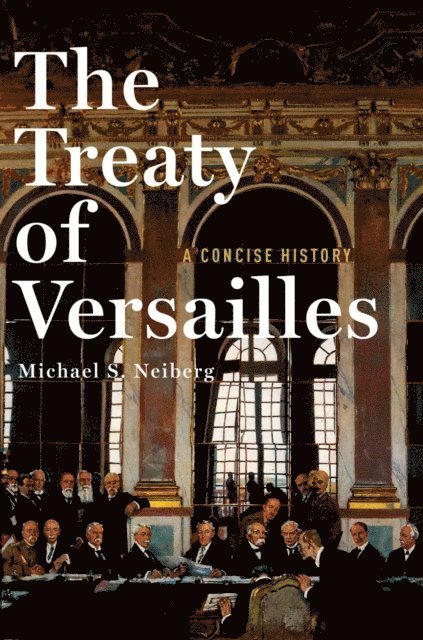
Signed on June 28, 1919 between Germany and the principal Allied powers, the Treaty of Versailles formally ended World War I. Problematic from the very beginning, even its contemporaries saw the treaty as a mediocre compromise, creating a precarious order in Europe and abroad and destined to fall short of ensuring lasting peace. At the time, observers read the treaty through competing lenses: a desire for peace after five years of disastrous war, demands for vengeance against Germany, the uncertain future of colonialism, and, most alarmingly, the emerging threat of Bolshevism. A century after its signing, we can look back at how those developments evolved through the twentieth century, evaluating the treaty and its consequences with unprecedented depth of perspective.The author of several award-winning books, Michael S. Neiberg provides a lucid and authoritative account of the Treaty of Versailles, explaining the enormous challenges facing those who tried to put the world back together after the global destruction of the World War I. Rather than assessing winners and losers, this compelling book analyzes the many subtle factors that influenced the treaty and the dominant, at times ambiguous role of the "Big Four" leaders: Woodrow Wilson of the United States, David Lloyd George of Great Britain, Vittorio Emanuele Orlando of Italy, and Georges Clémenceau of France.The Treaty of Versailles was not solely responsible for the catastrophic war that crippled Europe and the world just two decades later, but it played a critical role. As Neiberg reminds us, to understand decolonization, World War II, the Cold War, and even the complex world we inhabit today, there is no better place to begin than with World War I and the treaty that tried, and perhaps failed, to end it.
266 kr
Skickas inom 3-6 vardagar
Signed on 28 June 1919 between Germany and the principal Allied powers, the Treaty of Versailles formally ended World War I. Problematic from the very beginning, even its contemporaries saw the treaty as a mediocre compromise, creating a precarious order in Europe and abroad and destined to fall short of ensuring lasting peace. At the time, observers read the treaty through competing lenses: a desire for peace after five years of disastrous war, demands for vengeance against Germany, the uncertain future of colonialism, and, most alarmingly, the emerging threat of Bolshevism. A century after its signing, we can look back at how those developments evolved through the twentieth century, evaluating the treaty and its consequences with unprecedented depth of perspective. The author of several award-winning books, Michael S. Neiberg provides a lucid and authoritative account of the Treaty of Versailles, explaining the enormous challenges facing those who tried to put the world back together after the global destruction of the World War I. Rather than assessing winners and losers, this compelling book analyzes the many subtle factors that influenced the treaty and the dominant, at times ambiguous role of the 'Big Four' leaders -- Woodrow Wilson of the United States, David Lloyd George of Great Britain, Vittorio Emanuele Orlando of Italy, and Georges Clémenceau of France. The Treaty of Versailles was not solely responsible for the catastrophic war that crippled Europe and the world just two decades later, but it played a critical role. As Neiberg reminds us, to understand decolonization, World War II, the Cold War, and even the complex world we inhabit today, there is no better place to begin than with World War I and the treaty that tried, and perhaps failed, to end it.
309 kr
Skickas inom 10-15 vardagar
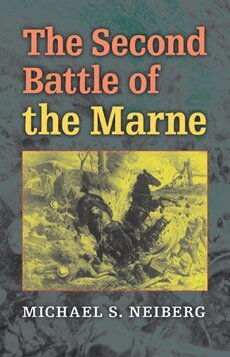
The First Battle of the Marne produced the so-called Miracle of the Marne, when French and British forces stopped the initial German drive on Paris in 1914. Hundreds of thousands of casualties later, with opposing forces still dug into trench lines, the Germans tried again to push their way to Paris and to victory. The Second Battle of the Marne (July 15 to August 9, 1918) marks the point at which the Allied armies stopped the massive German Ludendorff Offensives and turned to offensive operations themselves. The Germans never again came as close to Paris nor resumed the offensive. The battle was one of the first large multinational battles fought by the Allies since the assumption of supreme command by French general Ferdinand Foch. It marks the only time the French, American, and British forces fought together in one battle. A superb account of the bloody events of those fateful days, this book sheds new light on a critically important 20th-century battle.
901 kr
Skickas inom 10-15 vardagar
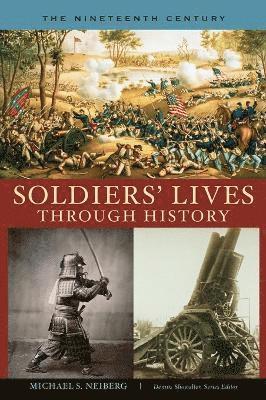
This is the story of the evolution of the citizen army throughout Western nations during the nineteenth century and up through World War I. The French Revolution had brought to Europe the concept of military service as a citizen responsibility. Until then, armies and navies had been the province of the upper classes and of mercenaries, with authoritarian governments firmly in place that held little connection to the common person. As more democratic and republican governments developed during the 1800s, military service became not only a citizen's obligation, but for many, an honor. By the time of World War I, men and women-in more limited roles-were becoming willing to risk their lives for the goals of their countries.
2 150 kr
Skickas inom 10-15 vardagar
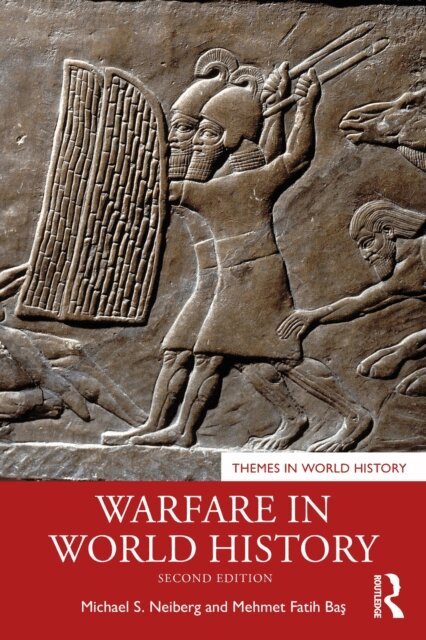
Despite the catastrophic effects of war, wars have also proved to be instrumental to long-term change in world history This text is the first of its kind to survey how warfare has developed from ancient times to the present day and the role it has played in shaping the world we know. The periods discussed include:* the pre-gunpowder era* the development of gunpowder weapons and their rapid adoption in Western Europe* the French Revolution and the industrialization of warfare* the First and Second World Wars* the Cold War and the wars of liberation fought across the Third World.With in-depth examples illustrating the dominant themes in the history of warfare, Warfare in World History focuses not only on the famous and heroic, but also discusses the experiences of countless millions of unknowns who have fought in wars over time.
579 kr
Skickas inom 10-15 vardagar
Despite the catastrophic effects of war, wars have also proved to be instrumental to long-term change in world history This text is the first of its kind to survey how warfare has developed from ancient times to the present day and the role it has played in shaping the world we know. The periods discussed include:* the pre-gunpowder era* the development of gunpowder weapons and their rapid adoption in Western Europe* the French Revolution and the industrialization of warfare* the First and Second World Wars* the Cold War and the wars of liberation fought across the Third World.With in-depth examples illustrating the dominant themes in the history of warfare, Warfare in World History focuses not only on the famous and heroic, but also discusses the experiences of countless millions of unknowns who have fought in wars over time.
2 150 kr
Skickas inom 10-15 vardagar
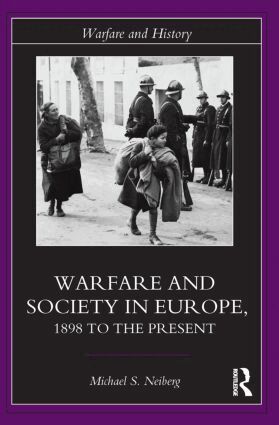
Warfare and Society in Europe, 1898 to the Present examines warfare in Europe from the Fashoda conflict in modern-day Sudan to the recent war in Iraq. The twentieth century was by far the world's most destructive century with two global wars marking the first half of the century and the constant fear of nuclear annihilation haunting the second half.Throughout, this book treats warfare as a function of larger political, cultural, social and economic issues and includes discussion of:* the alliances that led to the outbreak of the First World War* the First World War* the Second World War* the increasing role played by the United States in Europe's twentieth century wars* Eastern European wars such as the Russian Civil War and the Greco-Turkish war* new technologies and weapons.Combining a traditional survey of military history with a survey of social issues, Michael S. Neiberg both examines how social changes have impacted the nature of war fighting and how war has shaped the basic patterns of European society.
593 kr
Skickas inom 10-15 vardagar
Warfare and Society in Europe, 1898 to the Present examines warfare in Europe from the Fashoda conflict in modern-day Sudan to the recent war in Iraq. The twentieth century was by far the world's most destructive century with two global wars marking the first half of the century and the constant fear of nuclear annihilation haunting the second half.Throughout, this book treats warfare as a function of larger political, cultural, social and economic issues and includes discussion of:* the alliances that led to the outbreak of the First World War* the First World War* the Second World War* the increasing role played by the United States in Europe's twentieth century wars* Eastern European wars such as the Russian Civil War and the Greco-Turkish war* new technologies and weapons.Combining a traditional survey of military history with a survey of social issues, Michael S. Neiberg both examines how social changes have impacted the nature of war fighting and how war has shaped the basic patterns of European society.
384 kr
Skickas inom 10-15 vardagar
This book examines the Reserve Officers Training Corps program as a distinctively American expression of the social, cultural, and political meanings of military service. Since 1950, ROTC has produced nearly two out of three American active duty officers, yet there has been no comprehensive scholarly look at civilian officer education programs in nearly forty years.While most modern military systems educate and train junior officers at insular academies like West Point, only the United States has relied heavily on the active cooperation of its civilian colleges. Michael Neiberg argues that the creation of officer education programs on civilian campuses emanates from a traditional American belief (which he traces to the colonial period) in the active participation of civilians in military affairs. Although this ideology changed shape through the twentieth century, it never disappeared. During the Cold War military buildup, ROTC came to fill two roles: it provided the military with large numbers of well-educated officers, and it provided the nation with a military comprised of citizen-soldiers. Even during the Vietnam era, officers, university administrators, and most students understood ROTC's dual role. The Vietnam War thus led to reform, not abandonment, of ROTC.Mining diverse sources, including military and university archives, Making Citizen-Soldiers provides an in-depth look at an important, but often overlooked, connection between the civilian and military spheres.
295 kr
Skickas inom 10-15 vardagar
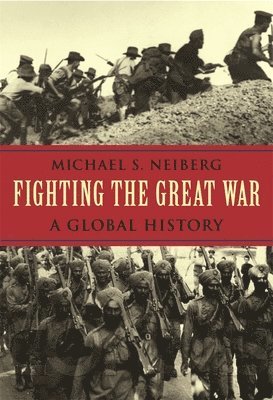
Despair at Gallipoli. Victory at Vimy Ridge. A European generation lost, an American spirit found. The First World War, the deadly herald of a new era, continues to captivate readers. In this lively book, Michael Neiberg offers a concise history based on the latest research and insights into the soldiers, commanders, battles, and legacies of the Great War.Tracing the war from Verdun to Salonika to Baghdad to German East Africa, Neiberg illuminates the global nature of the conflict. More than four years of mindless slaughter in the trenches on the western front, World War I was the first fought in three dimensions: in the air, at sea, and through mechanized ground warfare. New weapons systems--tanks, bomber aircraft, and long-range artillery--all shaped the battle environment. Moving beyond the standard portrayal of the war's generals as "butchers and bunglers," Neiberg offers a nuanced discussion of officers constrained by the monumental scale of complex events. Diaries and letters of men serving on the front lines capture the personal stories and brutal conditions--from Alpine snows to Mesopotamian sands--under which these soldiers lived, fought, and died.Generously illustrated, with many never-before-published photographs, this book is an impressive blend of analysis and narrative. Anyone interested in understanding the twentieth century must begin with its first global conflict, and there is no better place to start than with Fighting the Great War.
185 kr
Skickas inom 7-10 vardagar
Winner of the Society for Military History’s Distinguished Book Award“Deeply researched and forcefully written . . . deftly explains the confused politics and diplomacy that bedeviled the war against the Nazis.”—Wall Street Journal“Neiberg is one of the very best historians on wartime France, and his approach to the fall of France and its consequences is truly original and perceptive as well as superbly written.”—Antony Beevor, author of The Second World War“An utterly gripping account, the best to date, of relations within the turbulent triumvirate of France, Britain, and America in the Second World War.”—Andrew Roberts, author of Churchill: Walking with DestinyThe “most shocking single event” of World War II, according to US Secretary of War Henry Stimson, was not the Japanese attack on Pearl Harbor but the fall of France in the spring of 1940. The Nazi invasion of France destabilized Washington’s strategic assumptions, resulting in hasty and desperate decision-making. Michael Neiberg offers a dramatic history of America’s bewildering response—policies that placed the United States in league with fascism and nearly ruined its alliance with Britain.FDR and his advisors naively believed they could woo Vichy France’s decorated wartime leader, Marshal Philippe Pétain, and prevent the country from becoming a formal German ally. The British, convinced that the Vichy government was fully subservient to Nazi Germany, chose to back Charles de Gaulle and actively financed and supported the Resistance. After the war, America’s decision to work with the Vichy regime cast a pall over US-French relations that lasted for decades.
240 kr
Skickas inom 10-15 vardagar
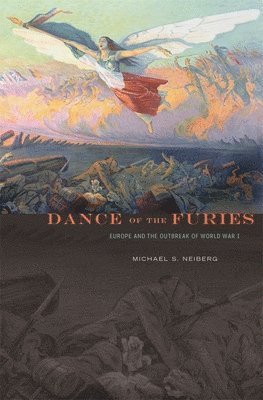
The common explanation for the outbreak of World War I depicts Europe as a minefield of nationalism, needing only the slightest pressure to set off an explosion of passion that would rip the continent apart. But in a crucial reexamination of the outbreak of violence, Michael S. Neiberg shows that ordinary Europeans, unlike their political and military leaders, neither wanted nor expected war during the fateful summer of 1914. By training his eye on the ways that people outside the halls of power reacted to the rapid onset and escalation of the fighting, Neiberg dispels the notion that Europeans were rabid nationalists intent on mass slaughter. He reveals instead a complex set of allegiances that cut across national boundaries.Neiberg marshals letters, diaries, and memoirs of ordinary citizens across Europe to show that the onset of war was experienced as a sudden, unexpected event. As they watched a minor diplomatic crisis erupt into a continental bloodbath, they expressed shock, revulsion, and fear. But when bargains between belligerent governments began to crumble under the weight of conflict, public disillusionment soon followed. Yet it was only after the fighting acquired its own horrible momentum that national hatreds emerged under the pressure of mutually escalating threats, wartime atrocities, and intense government propaganda.Dance of the Furies gives voice to a generation who found themselves compelled to participate in a ghastly, protracted orgy of violence they never imagined would come to pass.
373 kr
Skickas inom 7-10 vardagar
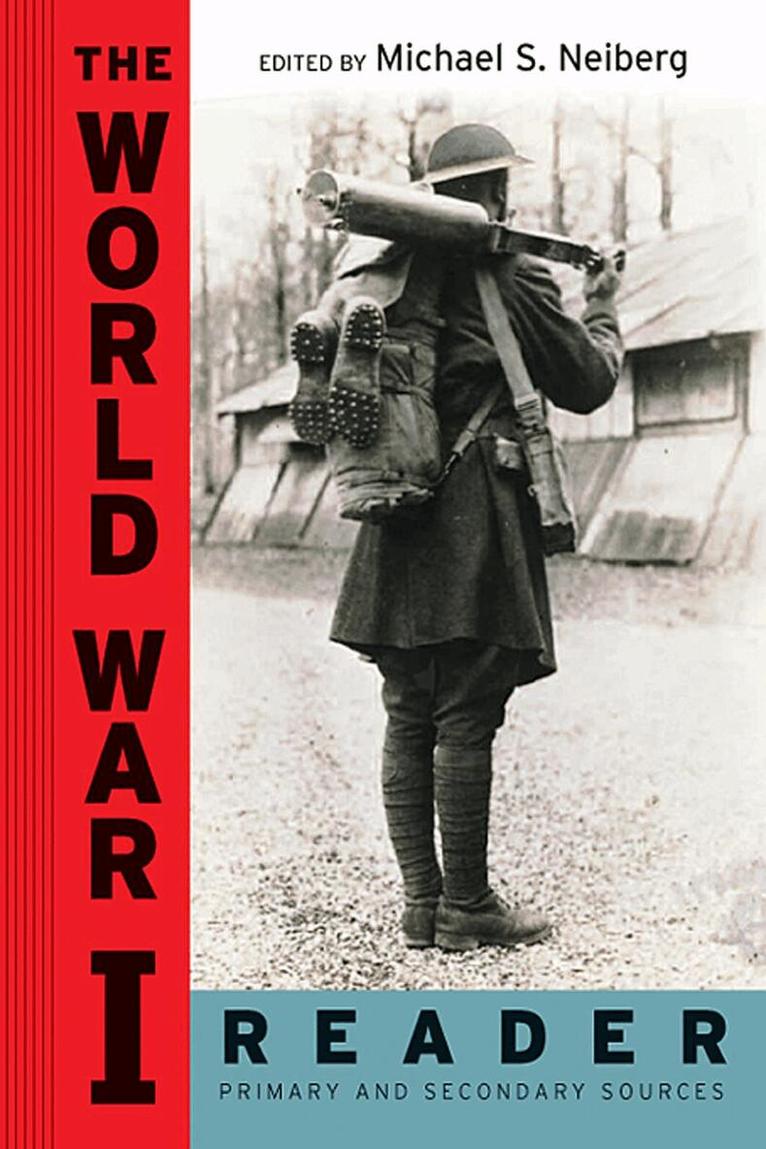
An accessible compilation of primary and secondary scholarship on the frequently misunderstood First World WarAlmost 100 years after the Treaty of Versailles was signed, World War I continues to be badly understood and greatly oversimplified. Its enormous impact on the world in terms of international diplomacy and politics, and the ways in which future military engagements would evolve, be fought, and ultimately get resolved have been ignored. With this reader of primary and secondary documents, edited and compiled by Michael S. Neiberg, students, scholars, and war buffs can gain an extensive yet accessible understanding of this conflict. Neiberg introduces the basic problems in the history of World War I, shares the words and experiences of the participants themselves, and, finally, presents some of the most innovative and dynamic current scholarship on the war.Neiberg, a leading historian of World War I, has selected a wide array of primary documents, ranging from government papers to personal diaries, demonstrating the war's devastating effect on all who experienced it, whether President Woodrow Wilson, an English doughboy in the trenches, or a housewife in Germany. In addition to this material, each chapter in The World War I Reader contains a selection of articles and book chapters written by major scholars of World War I, giving readers perspectives on the war that are both historical and contemporary. Chapters are arranged chronologically and by theme, and address causes, the experiences of soldiers and their leaders, battlefield strategies and conditions, home front issues, diplomacy, and peacemaking. A time-line, maps, suggestions for further reading, and a substantive introduction by Neiberg that lays out the historiography of World War I round out the book.
2 150 kr
Skickas inom 10-15 vardagar
This volume presents the best writings on the origins, development, success and failure of fascism outside Germany. By treating the problem in a global context, these essays together add tremendous complexity to our understanding of one of history‘s most destructive political movements. The collection covers theories, origins and definitions of fascism, fascism in power, fascism in opposition, and fascism in a global and comparative setting.
635 kr
Kommande
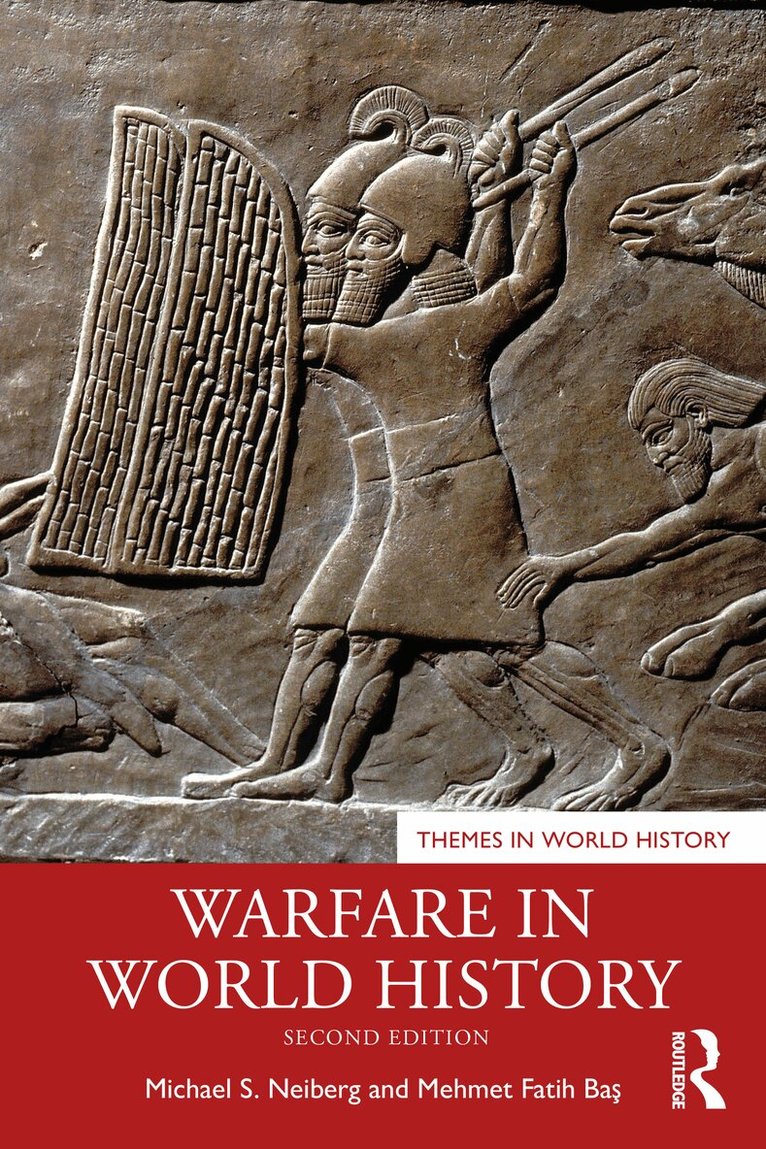
Warfare in World History provides a succinct, comprehensive overview of how warfare has developed from ancient times to the present day and the instrumental role it has played in shaping the world as we know it.This volume covers major periods of military history, including the emergence of the first armies in the Bronze Age; distinct military traditions of various civilizations during the Middle Ages; the development of gunpowder weapons and their rapid adoption in Europe and the Middle East; the French Revolution and the industrialization of warfare; the colonial expansion of European powers, and the resistance of Indigenous peoples; and the World Wars, the Cold War, and the wars of liberation across the Third World. It explores each era's new technological advances and the unique social, political, and cultural development in which wars were fought. With in-depth examples, this volume focuses not only on famous and heroic figures but also discusses the experiences of millions of unknown people who have fought in wars over time.Now fully up to date in this 2nd edition, the book includes a new chapter on the post-2000 period—from the War on Terror to the ongoing conflict in Ukraine. It examines the emergence of global terrorist organizations, hybrid threats, and non-state actors; the re-emergence of mass conscripted armies; the rise of cyberspace as a new domain of warfare; and the role of autonomous weapon systems in changing the character of war. This edition also boasts more coverage of non-western powers with fully updated references and recommended readings.This book will be of interest to students of world history, military history and international relations.
2 325 kr
Kommande
Warfare in World History provides a succinct, comprehensive overview of how warfare has developed from ancient times to the present day and the instrumental role it has played in shaping the world as we know it.This volume covers major periods of military history, including the emergence of the first armies in the Bronze Age; distinct military traditions of various civilizations during the Middle Ages; the development of gunpowder weapons and their rapid adoption in Europe and the Middle East; the French Revolution and the industrialization of warfare; the colonial expansion of European powers, and the resistance of Indigenous peoples; and the World Wars, the Cold War, and the wars of liberation across the Third World. It explores each era's new technological advances and the unique social, political, and cultural development in which wars were fought. With in-depth examples, this volume focuses not only on famous and heroic figures but also discusses the experiences of millions of unknown people who have fought in wars over time.Now fully up to date in this 2nd edition, the book includes a new chapter on the post-2000 period—from the War on Terror to the ongoing conflict in Ukraine. It examines the emergence of global terrorist organizations, hybrid threats, and non-state actors; the re-emergence of mass conscripted armies; the rise of cyberspace as a new domain of warfare; and the role of autonomous weapon systems in changing the character of war. This edition also boasts more coverage of non-western powers with fully updated references and recommended readings.This book will be of interest to students of world history, military history and international relations.
635 kr
Skickas inom 10-15 vardagar
This volume presents the best writings on the origins, development, success and failure of fascism outside Germany. By treating the problem in a global context, these essays together add tremendous complexity to our understanding of one of history‘s most destructive political movements. The collection covers theories, origins and definitions of fascism, fascism in power, fascism in opposition, and fascism in a global and comparative setting.
177 kr
Skickas inom 10-15 vardagar
Ferdinand Foch is the prototype of the twentieth-century general. Better than any other general of the First World War, Foch came to understand how technology and modern alliance systems had changed the nature of warfare. He is most famous for his role as Allied commander in chief in 1918. In this position, unparalleled in the history of warfare, Foch welded together the disparate war efforts of France, Great Britain, the United States, Italy, and Belgium. Now fighting as a more coherent whole, the Allies repulsed the German spring offensives of 1918 and returned to the attack themselves in the summer. In this role, Foch foreshadowed the similar roles played by other commanders of large coalitions, such as Dwight Eisenhower in World War II and Norman Schwarzkopf in Desert Storm.Foch's other important legacy is his public dispute with French prime minister Georges Clemenceau during the armistice and peace negotiations. Foch argued strongly for the creation of Allied bridgeheads across the Rhine River to ensure that a less populous and less industrialized France could defeat a vengeful Germany in the future if necessary. His public quarrels with Clemenceau, who did not share Foch's opinion and did not care for his interference, left the French Third Republic with a civil-military crisis as menacing as the one with which it began World War I. Foch's legacies are both positive and negative, but he left a profound impact on the twentieth century. Michael S. Neiberg masterfully analyzes this complex man and provides a solid overview of French political history against the fabric of the twentieth century's first industrialized war.
214 kr
Skickas
After the first few months of World War I, the Western Front consisted of a relatively static line of trench systems which stretched from the coast of the North Sea southwards to the Swiss border. To try to break through the opposing lines of trenches and barbed wire entanglements, both sides employed huge artillery bombardments followed by attacks by tens of thousands of soldiers. Battles could last for months and led to casualties measured in hundreds of thousands for attacker and defender alike. After most of these attacks, only a short section of the front would have moved and only by a kilometer or two. After Gallipoli, Australians were moved to fight in France on the western Front, in battles including the Battle of the Somme. On the first day of the 1916 Battle of the Somme, 60,000 Allies were casualties, including 20,000 deaths. The principal adversaries on the Western Front, who fielded armies of millions of men, were Germany to the East against a western alliance to the West consisting of France and the United Kingdom with sizable contingents from the British Empire, especially the Dominions. The United States entered the war in 1917 and by the summer of 1918 had an army of around half a million men which rose to a million by the time the Armistice was signed on November 11, 1918. For most of World War I, Allied Forces, predominantly those of France and the British Empire, were stalled at trenches on the Western Front. With the last few men who served in World War I now dying out, and the 90th anniversary of the Armistice coming in November 2008, there is no better time to reevaluate this controversial war and shed fresh light on the conflict. With the aid of numerous black and white and color photographs, many previously unpublished, the World War I series recreates the battles and campaigns that raged across the surface of the globe, on land, at sea and in the air. The text is complemented by full-color maps that guide the reader through specific actions and campaigns.
245 kr
Skickas
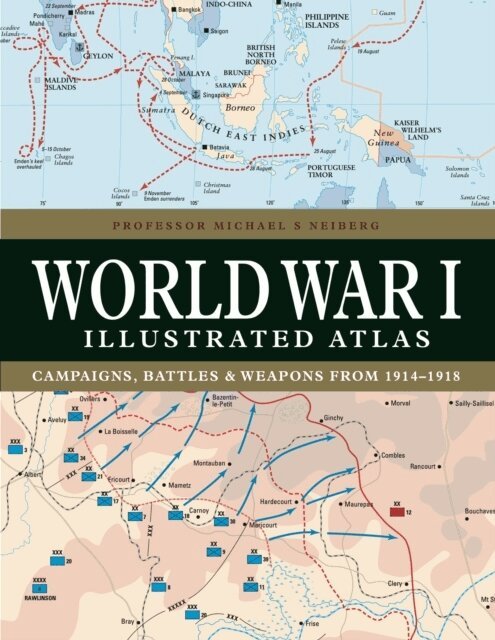
World War I might conjure up images of the trenches of the Western Front where the fighting raged for nearly four and half years, but this was only part of what was truly a world war. It was a complex conflict fought in a number of theatres: an air war, a land war fought in the Balkans, Italy, Africa, Turkey and the Middle East, and also a naval war fought in the North Sea, South Atlantic, South Pacific and Indian Oceans. The ‘Great War’ introduced killing on an unprecedented scale and resulted in the loss of millions of lives. World War I Illustrated Atlas is a comprehensive visual guide to this complex conflict. In fine detail, it plots the exact course of the land, sea and air campaigns, enabling the reader to trace the ebb and flow of the fortunes of all sides. With more than 180 full-colour maps, every theatre of war is covered – from the Western Front to Penang, from Gallipoli to Galicia, from Dogger Bank to Dalmatia, from Romania to Rhodesia and from the Falklands to Togo and the Sinai desert. All the maps have been specially commissioned from an expert cartographer. Each map is designed to highlight a particular aspect of the war – thus maps vary in shape and size, with some giving a global perspective while others depict the exact movement of armed forces on land, sea or in the air. Battles such as Jutland, the Somme, Cambrai and the Gallipoli campaign are shown in great detail. All maps are accompanied by an explanatory key. With expert, accessible text and accompanying archival photographs, this complete atlas provides an invaluable work of reference for both the general reader and the serious student of World War I.