Michael Welbourne – författare
Visar alla böcker från författaren Michael Welbourne. Handla med fri frakt och snabb leverans.
4 produkter
4 produkter
E-bok
PDF, Engelska, 2001484 kr
Läs direkt efter köp
Knowledge gives a clear and accessible overview of the main themes and questions that have provided the context for modern discussions, beginning with Plato and Cartesian individualism. Welbourne examines the various contemporary, tripartite analyses of knowledge in terms of belief, truth, and some form of justification and shows that they fail to adequately capture the idea of knowledge. He argues for a wider view of philosophy of knowledge that includes examination of the surrounding social practices, placing particular emphasis on the notion of testimony. Welbourne argues that knowledge is an essentially a public phenomenon rooted in our communicative practices and shows that thinking about how testimony works as a source of beliefs actually gives us a handle on the idea of knowledge itself. The book will be essential reading for anyone interested in epistemology, the philosophy of language, or the intersection between the two.
E-bok
Engelska, 2014690 kr
Läs direkt efter köp
What is it about knowledge that makes us value it more highly than mere true belief? This question lies at the heart of epistemology and has challenged philosophers ever since it was first posed by Plato. Michael Welbourne''s examination of the historical and contemporary answers to this question provides both an excellent introduction to the development of epistemology but also a new theory of the nature of knowledge. The early chapters introduce the main themes and questions that have provided the context for modern discussions. The Platonic beginnings, Cartesian individualism and the tripartite analyses of knowledge are examined in turn. In the second half of this book, the focus shifts from conceptual analysis to an examination of the social practices surrounding knowledge, placing special emphasis on the notion of testimony. The author argues originally and persuasively that our idea of knowledge has its roots in communicative practices and that thinking about how testimony works as a source of beliefs actually gives us a handle on the very idea of knowledge itself. This book will be essential reading for anyone interested in epistemology, the philosophy of language, or the intersection between the two areas.
E-bok
PDF, Engelska, 2014690 kr
Läs direkt efter köp
What is it about knowledge that makes us value it more highly than mere true belief? This question lies at the heart of epistemology and has challenged philosophers ever since it was first posed by Plato. Michael Welbourne''s examination of the historical and contemporary answers to this question provides both an excellent introduction to the development of epistemology but also a new theory of the nature of knowledge. The early chapters introduce the main themes and questions that have provided the context for modern discussions. The Platonic beginnings, Cartesian individualism and the tripartite analyses of knowledge are examined in turn. In the second half of this book, the focus shifts from conceptual analysis to an examination of the social practices surrounding knowledge, placing special emphasis on the notion of testimony. The author argues originally and persuasively that our idea of knowledge has its roots in communicative practices and that thinking about how testimony works as a source of beliefs actually gives us a handle on the very idea of knowledge itself. This book will be essential reading for anyone interested in epistemology, the philosophy of language, or the intersection between the two areas.
Häftad, Engelska, 2001
834 kr
Skickas inom 3-6 vardagar
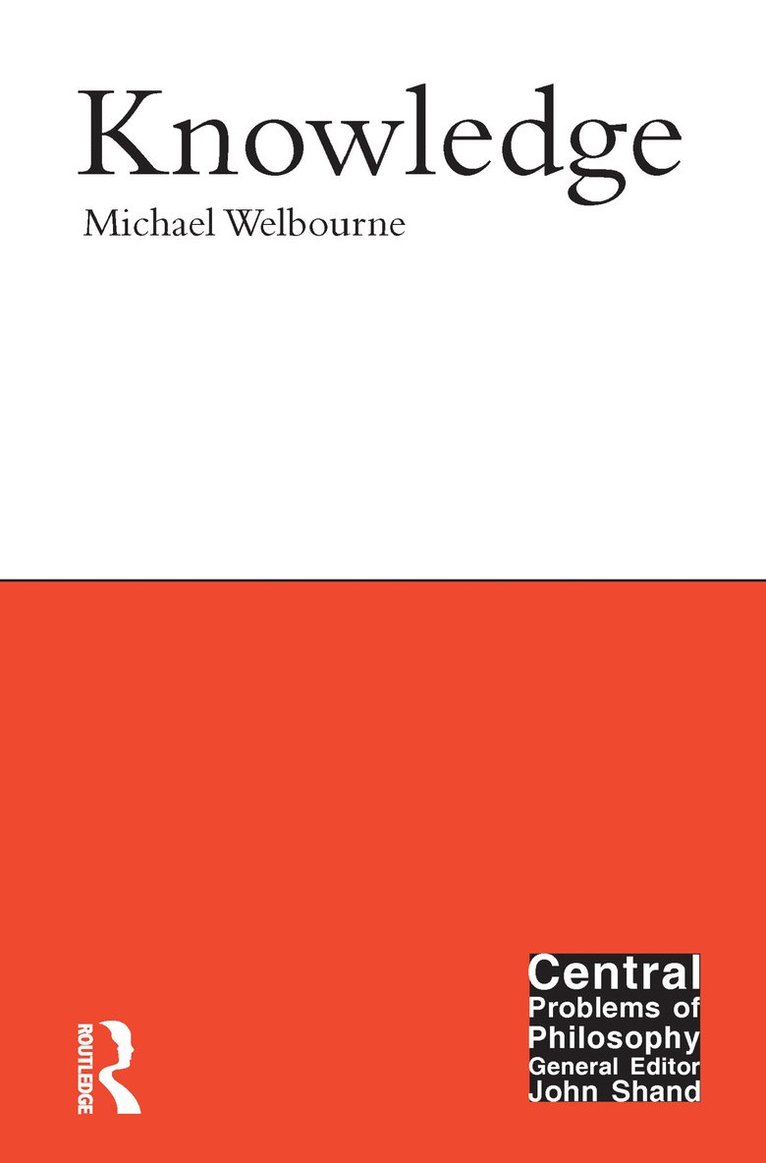
What is it about knowledge that makes us value it more highly than mere true belief? This question lies at the heart of epistemology and has challenged philosophers ever since it was first posed by Plato. Michael Welbourne's examination of the historical and contemporary answers to this question provides both an excellent introduction to the development of epistemology but also a new theory of the nature of knowledge. The early chapters introduce the main themes and questions that have provided the context for modern discussions. The Platonic beginnings, Cartesian individualism and the tripartite analyses of knowledge are examined in turn. In the second half of this book, the focus shifts from conceptual analysis to an examination of the social practices surrounding knowledge, placing special emphasis on the notion of testimony. The author argues originally and persuasively that our idea of knowledge has its roots in communicative practices and that thinking about how testimony works as a source of beliefs actually gives us a handle on the very idea of knowledge itself. This book will be essential reading for anyone interested in epistemology, the philosophy of language, or the intersection between the two areas.