• Fri frakt över 249 kr
  • •
  • Snabba leveranser
  • •
  • Billiga böcker
Kundservice

Du är på sajten för privatpersoner.

Företag, bibliotek eller offentlig verksamhet?

Du handlar på classic.bokus.com, där alla dina funktioner finns intakta.
Till classic.bokus.com
Bokus logotyp. Gå till startsidan.
  • Erbjudanden
  • Nyheter
  • Student
  • Topplistor
  • Barn & ungdom
  • Bokus Play
  • E-böcker
  • Pocketböcker
  • Spel & pussel

10% rabatt på allt med kod NYSTART10 →

Sidfot

Mina sidor

    Hjälp

    • Kundservice
    • Vanliga frågor och svar
    • Frakt och leverans
    • Retur vid ångerrätt
    • Reklamera vara
    • Betalning
    • Köpvillkor
    • Allmänna villkor
    • Information om webbplatsens tillgänglighet

    Om Bokus

    • Om oss
    • Pressrum
    • För studenter
    • För företag
    • För bibliotek och offentlig verksamhet
    • För leverantörer
    • Hållbarhet

    Populärt

    • Aktuella erbjudanden
    • Presentkort
    • Studentlitteratur
    • Nya böcker
    • Topplistor
    • Signerade böcker
    • Engelska böcker

    Inspiration

    • Boktips
    • BookTok
    • Populära bokserier
    • Barnbokskaraktärer
    • Populära författare
    Logotyp för Bokus
    Följ oss på Facebook (extern länk)Följ oss på Instagram (extern länk)Följ oss på YouTube (extern länk)Följ oss på TikTok (extern länk)
    bokus @ CookiesAnpassa cookiesIntegritetspolicyKöpvillkor
    Till Citymail hemsida (extern länk)Till Budbee hemsida (extern länk)Till Postnord hemsida (extern länk)Till Schenker hemsida (extern länk)Till Early Bird hemsida (extern länk)Till Walleys hemsida (extern länk)
    1. Filosofi och religion
    2. Filosofi
    3. Filosofiska discipliner

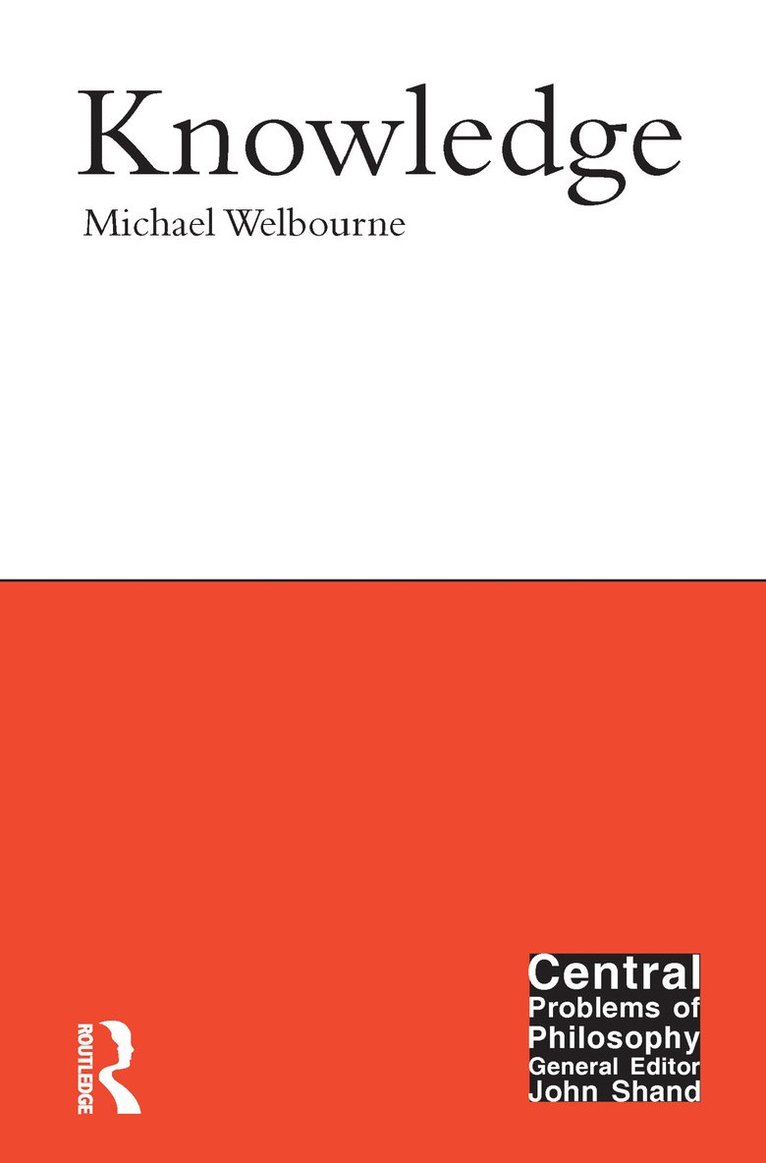
    Knowledge

    AvMichael Welbourne

    Häftad, Engelska, 2001

    Del i serien Central Problems of Philosophy

    778 kr

    Beställningsvara. Skickas inom 5-8 vardagar. Fri frakt över 249 kr.

    Fler format och utgåvor

    E-bok

    721 kr

    E-bok

    721 kr

    Beskrivning

    What is it about knowledge that makes us value it more highly than mere true belief? This question lies at the heart of epistemology and has challenged philosophers ever since it was first posed by Plato. Michael Welbourne's examination of the historical and contemporary answers to this question provides both an excellent introduction to the development of epistemology but also a new theory of the nature of knowledge. The early chapters introduce the main themes and questions that have provided the context for modern discussions. The Platonic beginnings, Cartesian individualism and the tripartite analyses of knowledge are examined in turn. In the second half of this book, the focus shifts from conceptual analysis to an examination of the social practices surrounding knowledge, placing special emphasis on the notion of testimony. The author argues originally and persuasively that our idea of knowledge has its roots in communicative practices and that thinking about how testimony works as a source of beliefs actually gives us a handle on the very idea of knowledge itself. This book will be essential reading for anyone interested in epistemology, the philosophy of language, or the intersection between the two areas.

    Produktinformation

    • Utgivningsdatum:2001-11-30
    • Mått:129 x 198 x 14 mm
    • Vikt:300 g
    • Format:Häftad
    • Språk:Engelska
    • Serie:Central Problems of Philosophy
    • Antal sidor:160
    • Förlag:Taylor & Francis Ltd
    • ISBN:9781902683393

    Utforska kategorier

    • Filosofiska discipliner inom Filosofi och religion

    Mer om författaren

    Michael Welbourne was formerly Senior Lecturer in Philosophy at the University of Bristol.

    Recensioner i media

    "A very useful introduction and a valuable contribution to the literature on the nature of knowledge. It succeeds in conveying complex ideas without presupposing previous knowledge and in developing an original theory within an introductory survey of the issues." - James Logue, Somerville College, Oxford

    Innehållsförteckning

    • Introduction 1. Beginning with Plato 2. Analysing knowledge Plato's way 3. Analysing knowledge the modern way 4. Public knowledge 5. Learning from testimony 6. The concept of knowledge: a new theory 7. So, why do we value knowledge? Further reading References Index