Michael Z. Newman - Böcker
Visar alla böcker från författaren Michael Z. Newman. Handla med fri frakt och snabb leverans.
9 produkter
9 produkter
1 028 kr
Skickas inom 7-10 vardagar
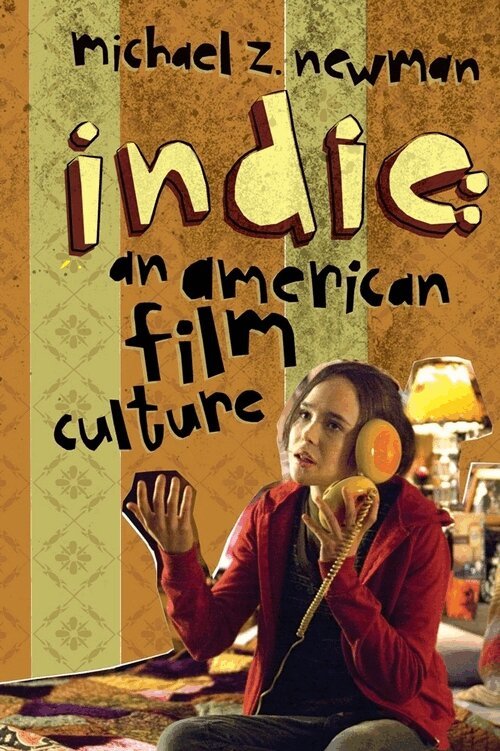
America's independent films often seem to defy classification. Their strategies of storytelling and representation range from raw, no-budget projects to more polished releases of Hollywood's "specialty" divisions. Yet understanding American indies involves more than just considering films. Filmmakers, distributors, exhibitors, festivals, critics, and audiences all shape the art's identity, which is always understood in relation to the Hollywood mainstream. By locating the American indie film in the historical context of the "Sundance-Miramax" era (the mid-1980s to the end of the 2000s), Michael Z. Newman considers indie cinema as an alternative American film culture. His work isolates patterns of character and realism, formal play, and oppositionality and the functions of the festivals, art houses, and critical media promoting them. He also accounts for the power of audiences to identify indie films in distinction to mainstream Hollywood and to seek socially emblematic characters and playful form in their narratives.Analyzing films such as Welcome to the Dollhouse (1996), Lost in Translation (2003), Pulp Fiction (1994), and Juno (2007), along with the work of Nicole Holofcener, Jim Jarmusch, John Sayles, Steven Soderbergh, and the Coen brothers, Newman investigates the conventions that cast indies as culturally legitimate works of art. He binds these diverse works together within a cluster of distinct viewing strategies and invites a reevaluation of the difference of independent cinema and its relationship to class and taste culture.
258 kr
Skickas inom 7-10 vardagar
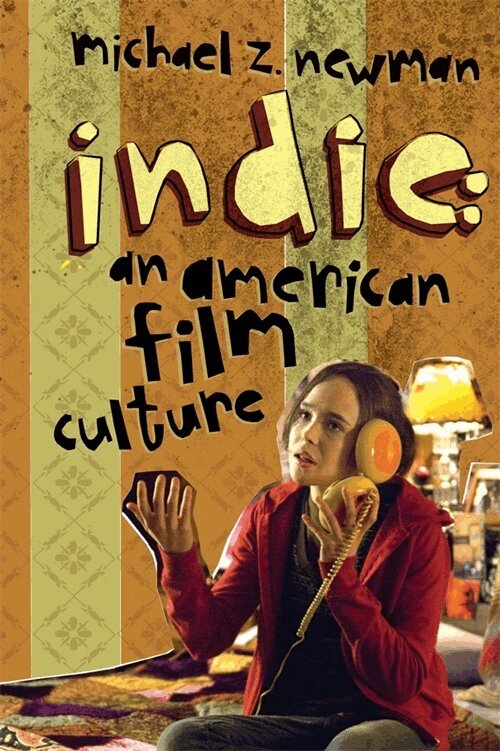
America's independent films often seem to defy classification. Their strategies of storytelling and representation range from raw, no-budget projects to more polished releases of Hollywood's "specialty" divisions. Yet understanding American indies involves more than just considering films. Filmmakers, distributors, exhibitors, festivals, critics, and audiences all shape the art's identity, which is always understood in relation to the Hollywood mainstream. By locating the American indie film in the historical context of the "Sundance-Miramax" era (the mid-1980s to the end of the 2000s), Michael Z. Newman considers indie cinema as an alternative American film culture. His work isolates patterns of character and realism, formal play, and oppositionality and the functions of the festivals, art houses, and critical media promoting them. He also accounts for the power of audiences to identify indie films in distinction to mainstream Hollywood and to seek socially emblematic characters and playful form in their narratives.Analyzing films such as Welcome to the Dollhouse (1996), Lost in Translation (2003), Pulp Fiction (1994), and Juno (2007), along with the work of Nicole Holofcener, Jim Jarmusch, John Sayles, Steven Soderbergh, and the Coen brothers, Newman investigates the conventions that cast indies as culturally legitimate works of art. He binds these diverse works together within a cluster of distinct viewing strategies and invites a reevaluation of the difference of independent cinema and its relationship to class and taste culture.
133 kr
Skickas inom 7-10 vardagar
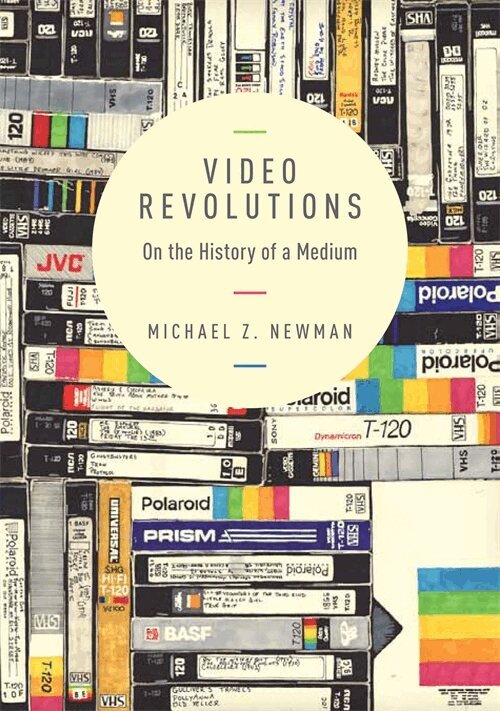
Since the days of early television, video has been an indispensable part of culture, society, and moving-image media industries. Over the decades, it has been an avant-garde artistic medium, a high-tech consumer gadget, a format for watching movies at home, a force for democracy, and the ultimate, ubiquitous means of documenting reality. In the twenty-first century, video is the name we give all kinds of moving images. We know it as an adaptable medium that bridges analog and digital, amateur and professional, broadcasting and recording, television and cinema, art and commercial culture, and old media and new digital networks. In this history, Michael Z. Newman casts video as a medium of shifting value and legitimacy in relation to other media and technologies, particularly film and television. Video has been imagined as more or less authentic or artistic than movies or television, as more or less democratic and participatory, as more or less capable of capturing the real.Techno-utopian rhetoric has repeatedly represented video as a revolutionary medium, promising to solve the problems of the past and the present-often the very problems associated with television and the society shaped by it-and to deliver a better future. Video has also been seen more negatively, particularly as a threat to movies and their culture. This study considers video as an object of these hopes and fears and builds an approach to thinking about the concept of the medium in terms of cultural status.
536 kr
Skickas inom 10-15 vardagar
In this critical primer, Michael Z. Newman introduces newcomers to the key concepts, issues, and vocabulary of media studies. Across ten chapters, Newman examines topics from text and audience to citizenship and consumerism, drawing on a myriad of examples of media old and new. Film and TV rub shoulders with mobile games and social media, and popular music and video sharing platforms with journalism and search engines. While the book takes a critical, cultural approach, it covers topics that apply across many kinds of media scholarship, bridging the humanities and the social sciences and looking at media as a global phenomenon. It considers media in relation to society and its unequal structures of power, and relates media representations to their conditions of production in media industries and consumption in the everyday lives of audiences and users. Spanning the historical periods of mass media and online participatory culture, it also probes assumptions about media that were formulated in a previous era and looks at how to update our thinking to address an ever-changing digital mediascape. With its clear and accessible style, this book is tailor-made for undergraduate students of media, communication, and cultural studies, as well as anyone who would like to better understand media.
2 088 kr
Skickas inom 10-15 vardagar
In this critical primer, Michael Z. Newman introduces newcomers to the key concepts, issues, and vocabulary of media studies. Across ten chapters, Newman examines topics from text and audience to citizenship and consumerism, drawing on a myriad of examples of media old and new. Film and TV rub shoulders with mobile games and social media, and popular music and video sharing platforms with journalism and search engines. While the book takes a critical, cultural approach, it covers topics that apply across many kinds of media scholarship, bridging the humanities and the social sciences and looking at media as a global phenomenon. It considers media in relation to society and its unequal structures of power, and relates media representations to their conditions of production in media industries and consumption in the everyday lives of audiences and users. Spanning the historical periods of mass media and online participatory culture, it also probes assumptions about media that were formulated in a previous era and looks at how to update our thinking to address an ever-changing digital mediascape. With its clear and accessible style, this book is tailor-made for undergraduate students of media, communication, and cultural studies, as well as anyone who would like to better understand media.
2 491 kr
Skickas inom 10-15 vardagar
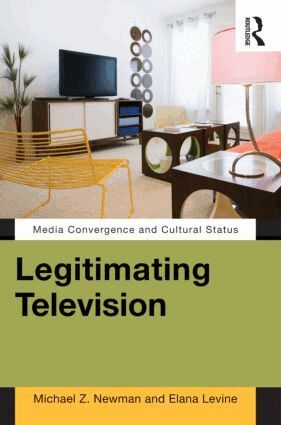
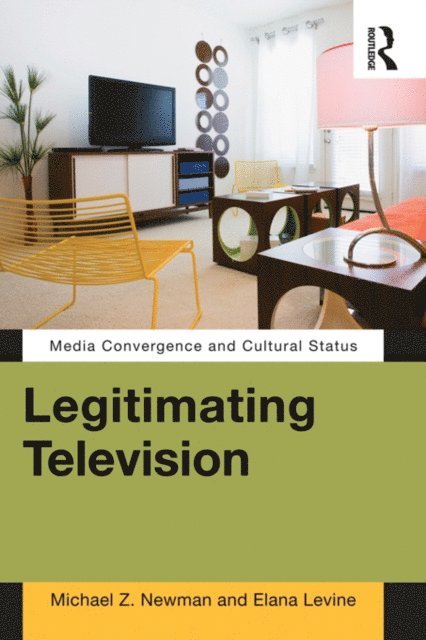
Legitimating Television: Media Convergence and Cultural Status explores how and why television is gaining a new level of cultural respectability in the 21st century. Once looked down upon as a "plug-in drug" offering little redeeming social or artistic value, television is now said to be in a creative renaissance, with critics hailing the rise of Quality series such as Mad Men and 30 Rock. Likewise, DVDs and DVRs, web video, HDTV, and mobile devices have shifted the longstanding conception of television as a household appliance toward a new understanding of TV as a sophisticated, high-tech gadget. Newman and Levine argue that television’s growing prestige emerges alongside the convergence of media at technological, industrial, and experiential levels. Television is permitted to rise in respectability once it is connected to more highly valued media and audiences. Legitimation works by denigrating "ordinary" television associated with the past, distancing the television of the present from the feminized and mass audiences assumed to be inherent to the "old" TV. It is no coincidence that the most validated programming and technologies of the convergence era are associated with a more privileged viewership. The legitimation of television articulates the medium with the masculine over the feminine, the elite over the mass, reinforcing cultural hierarchies that have long perpetuated inequalities of gender and class. Legitimating Television urges readers to move beyond the question of taste—whether TV is "good" or "bad"—and to focus instead on the cultural, political, and economic issues at stake in television’s transformation in the digital age.
563 kr
Skickas inom 10-15 vardagar
Legitimating Television: Media Convergence and Cultural Status explores how and why television is gaining a new level of cultural respectability in the 21st century. Once looked down upon as a "plug-in drug" offering little redeeming social or artistic value, television is now said to be in a creative renaissance, with critics hailing the rise of Quality series such as Mad Men and 30 Rock. Likewise, DVDs and DVRs, web video, HDTV, and mobile devices have shifted the longstanding conception of television as a household appliance toward a new understanding of TV as a sophisticated, high-tech gadget. Newman and Levine argue that television’s growing prestige emerges alongside the convergence of media at technological, industrial, and experiential levels. Television is permitted to rise in respectability once it is connected to more highly valued media and audiences. Legitimation works by denigrating "ordinary" television associated with the past, distancing the television of the present from the feminized and mass audiences assumed to be inherent to the "old" TV. It is no coincidence that the most validated programming and technologies of the convergence era are associated with a more privileged viewership. The legitimation of television articulates the medium with the masculine over the feminine, the elite over the mass, reinforcing cultural hierarchies that have long perpetuated inequalities of gender and class. Legitimating Television urges readers to move beyond the question of taste—whether TV is "good" or "bad"—and to focus instead on the cultural, political, and economic issues at stake in television’s transformation in the digital age.
576 kr
Skickas inom 10-15 vardagar
In the second edition of this critical primer, Michael Z. Newman introduces newcomers to the key concepts, issues, and vocabulary of media studies.Across eleven chapters, Newman examines topics from text and audience to citizenship and consumerism, drawing on a myriad of examples of media old and new. Film and TV rub shoulders with mobile games and social media, and popular music and video-sharing platforms with journalism and search engines. While the book takes a critical, cultural approach, it covers topics that apply across many kinds of media scholarship, bridging the humanities and the social sciences and looking at media as a global phenomenon. It considers media in relation to society and its unequal structures of power, and relates media representations to their conditions of production in media industries and consumption in the everyday lives of audiences and users. Spanning the historical periods of mass media and online participatory culture, it also probes assumptions about media that were formulated in a previous era and looks at how to update our thinking to address an ever-changing digital mediascape.With its clear and accessible style, this book is tailor made for undergraduate students of media, communication, and cultural studies, as well as anyone who would like to better understand media.
2 088 kr
Skickas inom 10-15 vardagar
In the second edition of this critical primer, Michael Z. Newman introduces newcomers to the key concepts, issues, and vocabulary of media studies.Across eleven chapters, Newman examines topics from text and audience to citizenship and consumerism, drawing on a myriad of examples of media old and new. Film and TV rub shoulders with mobile games and social media, and popular music and video-sharing platforms with journalism and search engines. While the book takes a critical, cultural approach, it covers topics that apply across many kinds of media scholarship, bridging the humanities and the social sciences and looking at media as a global phenomenon. It considers media in relation to society and its unequal structures of power, and relates media representations to their conditions of production in media industries and consumption in the everyday lives of audiences and users. Spanning the historical periods of mass media and online participatory culture, it also probes assumptions about media that were formulated in a previous era and looks at how to update our thinking to address an ever-changing digital mediascape.With its clear and accessible style, this book is tailor made for undergraduate students of media, communication, and cultural studies, as well as anyone who would like to better understand media.