Michèle Lamont – författare
123 kr
Skickas
230 kr
Skickas inom 3-6 vardagar
102 kr
Läs direkt efter köp
340 kr
Skickas inom 5-8 vardagar
290 kr
Skickas inom 5-8 vardagar
257 kr
Skickas inom 5-8 vardagar
848 kr
Skickas inom 5-8 vardagar
373 kr
Skickas inom 5-8 vardagar
2 596 kr
Skickas inom 10-15 vardagar
257 kr
Skickas inom 5-8 vardagar
244 kr
Skickas inom 10-15 vardagar
298 kr
Skickas inom 5-8 vardagar
432 kr
Läs direkt efter köp
428 kr
Läs direkt efter köp
763 kr
Läs direkt efter köp
Multiculturalism and diversity have raised a number of challenges for liberal democracy, not least the stigmatization of people in response to these developments. In this book, leading experts from a range of disciplines look at the responses to stigmatization from the perspectives of ordinary people. They use a range of case studies drawn from the US, Brazil, Canada, France, Israel, South Africa, and Sweden: the first systematic qualitative and cross-national exploration of how diverse minority groups respond to stigmatization in the course of their everyday lives.
The chapters in this book tackle a range of theoretical questions about stigmatization, including how they make sense of their experiences, how they shape subsequent behaviour, and how they negotiate and transform social and symbolic boundaries within a range of social and institutional contexts.
Responses to Stigmatization in Comparative Perspective provides new data and analysis of how stigmatization affects a range of societies, and its original research and analysis will be important reading for those studying Ethnicity, as well as Sociologists, Political Scientists, and Anthropologists. This book was originally published as a special issue of Ethnic and Racial Studies.
769 kr
Läs direkt efter köp
Multiculturalism and diversity have raised a number of challenges for liberal democracy, not least the stigmatization of people in response to these developments. In this book, leading experts from a range of disciplines look at the responses to stigmatization from the perspectives of ordinary people. They use a range of case studies drawn from the US, Brazil, Canada, France, Israel, South Africa, and Sweden: the first systematic qualitative and cross-national exploration of how diverse minority groups respond to stigmatization in the course of their everyday lives.
The chapters in this book tackle a range of theoretical questions about stigmatization, including how they make sense of their experiences, how they shape subsequent behaviour, and how they negotiate and transform social and symbolic boundaries within a range of social and institutional contexts.
Responses to Stigmatization in Comparative Perspective provides new data and analysis of how stigmatization affects a range of societies, and its original research and analysis will be important reading for those studying Ethnicity, as well as Sociologists, Political Scientists, and Anthropologists. This book was originally published as a special issue of Ethnic and Racial Studies.
665 kr
Skickas inom 10-15 vardagar
401 kr
Läs direkt efter köp
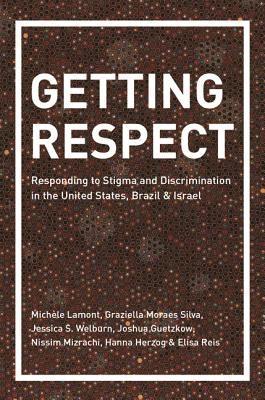
A comparative look at how discrimination is experienced by stigmatized groups in the United States, Brazil, and IsraelRacism is a common occurrence for members of marginalized groups around the world. Getting Respect illuminates their experiences by comparing three countries with enduring group boundaries: the United States, Brazil and Israel. The authors delve into what kinds of stigmatizing or discriminatory incidents individuals encounter in each country, how they respond to these occurrences, and what they view as the best strategy—whether individually, collectively, through confrontation, or through self-improvement—for dealing with such events.This deeply collaborative and integrated study draws on more than four hundred in-depth interviews with middle- and working-class men and women residing in and around multiethnic cities—New York City, Rio de Janeiro, and Tel Aviv—to compare the discriminatory experiences of African Americans, black Brazilians, and Arab Palestinian citizens of Israel, as well as Israeli Ethiopian Jews and Mizrahi (Sephardic) Jews. Detailed analysis reveals significant differences in group behavior: Arab Palestinians frequently remain silent due to resignation and cynicism while black Brazilians see more stigmatization by class than by race, and African Americans confront situations with less hesitation than do Ethiopian Jews and Mizrahim, who tend to downplay their exclusion. The authors account for these patterns by considering the extent to which each group is actually a group, the sociohistorical context of intergroup conflict, and the national ideologies and other cultural repertoires that group members rely on.Getting Respect is a rich and daring book that opens many new perspectives into, and sets a new global agenda for, the comparative analysis of race and ethnicity.
Reconsidering Culture and Poverty
784 kr
Skickas inom 3-6 vardagar
Culture has returned to the poverty research agenda.
Over the past decade, sociologists, demographers, and even economists have begun asking questions about the role of culture in many aspects of poverty, at times even explaining the behavior of low-income populations in reference to cultural factors. Unlike their predecessors, contemporary researchers rarely claim that culture will sustain itself for multiple generations regardless of structural changes, and they almost never use the term "pathology," which implied in an earlier era that people would cease to be poor if they changed their culture. The new generation of scholars conceives of culture in substantially different ways.
In this latest issue of the ANNALS, readers are treated to thought-provoking articles that attempt to bridge the gap between poverty and culture scholarship, highlighting new trends in poverty research.
The authors identify the scholarly and policy-related basis for why poverty researchers should be deeply concerned with culture, noting the importance of understanding better how people cope with poverty and how they escape it. They then tackle the perplexing question—what is "culture"?—and propose that sociologists and anthropologists studying culture have developed at least seven different analytical tools for capturing meaning that could help answer a number of questions central to the study of poverty, including those centered on marriage, education, neighborhoods, and community participation, among others. While not denying the importance of macro-structural conditions—such as the concentration of wealth and income, the spatial segregation across classes and racial groups, or the persistent international migration of labor and capital—they argue that human action is both constrained and enabled by the meaning people give to their actions and that these dynamics should become central to our understanding of the production and reproduction of poverty and social inequality.
By considering poverty in the United States and abroad, examining both the elite, policy-making level and the daily lives of low-income people themselves, the articles convey a composite and multileveled picture of the ways in which meaning-making factors into the production and reproduction of poverty. The volume aims to demonstrate the importance of cultural concepts for poverty research, serve as a model and a resource for poverty scholars who wish to incorporate cultural concepts into their research, assist in the training of future scholars working at the nexus of poverty and culture, and identify crucial areas for future methodological, theoretical, and empirical development. The volume also serves to debunk existing myths about the cultural orientations of the poor for those formulating policy; as the editors point out, "ignoring culture can lead to bad policy."
This volume is vital reading, not only for sociologists but also for researchers across the social sciences as a whole.
254 kr
Lyssna direkt efter köp
177 kr
Läs direkt efter köp
Fronesis 74-75. Erkännande
145 kr
Skickas inom 5-8 vardagar
272 kr
Tillfälligt slut
277 kr
Tillfälligt slut