Michelle Aicken – författare
Visar alla böcker från författaren Michelle Aicken. Handla med fri frakt och snabb leverans.
6 produkter
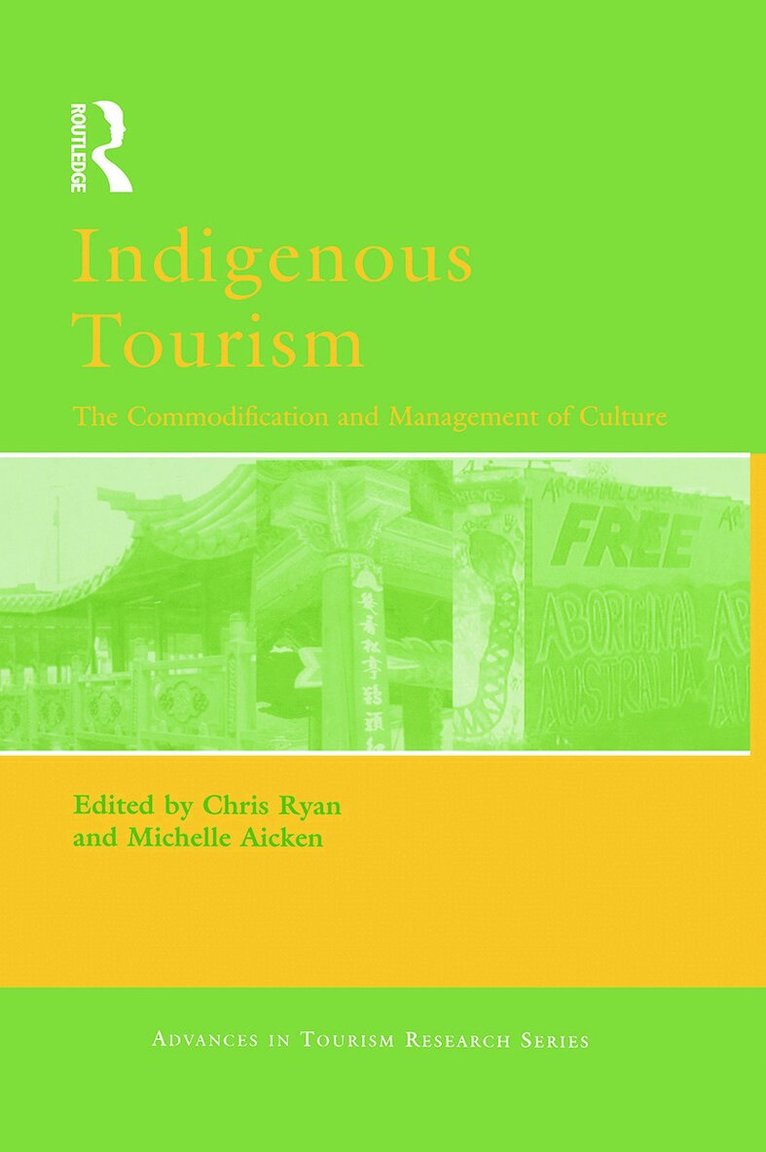
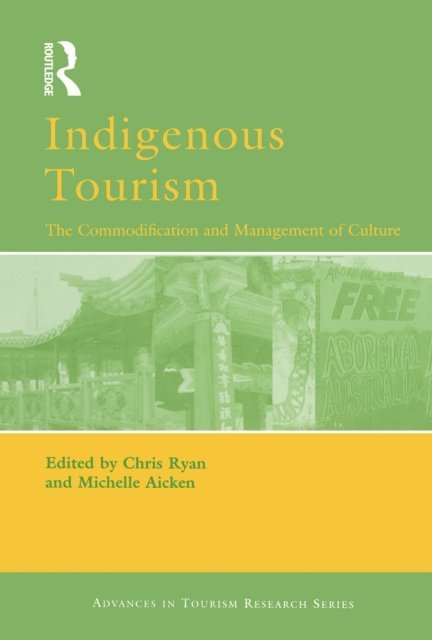
Indigenous Tourism
Av Michelle Aicken, Chris Ryan
Inbunden, 2005
3161 kr
Lägg i varukorg
In a world characterized by an encroaching homogeneity induced by the growth of multi-national corporations and globalization, the causes of difference accrue new levels of importance. This is as true of tourism as in many other spheres of life – and one cause of differentiation for tourism …
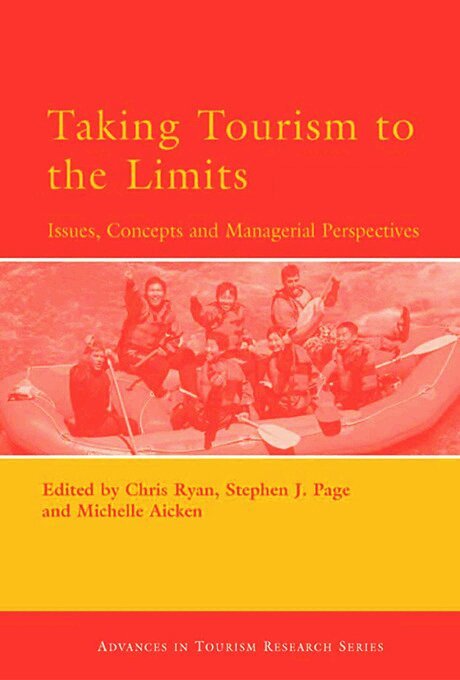
Taking Tourism to the Limits
Av Michelle Aicken, Stephen J. Page m. fl.
Inbunden, 2005
788 kr
Lägg i varukorg
The concept of margins and limits is often referred to within the tourism academic literature and includes subjects as diverse as carrying capacities, peripheral economies, technological advancement, adventure tourism, dark tourism and socially marginalized communities. After identifying a number …
Taking Tourism to the Limits
Av Chris Ryan, Stephen J. Page m. fl.
E-bok, 2006
624 kr
Lägg i varukorg
The concept of margins and limits is often referred to within the tourism academic literature and includes subjects as diverse as carrying capacities, peripheral economies, technological advancement, adventure tourism, dark tourism and socially marginalized communities. After identifying a number …
Taking Tourism to the Limits
Av Chris Ryan, Stephen J. Page m. fl.
E-bok, 2006
604 kr
Lägg i varukorg
The concept of margins and limits is often referred to within the tourism academic literature and includes subjects as diverse as carrying capacities, peripheral economies, technological advancement, adventure tourism, dark tourism and socially marginalized communities. After identifying a number …
Indigenous Tourism
Av Chris Ryan, Michelle Aicken
E-bok, 2010
3636 kr
Lägg i varukorg
In a world characterized by an encroaching homogeneity induced by the growth of multi-national corporations and globalization, the causes of difference accrue new levels of importance. This is as true of tourism as in many other spheres of life – and one cause of differentiation for tourism …
Indigenous Tourism
Av Chris Ryan, Michelle Aicken
E-bok, 2010
3636 kr
Lägg i varukorg
In a world characterized by an encroaching homogeneity induced by the growth of multi-national corporations and globalization, the causes of difference accrue new levels of importance. This is as true of tourism as in many other spheres of life – and one cause of differentiation for tourism …