Michelle Geoffrion-Vinci - Böcker
Visar alla böcker från författaren Michelle Geoffrion-Vinci. Handla med fri frakt och snabb leverans.
3 produkter
3 produkter
1 467 kr
Skickas inom 10-15 vardagar
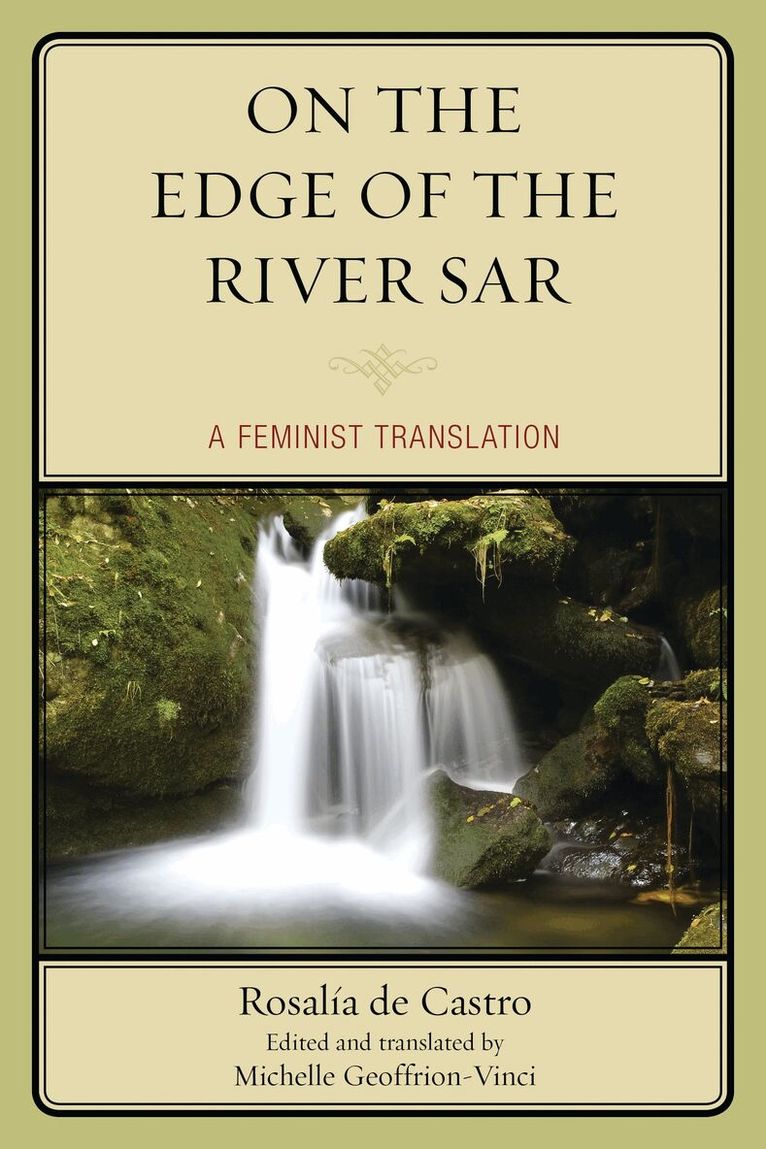
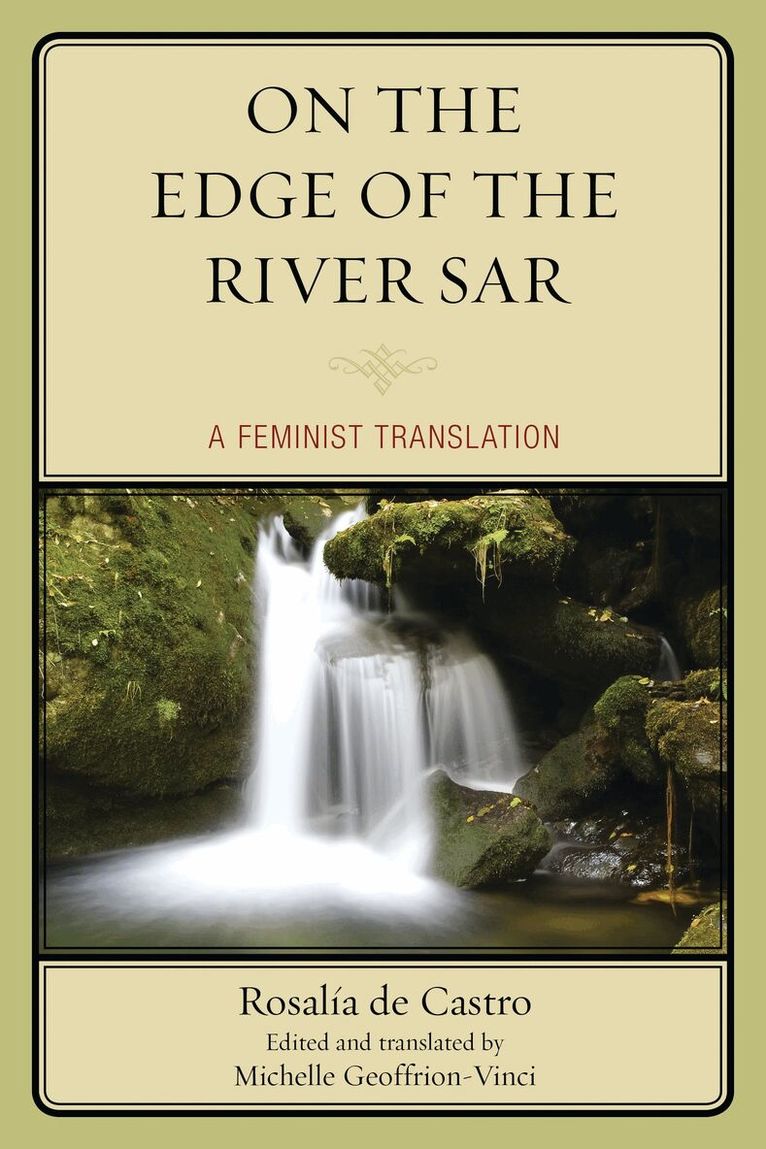
This book presents the first feminist translation of Rosalía de Castro’s seminal poetic anthology En las orillas del Sar [On the Edge of the River Sar] (1884). Rosalía de Castro (1837–1885) was an artist of vast poetic vision. Her understanding of human nature and her deep sensitivity to the injustices suffered by women and by such marginalized peoples as those of her native region, Galicia, are manifest in verses of universal yet rarely translated significance. An outspoken proponent of both women’s rights and her region’s cultural and political autonomy, Castro used her poetry as a vehicle through which to decry the crushing hardships both groups endured as Spain vaulted between progressive liberal and conservative reactionary political forces throughout the nineteenth century. Depending upon what faction held sway in the nation at any given time during Castro’s truncated literary career, her works were either revered as revolutionary or reviled as heretical for the views they espoused. Long after her death by uterine cancer in 1885, Castro was excluded from the pantheon of Spanish literature by Restoration society for her unorthodox views. Compellingly, the poet’s conceptualization of the individual and the national self as informed by gender, ethnicity, class, and language echoes contemporary scholars of cultural studies who seek to broaden present-day definitions of national identity through the incorporation of precisely these same phenomena.Thanks to the most recent works in Rosalian and Galician studies, we are now able to recuperate and reevaluate Rosalía de Castro’s poems in their original languages for the more radical symbolism and themes they foreground related to gender, sexuality, race and class as they inform individual and national identities. However, although Castro’s poetic corpus is widely accessible in its original languages, these important features of her verses have yet to be given voice in the small number of English translations of only a sub-set of her works that have been produced in the last century. As a result, our understanding of Castro’s potential contributions to contemporary world poetries, gender studies, Galician and more broadly cultural studies is woefully incomplete. An English translation of Castro’s works that is specifically feminist in its methodological orientation offers a unique and thought-provoking means by which to fill this void.
653 kr
Skickas inom 10-15 vardagar
This book presents the first feminist translation of Rosalía de Castro’s seminal poetic anthology En las orillas del Sar [On the Edge of the River Sar] (1884). Rosalía de Castro (1837–1885) was an artist of vast poetic vision. Her understanding of human nature and her deep sensitivity to the injustices suffered by women and by such marginalized peoples as those of her native region, Galicia, are manifest in verses of universal yet rarely translated significance. An outspoken proponent of both women’s rights and her region’s cultural and political autonomy, Castro used her poetry as a vehicle through which to decry the crushing hardships both groups endured as Spain vaulted between progressive liberal and conservative reactionary political forces throughout the nineteenth century. Depending upon what faction held sway in the nation at any given time during Castro’s truncated literary career, her works were either revered as revolutionary or reviled as heretical for the views they espoused. Long after her death by uterine cancer in 1885, Castro was excluded from the pantheon of Spanish literature by Restoration society for her unorthodox views. Compellingly, the poet’s conceptualization of the individual and the national self as informed by gender, ethnicity, class, and language echoes contemporary scholars of cultural studies who seek to broaden present-day definitions of national identity through the incorporation of precisely these same phenomena.Thanks to the most recent works in Rosalian and Galician studies, we are now able to recuperate and reevaluate Rosalía de Castro’s poems in their original languages for the more radical symbolism and themes they foreground related to gender, sexuality, race and class as they inform individual and national identities. However, although Castro’s poetic corpus is widely accessible in its original languages, these important features of her verses have yet to be given voice in the small number of English translations of only a sub-set of her works that have been produced in the last century. As a result, our understanding of Castro’s potential contributions to contemporary world poetries, gender studies, Galician and more broadly cultural studies is woefully incomplete. An English translation of Castro’s works that is specifically feminist in its methodological orientation offers a unique and thought-provoking means by which to fill this void.
1 391 kr
Skickas inom 10-15 vardagar
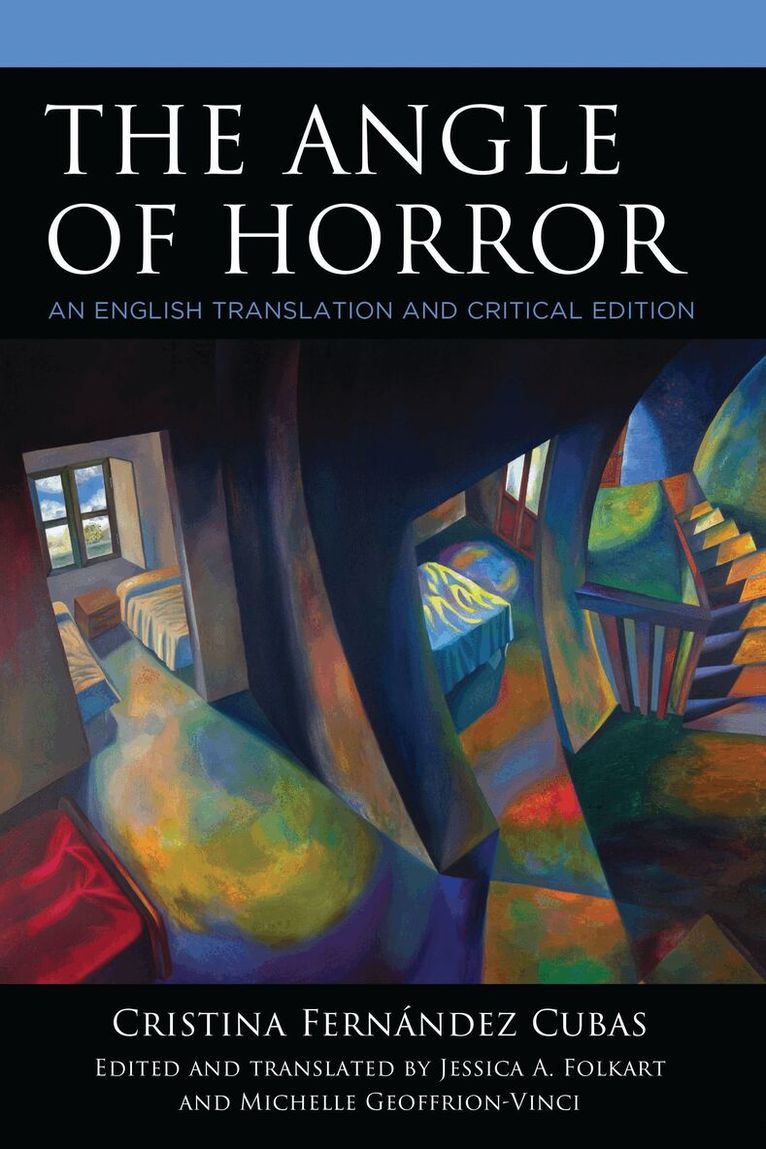
From Cristina Fernández Cubas, Spain's award-winning master of the short story, comes a collection of unsettling, thought-provoking, and often hilarious stories, The Angle of Horror. A socially awkward twenty-something who transforms from Jekyll to Hyde by playing the tuba; a miserly curmudgeon whose ultimate act of generosity as well as his final breath are snuffed out by a seemingly innocent grandson; a young collegian who suffers a nightmare of shadows and slants, then discovers his waking world is also horribly askew; a lonely Spaniard living abroad who seeks familiarity in a Spanish specialty shop but only finds true belonging while obsessively stalking the proprietor. These are but a few of the "angles" that Fernández Cubas constructs in these four twisted tales: "Helicon," "Grandfather’s Legacy," "The Angle of Horror," and "The Flower of Spain." Presented in critical edition and translation for the first time, these acclaimed Spanish tales are featured alongside their English translation, with historical contextualization and critical commentary by scholars Jessica A. Folkart and Michelle Geoffrion-Vinci.