Michelle Phelps – författare
Visar alla böcker från författaren Michelle Phelps. Handla med fri frakt och snabb leverans.
5 produkter
5 produkter
E-bok
Engelska, 2017364 kr
Läs direkt efter köp
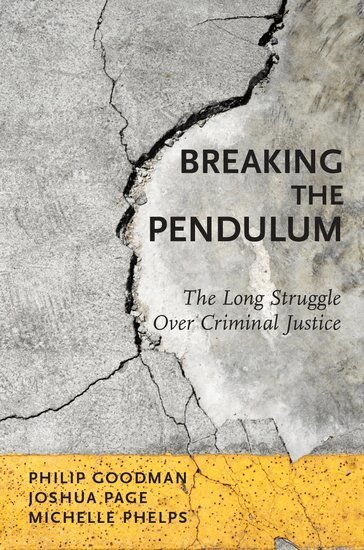
The history of criminal justice in the U.S. is often described as a pendulum, swinging back and forth between strict punishment and lenient rehabilitation. While this view is common wisdom, it is wrong. In Breaking the Pendulum, Philip Goodman, Joshua Page, and Michelle Phelps systematically debunk the pendulum perspective, showing that it distorts how and why criminal justice changes. The pendulum model blinds us to the blending of penal orientations, policies, and practices, as well as the struggle between actors that shapes laws, institutions, and how we think about crime, punishment, and related issues.Through a re-analysis of more than two hundred years of penal history, starting with the rise of penitentiaries in the 19th Century and ending with ongoing efforts to roll back mass incarceration, the authors offer an alternative approach to conceptualizing penal development. Their agonistic perspective posits that struggle is the motor force of criminal justice history. Punishment expands, contracts, and morphs because of contestation between real people in real contexts, not a mechanical "swing" of the pendulum. This alternative framework is far more accurate and empowering than metaphors that ignore or downplay the importance of struggle in shaping criminal justice.This clearly written, engaging book is an invaluable resource for teachers, students, and scholars seeking to understand the past, present, and future of American criminal justice. By demonstrating the central role of struggle in generating major transformations, Breaking the Pendulum encourages combatants to keep fighting to change the system.
Inbunden, Engelska, 2017
1 515 kr
Skickas inom 5-8 vardagar
The history of criminal justice in the U.S. is often described as a pendulum, swinging back and forth between strict punishment and lenient rehabilitation. While this view is common wisdom, it is wrong. In Breaking the Pendulum, Philip Goodman, Joshua Page, and Michelle Phelps systematically debunk the pendulum perspective, showing that it distorts how and why criminal justice changes. The pendulum model blinds us to the blending of penal orientations, policies, and practices, as well as the struggle between actors that shapes laws, institutions, and how we think about crime, punishment, and related issues.Through a re-analysis of more than two hundred years of penal history, starting with the rise of penitentiaries in the 19th Century and ending with ongoing efforts to roll back mass incarceration, the authors offer an alternative approach to conceptualizing penal development. Their agonistic perspective posits that struggle is the motor force of criminal justice history. Punishment expands, contracts, and morphs because of contestation between real people in real contexts, not a mechanical "swing" of the pendulum. This alternative framework is far more accurate and empowering than metaphors that ignore or downplay the importance of struggle in shaping criminal justice.This clearly written, engaging book is an invaluable resource for teachers, students, and scholars seeking to understand the past, present, and future of American criminal justice. By demonstrating the central role of struggle in generating major transformations, Breaking the Pendulum encourages combatants to keep fighting to change the system.
Häftad, Engelska, 2017
337 kr
Skickas inom 5-8 vardagar
The history of criminal justice in the U.S. is often described as a pendulum, swinging back and forth between strict punishment and lenient rehabilitation. While this view is common wisdom, it is wrong. In Breaking the Pendulum, Philip Goodman, Joshua Page, and Michelle Phelps systematically debunk the pendulum perspective, showing that it distorts how and why criminal justice changes. The pendulum model blinds us to the blending of penal orientations, policies, and practices, as well as the struggle between actors that shapes laws, institutions, and how we think about crime, punishment, and related issues.Through a re-analysis of more than two hundred years of penal history, starting with the rise of penitentiaries in the 19th Century and ending with ongoing efforts to roll back mass incarceration, the authors offer an alternative approach to conceptualizing penal development. Their agonistic perspective posits that struggle is the motor force of criminal justice history. Punishment expands, contracts, and morphs because of contestation between real people in real contexts, not a mechanical "swing" of the pendulum. This alternative framework is far more accurate and empowering than metaphors that ignore or downplay the importance of struggle in shaping criminal justice.This clearly written, engaging book is an invaluable resource for teachers, students, and scholars seeking to understand the past, present, and future of American criminal justice. By demonstrating the central role of struggle in generating major transformations, Breaking the Pendulum encourages combatants to keep fighting to change the system.
E-bok
PDF, Engelska, 2017364 kr
Läs direkt efter köp
The history of criminal justice in the U.S. is often described as a pendulum, swinging back and forth between strict punishment and lenient rehabilitation. While this view is common wisdom, it is wrong. In Breaking the Pendulum, Philip Goodman, Joshua Page, and Michelle Phelps systematically debunk the pendulum perspective, showing that it distorts how and why criminal justice changes. The pendulum model blinds us to the blending of penal orientations, policies, and practices, as well as the struggle between actors that shapes laws, institutions, and how we think about crime, punishment, and related issues.Through a re-analysis of more than two hundred years of penal history, starting with the rise of penitentiaries in the 19th Century and ending with ongoing efforts to roll back mass incarceration, the authors offer an alternative approach to conceptualizing penal development. Their agonistic perspective posits that struggle is the motor force of criminal justice history. Punishment expands, contracts, and morphs because of contestation between real people in real contexts, not a mechanical "swing" of the pendulum. This alternative framework is far more accurate and empowering than metaphors that ignore or downplay the importance of struggle in shaping criminal justice.This clearly written, engaging book is an invaluable resource for teachers, students, and scholars seeking to understand the past, present, and future of American criminal justice. By demonstrating the central role of struggle in generating major transformations, Breaking the Pendulum encourages combatants to keep fighting to change the system.
96 kr
Läs direkt efter köp
¿Por qué en sociedades como las nuestras las personas que han cometido un delito son castigadas de un modo más severo y tenemos muchísimos más presos que los que teníamos hace tres décadas? Con frecuencia, las transformaciones del castigo se piensan como un péndulo que, en respuesta a cambios económicos y políticos profundos, oscila mecánicamente entre el exceso punitivo y el exceso progresista. Esta perspectiva tiene el atractivo de la simpleza retórica, pero impide entender cómo funciona en la práctica la justicia penal. A partir de estudios de caso y con el propósito de construir nuevas herramientas de análisis aplicables a diferentes contextos, los autores de este libro muestran hasta qué punto la metáfora del péndulo se asienta en la fantasía de que una orientación penal –con sus políticas y programas– se desmantela por completo al tiempo que un régimen nuevo toma su lugar. El campo penal –nos dicen– no es un bloque homogéneo sino un espacio de luchas entre actores muy diversos, cada uno con su propio capital y poder. Están los actores estatales –jueces, fiscales, autoridades políticas y penitenciarias, legisladores–, pero también los no estatales, como los expertos, las asociaciones de víctimas, los medios de comunicación. Los cambios en la política carcelaria, la fijación de penas, la edad de imputabilidad, el uso de la prisión preventiva o de los juicios abreviados dependen más de las tensiones y negociaciones entre estos actores, siempre en pugna y rivalidad, que de bruscos golpes de timón en una dirección u otra. Este libro –pensado para docentes, investigadores, profesionales y activistas– es un aporte extraordinario para pensar el castigo desde una perspectiva renovada, menos determinista, que otorga un lugar central a las luchas como motor del cambio y, al mismo tiempo, reivindica que el presente no es inevitable y que el futuro puede ser moldeado activamente.