Miguel A. Guajardo – författare
430 kr
Skickas inom 10-15 vardagar
686 kr
Läs direkt efter köp
686 kr
Läs direkt efter köp
1 988 kr
Skickas inom 10-15 vardagar
1 305 kr
Skickas inom 10-15 vardagar
2 125 kr
Skickas inom 10-15 vardagar
540 kr
Skickas inom 10-15 vardagar
641 kr
Läs direkt efter köp
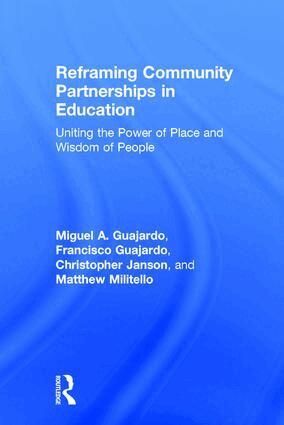
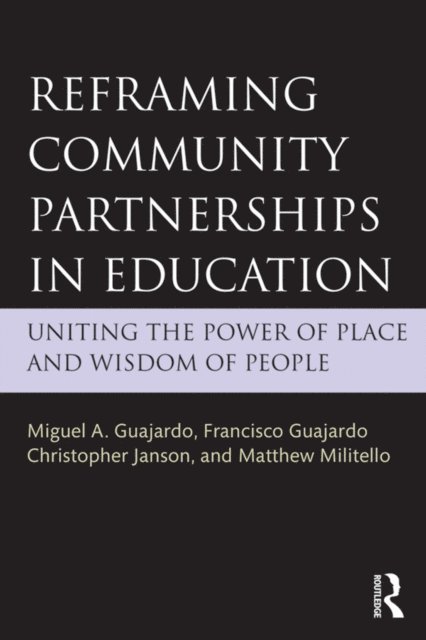
Reframing Community Partnerships in Education provides both the theoretical framework as well as a practical guide to engage educators in interdisciplinary, inter-organizational, multicultural, and multi-generational work to improve the social fabric of communities. Using case examples of best practice, this book explores transformational practices for community development, community building, and civic engagement. Featuring "Community Learning Exchange" pedagogies adaptable to a wide range of contexts, this book encourages educators—through use of participatory practices and a collective leadership model—to build stronger communities and advance learning for all.
641 kr
Läs direkt efter köp
Reframing Community Partnerships in Education provides both the theoretical framework as well as a practical guide to engage educators in interdisciplinary, inter-organizational, multicultural, and multi-generational work to improve the social fabric of communities. Using case examples of best practice, this book explores transformational practices for community development, community building, and civic engagement. Featuring "Community Learning Exchange" pedagogies adaptable to a wide range of contexts, this book encourages educators—through use of participatory practices and a collective leadership model—to build stronger communities and advance learning for all.
507 kr
Läs direkt efter köp
Story and auto-ethnography are study methods based on decolonizing and liberating research perspectives. Stories, auto-ethnographies, and other qualitative methodologies enable the researcher/educator to be both a research instrument and an object in their study. Stories allow for the examination of personal growth, its effect on practice, and their impact on community. The researcher/educator is able to witness her/his own life as they collaborate with participants. Through the use of story, auto-ethnography, and other qualitative methodologies, researchers/educators can link the history of self within their community/activist work to its present conditions as they map their collective community’s future.
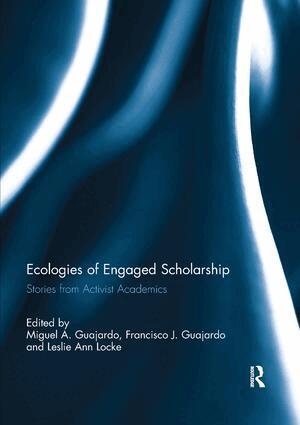
Ecologies of Engaged Scholarship explores the use of story and auto-ethnography as a tool to know ‘self’ and ‘other’ in relationship to capacity building, pedagogical processes, and activist scholarship. It highlights activist-scholarship to better understand the epistemology and landscape of activist research. Contributors to the book self-identify as activist-scholars or scholar-activists, and in their unique chapters they consider the values informing their work, the origins and nature of their work, and how they make meaning of their work. They also consider how family and/or community has been involved, how previous schooling experiences have affected their trajectory, and how particular relationships have worked to influence their philosophical understanding. This book was originally published as a special issue of the International Journal of Qualitative Studies in Education.
507 kr
Läs direkt efter köp
Story and auto-ethnography are study methods based on decolonizing and liberating research perspectives. Stories, auto-ethnographies, and other qualitative methodologies enable the researcher/educator to be both a research instrument and an object in their study. Stories allow for the examination of personal growth, its effect on practice, and their impact on community. The researcher/educator is able to witness her/his own life as they collaborate with participants. Through the use of story, auto-ethnography, and other qualitative methodologies, researchers/educators can link the history of self within their community/activist work to its present conditions as they map their collective community’s future.
Ecologies of Engaged Scholarship explores the use of story and auto-ethnography as a tool to know ‘self’ and ‘other’ in relationship to capacity building, pedagogical processes, and activist scholarship. It highlights activist-scholarship to better understand the epistemology and landscape of activist research. Contributors to the book self-identify as activist-scholars or scholar-activists, and in their unique chapters they consider the values informing their work, the origins and nature of their work, and how they make meaning of their work. They also consider how family and/or community has been involved, how previous schooling experiences have affected their trajectory, and how particular relationships have worked to influence their philosophical understanding. This book was originally published as a special issue of the International Journal of Qualitative Studies in Education.