Mihai Damian – författare
Visar alla böcker från författaren Mihai Damian. Handla med fri frakt och snabb leverans.
5 produkter
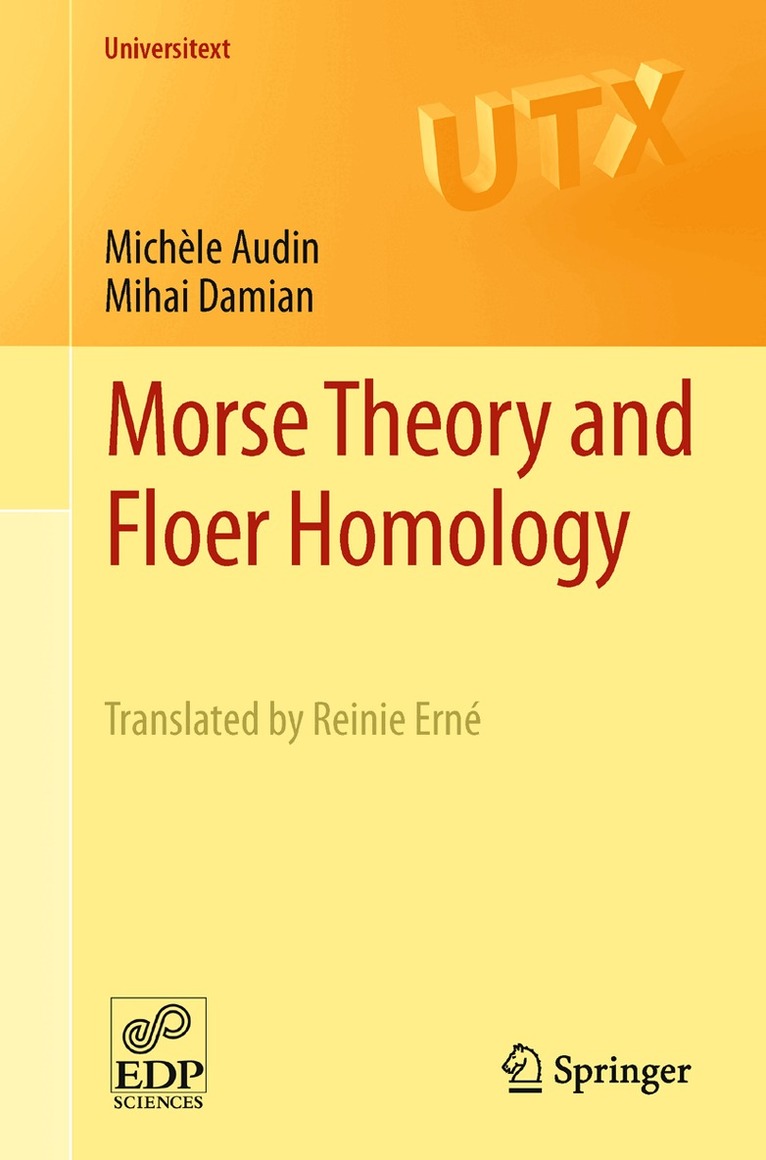
Morse Theory and Floer Homology
Av Michèle Audin, Mihai Damian
Häftad, 2013
1096 kr
Lägg i varukorg
This book is an introduction to modern methods of symplectic topology. It is devoted to explaining the solution of an important problem originating from classical mechanics: the 'Arnold conjecture', which asserts that the number of 1-periodic trajectories of a non-degenerate Hamiltonian system is …
Morse Theory and Floer Homology
Av Mihai Damian, Michele Audin
E-bok, 2013
1296 kr
Lägg i varukorg
This book is an introduction to modern methods of symplectic topology. It is devoted to explaining the solution of an important problem originating from classical mechanics: the ''Arnold conjecture'', which asserts that the number of 1-periodic trajectories of a non-degenerate Hamiltonian system is …
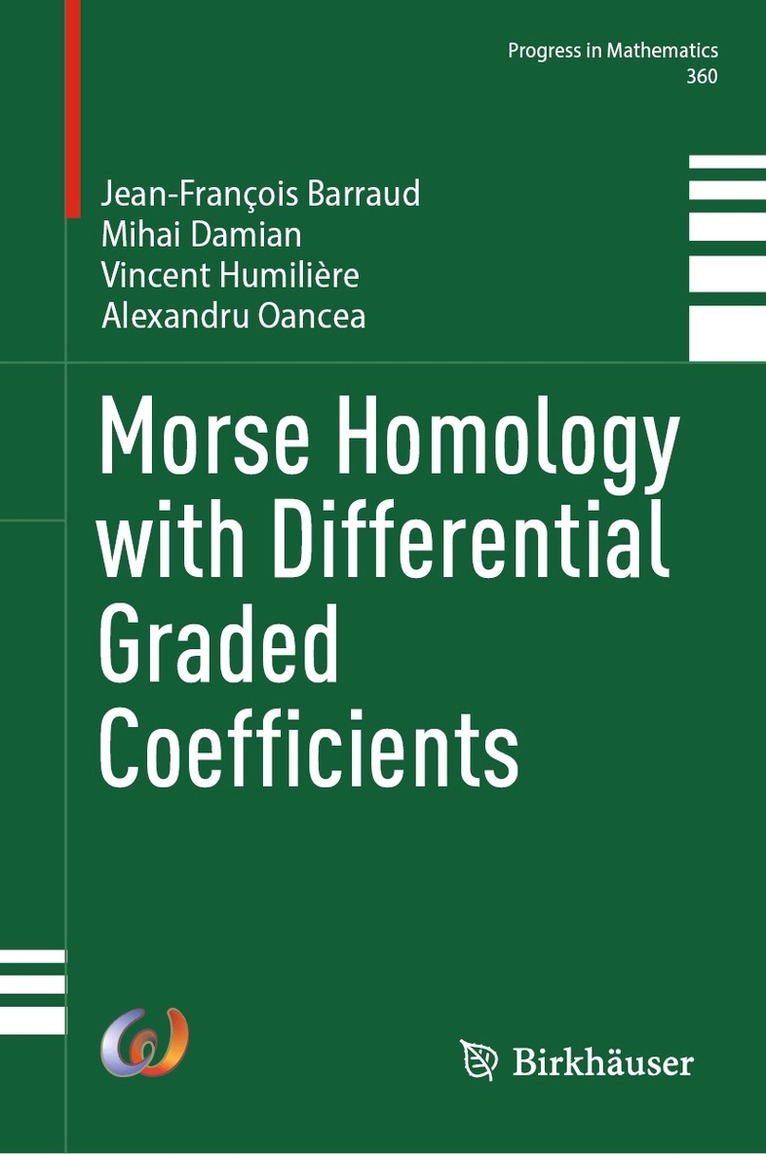
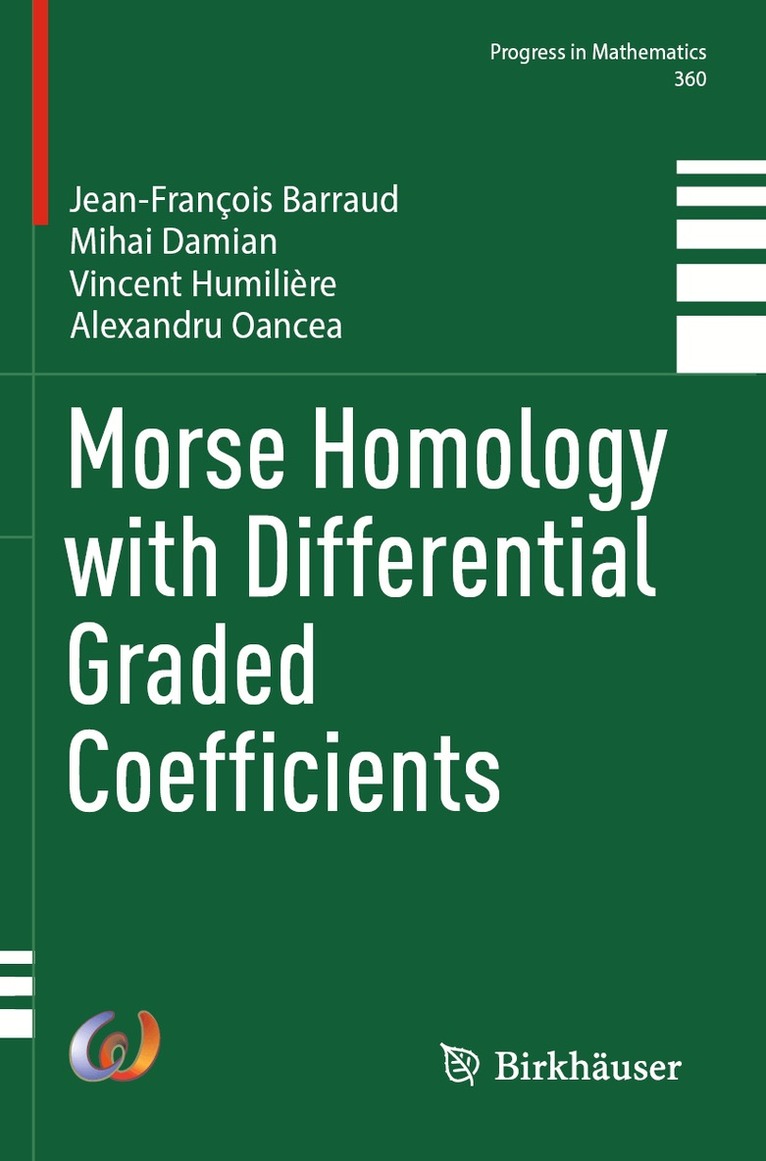
Morse Homology with Differential Graded Coefficients
Av Jean-François Barraud, Mihai Damian m. fl.
Inbunden, 2025
1641 kr
Lägg i varukorg
The key geometric objects underlying Morse homology are the moduli spaces of connecting gradient trajectories between critical points of a Morse function. The basic question in this context is the following: How much of the topology of the underlying manifold is visible using moduli spaces of …
Morse Homology with Differential Graded Coefficients
Av Alexandru Oancea, Vincent Humiliere m. fl.
E-bok, 2025
2111 kr
Lägg i varukorg
The key geometric objects underlying Morse homology are the moduli spaces of connecting gradient trajectories between critical points of a Morse function. The basic question in this context is the following: How much of the topology of the underlying manifold is visible using moduli spaces of …
Morse Homology with Differential Graded Coefficients
Av Jean-François Barraud, Mihai Damian m. fl.
Häftad, 2026
1641 kr
Lägg i varukorg
The key geometric objects underlying Morse homology are the moduli spaces of connecting gradient trajectories between critical points of a Morse function. The basic question in this context is the following: How much of the topology of the underlying manifold is visible using moduli spaces of …