Mikhail Kissine – författare
Visar alla böcker från författaren Mikhail Kissine. Handla med fri frakt och snabb leverans.
9 produkter
Future Times, Future Tenses
Av Saghie Sharifzadeh, Mikhail Kissine m. fl.
E-bok, 2014
1643 kr
Lägg i varukorg
Future Times, Future Tenses examines how the future is expressed by means of tense, aspect, and modality across a wide range of languages, among them French, Polish, Basque, Turkish, and West Greenlandic. From the present point of view, the future is not fixed: while there is arguably only one …
Future Times, Future Tenses
Av Philippe de Brabanter, Mikhail Kissine m. fl.
Inbunden, 2014
2564 kr
Lägg i varukorg
Future Times, Future Tenses examines how the future is expressed by means of tense, aspect, and modality across a wide range of languages, among them French, Polish, Basque, Turkish, and West Greenlandic. From the present point of view, the future is not fixed: while there is arguably only one …
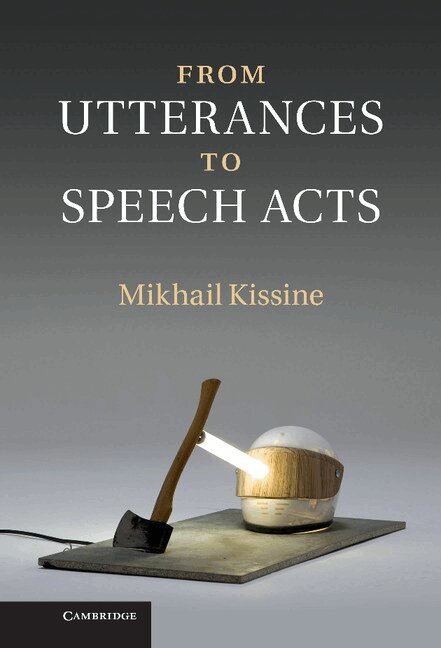
From Utterances to Speech Acts
Inbunden, 2013
1777 kr
Lägg i varukorg
Most of the time our utterances are automatically interpreted as speech acts: as assertions, conjectures and testimonies; as orders, requests and pleas; as threats, offers and promises. Surprisingly, the cognitive correlates of this essential component of human communication have received little …
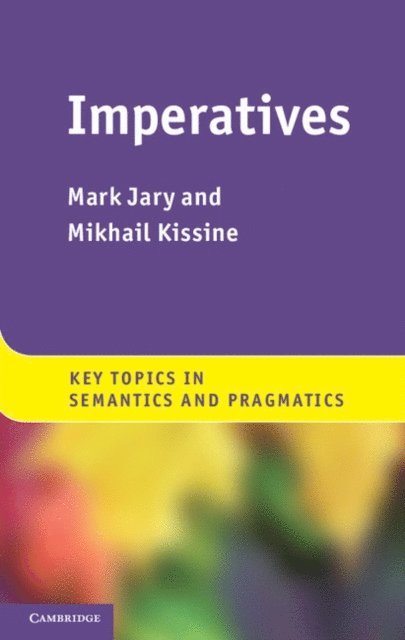
Imperatives
Inbunden, 2014
1677 kr
Lägg i varukorg
Imperative sentences usually occur in speech acts such as orders, requests, and pleas. However, they are also used to give advice, and to grant permission, and are sometimes found in advertisements, good wishes and conditional constructions. Yet, the relationship between the form of imperatives, …
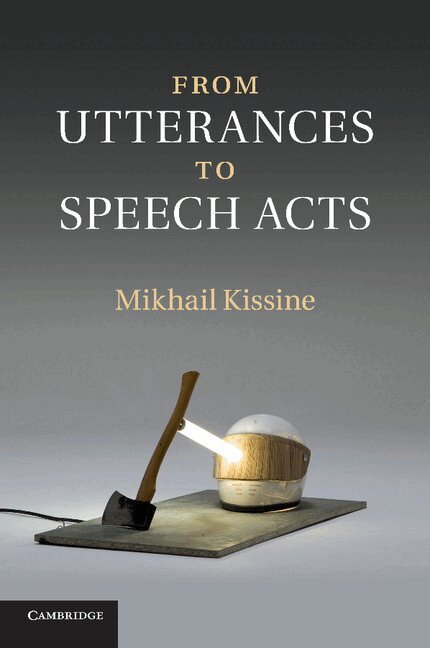
From Utterances to Speech Acts
Häftad, 2014
754 kr
Lägg i varukorg
Most of the time our utterances are automatically interpreted as speech acts: as assertions, conjectures and testimonies; as orders, requests and pleas; as threats, offers and promises. Surprisingly, the cognitive correlates of this essential component of human communication have received little …
Imperatives
Häftad, 2014
636 kr
Lägg i varukorg
Imperative sentences usually occur in speech acts such as orders, requests, and pleas. However, they are also used to give advice, and to grant permission, and are sometimes found in advertisements, good wishes and conditional constructions. Yet, the relationship between the form of imperatives, …
Imperatives
E-bok, 2014
621 kr
Lägg i varukorg
Imperative sentences usually occur in speech acts such as orders, requests, and pleas. However, they are also used to give advice, and to grant permission, and are sometimes found in advertisements, good wishes and conditional constructions. Yet, the relationship between the form of imperatives, …
Imperatives
E-bok, 2014
621 kr
Lägg i varukorg
Imperative sentences usually occur in speech acts such as orders, requests, and pleas. However, they are also used to give advice, and to grant permission, and are sometimes found in advertisements, good wishes and conditional constructions. Yet, the relationship between the form of imperatives, …
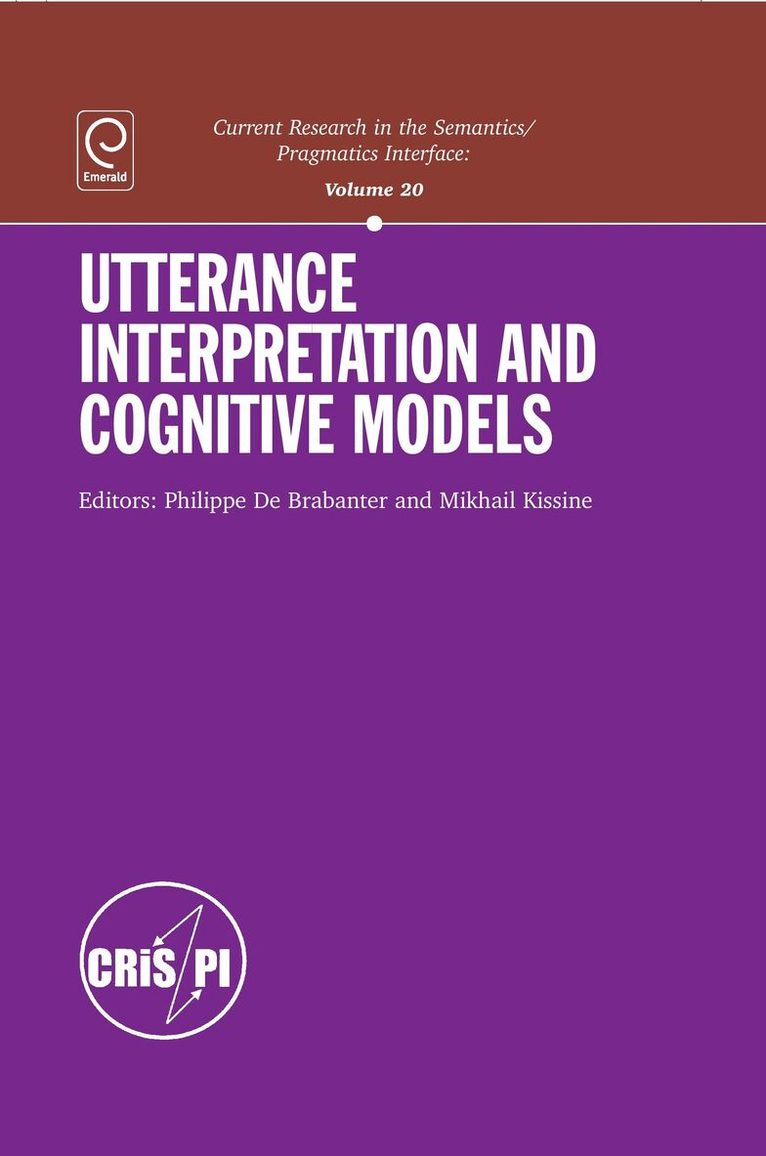
Utterance Interpretation and Cognitive Models
Av Philippe De Brabanter, Mikhail Kissine
Inbunden, 2009
2632 kr
Lägg i varukorg
This book, Utterance Interpretation and Cognitive Models, is a collection of papers that stems from the conference of the same name held at the Free University of Brussels in June 2006. Our main objective is to reconcile armchair theorising about the semantics-pragmatics interface with hypotheses …