Miki Makihara - Böcker
Visar alla böcker från författaren Miki Makihara. Handla med fri frakt och snabb leverans.
3 produkter
3 produkter
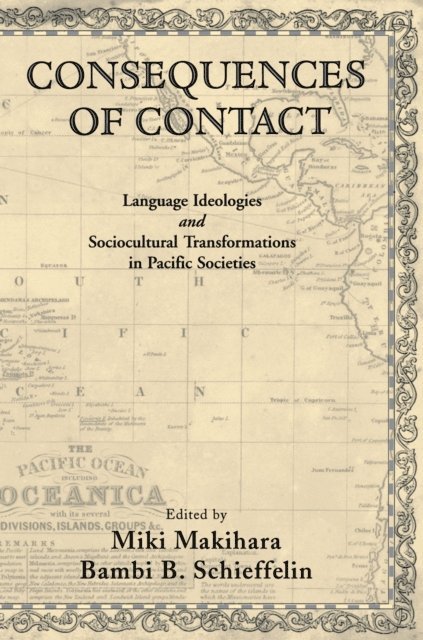
Consequences of Contact
Language Ideologies and Sociocultural Transformations in Pacific Societies
Inbunden, Engelska, 2007
1 513 kr
Skickas inom 3-6 vardagar
The Pacific is historically an area of enormous linguistic diversity, where talk figures as a central component of social life. Pacific communities also represent diverse contact zones, where between indigenous and introduced institutions and ideas; between local actors and outsiders; and involving different lingua franca, colonial, and local language varieties. Contact between colonial and post-colonial governments, religious institutions, and indigenous communities has spurred profound social change, irrevocably transforming linguistic ideologies and practices.Drawing on ethnographic and linguistic analyses, this edited volume examines situations of intertwined linguistic and cultural change unfolding in specific Pacific locations in the late twentieth and early twenty-first centuries. Its overarching concern is with the multiple ways that processes of historical change have shaped and been shaped by linguistic ideologies reflexive sensibilities about languages and language useheld by Pacific peoples and other agents of change. The essays demonstrate that language and linguistic practices are linked to changing consciousness of self and community through notions of agency, morality, affect, authority, and authenticity.In times of cultural contact, communities often experience language change at an accelerated rate. This is particularly so in small-scale communities where innovations and continuity routinely depend on the imagination, creativity, and charisma of fewer individuals. The essays in this volume provide evidence of this potential and a record of their voices, as they document new types of local actors, e.g., pastors, Bible translators, teachers, political activists, spirit mediums, and tour guides, some of whom introduce, innovate, legitimate, or resist new ideas and ways to express them through language. Drawing on and transforming metalinguistic concepts, local actors (re)shape language, reproducing and changing the communicative economy. In the process, they cultivate new cultural conceptions of language, for example, as a medium for communicating religious knowledge and political authority, and for constructing social boundaries and transforming relationships of domination.
Consequences of Contact
Language Ideologies and Sociocultural Transformations in Pacific Societies
Häftad, Engelska, 2007
534 kr
Skickas inom 5-8 vardagar
The Pacific is historically an area of enormous linguistic diversity, where talk figures as a central component of social life. Pacific communities also represent diverse contact zones, where between indigenous and introduced institutions and ideas; between local actors and outsiders; and involving different lingua franca, colonial, and local language varieties. Contact between colonial and post-colonial governments, religious institutions, and indigenous communities has spurred profound social change, irrevocably transforming linguistic ideologies and practices. Drawing on ethnographic and linguistic analyses, this edited volume examines situations of intertwined linguistic and cultural change unfolding in specific Pacific locations in the late twentieth and early twenty-first centuries. Its overarching concern is with the multiple ways that processes of historical change have shaped and been shaped by linguistic ideologies - reflexive sensibilities about languages and language use - held by Pacific peoples and other agents of change. The essays demonstrate that language and linguistic practices are linked to changing consciousness of self and community through notions of agency, morality, affect, authority, and authenticity. In times of cultural contact, communities often experience language change at an accelerated rate. This is particularly so in small-scale communities where innovations and continuity routinely depend on the imagination, creativity, and charisma of fewer individuals. The essays in this volume provide evidence of this potential and a record of their voices, as they document new types of local actors, e.g., pastors, Bible translators, teachers, political activists, spirit mediums, and tour guides, some of whom introduce, innovate, legitimate, or resist new ideas and ways to express them through language. Drawing on and transforming metalinguistic concepts, local actors (re)shape language, reproducing and changing the communicative economy. In the process, they cultivate new cultural conceptions of language, for example, as a medium for communicating religious knowledge and political authority, and for constructing social boundaries and transforming relationships of domination.
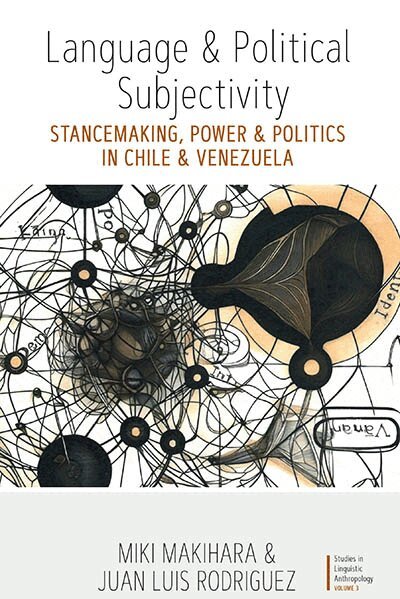
Language and Political Subjectivity
Stancemaking, Power and Politics in Chile and Venezuela
Inbunden, Engelska, 2025
1 860 kr
Skickas inom 3-6 vardagar
Politics and power are understood as interconnected yet opposed forms of agency that do not exist without each other and depend on transgressions and the upholding of social boundaries. Language and Political Subjectivity is an ethnographic and historical piece of research that considers how Indigenous and diasporic communities, with their political subjectivities, expand over significant sociohistorical changes, debates, and struggles in the transformation of Chilean democracy and Venezuela’s Bolivarian Revolution. It offers an innovative approach to stancemaking as a rhetorical semiotic process that produces truth, beliefs, and certainties about social realities and relations.