Mirela Ivanova – författare
Visar alla böcker från författaren Mirela Ivanova. Handla med fri frakt och snabb leverans.
8 produkter
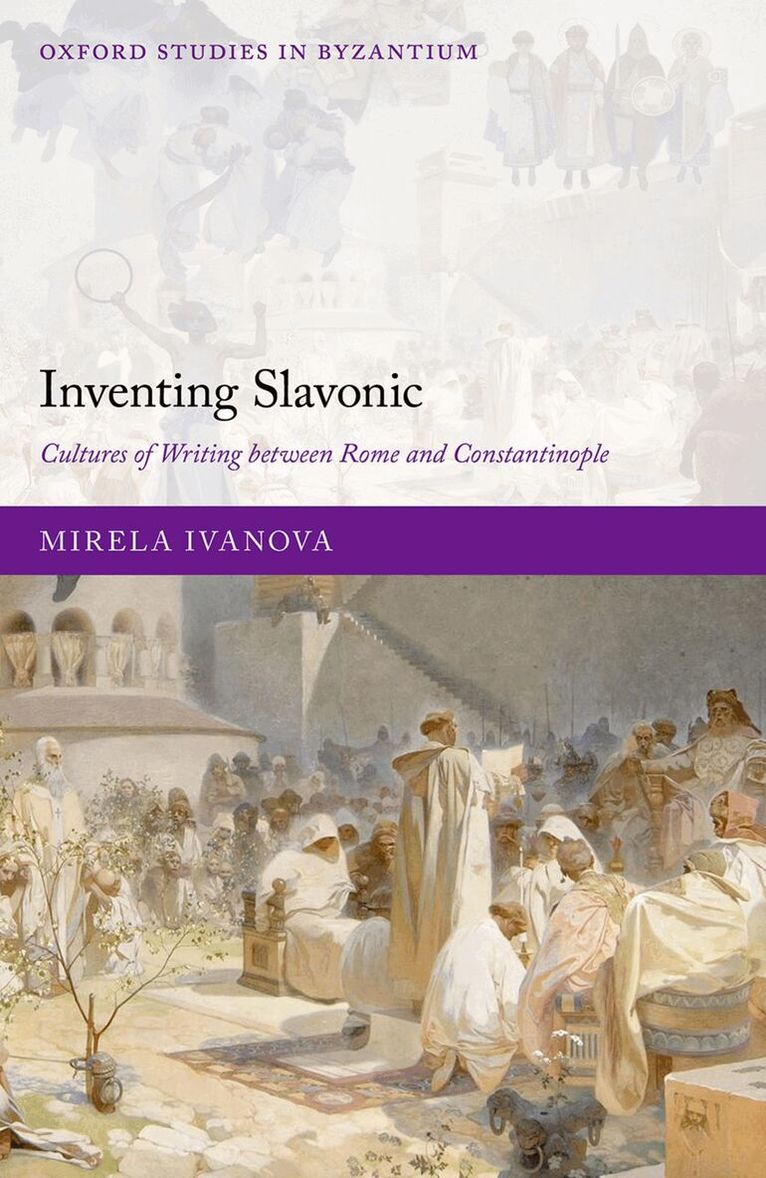
Inventing Slavonic
Cultures of Writing Between Rome and Constantinople
Inbunden, 2024
1883 kr
Lägg i varukorg
Few alphabets in the world are actively celebrated, and none more so than the Slavonic. Annually across Eastern Europe, the alphabet and its inventors, Cyril and Methodios, are celebrated with parades, concerts, liturgical services, and public addresses by presidents, ministers, and mayors. …
Inventing Slavonic
Cultures of Writing Between Rome and Constantinople
E-bok, 2024
1322 kr
Lägg i varukorg
Few alphabets in the world are actively celebrated, and none more so than the Slavonic. Annually across Eastern Europe, the alphabet and its inventors, Cyril and Methodios, are celebrated with parades, concerts, liturgical services, and public addresses by presidents, ministers, and mayors. …
Inventing Slavonic
Cultures of Writing Between Rome and Constantinople
E-bok, 2024
1322 kr
Lägg i varukorg
Few alphabets in the world are actively celebrated, and none more so than the Slavonic. Annually across Eastern Europe, the alphabet and its inventors, Cyril and Methodios, are celebrated with parades, concerts, liturgical services, and public addresses by presidents, ministers, and mayors. …
Is Byzantine Studies a Colonialist Discipline?
Toward a Critical Historiography
Av Benjamin Anderson, Mirela Ivanova
Häftad, 2023
301 kr
Lägg i varukorg
Is Byzantine Studies a colonialist discipline? Rather than provide a definitive answer to this question, this book defines the parameters of the debate and proposes ways of thinking about what it would mean to engage seriously with the field’s political and intellectual genealogies, hierarchies, …
Work Appropriation and Social Inequality
Av Ruth Yeoman, Stephan Voswinkel m. fl.
Inbunden, 2021
905 kr
Lägg i varukorg
Work Appropriation and Social Inequality
Av Ruth Yeoman, Stephan Voswinkel m. fl.
Häftad, 2022
682 kr
Lägg i varukorg
Kapitalismus und Kapitalismuskritik
Av Mirela Ivanova, Helene Thaa m. fl.
Häftad, 2022
487 kr
Lägg i varukorg
Transmitting and Circulating the Late Antique and Byzantine Worlds
Inbunden, 2019
1892 kr
Lägg i varukorg
Transmitting and Circulating the Late Antique and Byzantine Worlds seeks to be a crucial contribution to the history of medieval connectedness. Using one of the methodological tools associated with the global history movement, this volume aims to use connectedness to revitalise local and regional …