Miroslav Karny – författare
Visar alla böcker från författaren Miroslav Karny. Handla med fri frakt och snabb leverans.
18 produkter
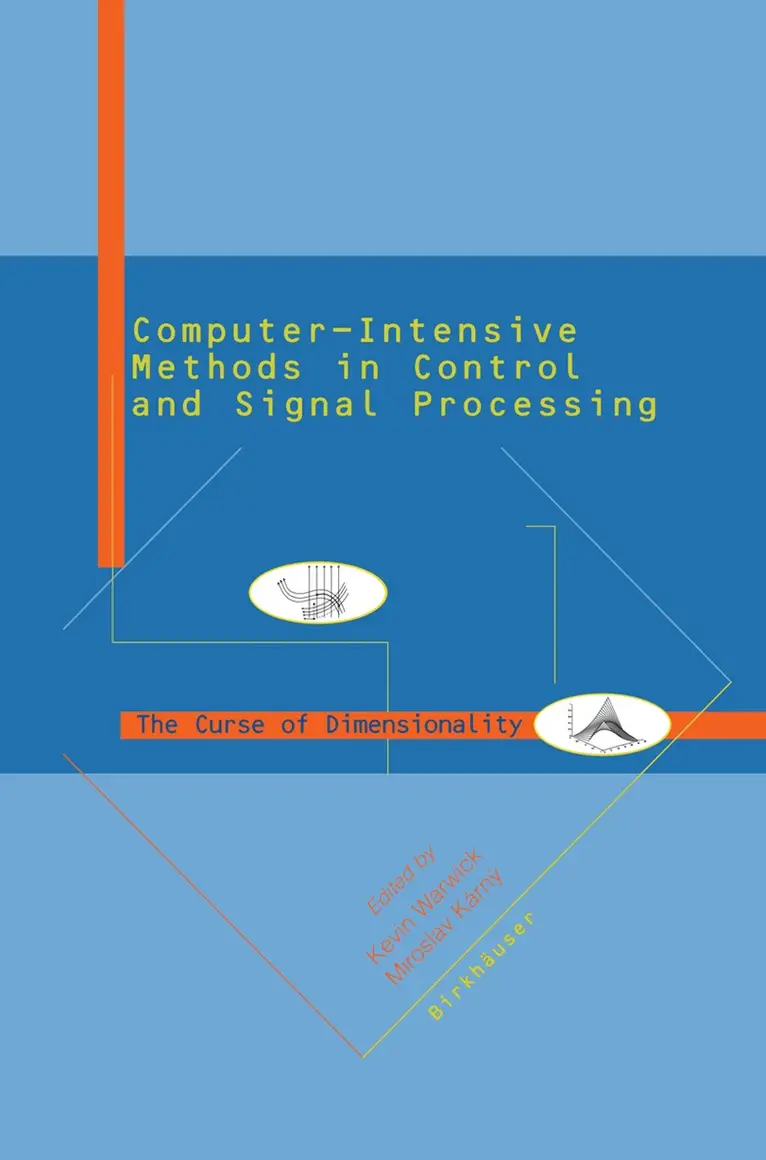
Computer Intensive Methods in Control and Signal Processing
The Curse of Dimensionality
Av Kevin Warwick, Miroslav Karny
Inbunden, 1997
1093 kr
Lägg i varukorg
This volume is based upon the 2nd IEEE European Workshop on Computer-Intensive Methods in Control and Signal Processing, subtitled "Can We Beat the Curse of Dimensionality?", held in Prague, August 1996. The book brings together a blend of approaches to a common theme from a variety of …
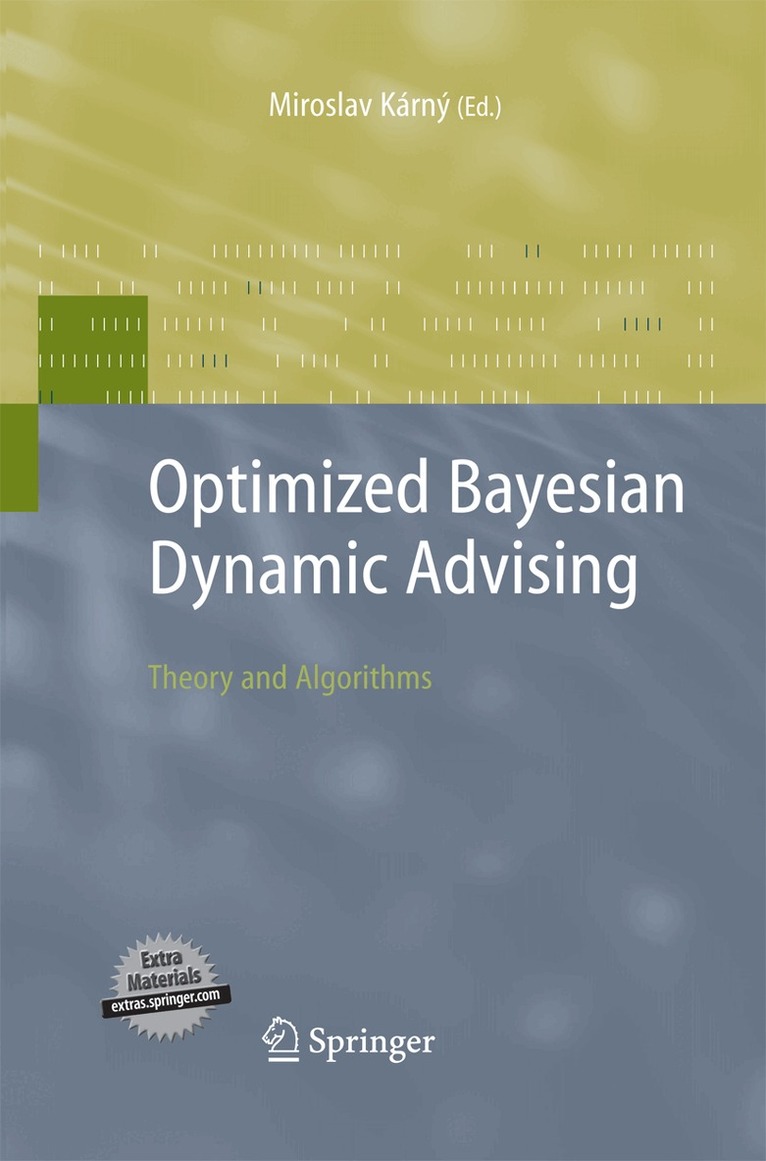
Optimized Bayesian Dynamic Advising
Theory and Algorithms
Häftad, 2014
1679 kr
Lägg i varukorg
This work summarizes the theoretical and algorithmic basis of optimized pr- abilistic advising. It developed from a series of targeted research projects s- ported both by the European Commission and Czech grant bodies. The source text has served as a common basis of communication for the research …
Computer Intensive Methods in Control and Signal Processing
The Curse of Dimensionality
Av Miroslav Karny, Kevin Warwick
E-bok, 2012
1459 kr
Lägg i varukorg
Due to the rapid increase in readily available computing power, a corre sponding increase in the complexity of problems being tackled has occurred in the field of systems as a whole. A plethora of new methods which can be used on the problems has also arisen with a constant desire to deal with …
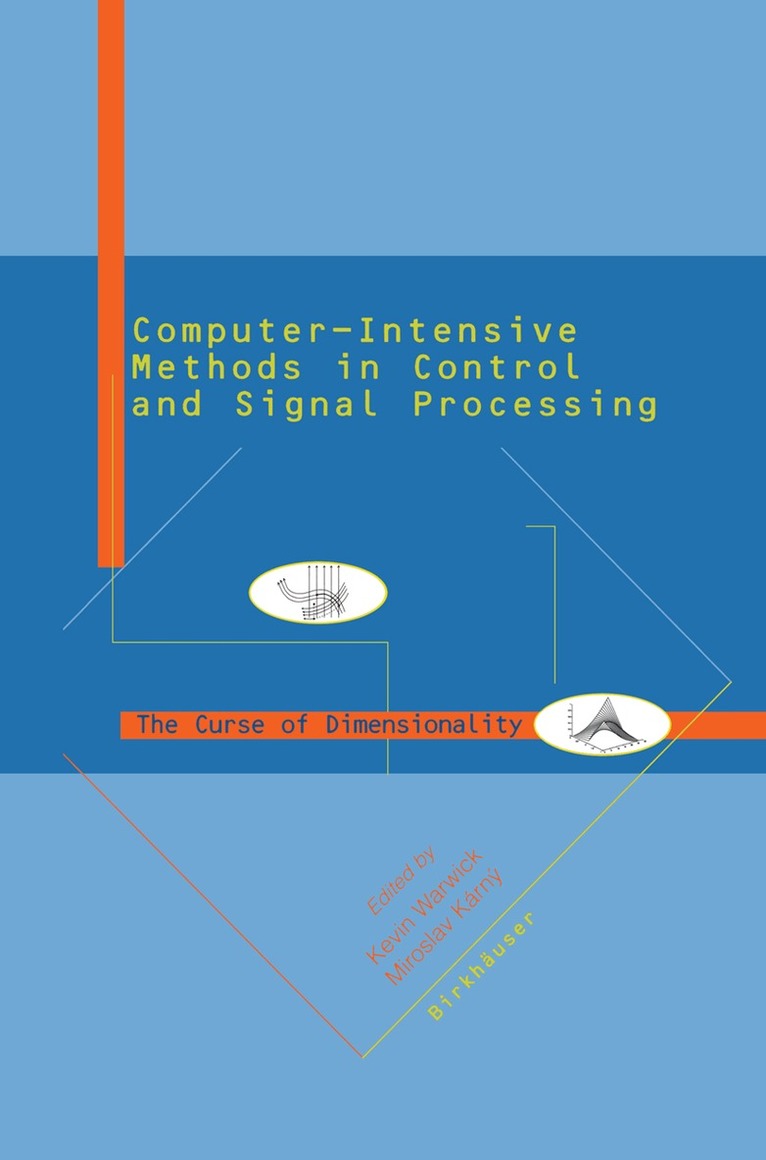
Computer Intensive Methods in Control and Signal Processing
The Curse of Dimensionality
Av Kevin Warwick, Miroslav Karny
Häftad, 2012
1093 kr
Lägg i varukorg
Due to the rapid increase in readily available computing power, a corre sponding increase in the complexity of problems being tackled has occurred in the field of systems as a whole. A plethora of new methods which can be used on the problems has also arisen with a constant desire to deal with …
Optimized Bayesian Dynamic Advising
Theory and Algorithms
E-bok, 2005
2065 kr
Lägg i varukorg
This work summarizes the theoretical and algorithmic basis of optimized pr- abilistic advising. It developed from a series of targeted research projects s- ported both by the European Commission and Czech grant bodies. The source text has served as a common basis of communication for the research …
Optimized Bayesian Dynamic Advising
Theory and Algorithms
Inbunden, 2005
1636 kr
Lägg i varukorg
This work summarizes the theoretical and algorithmic basis of optimized pr- abilistic advising. It developed from a series of targeted research projects s- ported both by the European Commission and Czech grant bodies. The source text has served as a common basis of communication for the research …
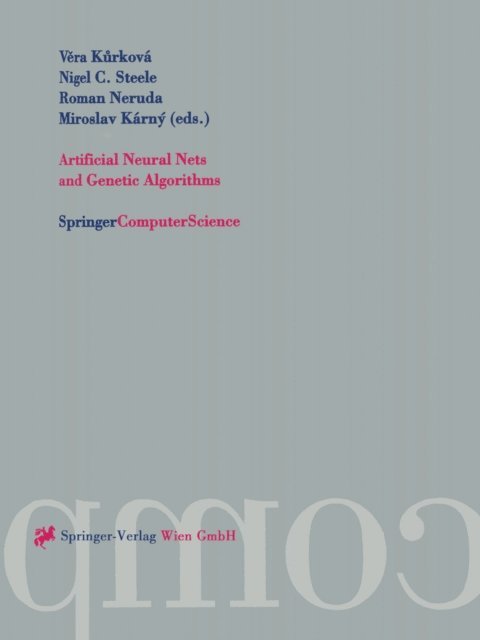
Artificial Neural Nets and Genetic Algorithms
Proceedings of the International Conference in Prague, Czech Republic, 2001
Av Vera Kurkova, N. C. Steele m. fl.
Häftad, 2001
566 kr
Lägg i varukorg
The first ICANNGA conference, devoted to biologically inspired computational paradigms, Neural Net works and Genetic Algorithms, was held in Innsbruck, Austria, in 1993. The meeting attracted researchers from all over Europe and further afield, who decided that this particular blend of topics …
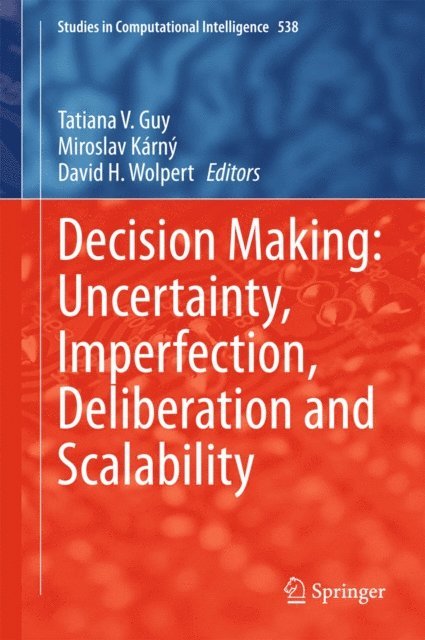
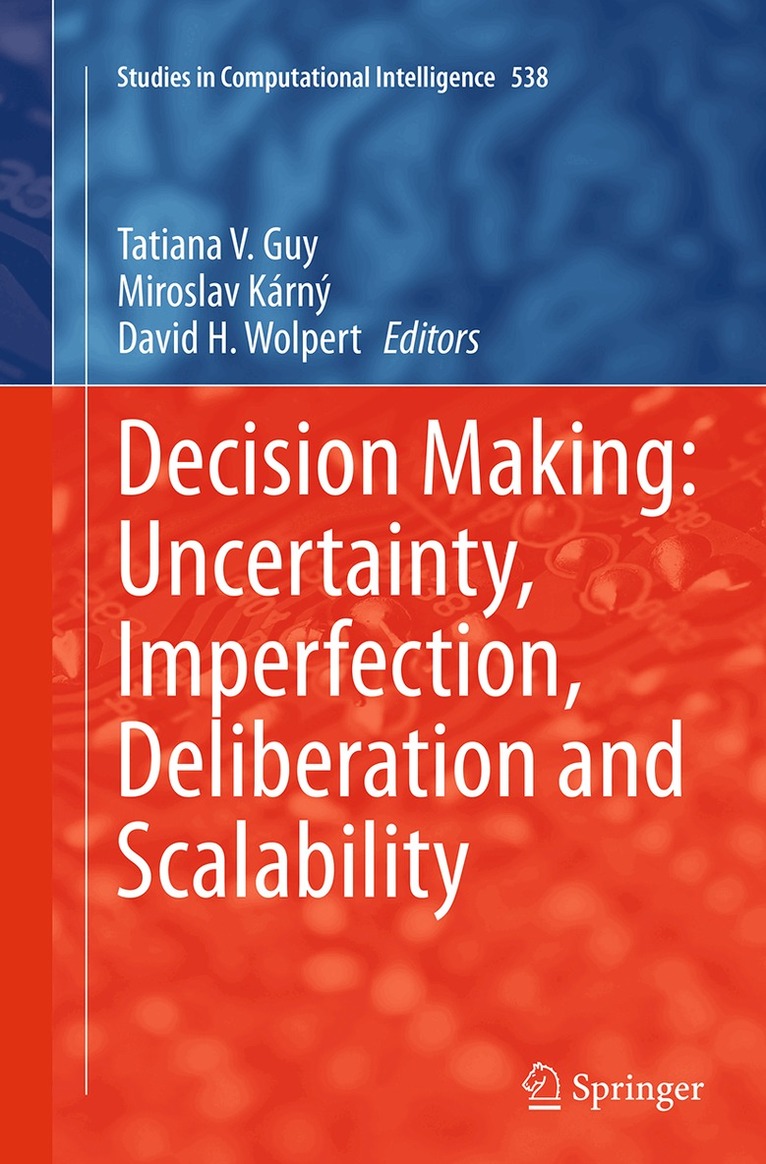
Decision Making: Uncertainty, Imperfection, Deliberation and Scalability
Av Tatiana V. Guy, Miroslav Kárný m. fl.
Inbunden, 2015
1126 kr
Lägg i varukorg
This volume focuses on uncovering the fundamental forces underlying dynamic decision making among multiple interacting, imperfect and selfish decision makers.The chapters are written by leading experts from different disciplines, all considering the many sources of imperfection in decision making, …
Decision Making: Uncertainty, Imperfection, Deliberation and Scalability
Av David H. Wolpert, Miroslav Karny m. fl.
E-bok, 2015
1502 kr
Lägg i varukorg
This volume focuses on uncovering the fundamental forces underlying dynamic decision making among multiple interacting, imperfect and selfish decision makers. The chapters are written by leading experts from different disciplines, all considering the many sources of imperfection in decision making, …
Decision Making: Uncertainty, Imperfection, Deliberation and Scalability
Av Tatiana V. Guy, Miroslav Kárný m. fl.
Häftad, 2016
1126 kr
Lägg i varukorg
This volume focuses on uncovering the fundamental forces underlying dynamic decision making among multiple interacting, imperfect and selfish decision makers.The chapters are written by leading experts from different disciplines, all considering the many sources of imperfection in decision making, …
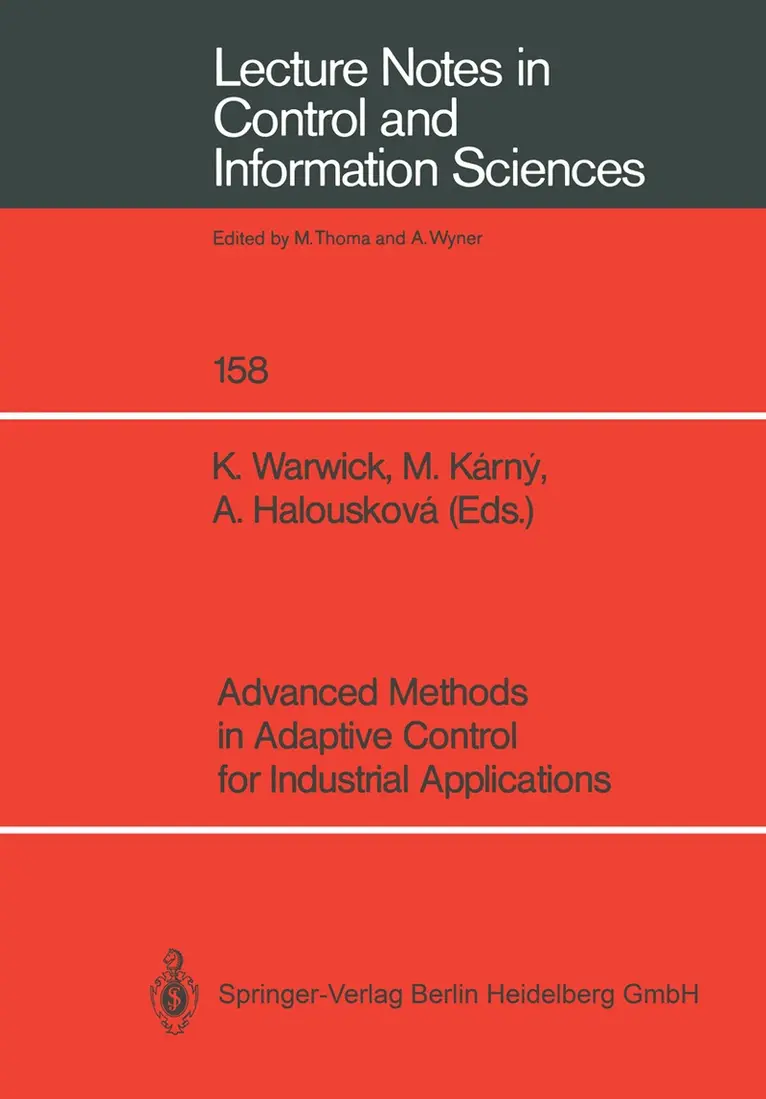
Advanced Methods in Adaptive Control for Industrial Applications
Av Kevin Warwick, Miroslav Karny m. fl.
Häftad, 1991
550 kr
Lägg i varukorg
This volume is based on a seminar concerned with advanced methods in adaptive control for industrial applications which was held in Prague in May 1990 and which brought together experts in the UK and Czechoslovakia in order to suggest solutions to specific current and anticipated problems faced by …
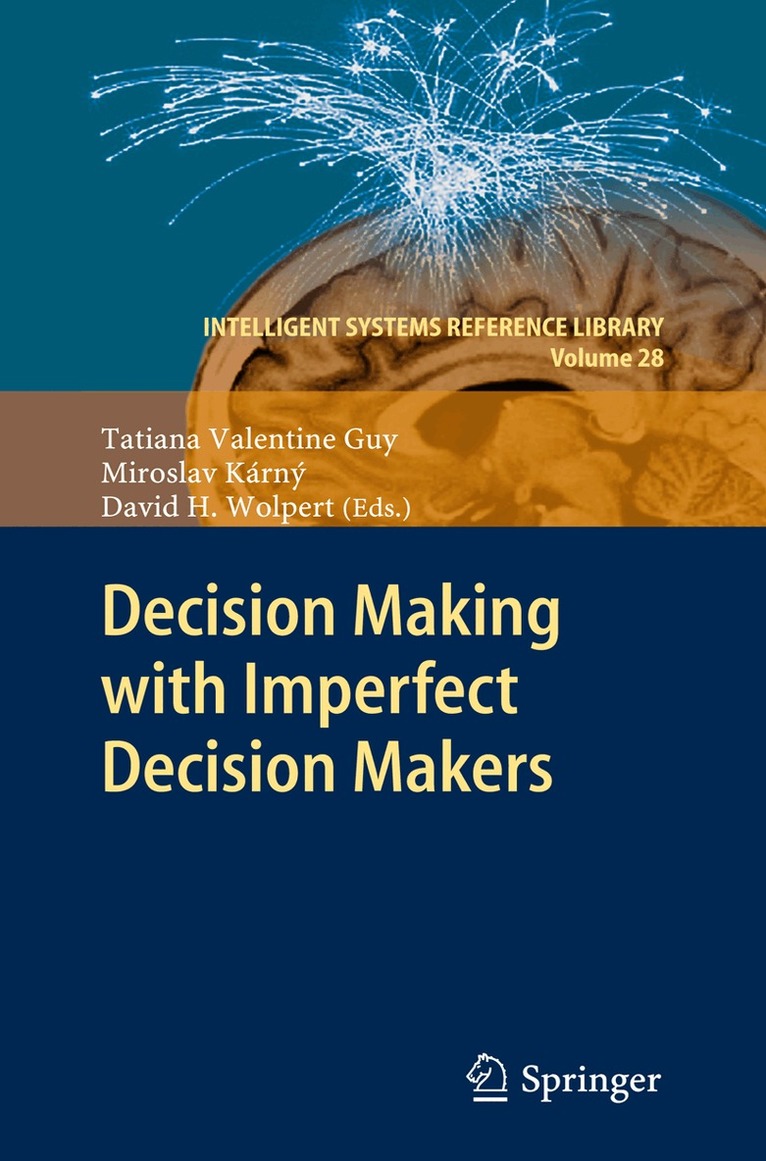
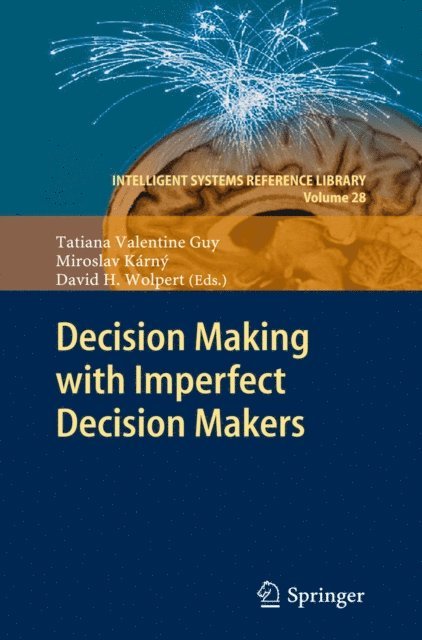
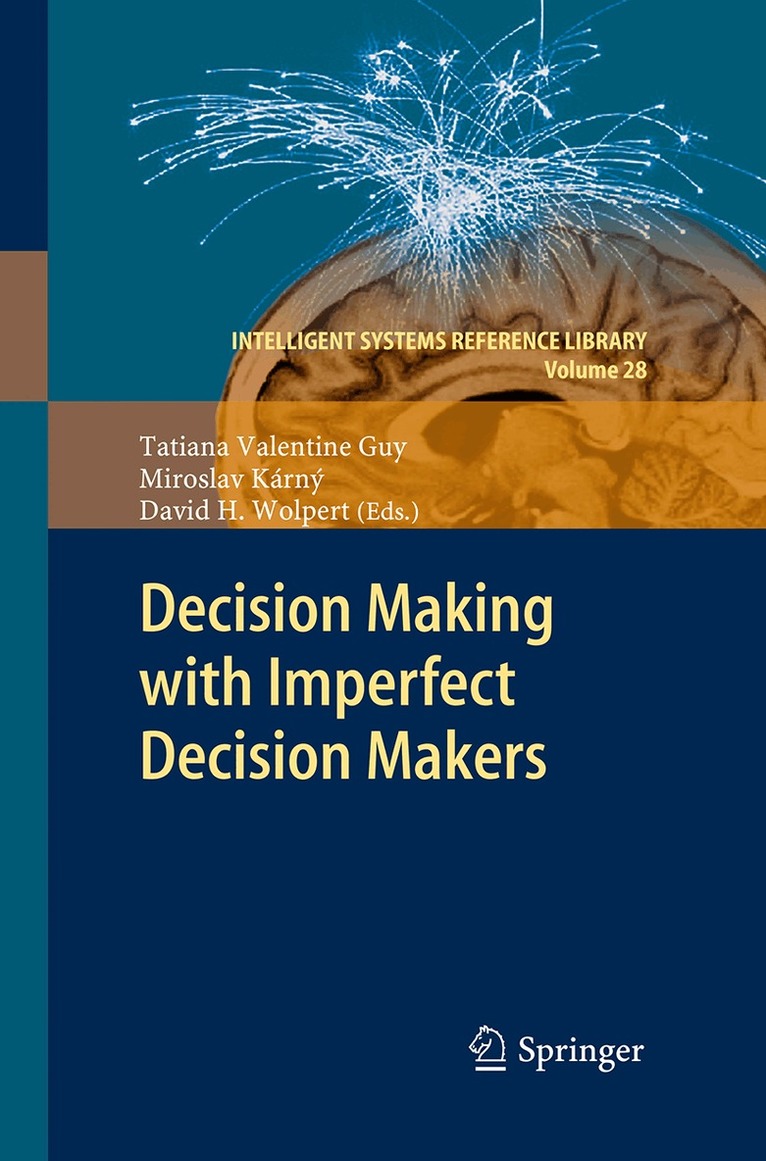
Decision Making with Imperfect Decision Makers
Av Tatiana Valentine Guy, Miroslav Kárný m. fl.
Inbunden, 2011
1685 kr
Lägg i varukorg
Prescriptive Bayesian decision making has reached a high level of maturity and is well-supported algorithmically. However, experimental data shows that real decision makers choose such Bayes-optimal decisions surprisingly infrequently, often making decisions that are badly sub-optimal. So prevalent …
Decision Making with Imperfect Decision Makers
Av David H. Wolpert, Miroslav Karny m. fl.
E-bok, 2011
2174 kr
Lägg i varukorg
Prescriptive Bayesian decision making has reached a high level of maturity and is well-supported algorithmically. However, experimental data shows that real decision makers choose such Bayes-optimal decisions surprisingly infrequently, often making decisions that are badly sub-optimal. So prevalent …
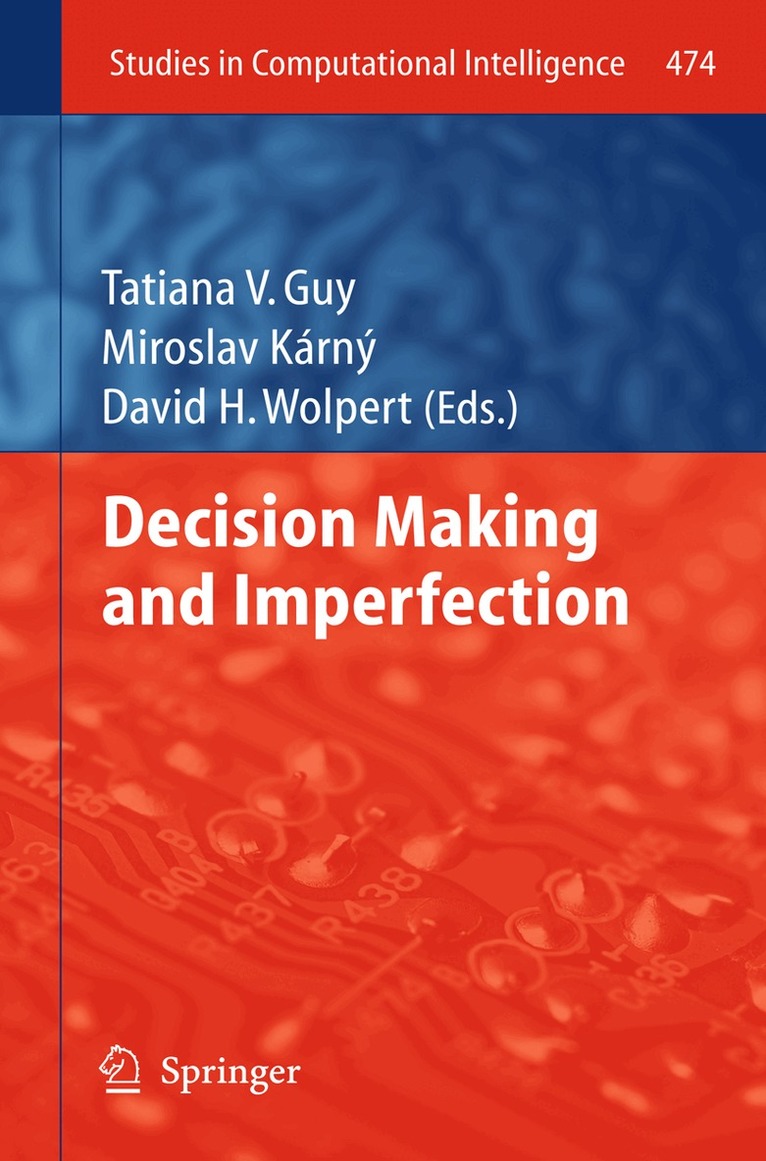
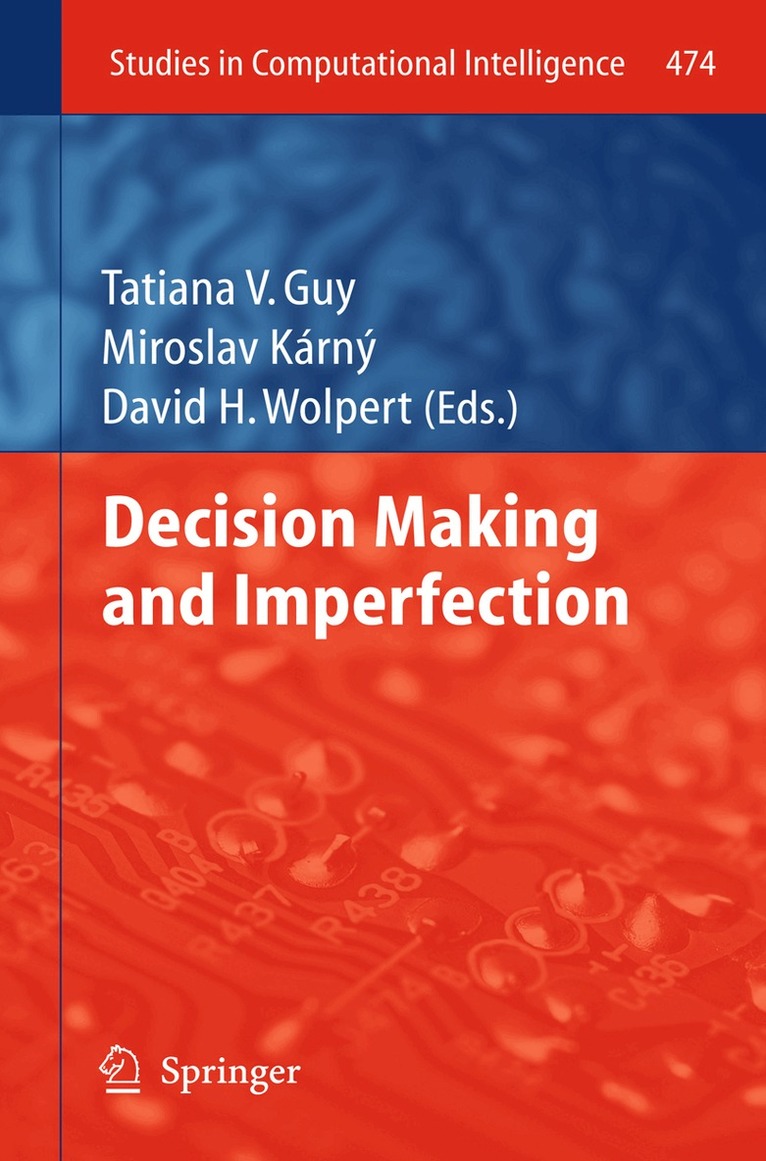
Decision Making and Imperfection
Av Tatiana V Guy, Miroslav Karny m. fl.
Inbunden, 2013
1126 kr
Lägg i varukorg
Decision making (DM) is ubiquitous in both natural and artificial systems. The decisions made often differ from those recommended by the axiomatically well-grounded normative Bayesian decision theory, in a large part due to limited cognitive and computational resources of decision makers (either …
Decision Making and Imperfection
Av David Wolpert, Miroslav Karny m. fl.
E-bok, 2013
1502 kr
Lägg i varukorg
Decision making (DM) is ubiquitous in both natural and artificial systems. The decisions made often differ from those recommended by the axiomatically well-grounded normative Bayesian decision theory, in a large part due to limited cognitive and computational resources of decision makers (either …
Decision Making and Imperfection
Av Tatiana V Guy, Miroslav Karny m. fl.
Häftad, 2015
1126 kr
Lägg i varukorg
Decision making (DM) is ubiquitous in both natural and artificial systems. The decisions made often differ from those recommended by the axiomatically well-grounded normative Bayesian decision theory, in a large part due to limited cognitive and computational resources of decision makers (either …
Decision Making with Imperfect Decision Makers
Av Tatiana Valentine Guy, Miroslav Kárný m. fl.
Häftad, 2016
1685 kr
Lägg i varukorg
Prescriptive Bayesian decision making has reached a high level of maturity and is well-supported algorithmically. However, experimental data shows that real decision makers choose such Bayes-optimal decisions surprisingly infrequently, often making decisions that are badly sub-optimal. So prevalent …
Artificial Neural Nets and Genetic Algorithms
Proceedings of the International Conference in Prague, Czech Republic, 2001
Av Miroslav Karny, Roman Neruda m. fl.
E-bok, 2013
734 kr
Lägg i varukorg
The first ICANNGA conference, devoted to biologically inspired computational paradigms, Neural Net works and Genetic Algorithms, was held in Innsbruck, Austria, in 1993. The meeting attracted researchers from all over Europe and further afield, who decided that this particular blend of topics …