
Mitja SardoA – författare
686 kr
Läs direkt efter köp
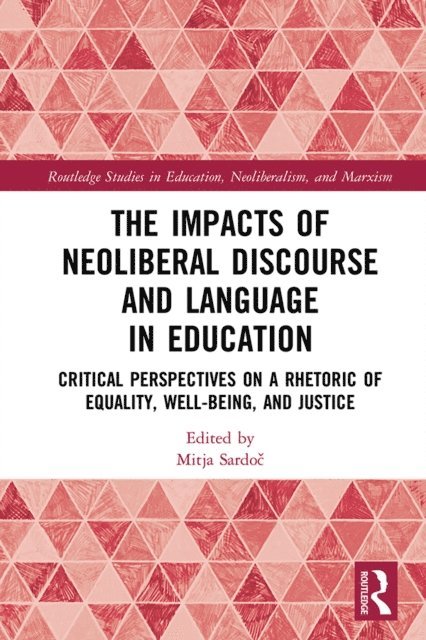
This edited collection combines quantitative content and critical discourse analysis to reveal a shift in the rhetoric used as part of the neoliberal agenda in education. It does so by analysing, uncovering, and commenting on language as a central tool of education.
Focussing on vocabulary, metaphors, and slogans used in strategy documents, advertising, policy, and public discourse, the text illustrates how concepts such as justice, opportunity, well-being, talent, and disadvantage have been hijacked by educational institutes, governments, and universities. Showing how neoliberalism has changed discourses about education and educational policy, these chapters trace issues such as anti-intellectualism, commercialization, meritocracy, and an erasure of racial difference back to a contradictory growth in egalitarian rhetoric.
Given its global scope, this volume offers a timely intervention in the studies of neoliberalism and education by developing a holistic vision of how the language of neoliberalism has changed how we think about education. It will prove to be an essential resource for scholars and researchers working at the intersections of education, policymaking, and neoliberalism.
686 kr
Läs direkt efter köp
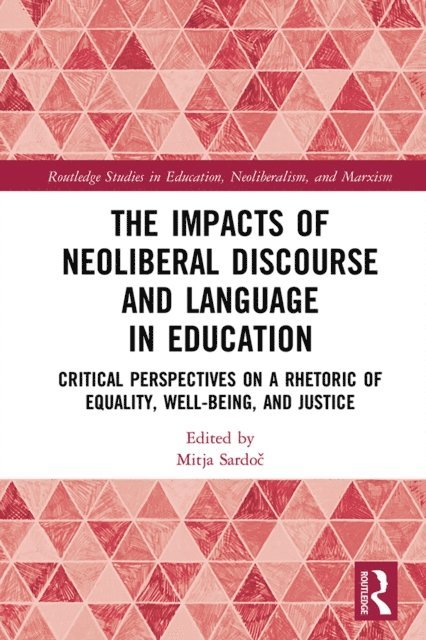
This edited collection combines quantitative content and critical discourse analysis to reveal a shift in the rhetoric used as part of the neoliberal agenda in education. It does so by analysing, uncovering, and commenting on language as a central tool of education.
Focussing on vocabulary, metaphors, and slogans used in strategy documents, advertising, policy, and public discourse, the text illustrates how concepts such as justice, opportunity, well-being, talent, and disadvantage have been hijacked by educational institutes, governments, and universities. Showing how neoliberalism has changed discourses about education and educational policy, these chapters trace issues such as anti-intellectualism, commercialization, meritocracy, and an erasure of racial difference back to a contradictory growth in egalitarian rhetoric.
Given its global scope, this volume offers a timely intervention in the studies of neoliberalism and education by developing a holistic vision of how the language of neoliberalism has changed how we think about education. It will prove to be an essential resource for scholars and researchers working at the intersections of education, policymaking, and neoliberalism.
795 kr
Läs direkt efter köp
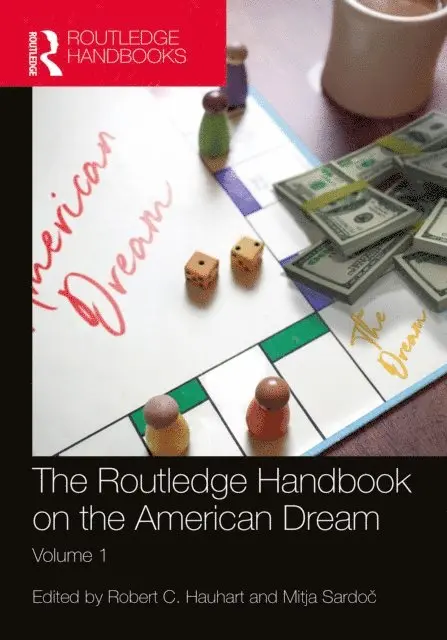
What do we mean by the American dream? Can we define it? Or does any discussion of the phrase end inconclusively, the solid turned liquid—like ice melting? Do we know whether the American dream motivates and inspires or, alternately, obscures and deceives? The Routledge Handbook on the American Dream offers distinctive, authoritative, original essays by well-known scholars that address the social, economic, historical, philosophic, legal, and cultural dimensions of the American dream for the twenty-first century. The American dream, first discussed and defined in print by James Truslow Adams’s The Epic of America (1931), has become nearly synonymous with being American. Adams’s definition, although known to scholars, is often lost in our ubiquitous use of the term. When used today, the iconic phrase seems to encapsulate every fashion, fad, trend, association, or image the user identifies with the United States or American life. The American dream’s ubiquity, though, argues eloquently for a deeper understanding of its heritage, its implications, and its impact—to be found in this first research handbook ever published on the topic.
795 kr
Läs direkt efter köp
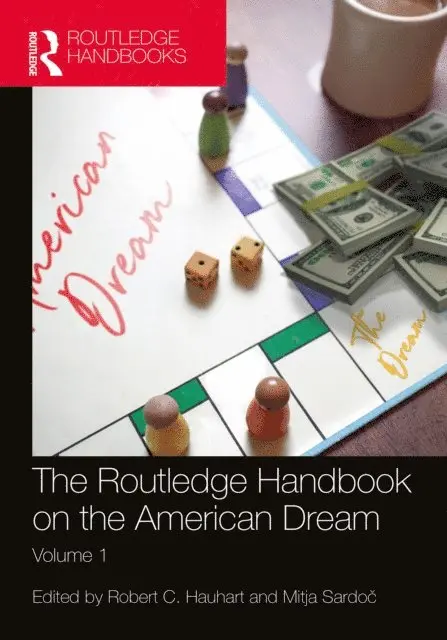
What do we mean by the American dream? Can we define it? Or does any discussion of the phrase end inconclusively, the solid turned liquid—like ice melting? Do we know whether the American dream motivates and inspires or, alternately, obscures and deceives? The Routledge Handbook on the American Dream offers distinctive, authoritative, original essays by well-known scholars that address the social, economic, historical, philosophic, legal, and cultural dimensions of the American dream for the twenty-first century. The American dream, first discussed and defined in print by James Truslow Adams’s The Epic of America (1931), has become nearly synonymous with being American. Adams’s definition, although known to scholars, is often lost in our ubiquitous use of the term. When used today, the iconic phrase seems to encapsulate every fashion, fad, trend, association, or image the user identifies with the United States or American life. The American dream’s ubiquity, though, argues eloquently for a deeper understanding of its heritage, its implications, and its impact—to be found in this first research handbook ever published on the topic.
706 kr
Läs direkt efter köp
This volume brings together interviews with leading scholars to discuss some of the most important issues associated with radicalization, violent extremism and terrorism.
The overall aim of these interviews is to move beyond the ‘conventional wisdom’ over radicalization and violent extremism best represented by many of its well-known slogans, metaphors, aphorisms alongside various other thought-terminating clichés. A vast range of topics are tackled in these conversations, including issues as diverse as the genealogy of radicalization and violent extremism, the rhetoric of emergency politics (’the language of fear’), the ethics of securitization, mutual radicalization, the challenges arising out of the relationship between cognitive and behavioural radicalization, Islamism bias in research on radicalization, the ethics of espionage (as an integral element of the ‘war on terror’), the epistemic dimension of radicalization, the application of the just war conceptual framework to terrorism, and the ethics of exceptional means when addressing security-related issues, to name a few. The unifying assumption of the interviews in the volume is the complex nature of radicalization, violent extremism and conflicting diversity, as well as their interwoven relationship. While radicalization has become one of the ‘great buzzwords’ of the intelligence and security ‘industry’, pleas for its very abandonment as a useful analytical category have also started to emerge.
This book will be of much interest to students of terrorism studies, radicalisation, violent extremism, security studies and International Relations, in general.
790 kr
Läs direkt efter köp
The Routledge Handbook on the American Dream: Volume 2 explores the social, economic, and cultural aspects of the American Dream in both theory and reality in the twenty-first century. This collection of essays brings together leading scholars from a range of fields to further develop the themes and issues explored in the first volume.
The concept of the American Dream, first expounded by James Truslow Adams in The Epic of America in 1931, is at once both ubiquitous and difficult to define. The term perfectly captures the hopes of freedom, opportunity and upward social mobility invested in the nation. However, the American Dream appears increasingly illusory in the face of widening inequality and apparent lack of opportunity, particularly for the poor and ethnic, or otherwise marginalized, minorities in the United States. As such, an understanding of the American Dream through both theoretical analyses and empirical studies, whether qualitative or quantitative, is crucial to understanding contemporary America.
Like the first volume of The Routledge Handbook on the American Dream, this collection will be of great interest to students and researchers in a range of fields in the humanities and social sciences.