MJ Thompson - Böcker
Visar alla böcker från författaren MJ Thompson. Handla med fri frakt och snabb leverans.
6 produkter
6 produkter
1 232 kr
Skickas inom 7-10 vardagar
As principal dancer with Montréal-based company La La La Human Steps, Louise Lecavalier was among the most iconic dancers of her generation: strong, muscled, androgynous, punk. Moving with spectacular speed, precision and an athletic physicality, her commitment to dancing would ultimately transform the potential of what bodies within Western concert dance could do.Drawing on extensive oral history accounts and archival material, the book follows Lecavalier’s impact on the evolving aesthetic of La La La Human Steps, via the development of its early repertoire, and offers the first sustained account of her 1982 solo Non, Non, Non, je ne suis pas Mary Poppins. More, it tracks diverse influences and sources for the repertoire, complicating understandings of nationalism in Québec, while marking the significance of the collective in generating new aesthetics. What emerges is a portrait of the dancer as artist, icon, labourer and mover of cultural discourse. Featuring an expansive set of photos and ephemera, including performance documentation by photographer/activist Linda Dawn Hammond, production images by choreographer Édouard Lock and street photography by key players in the 1980s Montréal scene, this study offers a critical and celebratory appraisal of Lecavalier’s unique contribution and the role of the dancer more broadly as a producer of culture.
499 kr
Kommande
As principal dancer with Montréal-based company La La La Human Steps, Louise Lecavalier was among the most iconic dancers of her generation: strong, muscled, androgynous, punk. Moving with spectacular speed, precision and an athletic physicality, her commitment to dancing would ultimately transform the potential of what bodies within Western concert dance could do.Drawing on extensive oral history accounts and archival material, the book follows Lecavalier’s impact on the evolving aesthetic of La La La Human Steps, via the development of its early repertoire, and offers the first sustained account of her 1982 solo Non, Non, Non, je ne suis pas Mary Poppins. More, it tracks diverse influences and sources for the repertoire, complicating understandings of nationalism in Québec, while marking the significance of the collective in generating new aesthetics. What emerges is a portrait of the dancer as artist, icon, labourer and mover of cultural discourse. Featuring an expansive set of photos and ephemera, including performance documentation by photographer/activist Linda Dawn Hammond, production images by choreographer Édouard Lock and street photography by key players in the 1980s Montréal scene, this study offers a critical and celebratory appraisal of Lecavalier’s unique contribution and the role of the dancer more broadly as a producer of culture.
1 069 kr
Skickas inom 10-15 vardagar
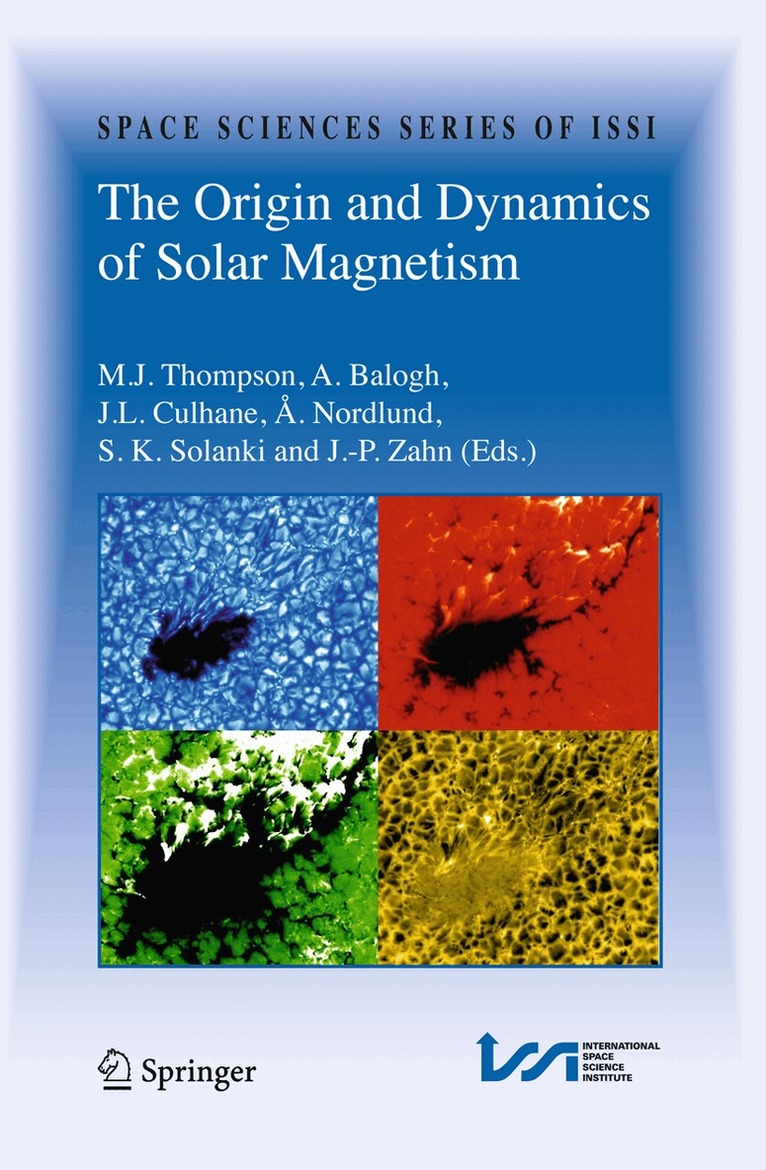
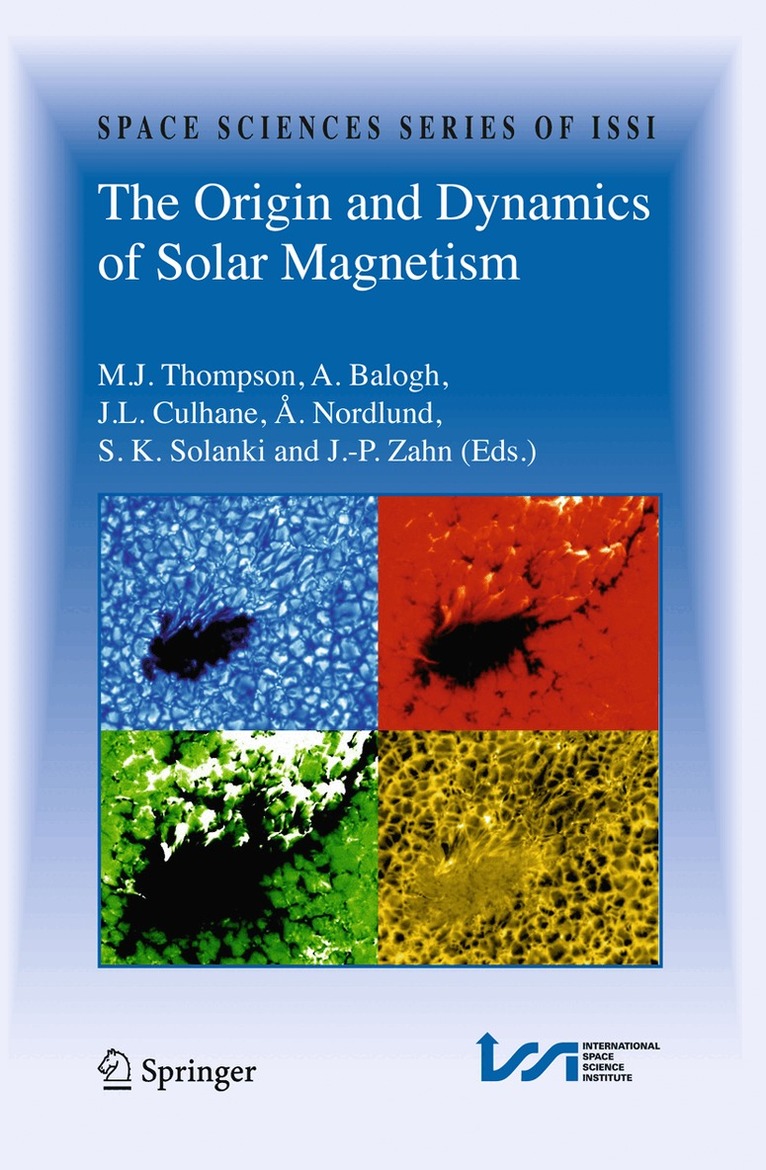
Starting in 1995 numerical modeling of the Earth’s dynamo has ourished with remarkable success. Direct numerical simulation of convection-driven MHD- ow in a rotating spherical shell show magnetic elds that resemble the geomagnetic eld in many respects: they are dominated by the axial dipole of approximately the right strength, they show spatial power spectra similar to that of Earth, and the magnetic eld morphology and the temporal var- tion of the eld resembles that of the geomagnetic eld (Christensen and Wicht 2007). Some models show stochastic dipole reversals whose details agree with what has been inferred from paleomagnetic data (Glatzmaier and Roberts 1995; Kutzner and Christensen 2002; Wicht 2005). While these models represent direct numerical simulations of the fundamental MHD equations without parameterized induction effects, they do not match actual pla- tary conditions in a number of respects. Speci cally, they rotate too slowly, are much less turbulent, and use a viscosity and thermal diffusivity that is far too large in comparison to magnetic diffusivity. Because of these discrepancies, the success of geodynamo models may seem surprising. In order to better understand the extent to which the models are applicable to planetary dynamos, scaling laws that relate basic properties of the dynamo to the fundamental control parameters play an important role. In recent years rst attempts have been made to derive such scaling laws from a set of numerical simulations that span the accessible parameter space (Christensen and Tilgner 2004; Christensen and Aubert 2006).
1 069 kr
Skickas inom 10-15 vardagar
Starting in 1995 numerical modeling of the Earth’s dynamo has ourished with remarkable success. Direct numerical simulation of convection-driven MHD- ow in a rotating spherical shell show magnetic elds that resemble the geomagnetic eld in many respects: they are dominated by the axial dipole of approximately the right strength, they show spatial power spectra similar to that of Earth, and the magnetic eld morphology and the temporal var- tion of the eld resembles that of the geomagnetic eld (Christensen and Wicht 2007). Some models show stochastic dipole reversals whose details agree with what has been inferred from paleomagnetic data (Glatzmaier and Roberts 1995; Kutzner and Christensen 2002; Wicht 2005). While these models represent direct numerical simulations of the fundamental MHD equations without parameterized induction effects, they do not match actual pla- tary conditions in a number of respects. Speci cally, they rotate too slowly, are much less turbulent, and use a viscosity and thermal diffusivity that is far too large in comparison to magnetic diffusivity. Because of these discrepancies, the success of geodynamo models may seem surprising. In order to better understand the extent to which the models are applicable to planetary dynamos, scaling laws that relate basic properties of the dynamo to the fundamental control parameters play an important role. In recent years rst attempts have been made to derive such scaling laws from a set of numerical simulations that span the accessible parameter space (Christensen and Tilgner 2004; Christensen and Aubert 2006).
1 064 kr
Skickas inom 10-15 vardagar
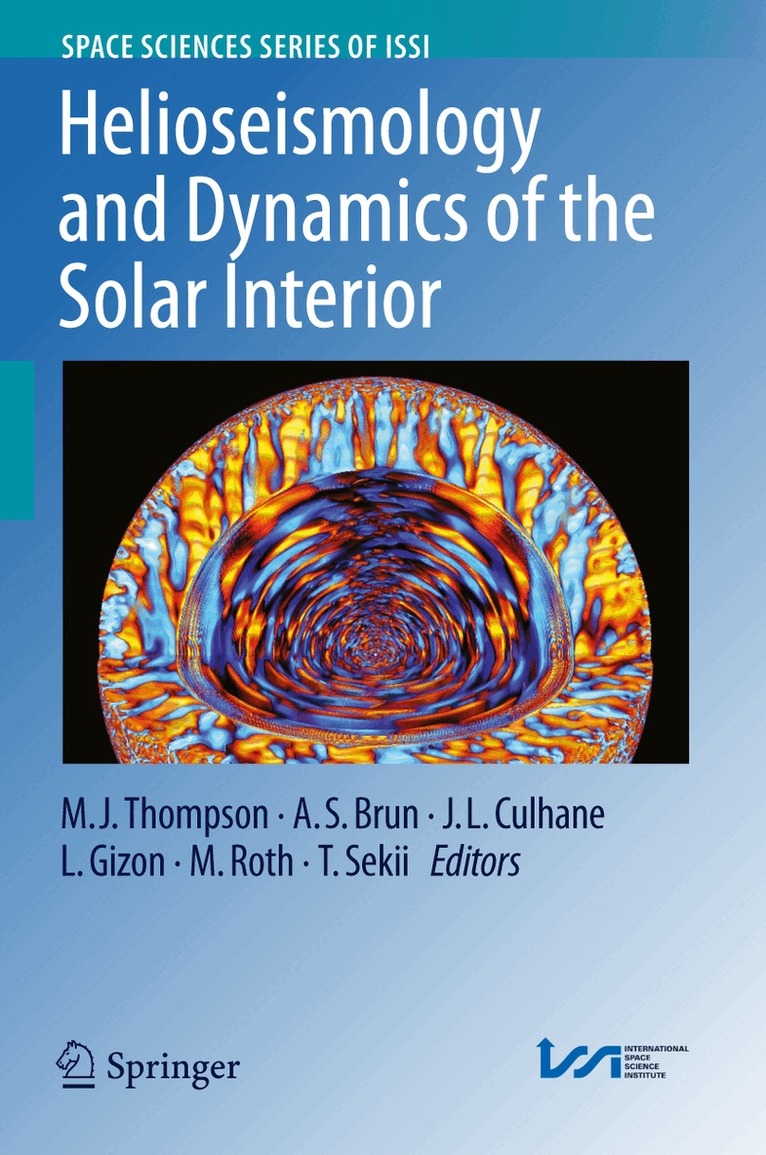
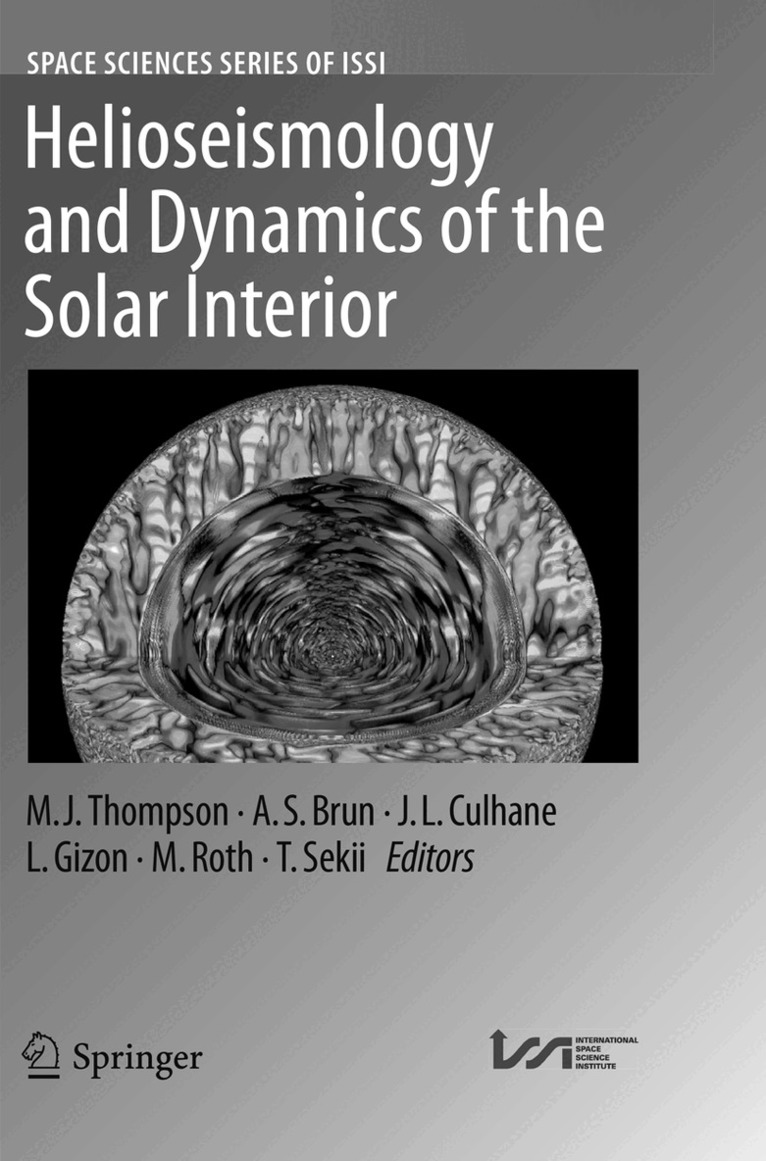
The articles republished in this book survey and summarize recent research in helioseismology as well as studies of the interior structure, dynamics and magnetism of the solar interior that are being tested and refined using the helioseismic results.Helioseismology has in the last few decades become a highly productive technique for studying the Sun’s interior from observations of the vibrations of its surface. The vibrations are manifestations of resonant modes of the Sun that are continuously excited by turbulent motions in the Sun’s convection zone, and a plethora of data have been obtained from dedicated ground-based and space-based observing systems.The book will be of particular interest to researchers and graduate students in the fields of helioseismology, solar interior dynamics and the solar dynamo. It will also be of interest to researchers in solar physics, solar activity, stellar physics, astrophysical fluid dynamics and asteroseismology.Originallypublished in Space Science Reviews, Volume 196, Issue 1-4, December 2015
1 064 kr
Skickas inom 10-15 vardagar
The articles republished in this book survey and summarize recent research in helioseismology as well as studies of the interior structure, dynamics and magnetism of the solar interior that are being tested and refined using the helioseismic results.Helioseismology has in the last few decades become a highly productive technique for studying the Sun’s interior from observations of the vibrations of its surface. The vibrations are manifestations of resonant modes of the Sun that are continuously excited by turbulent motions in the Sun’s convection zone, and a plethora of data have been obtained from dedicated ground-based and space-based observing systems.The book will be of particular interest to researchers and graduate students in the fields of helioseismology, solar interior dynamics and the solar dynamo. It will also be of interest to researchers in solar physics, solar activity, stellar physics, astrophysical fluid dynamics and asteroseismology.Originallypublished in Space Science Reviews, Volume 196, Issue 1-4, December 2015