Mohammed J. Zaki - Böcker
Visar alla böcker från författaren Mohammed J. Zaki. Handla med fri frakt och snabb leverans.
6 produkter
6 produkter
863 kr
Skickas inom 7-10 vardagar
The fundamental algorithms in data mining and machine learning form the basis of data science, utilizing automated methods to analyze patterns and models for all kinds of data in applications ranging from scientific discovery to business analytics. This textbook for senior undergraduate and graduate courses provides a comprehensive, in-depth overview of data mining, machine learning and statistics, offering solid guidance for students, researchers, and practitioners. The book lays the foundations of data analysis, pattern mining, clustering, classification and regression, with a focus on the algorithms and the underlying algebraic, geometric, and probabilistic concepts. New to this second edition is an entire part devoted to regression methods, including neural networks and deep learning.
1 578 kr
Skickas inom 10-15 vardagar
8. 1. 1 Protein Subcellular Location The life sciences have entered the post-genome era where the focus of biologicalresearchhasshiftedfromgenomesequencestoproteinfunctionality. Withwhole-genomedraftsofmouseandhumaninhand,scientistsareputting more and more e?ort into obtaining information about the entire proteome in a given cell type. The properties of a protein include its amino acid sequences, its expression levels under various developmental stages and in di?erenttissues,its3Dstructureandactivesites,itsfunctionalandstructural binding partners, and its subcellular location. Protein subcellular location is important for understanding protein function inside the cell. For example, the observation that the product of a gene is localized in mitochondria will support the hypothesis that this protein or gene is involved in energy metabolism. Proteins localized in the cytoskeleton are probably involved in intracellular tra?cking and support. The context of protein functionality is well represented by protein subcellular location. Proteins have various subcellular location patterns [250]. One major category of proteins is synthesized on free ribosomes in the cytoplasm. Soluble proteins remain in the cytoplasm after their synthesis and function as small factories catalyzing cellular metabolites. Other proteins that have a target signal in their sequences are directed to their target organelle (such as mitochondria) via posttranslational transport through the organelle membrane. Nuclear proteins are transferred through pores on the nuclear envelope to the nucleus and mostly function as regulators. The second major category of proteins is synthesized on endoplasmic reticulum(ER)-associated ribosomes and passes through the reticuloendothelial system, consisting of the ERand the Golgi apparatus.
1 625 kr
Skickas inom 10-15 vardagar
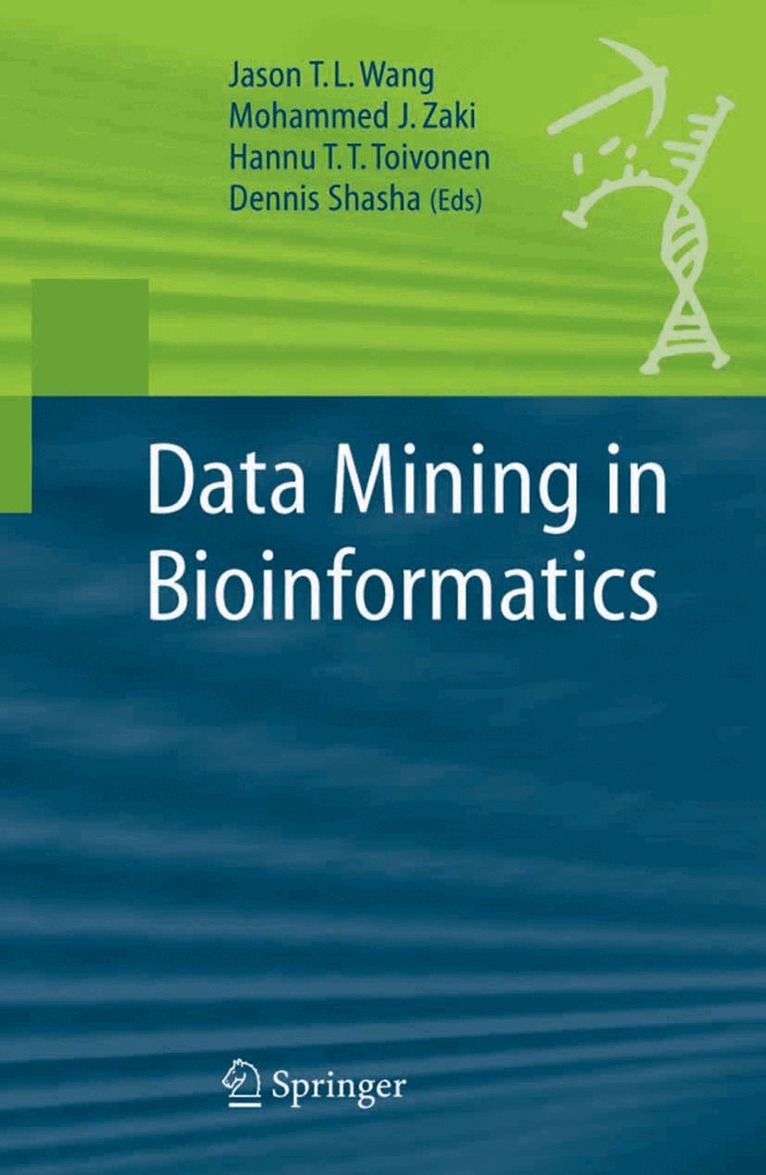
The goal of this book is to help readers understand state-of-the-art techniques in biological data mining and data management and includes topics such as: - preprocessing tasks such as data cleaning and data integration as applied to biological data - classification and clustering techniques for microarrays - comparison of RNA structures based on string properties and energetics - discovery of the sequence characteristics of different parts of the genome - mining of haplotypes to find disease markers - sequencing of events leading to the folding of a protein - inference of the subcellular location of protein activity - classification of chemical compounds based on structure - special purpose metrics and index structures for phylogenetic applications - a new query language for protein searching based on the shape of proteins - very fast indexing schemes for sequences and pathways Aimed at computer scientists, necessary biology is explained.
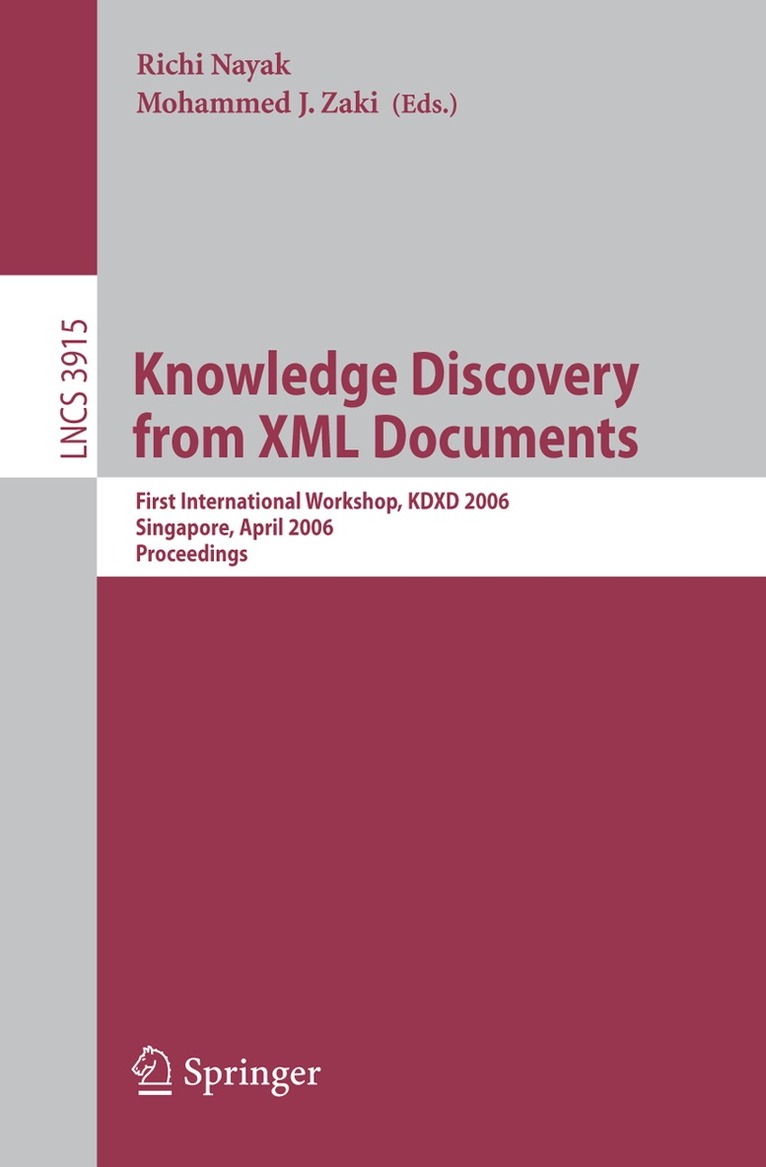
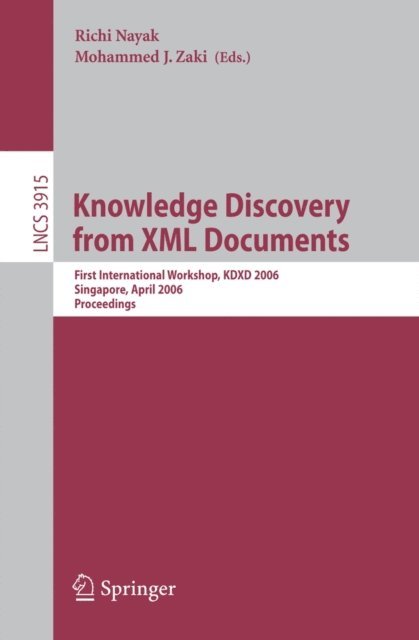
Knowledge Discovery from XML Documents
First International Workshop, KDXD 2006, Singapore, April 9, 2006, Proceedings
Häftad, Engelska, 2006
552 kr
Skickas inom 10-15 vardagar
The KDXD 2006 (Knowledge Discovery from XML Documents) workshop is the ?rst international workshop running this year in conjunction with the 10th Paci?c-Asia Conference on Knowledge Discovery and Data Mining, PAKDD 2006. The workshop provided an important forum for the dissemination and exchange of new ideas and research related to XML data discovery and retrieval. The eXtensible Markup Language (XML) has become a standard language for data representation and exchange. With the continuous growth in XML data sources,theabilitytomanagecollectionsofXMLdocumentsanddiscoverkno- edge from them for decision support becomes increasingly important. Due to the inherent ?exibility ofXML, in both structure and semantics, inferring important knowledge from XML data is faced with new challenges as well as bene?ts. The objective of the workshop was to bring together researchers and practitioners to discuss all aspects of the emerging XML data management challenges. Thus, the topics of interest included, but were not limited to: XML data mining methods; XML data mining applications; XML data management emerging issues and challenges; XML in improving knowledge discovery process; and Benchmarks and mining performance using XML databases. The workshop received 26 submissions. We would like to thank all those who submittedtheirworktotheworkshopunderrelativelypressuringtimedeadlines. We selected ten high-quality full papers for discussion and presentation in the workshop and for inclusion in the proceedings after being peer-reviewed by at least three members of the Program Committee. Accepted papers were grouped in three sessions and allocated equal presentation time slots. The ?rst session was on XML data mining methods of classi?cation, clustering and association.
552 kr
Skickas inom 10-15 vardagar
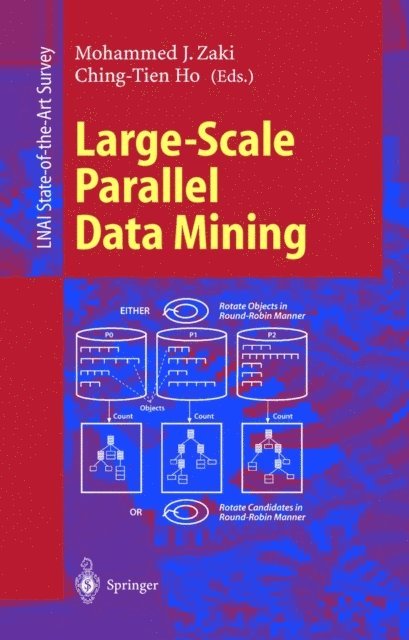
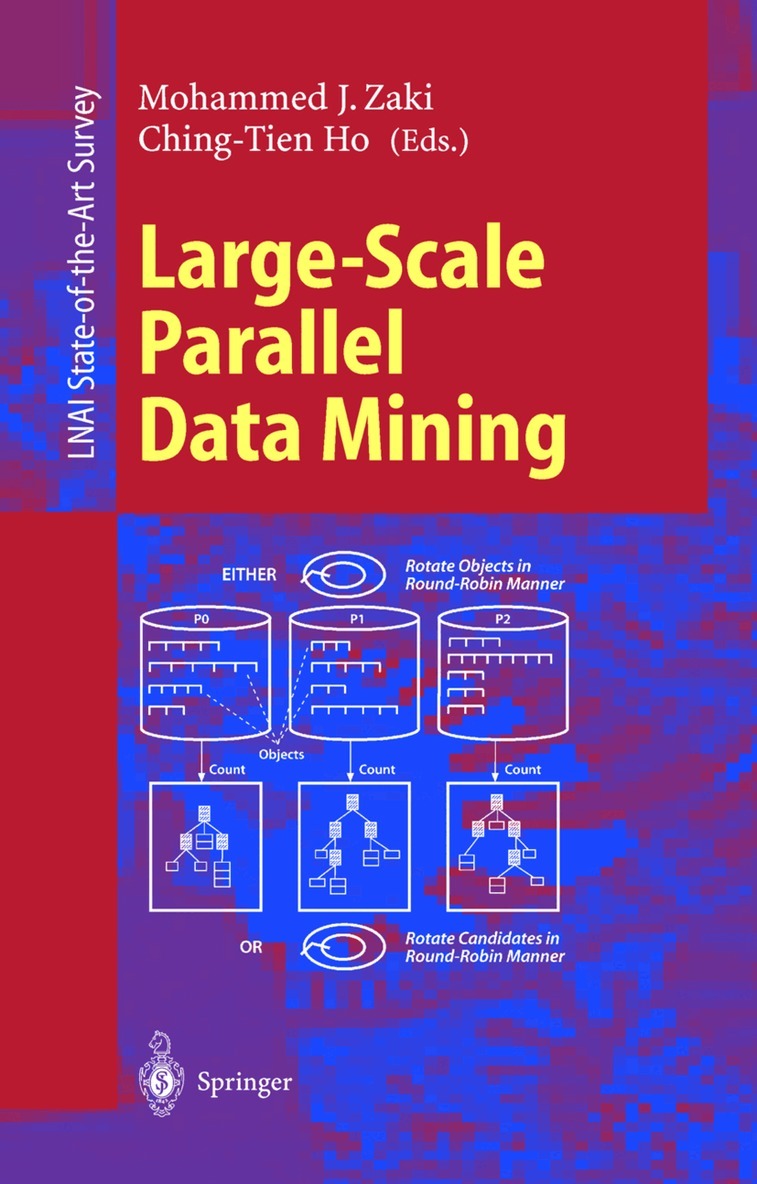
Withthe unprecedented rate at which data is being collected today in almostall elds of human endeavor, there is an emerging economic and scientic need to extract useful information from it. For example, many companies already have data-warehouses inthe terabyte range (e.g., FedEx, Walmart).The WorldWide Web has an estimated 800 millionweb-pages. Similarly,scienti c data is rea- ing gigantic proportions (e.g., NASA space missions, Human Genome Project). High-performance, scalable, parallel, and distributed computing is crucial for ensuring system scalabilityand interactivityas datasets continue to grow in size and complexity. Toaddress thisneedweorganizedtheworkshoponLarge-ScaleParallelKDD Systems, which was held in conjunction with the 5th ACM SIGKDD Inter- tional Conference on Knowledge Discovery and Data Mining, on August 15th, 1999, San Diego, California.The goal of this workshop was to bring researchers and practitioners together in a setting where they could discuss the design, - plementation,anddeploymentoflarge-scaleparallelknowledgediscovery (PKD) systems, which can manipulate data taken from very large enterprise or sci- tic databases, regardless of whether the data is located centrally or is globally distributed. Relevant topics identie d for the workshop included: { How to develop a rapid-response, scalable, and parallel knowledge discovery system that supports global organizations with terabytes of data.
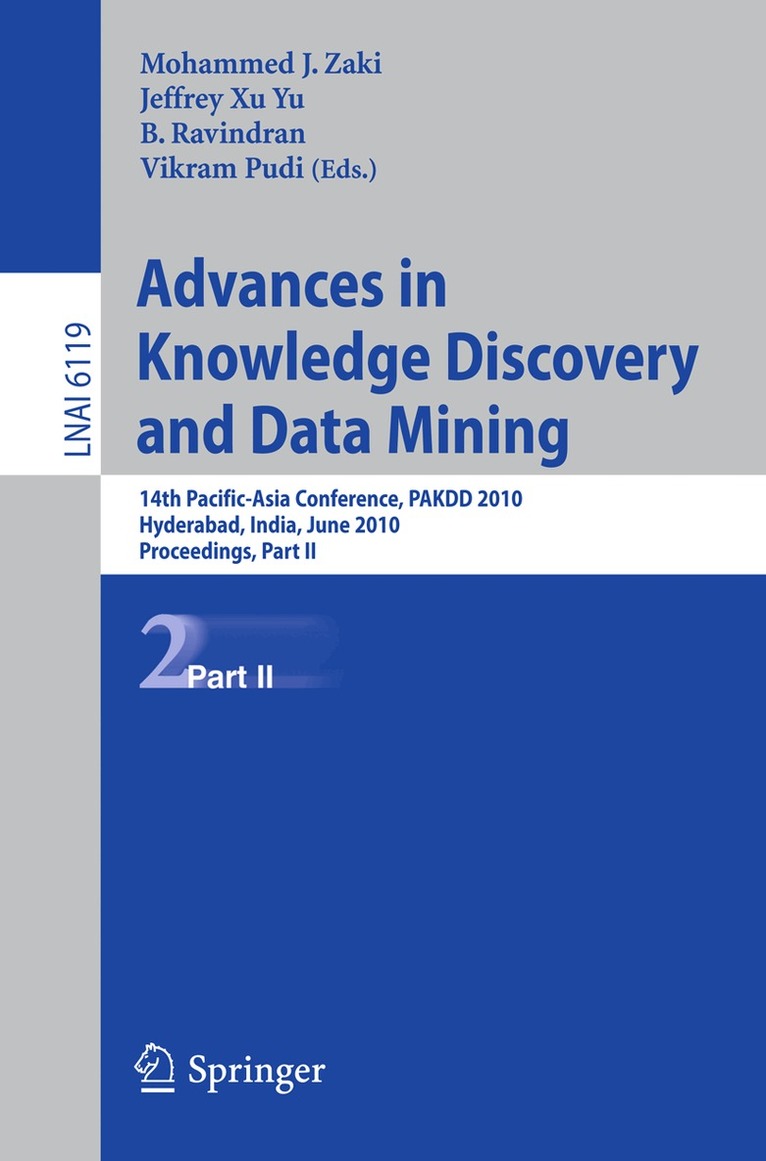
Advances in Knowledge Discovery and Data Mining, Part II
14th Pacific-Asia Conference, PAKDD 2010, Hyderabad, India, June 21-24, 2010, Proceedings
Häftad, Engelska, 2010
1 096 kr
Skickas inom 10-15 vardagar
The14thPaci?c-AsiaConferenceonKnowledgeDiscoveryandData Mining was held in Hyderabad, India during June 21-24, 2010; this was the ?rst time the conference was held in India. PAKDDisamajorinternationalconferenceintheareasofdatamining (DM) and knowledge discovery in databases (KDD). It provides an international - rum for researchers and industry practitioners to share their new ideas, original research results and practical development experiences from all KDD-related areas including data mining, data warehousing, machine learning, databases, statistics, knowledge acquisition and automatic scienti?c discovery, data visu- ization, causal induction and knowledge-based systems. PAKDD-2010 received 412 research papers from over 34 countries incl- ing: Australia,Austria,Belgium, Canada,China, Cuba, Egypt,Finland, France, Germany, Greece, Hong Kong, India, Iran, Italy, Japan, S. Korea, Malaysia, Mexico,TheNetherlands,NewCaledonia,NewZealand,SanMarino,Singapore, Slovenia,Spain, Switzerland, Taiwan, Thailand, Tunisia, Turkey, UK, USA, and Vietnam. This clearly re?ects the truly international stature of the PAKDD conference.AfteraninitialscreeningofthepapersbytheProgramCommitteeChairs,for papers that did not conform to the submission guidelines or that were deemed not worthy of further reviews, 60 papers were rejected with a brief expla- tion for the decision. The remaining 352 papers were rigorously reviewed by at least three reviewers. The initial results were discussed among the reviewers and ?nally judged by the Program Committee Chairs. In some cases of c- ?ict additional reviews were sought. As a result of the deliberation process, only 42 papers (10.2%) were accepted as long presentations (25 mins), and an ad- tional 55 papers (13.3%) were accepted as short presentations (15 mins). The total acceptance rate was thus about 23.5% across both categories.